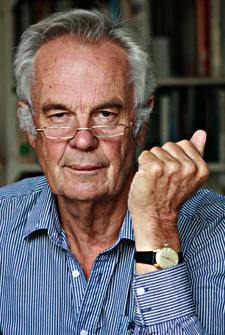
Imperiled Polities: Egypt and Turkey – Two visions of democracy

By Richard Falk

The Meaning of a 98.1% Vote

In mid-January there was a vote in Egypt as to whether to approve a constitution drafted by a 50-person committee appointed by the interim government put in place after the military coup carried out on July 3, 2013. The constitution was approved by 98.1% of those who voted, 38.6% of the eligible 53 million Egyptians.

This compares with 63.8% support received by the constitution prepared during the presidency of Mohammed Morsi from the 32.9% of the Egyptian citizenry that participated in the vote. It should be observed that this new constitutional referendum was boycotted by both the Muslim Brotherhood (MB) and various of the youth groups that has been at the forefront of the anti-Mubarak upheaval in 2011.

Also the validity of the vote was further discredited because of the atmosphere of intimidation in Egypt well conveyed by the pro-coup slogan: “You are either with me or with the terrorists.” Not only had the MB been criminalized, its assets seized, its leaders jailed, its media outlets shut down, but anyone of any persuasion who seemed opposed to the leadership and style of General el-Sisi was subject to arrest and abuse.

In the background here are questions about the nature of ‘democracy,’ and how to evaluate the views of people caught in the maelstrom of political conflict. On one level, it might seem that a vote of over 90% for absolutely anything is an expression of extraordinary consensus, and as a result el-Sisi’s constitution is far more popular than Morsi’s constitution, and hence more legitimate. Reflecting on this further makes it seem evident, especially when the oppressive context is to taken into account that the one-sided vote should be interpreted in the opposite manner, making Morsi’s vote more trustworthy because it reached plausible results.

Any vote in a modern society that claims 98.1% support should be automatically disregarded because it must have been contrived and coerced.Read More »

An American idol: The U.S. should ‘govern’ the world?

By Richard Falk

Prefatory Note:
This post consists of a much expanded text of an opinion piece that was published by AJE on January 18, 2014; it seeks to discredit imperial and neoliberal claims that the United States is a benevolent hegemon, providing global public goods to the world as a whole, including supposed geopolitical and ideological rivals.

It might not have seemed necessary in the 21st century to ask or answer such a ridiculous question. After all, in the last half of the prior century European colonialism collapsed politically, morally, and even legally, its pretensions and cruelties thoroughly exposed and totally discredited. As well, the Soviet empire fell apart.

And yet there are those who muster the temerity to insist that even now it is only the global governing authority of the United States that underpins the degree of security and prosperity that currently exists in the world. Without such a role played by the United States, this reasoning alleges, there would be widespread chaos, economic stagnancy, and far more frequent international warfare.

Not surprisingly, the proponents of this conception of world order as dependent on U.S. military, economic, diplomatic, and ideological capabilities are themselves exclusively American. It is even less surprising that the most articulate celebrants of this new variant of a self-serving imperial approach to global security and prosperity are situated either in mainstream academic institutions or in supposedly liberal media outlets.

I consider Michael Mandelbaum to be the most unabashed and articulate advocate of this American ‘global domination project’ that he felicitously calls ‘the world’s de facto government.’ Read More »

Geneva II – The mismanagement of conflicts

By Johan Galtung

This is not the way to do it. A major party to the conflicts cannot be at the same time the conference manager; to the point of making the UN Secretary General disinvite a major invited party. Whether this is due to AIPAC-American Israel Public Affairs Committee buying US Senators, or whatever process internal to the USA-Israel system, or it comes out of Secretary Kerry’s genuine conviction, is immaterial.

This looks like a court where the prosecutor is also the judge, having decided who the major culprit is and instructed the judge to proceed accordingly from Court I to II, with only those agreeing to Court I being in the jury of Court II.

Had Ban Ki-moon been a man honoring UN authority he would have disinvited himself instead, claiming undue pressure. Disinvite a major party and two things are guaranteed: a lost chance to find a solution to what is also a sunni-shia conflict, and a major spoiler of whatever conclusions may be arrived at. There was a promising point: they will first talk with the parties separately to identify their positions–but, leaving out the major carrier of shia, no chance.

This foretold failure–barring a miracle–will probably not last long. The photo-card will be played out at an early stage. It looks ominous; but is an authoritarian regime like Assad’s compatible with its army taking so many potentially incriminating photos that could fall into the hands of a “self-styled defector”? Why make photos anyhow?

Let us say, brutally simplified, that there are seven conflicts, not only one, all directly or indirectly violent, unfolding in Syria.Read More »

TFF PressInfo – Geneva will fail but don’t blame only the Syrian parties

Lund, Sweden – January 24, 2014

By Jan Oberg*

Subscribe to PressInfos to your right here!

The meeting in Geneva about Syria resumes today. It is destined to become a historic failure. Most observers will blame either of the armed Syrian parties – the government or the rebels – for adhering unbendingly to their mutually exclusive positions.

But that isn’t fair. Those who set themselves up as conflict-managers, mediators, negotiators and peace-makers and called the meeting must also take responsibility for its failure. It is the UN, the Arab League and several governments, various NATO countries and Russia (”facilitators” in the following).

This article is about how to achieve a negotiated peace.

Here follow 8 – out of many more – professional criteria that are useful for an evaluation of Geneva. Summary at the end:

1) How well do the facilitators understand what the conflict is about?
It’s about history, suffering, socio-economic crisis, foreign involvement, traumas and constitutional matters; it’s about vicious cycles of violence and arms traders’ profits.
No conflict is only about one top leader and, as we know from Iraq, Libya and elsewhere, conflicts are not solved by that leader leaving the stage. And no conflict is about only two sides, one with all the good people on one side and one with all the evil ones.
Further it is reasonable to say that Syria is a stage for a much larger conflict being played out: the wider Middle East as well as among actors who are competing for power in tomorrow’s world. Read More »

TFF PressInfo – Why is everybody ignoring Syria’s people?

Lund, Sweden – January 23, 2014

Interview by Jan Oberg

Subscribe to PressInfos to your right here!

Introduction
Sinbad is in his mid-20s and he took up studies in Europe before his native Syria began falling apart in senseless violence. He used to live in Damascus, his father being an officer in the Syrian Army but retired well before hell broke loose.

Sinbad is one of his country’s many young intellectuals, extremely knowledgeable about international, regional and national politics and also a man who, from a distance, has done what he possibly could to maintain links with his society – which is not just Syria but civil society. Among other things he established a website on which everybody could dialogue freely under one condition: that they advocate political and other civil strategies and tools and no violence or expressions of hatred. It turned out to be very difficult to maintain such a website.

Today he is disillusioned. He did not have the slightest hunch that the Arab Spring would be turning into a violent winter in such a short time. His family has been forced to flee to a far-away village, he himself can not go home.

Sinbad is at least as much disappointed – if not angered – that so many of his fellow citizens have taken to the quick fix idea of violent struggle against the regime and have only managed that way to make everything worse – for all society, that is.

Eager as I am to understand better the civil society dimension of this conflict, I readily grasp the chance to sit down with him in a café in Amsterdam and start out asking him:

Q: Over the last few years Western media have covered basically the violence – both by the al-Assad regime and by the rebels. Do you feel that civil society has been under-covered, so to speak?

Sinbad: Absolutely! Western media has consistently ignored the millions who would not dream of touching a gun and even keep social functions and relations going on a daily basis, including help each other. What the media tell you is far from the whole truth. The silent – big – majority is silent, not given a voice and they are now hiding behind their doors. Read More »

Selected links to a better understanding of Iran

By Farhang Jahanpour and Jan Oberg

These are the links mentioned in TFF PressInfo of January 20, 2014. There are literally hundreds of websites that one could list but we have put together some of the ones that we find to be the most useful and that we regularly consult ourselves. They range from the media run by the Iranian government, as well as the BBC Persian, VOA in Persian, some opposition websites and one on Iranian music and the massive Encyclopaedia Iranica; further there are some dailies and agencies, sites with political analyses sites and some video documentaries.

We sincerely hope this you’ll find something useful in this collection. Please share this page with anybody who wishes to know more about Iran. And let’s emphasise that the best way to learn about Iran is to go there and see for yourself.

Al-Monitor Iran Pulse

IRNA – Islamic Republic News Agency

Iran Review
It is a web site, which calls itself “leading independent, non-governmental and non-partisan website.” It provides translations of articles by some leading Iranian journalists and political analysts, and some of them are very informative and thought provoking.

Payvand
It is a website run by Iranian-Americans but is generally non-partisan and publishes good articles about Iran, some pro-Iranian government and some opposed to it. The articles provide good information about some of the leading current developments in Iran.

Campaigns Against Sanctions and Military Intervention in Iran (CASMII)
This is a website run by a professor of computer studies at the University of London. It defines itself as follows: “CASMII is independent of all political groups and governments, including the Iranian government, and does not adhere to any particular religion or ideology. We strive to bring together the broadest possible spectrum of forces, on the basis of democratic principles and decision making structures.” However, it tends to publish articles that are generally-speaking pro-Iranian government and in any case opposed to military action or sanctions against Iran.

Press TV
PressTV is the official English language TV station of the Islamic Republic of Iran and naturally takes a pro-Iranian stance in most of its reporting. Its satellite channel beamed to Europe was banned as part of the sanctions against Iran, but it is available online.Read More »

The emergent Palestinian imaginary

By Richard Falk

[Prefatory Note: this text is based on my presentation at the conference listed below, which brought together a wide array of scholars, media people, and persons concerned with the future of Palestine]

Second Annual Conference of Research Centers in the Arab World, Doha, Qatar, 7-9 December 2013, THE PALESTINIAN CAUSE AND THE FUTURE OF THE PALESTINIAN NATIONAL MOVEMENT.

A preliminary remark: A sacrifical peace

It is a welcome development that the theme of such a major conference as this one should have as its theme ‘the future of the Palestinian movement,’ so well articulated in the opening address by Azmi Bishara.

It is often overlooked that as early as 1988, and possibly earlier, the unified Palestinian leadership has decisively opted for what I would call a ‘sacrificial’ peace. By sacrificial I mean an acceptance of peace and normalization with Israel that is premised upon the relinquishment of significant Palestinian rights under international law. The contours of this image of a resolved conflict consist of two principal elements: a Palestinian sovereign state within the 1967 ‘green line’ borders and a just resolution of the refugee problem. This conception of a durable peace is essentially an application of Security Council Resolution 242, 338, and is the foundation of the initiative formally endorsed by the Palestine National Council is 1988.

It is sacrificial in both dimensionsRead More »

New sanctions will backfire

By Farhang Jahanpour

Despite strong opposition by the White House and the States Department and despite the pleadings of some of the most prominent bipartisan US foreign policy luminaries who have warned that additional sanctions would jeopardize ongoing diplomatic efforts, (1) many US senators are pushing forward with a new resolution that is supported by the same neocons that brought us the Iraq war. (2)

It seems that the majority of Congressmen and Senators know very little about Iranian history or what is going on in Iran at present. Read More »

Who was Ariel Sharon?

By Jonathan Power

The Middle East has been living a nightmare, partly because of a man of Russian origin who became Israel’s greatest general and, later, prime minister of Israel: Ariel Sharon. What were the inner thoughts of this man? This is what Amos Oz, an acclaimed Israeli journalist, writer and novelist, with a world-wide reputation, helped us to discover in an interview published by the Israeli daily, Davar, in December 17, 1982.

“Call Israel by any name you like, call it a Judeo-Nazi state. Better a live Judeo-Nazi than a dead saint. I don’t care whether I am like Gaddafi. I am not after the admiration of the gentiles. ….I will destroy anyone who will raise a hand against my children, I will destroy him and his children, with or without our famous purity of arms…..

“We’ll hear no more of that nonsense about the unique Jewish morality, the moral lessons of the Holocaust or about the Jews who were supposed to have emerged from the gas chambers pure. As for Eyn Hilwe [Lebanon’s largest refugee camp] it’s a pity we did not wipe out that hornet’s nest completely.”

Sharon first stirred up controversy with the massacre at Qibiya, a Palestinian village. Read More »

Ten conflicts, solutions and conciliation

By Johan Galtung

2014: there are conflicts old and new crying for solution and conciliation, not violence; with reasonable, realistic ways out.

Take the South Sudan conflict between the Nuer and the Dinka. We know the story of the borders drawn by the colonial powers, confirmed in Berlin in 1884. Change a border by splitting a country – referendum or not – and what do you expect opening Pandora’s Box? More Pandora.

There is a solution: not drawing borders, making them irrelevant. The former Sudan could have become a federation with much autonomy, keeping some apart and others together in confederations-communities, also across borders. Much to learn from Switzerland, EU and ASEAN.Read More »