A New Year’s wish: Go beyond !

By Johan Galtung

Yes, go beyond, transcend! That is our message, New Year or not.

Take the US school shootings. The National Rifle Association’s vice president on TV: “the only person who can stop a bad person with a gun is a good person with a gun”. That statement struck many cords.

There is the deep US culture of Dualism – two kinds of people – and Manicheism – one bad, one good. There is Armageddon in the class room, the teacher or resident police pulling out the gun–bigger, better, more accurate–for the final battle, for the final and only solution. The NRA is riding on this DMA (Dualism/Manicheism/Armageddon) ground swell from below, and so are millions of others. It is concrete, feasible, and could start January 2013.

There is confirmation from above: this is US foreign policy. The only way to stop a bad country with arms is a good country with arms; the only way to stop evil terrorism from below is good state terrorism from above. Balance of power, countless bases, search and destroy.

We agree about the critical focus: school shootings–the USA committing suicide! – must not happen. But what do we know empirically to be constructive, creative? The answer is wrapped in ambiguity.Read More »

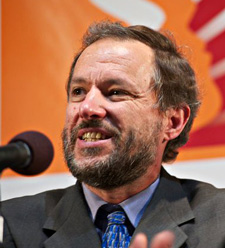
An Open Letter of Response to CRIF

Richard Falk

An Open Letter of Response to CRIF (Counsèil Représentif des Institutions juives de France)

I am shocked and saddened that your organization would label me as an anti-Semite and self-hating Jew. It is utterly defamatory, and such allegations are entirely based on distortions of what I believe and what I have done. To confuse my criticisms of Israel with self-hatred of myself as a Jew or with hatred of Jews is a calumny. I have long been a critic of American foreign policy but that does not make me anti-American; it is freedom of conscience that is the core defining reality of a genuinely democratic society, and its exercise is crucial to the quality of political life in a particular country, especially here in the United States where its size and influence often has such a large impact on the lives and destiny of many peoples excluded from participating in its policy debates or elections.

It is always difficult to negate irresponsible accusations of this kind. What follows is an attempt to clarify my honestly held positions in relation to a litany of charges that have been given currency by a campaign conducted by UN Watch ever since I was appointed by the UN Human Rights Council to be Special Rapporteur for the human rights situation in the Occupied Palestinian Territories in 2008. What follows are brief attempts at clarification in response to the main charges:Read More »

Egypt: Between a rock and a hard place

By Richard Falk

I have had the opportunity to be in Cairo three times for brief visits in the last 20 months, the first a few weeks after the departure of Hosni Mubarak on February 11, 2011, the second in February of 2012 when the revolutionary process was treading water, and this third one over the course of the previous ten days.
What is striking is how drastically the prevailing mood and expectations have changed from visit to visit, how fears, hopes, and perceptions have altered over time, and why they are likely to continue to do so.

I. The Overthrow of Mubarak

On the first visit, shortly after the extraordinary exploits in Tahrir Square that started on January 18, 2011, there was a spirit of stunned amazement that made it seem as though the ‘Arab Spring’ was a genuine historical phenomenon of epic proportions and that Egypt had become the core site of a new post-Marxist radical politics that relied on militant nonviolence and a radical ethos of transformation, but avoided ideology and hard power tactics.

Gandhi and Gene Sharp were most often invoked as the inspirational influences, not Lenin, Mao, Castro. Read More »

Observing the International Day of Solidarity with the Palestinian People in Cairo

By Richard Falk

Text of my remarks delivered in Cairo at joint UN/Arab League ceremony marking the observance of the 2012 International Day of Solidarity with the Palestinian People, 29 Nov 2012, some 10 hours prior to the historic vote in the UN General Assembly.

Your Excellency, Dr. Nabil Elaraby, Secretary General of the League of Arab States, H.E. Barakat Al Fara, H.E. Amre Dou Al Atta, Dr. Mohammad Gimi’a, Bishop Macos – Excellencies, Distinguished Guests, Ladies and Gentlemen:

It is an exceptional honor and challenge to speak on such an occasion. We meet at a tense historical moment with heavy potential consequences for the Palestinian people and for the peoples and governments of the region. I along with many others throughout the world share Nelson Mandela’s view that the denial of Palestinian rights remains the “the greatest moral issue of our time.” This 2012 International Day of Solidarity with the People of Palestine possesses a special significance. A ceasefire ending the latest orgy of violence afflicting the two societies, but especially affecting the people of Gaza, has been agreed upon just over a week ago, and appears to be holding. And in a few hours the Chairman of the Palestinian Liberation Organization and President of the Palestinian Authority, Mahmoud Abbas, is scheduled to ask the UN General Assembly to recognize Palestine as a non-member observer State within the UN, a status similar to that of the Vatican. When this initiative is approved later today it means an upgraded status for Palestine within the UN System, including probable access to other organs of the UN.

Meeting here in Cairo on this occasion has an added resonance. It was the Egyptian government that played such an instrumental role in producing the ceasefire in Gaza, and it is the democratization of Egypt that has done more to improve Palestinian prospects than any other recent regional or international development. It also raises expectations that Egypt will in the future exert its influence to bring this conflict that has lingered far too long to a just end by working toward a peaceful solution based on the recognition of Palestinian rights under international law. Nothing would better convey to the world that the Arab Spring represents a regional declaration of independence from the dominion of external influence. In doing so it would enlarge upon the earlier historic achievement of unexpectedly bringing about the downfall of a series of dictatorial regimes reigning throughout the Middle East.Read More »

Hope, wisdom, law, ethics, and spirituality in relation to killing and dying: Persisting Syrian dilemmas

By Richard Falk

In appraising political developments most of us rely on trusted sources, our overall political orientation, what we have learned from past experience, and our personal hierarchy of hopes and fears. No matter how careful, and judicious, we are still reaching conclusions in settings of radical uncertainty, which incline our judgments to reflect a priori and interpretative biases.

As militarists tends to favor reliance on force to resolve disputes among and within sovereign states, so war weary and pacifist citizens will seek to resolve even the most extreme dire conflict situations by insisting on the potentialities of non-violent diplomacy.

In the end, even in liberal democracies most of us are far too dependent on rather untrustworthy and manipulated media assessments to form our judgments about unfolding world events. How then should we understand the terrible ongoing ordeal of violence in Syria? Read More »

The Balkan wars at 100: Four ways to good neighborhood

By Johan Galtung

*Keynote Speech, Istanbul, Hacettepe University, 4 October 2012

Empires come and go. The Ottoman-Muslim Empire was among the better whereas the Iberian-Catholic and the European-Protestant were among the worst.

The religions of the kitab were respected and Turkish language was not imposed. Religious-linguistic entities in the Balkans survived, as opposed to those in Latin-Caribbean America. National independence movements succeeded: Greece in 1829, Serbia and Romania in 1878, Bulgaria in 1908, Albania in 1912.

But the nation-states were incomplete. And on October 8, 1912 – a century ago – the Balkan League–Serbia-Bulgaria-Greece-Montenegro–declared war on the Ottoman Empire; and won. Then came the Second Balkan war in 1913, among the victors, Serbia-Greece-Romania against Bulgaria over Macedonia. Bulgaria lost.

Today this all sounds disturbingly familiar; but it is very far from Kant’s “eternal peace”. The wars may be over right now but recent ones have claimed many more lives than the Balkan Wars of 1912-13, estimated at 122,000 killed in action, 20,000 from wounds and 82,000 from disease. Positive peace seems far away; there is only some unstable negative peace.

This keynote will use a four factor formula for positive peace…Read More »

Sociocide, Palestine and Israel

By Johan Galtung

Testimony for Russell Tribunal on Palestine – New York City, 7 Oct 2012

Honorable Members of the Jury!

Sociocide is a new concept that has not found its place in positive international law. But Genocide, the unspeakable crime of massive killing of members of a genus, a nation, for no other reason than membership, has. And Ecocide, the unspeakable crime of killing Mother Earth who nourishes us all, is finding its place via the constitutions of some countries in Latin America.

Sociocide, the killing of a society’s capacity to survive and to reproduce itself, should become equally and prominently a crime against humanity.Read More »