Om King hade levt idag

– och om likheterna mellan stater och människor i fängelse

Av Martin Smedjeback
Tal på Helsingborgs stadsbibliotek på King-dagen 17 januari 2011
21 år gammal åkte jag till USA för att jobba som au pair. Väl på plats flyttade jag in hos en rik familj i New Jersey för att under ett år ta hand om deras barn. I denna familj med två vuxna och tre barn hade de fyra bilar och sju TV-apparater. De hade ett materiellt överflöd men brist på kärlek. Elaka ord om varandra utdelades ofta i familjen, väldigt sällan ömhetsbetygelser.

“Vi måste snabbt börja gå från ett tingorienterat samhälle till ett personorienterat samhälle” sa Martin Luther King i ett tal. ”När maskiner och datorer, vinstmotiv och äganderättigheter, anses vara viktigare än människor då kan vi inte övervinna de tre enorma problemen: rasism, materialism och militarism.” Read More »

Waking Up from the Nightmare

By David R. Loy

Buddhist Reflections on Occupy Wall Street

In a Buddhist blog about Occupy Wall Street, Michael Stone quotes the philosopher Slavoj Žižek, who spoke to the New York Occupiers at Zuccotti Park on October 9, 2011:

“They tell you we are dreamers. The true dreamers are those who think things can go on indefinitely the way they are. We are not dreamers. We are awakening from a dream which is turning into a nightmare. We are not destroying anything. We are only witnessing how the system is destroying itself. We all know the classic scenes from cartoons. The cat reaches a precipice. But it goes on walking. Ignoring the fact that there is nothing beneath. Only when it looks down and notices it, it falls down. This is what we are doing here. We are telling the guys there on Wall Street – Hey, look down!”

As Slavoj and Michael emphasize, we are beginning to awaken from that dream. That’s an interesting way to put it, because the Buddha also woke up from a dream: the Buddha means “the awakened one.” What dream did he wake up from? Is it related to the nightmare we are awakening from now?Read More »

Arne Næss – the next hundred years

By Johan Galtung
Speech given in Oslo on January 27, 2012

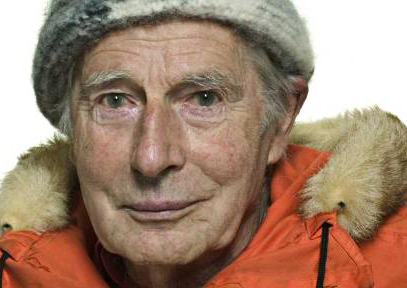
Norway’s by any comparison greatest philosopher was born one hundred years ago today, and died close to the age of 97. A world philosopher, a human being with an incredible radiation. Nobody who came close to him remained the same.

Arne Næss 27 January 1912 - 12 January 2009

What was his basic theme? In one word: nonviolence, but in a broader and deeper sense than most approaching demanding idea.

Arne Næss was very sensitive to verbal violence in debates; his answer was objectivity. He identified physical violence in political struggle; his answer was Gandhian nonviolence, strongly inspired as a student in Paris early 1930s by Indian students strongly convinced that nonviolence was the way. Read More »

Unarmed resistance is Syria’s best hope

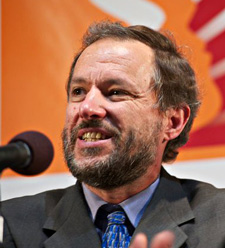
By Stephen Zunes

The Syrian pro-democracy struggle has been both an enormous tragedy and a powerful inspiration. Indeed, as someone who has studied mass nonviolent civil insurrections in dozens of countries in recent decades, I know of no people who have demonstrated such courage and tenacity in the face of such savage repression as have the people of Syria these past 10 months.Read More »

2012 Peace Proposal: Human Security and Sustainability: Sharing reverence for the dignity of life

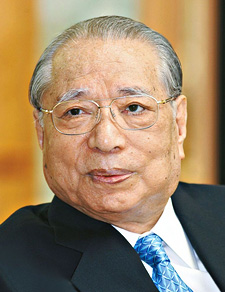
By Daisaku Ikeda
President of Soka Gakkai International (SGI)

Every year Dr. Ikeda publishes his thoughts on what must be done to secure a better future for us all. He is a true contributor to the TFF pro-peace orientation that emphasizes how important it is to “imagine a better world”.
We are proud to have had this wise, visionary leader of what is probably the world’s largest peace movement, as TFF Associate over many years.
Much more about him here
.

The economist Amartya Sen, a renowned advocate of the methods and approaches of human security, has emphasized “the dangers of sudden deprivation.” Such unanticipated threats can take the form of natural disaster and conflict, and can also arise from economic crises and rapid environmental degradation brought about by climate change. It is crucial that we respond vigorously to such threats, which can grievously undermine people’s lives, livelihoods and dignity.Read More »

Remembering the best and the worst of 2011

By Richard Falk

2011 was an exciting and pivotal year in many respects, although its main outcomes will remain inconclusive for years to come.  We will learn in 2012 whether we are moving closer to fulfilling our hopes, dreams, and goals or are trying to interpret and overcome a recurrence of disappointment and demoralization with respect to progressive change in world affairs. The stakes for some societies, and for humanity, have rarely been higher.Read More »

Arab revolutions and the power of nonviolent action

By Stephen Zunes

While sitting in a Cairo café just a couple blocks from Tahrir Square recently, I couldn’t help but notice the television in the corner broadcasting the evening news. Traditionally, TV news in Egypt and other Arab countries has consisted of the president (or king) giving a speech, greeting a foreign visitor, visiting a factory, or engaging in some other official function. This evening, however, the news was about a labor strike in Alexandria, relatives of those killed during the February revolution protesting outside the Interior Ministry, and ongoing developments in the pro-democracy struggles in Yemen and Syria.Read More »

‘Peace writ large’

By Scilla Elworthy

Time for a strategy for the transformation of conflict worldwide?

Globally, in the 21st century, two unprecedented factors are affecting war: violent conflict is being prevented with the skills of fast-growing localised peace building initiatives, and more wars are ending through negotiation rather than military victory.

Yet military expenditure has increased 45% over 10 years, and only minute amounts are spent on the prevention of conflict. Does this extraordinary situation call for a global strategy to change the way the world deals with war?Read More »