TFF PressInfo: Nuclear abolition now !

By TFF’s Board

Lund, Sweden August 6, 2014 – Hiroshima Day

The Nuclear Age – risk of omnicide and our new responsibilities

Nuclear weapons came into the world and were used for the first time in 1945. Their specific feature as weapons of mass destruction and “omnicide” – able to kill us all – has changed what it means to be alive on this earth and to be responsible for its existence.

Until nuclear weapons, human beings could not decide whether or not to end project humankind and project planet earth.

Today we know that the arsenals and missile projection methods are such that a few decision-makers, or a technical malfunction, could blow up enough of the world to make the living – if any – envy the dead.

We live in the Nuclear Age. It means living with the permanent daily threat of extinction.Read More »

Aage Bertelsen (1901 – 1980) – Danish educator for peace

By Jan Oberg & Johan Galtung*

Lund and Kuala Lumpur, July 2014

Introduction

He was a tall man and a great man, a visionary, pacifist, civil resister, educator and philosopher. He took life more seriously than most and he could be playful and fun like a child. His life’s guiding principle was ”Engage in your time!” and while he wrote and talked a lot he also did it. His name was Aage Bertelsen, he was born in Denmark in 1901 and died on August 15, 1980.

Bertelsen’s imprint on history is two-fold. First, with his wife Gerda he was a prime mover of one of the groups, the Lyngby Group, which organised the rescue of altogether 7.220 Danish Jews into safety in Sweden in October 1943 during the German occupation of Denmark – more here. The Lyngby Group – Lyngby is north of Copenhagen – got about 1.000 of these in safety by organising their nightly transport onboard small fisher boats over the Sound between Denmark and Sweden.

In this he deserves a place in international contemporary history for its humanity, civil courage and as an example of non-violent struggle against occupation.

Secondly, Bertelsen was an educator of and for peace. His life work educational efforts included his family and friends, his pupils over 22 years at the Aarhus Cathedral School in Aarhus, Denmark, the general public as well as national and international leaders.

He lived in pre-Internet times and very little is publicly available today about this renaissance man. From two rather different, but compatible, perspectives we’ve taken it upon us to remind the world about him – friends and colleagues of his as we happen to be.

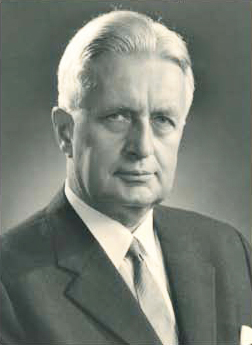
Headmaster Aage Bertelsen in 1961 Photo: Elfeldt, Copenhagen


Why now, over 30 years after his death? Read More »

The mouse that roared

By Gunnar Westberg

The Mouse that roared was a much acclaimed movie comedy from 1955 in which a small European Duchy tried in vain to get the attention of the USA for a trade conflict. To get the attention of the mighty superpower the Duchy finally declared war on the USA. And to its surprise, won!

The story to be told below is less funny.

The Minister of Foreign Affairs for the Marshall Islands, Mr. Tony de Brum, spoke at the recent conference on the treaty against nuclear weapons, NPT, in New York. He remembered his experience of nuclear weapon tests in his childhood:

“I have witnessed nuclear weapon explosions and my memories from the Lipiep atoll in Northern Marshall Islands are strong. I lived there as a boy during the 12 years of nuclear testing. I remember the blinding white light from the Bravo test on the Bikini atoll in 1954, a thousand times stronger than that over Hiroshima.

The Marshall Islands was used for 67 nuclear tests between 1946 and 1958, with an explosive yield corresponding to 1.6 Hiroshima bombs every day for twelve years. The consequences are still with us as a burden which no nation, no population, should be forced to bear.” Read More »

Marshallöarna utmanar kärnvapenstaterna

Av Gunnar Westberg

Marshallöarnas utrikesminister Tony de Brum berättade vid den pågående förberedelsekommitténs möte (Prep Com) i FNs-högkvarter i New York, den 28 april till 9 maj 2014 om avtalet mot kärnvapen, NPT, i New York, om sina upplevelser av kärnvapenprov:

Jag har varit vittne till kärnvapenexplosioner och mina minnen från Lipiep-atollen i norra Marshallöarna är starka. Jag bodde där som pojke under de 12 åren som kärnvapenproven pågick. Jag minns det bländande vita ljuset från Bravo-sprängningen på Bikini-atollen år 1954, tusen gånger starkare än den över Hiroshima.

Marshallöarna utsattes för 67 kärnvapenprov mellan 1946 och 1958, motsvarande 1,6 Hiroshima-sprängningar varje dag I tolv år. Följderna finns kvar hos oss som en börda som ingen nation, ingen befolkning, skulle behöva bära.

Marshallöarna förvaltades vid tiden för kärnvapensprängningarna av USA under FN-mandat. Nu är landet självständigt med namnet Republiken Marshallöarna, som omfattar ett stort antal öar med en befolkning av totalt endast 60 000 personer. Landet ar ett avtal med USA som bl a innebär att USA står för försvar och vissa sociala tjänster.

Marshallöarna tar nu strid för att inget land i världen skall utsättas för kärnvapen, inte testsprängningar men framför allt inte kärnvapenkrig. Read More »

TFF PressInfo: Sverige – inte längre aktör för en bättre värld

Av Jan Öberg
Dr.hc., direktör för TFF
4 maj 2014

Eliten i Sverige är mer lojal mot Nato, USA och EU än mot sitt folk

• Under de senaste 25-30 åren har Sveriges militära, säkerhets- och utrikespolitiska elit vridit Sveriges politik 180 grader.

• Dessa grundläggande förändringar inleddes av den socialdemokratiska regeringen under Göran Persson och utrikesminister Anna Lindh och har genomförts praktiskt taget utan offentlig debatt.

• Omsvängningen till interventionism, militarism och USA/Nato på alla områden har planerats gradvis, i smyg och ohederligt – kort sagt på ett sätt som är ovärdigt en demokrati.

• Denna elit är mer lojal mot Bryssel och Washington än mot svenskarna.

• Om din bild av Sverige är att det är ett progressivt, förnyande och fredsfrämjande land med global inställning som försvarar folkrätten så är den – tråkigt nog – föråldrad.

Hur Sverige har förändrats

Sverige är inte längre neutralt och det är bara formellt alliansfritt; det finns ingen mer närstående bundsförvant än USA/Nato. Landet har upphört att utveckla en egen politik och positionerar istället sig inom ramen för EU och Nato. Landet bidrar inte längre med betydelsefullt nytt tänkande – det sista var Olof Palmes kommission om gemensam säkerhet (1982).Read More »

Nonviolent Geopolitics: Law, Politics, and 21st Century Security*

By Richard Falk

In this short essay, my attempt will be to articulate a conception of a world order premised on nonviolent geopolitics, as well as to consider some obstacles to its realization. By focusing on the interplay of “law” and “geopolitics” the intention is to consider the role played both by normative traditions of law and morality and the “geopolitical” orientation that continue to guide dominant political actors on the global stage.

Such an approach challenges the major premise of realism that security, leadership, stability, and influence in the 21st century continue to rest primarily on military power, or what is sometimes described as “hard power” capabilities. [1]

From such a perspective international law plays a marginal role, useful for challenging the behavior of adversaries, but not to be relied upon in calculating the national interest of one’s own country. As such, the principal contribution of international law, aside from its utility in facilitating cooperation in situations where national interests converge, is to provide rhetoric that rationalizes controversial foreign policy initiatives undertaken by one’s own country and to demonize comparable behavior by an enemy state. This discursive role is not to be minimized, but neither should it be confused with exerting norms of restraint in a consistent and fair manner.

My intention is to do three things:

• to show the degree to which the victors in World War II crafted via the UN Charter essentially a world order, which if behaviorally implemented, would have marginalized war, and encoded by indirection a system of nonviolent geopolitics; in other words, the constitutional and institutional foundations already exist, but inert form;

• to provide a critique of the realist paradigm that never relinquished its hold over the imagination of dominant political elites, and an approach has not acknowledged the obsolescence and dangers associated with the war system;

• and, finally, to consider some trends in international life that make it rational to work toward the embodiment of nonviolent geopolitics in practice and belief, as well as in the formalities of international law.Read More »

Japan and the world community

By Johan Galtung

From Osaka, Kyoto

Japan could have been a leading world power today.

Not a 19th century colonial-imperial-military power, but a peace power like Switzerland, only much bigger. If its political leaders had embraced the peace constitution with Article 9 – finally nominated for the Nobel Peace Prize – depriving Japan of the right to war with the same enthusiasm of its population. A recent public opinion poll showed 2/3, 63%-64% opposing collective defense as well as revision of A9.

It is not that A9 – which is against war, not for peace – is perfect. Betrayed by politicians “interpreting” and used as a comfortable sleeping pillow by the peace movement people, two solid pillars should have been added, like defensive defense and positive peace.Read More »

The New World Order?

By Richard Falk

There is no more reliable guardian of entrenched conventional wisdom than The Economist. And so when its cover proclaims ‘the new world order,’ and removes any ambiguity from its intentions, by its portrayal of Putin as a shirtless tank commander with menacing features.

No such iconography accompanied the last notable invocation of the phrase ‘new world order’ by George H. W. Bush in mobilizing support for a forcible response to the Iraqi invasion and annexation of Kuwait in 1990, the dirty work of Saddam Hussein. Read More »

TFF PressInfo: The manufactured story about Iran’s nuclear program

By Farhang Jahanpour

As Iran and the world powers resume nuclear talks in Vienna with the hope of reaching a comprehensive agreement over Iran’s nuclear program by mid-July, the Israelis and their lobbyists in Washington are intensifying their efforts to scuttle the talks. In addition to all the efforts in the US Congress to impose additional sanctions on Iran, thus bringing the talks to a premature end, there are indications that Israel and her friends are continuing with various acts of sabotage against Iranian nuclear facilities.

In 2010, the so-called Stuxnet virus temporarily disrupted the operation of thousands of Iranian centrifuges. At least five Iranian nuclear scientists have been assassinated. Iran has also said that it has discovered tiny timed explosives planted on centrifuges but has disabled them before they could go off. On Monday 17 March 2014, Iran said that an alleged attempt to sabotage one of its nuclear facilities had involved foreign intelligence agencies that had tampered with imported pumps. However, in addition to all those acts of sabotage, there seems to be an intensive effort to manufacture a crisis by means of false intelligence.

Prior to the devastating Iraq war that destroyed the country and killed upwards of half a million people, not to say anything of thousands of Coalition forces who were killed and the two trillion dollars that was spent, a number of neocons bent on the invasion of Iraq manufactured various false reports in order to mislead the public and pave the way for the war.

On September 8, 2002, Michael R. Gordon and Judith Miller published a story in the New York Times that openly alleged that Saddam Hussein had intensified his quest for a nuclear bomb. They wrote: “In the last 14 months, Iraq has sought to buy thousands of specially designed aluminum tubes, which American officials believe were intended as components of centrifuges to enrich uranium… Bush administration officials say the quest for thousands of high-strength aluminum tubes is one of several signs that Mr. Hussein is seeking to revamp and accelerate Iraq’s nuclear weapons program.”

The unsuspecting public was misled by that false intelligence and the result was one of the longest and most disastrous wars in US history.

How the manufactured crisis was manufactured

In his latest groundbreaking book, entitled A Manufactured Crisis: The Untold Story of Iran Nuclear Scare, the historian and investigative journalist Gareth Porter catalogs a long list of false reports manufactured by Israeli intelligence agencies in order to mislead the public and pave the way for a war against Iran. (1)

Read More »

Pakistan – What Now?

By Johan Galtung


Islamabad, Ministry of Foreign Affairs, 28 Feb 2014

Your Excellencies,

The basic point is that Pakistan will not get that commodity called “peace” in Kashmir, Afghanistan and Central Asia by pursuing the ends and means of Washington and some local elites only. For peace to blossom the goals of other parties also have to be considered; and they are many. The logic of the political games pursued today presupposes some kind of victory or domination of “our side”: neither feasible nor desirable for peace. Hence, the need for some visions for peace politics is Kashmir, Afghanistan and Central Asia for tomorrow or the day after, with the hope that they can be useful when you have come to the end of the road with current policies. Nothing of this is easy; and without visions even impossible.

The fairly detailed, non-dogmatic vision appended (below) was my acceptance speech of the 2011 Abdul Ghaffar Khan International Peace-Builder Award by the Pakistan-American Muslim Association.

However, why do present policies so often seem to be non-starters?

The British empire drew three lines with disastrous effects for Pakistan: the Durand line in 1893, a 1,600-mile wound defining the border with Afghanistan, dividing the Pashtun nation – the biggest nation in the world without a state – into two parts; the McMahon line of 1914 defining the border with China in ways unacceptable to the Chinese; and the Mountbatten line of 1947 leading to the catastrophic violence of the partition. These lines have to be negated, liberating Pakistan from that past. Read More »