60 years of nuclear pain – and not a word in the media

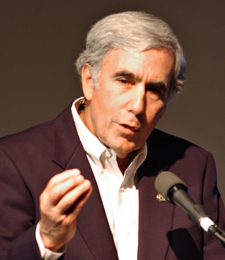
By David Krieger

As the trustee of the United Nations Trust Territory of the Pacific Islands, the United States had an obligation to protect the health and welfare of the Marshallese Islanders. Instead, the U.S. conducted 67 nuclear tests in the Marshall Islands between 1946 and 1958. These 67 nuclear tests had an explosive power equivalent to 1.6 Hiroshima bombs daily for 12 years. In short, the U.S. used these islands shamefully, and the Marshallese people continue to suffer today as a result.

Continue reading here

Criminalizing aggressive war

By Johan Galtung
Kuala Lumpur, February 24, 2014

Few, if anybody, today argue this so forcefully as Mahathir Mohammad, Malaysia’s fourth prime minister, for 22 years. He compares what we do when one person kills another to all we do not do when millions kill millions in aggressive wars. We have clear laws, we apprehend the suspect, weigh the evidence for or against in court, and, if found guilty, the murderer is punished. There may even be a system of compensation for the bereaved.

But in wars among states the murderers get medals and honors, and if victorious relish a post-glory exuberance disorder, nourishing a new aggression. And the bereaved are left with their grief and a post trauma stress disorder, nourishing the idea of revenge. Madness, irrationality, a social evil of top rank, to be abolished. As Mahathir says: “Peace for us simply means the absence of war. We must never be deflected from this simple objective”. An important reminder for all who broaden the concepts of violence and peace: remember the essence!

One approach is criminalization. For that clear laws are needed, meaning without loopholes. The UN Charter is an effort (Articles 1.1 and 2.4) prohibiting war and the threat of war among (member) states. Read More »

TFF PressInfo: Institute a course for all on what confront humanity in the 21st century

Open Letter to College and University Presidents Re: Global Security 101

By David Krieger

You are in a unique position of leadership to influence today’s youth to achieve a better tomorrow for America and the world. I am writing to enlist your help in educating young people to understand the survival challenges that face humanity in the 21st century.
Education is driven by values. Young people must learn to live with reverence for life, as did Albert Schweitzer, and to support equitable and nonviolent solutions to social problems, as did Gandhi and Martin Luther King, Jr. Young people must be imbued with compassion, commitment and courage. They must learn to use their imaginations to find creative and cooperative solutions to the great issues of our time. And they must find joy in the process and take time to celebrate the miracle of living on the only planet we know of in the universe that supports life. Continue here…

North Korea and the Iran nuclear deal

By Jonathan Power

The agreement just signed by Iran, the US, the EU and Russia is more than a milestone, it changes the world. Perhaps.

It is bitterly opposed by Israel. Prime Minister Benjamin Netanyahu seems determined to be the spoiler. Apparently Israel’s threat to bomb Iran’s nuclear facilities remains a serious option, even though such an attack would only have a limited effect and would provoke Iran to raise the ante against Israel.

But that is not the only worry. There are two other things. Read More »

A tale of two speeches: Rouhani and Netanyahu at UN General Assembly

By Farhang Jahanpour*

With the progress of the talks in Geneva between Iran and the six world powers (the so-called P5+1) on 15 and 16 October, there is growing optimism about a lasting solution to Iran’s nuclear program and to the resumption of relations between Iran and the United States after 34 years of estrangement. After an hour-long power-point presentation by the Iranian Foreign Minister Mohammad Javad Zarif, which he called “closing unnecessary crisis, and opening new horizons”, Michael Mann, the spokesman for EU foreign policy chief Catherine Ashton who is leading the talks for the P5+1 group, described the Iranian proposal as “very useful” and said: “For the first time, very detailed technical discussions took place.” (1)

The exact choice of words was also repeated by a senior US official taking part in the talks. After the formal talks between the two sides, there was another US-Iran bilateral meeting between the chief US representative in the talks, Ms. Wendy Sherman, and Iranian Deputy Foreign Minister Abbas Araqchi who led the Iranian delegation after the Iranian foreign minister’s original presentation. This was the second time after the meeting of Iranian and US foreign ministers in New York that senior officials from the two sides had had a bilateral meeting.Read More »

Time overdue to cut nuclear weapons

By Jonathan Power

At the time of the “Cuban Missile Crisis” in 1962 when the Soviet Union secretly shipped into Cuba nuclear weapons and the US, under President John Kennedy, threatened to bomb them, the world came as close to nuclear war as it ever has. Robert McNamara, the US Secretary of Defence, wondered if he would ever see another sunset. At universities students marched. The crisis ended when Kennedy agreed – with only a handful of his inner circle knowing this – to remove US nuclear missiles in Turkey which, with their short flight times, threatened Russia as much as the Cuban missiles threatened the US.

Many years later in June 1982, after only modest progress in mutually reducing nuclear weapons on each side, around three-quarters of a million demonstrators gathered in New York’s Central Park demanding a freeze on nuclear weapon production. The New York Times reported that “it was the largest demonstration in American history”.

But in 2013, despite more cutting, the Cold War over, the two old adversaries still have 6,400 nuclear weapons. Read More »

Criminalize war!

By Johan Galtung

Nobody has brought this simple message to the world like the Perdana Global Peace Foundation in Kuala Lumpur, Malaysia. As the leader, Mahathir Mohammad, Malaysia’s fourth prime minister says:

“Peace for us simply means the absence of war. We must never be deflected from this simple objective”.

So they organize compelling exhibitions and conferences to highlight the atrocities and horrors of war, starting with World War I, often in cooperation with Muhammadiyah Yogyakarta University in Indonesia. A very clear message from the Southeastern part of the world to the Northwestern part: Stop It! All your rules of war add up to its legitimation; wars get ever worse as measured by the percentage of non-combatant, civilian casualties; from about 10 percent in World War I to 90 percent in the Vietnam and other wars at the end of the 20th century. They dare refer to crimes as “unintended consequences”, “collateral damage”.

Take Norway, a “peace nation”, as example; not the USA an Israel with their gods, the idea of being chosen, and exceptionalism. See what Norway does against the spirit of UNSC-United Nations Security Council Resolution 1973 to protect civilians, promote cease-fire and mediate a political solution in Libya. And against the UN Charter Article 2 outlawing war.

According to testimony by pilots on the Norwegian Broadcasting Corporation “Brennpunkt” (In Focus), 25 percent of the bombing was planned with goals selected in advance. Read More »

A crisis averted: Now time for serious work to bring peace to the Middle East

By Farhang Jahanpour

The “framework document” (1) agreed by US Secretary of State John Kerry and Russian Foreign Minister Sergei Lavrov in Geneva on Saturday 14 September has averted an imminent crisis and has provided hope for the eventual resolution of the Syrian civil war by peaceful means. The document stipulates that Syria must provide a full inventory of its stockpile within a week, all production equipment being destroyed by November, and all weapons being removed from Syria or destroyed by mid-2014. This certainly is a positive development compared to the alternative that entailed a military attack on Syria with all its unpredictable consequences.

Both Russia and Iran played the leading role in persuading the Syrian President Bashar Asad to get rid of his chemical weapons. President Barack Obama and President Vladimir Putin welcomed the agreement. China, France, the UK, the UN and NATO have also expressed satisfaction at the agreement. This agreement has clearly a number of winners and losers.

The Winners of the Kerry-Lavrov Agreement

1- Clearly, the greatest winner has been the cause of peace and common sense. In 2007 when running for office, the then candidate Obama said that the President “does not have power under the Constitution to unilaterally authorize a military attack in a situation that does not involve stopping an actual or imminent threat to the nation.” (2) Yet now, President Obama was insisting that he had the authority to attack Syria even without Congressional approval. However, a military attack, even if it had received the approval of the Congress, which seemed unlikely, would have been illegal, would have compounded the problems, and would have portrayed the United States as an aggressive country.

The Kerry-Lavrov accord has changed the pattern of behaviorRead More »

Nukes are nuts !

By David Krieger
Krieger is one of the three TFF Associates nominated for the 2013 Nobel Peace Prize

When asked by a reporter why nuclear weapons are useless, Colin Powell, former US secretary of state and four-star general said: “Because they’re such horrible weapons. And so no sane leader would ever want to cross that line to using nuclear weapons. And, if you are not going to cross that line, then these things are basically useless.” In other words, one could say, nukes are nuts.

There are innumerable global security issues that need to be addressed, some of which are poverty, terrorism, the climate crisis, pollution of the oceans, loss of biodiversity and forest depletion. Not one of these issues can be addressed with nuclear weapons. In fact, nuclear weapons draw much-needed resources away from solving these global problems. Nukes are nuts.

Nuclear weapons are justified by their possessors for nuclear deterrence, but nuclear deterrence is only a hypothesis about human behavior. Read More »

TFF nominated for the Nobel Peace Prize

TFF PressInfo, September 12, 2013

Summary

The Transnational Foundation for Peace and Future Research (TFF), founded on September 12, 1985 – today 28 years ago – is nominated for the Nobel Peace Prize 2013 and so are three TFF Associates:

Richard Falk, professor in international law at Santa Barbara and Princeton, the UN S-G’s envoy for the Occupied Territories;
David Krieger, founder (1982) and president of The Nuclear Age Foundation devoted to nuclear abolition;
Jan Oberg, co-founder and director of TFF.

Background

World renown expert on the Nobel Peace Prize, Norwegian lawyer Fredrik Heffermehl*, says:

– Nobel dedicated his prize to “the “champions of peace” (not to “peace” in general). Not that many of those we know from open sources are nominated this year are qualified, but a select few are eligible, like the American Professor Richard Falk, Norwegian Ambassador Gunnar Garbo, American David Krieger of the Nuclear Age Peace Foundation, the former Director General of UNESCO Federico Mayor, Spain, Swedish peace scientist and organizer Jan Oberg, as well as American Professor of peace education Betty Reardon.

– These clearly are the kind of “champions of peace” described in Nobel’s will, working for global disarmament based on global law.Read More »