Reflections on the Cuban Missile Crisis at fifty

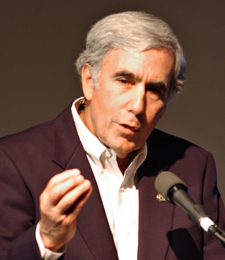
By David Krieger

Fifty years ago this month, the world teetered on the precipice of a nuclear war between the US and Soviet Union during the 13-day Cuban Missile Crisis. We were fortunate to have survived that crisis, thanks largely to the restraint shown by President Kennedy and Premier Khrushchev.

Now, fifty years later, there is no immediate crisis such as that in 1962 over Soviet nuclear-armed missiles being placed in Cuba. There are, however, still some 19,000 nuclear weapons in the arsenals of nine nuclear-armed nations: the US, Russia, UK, France, China, Israel, India, Pakistan and North Korea. Approximately 95 percent of these weapons are in the arsenals of the US and Russia. Some 2,000 of them are kept in a state of high alert, ready to be immediately launched upon an order to do so at any moment of any day or night. Read More »


Get the law and politics right in Iran now!

By Richard Falk

In his important article in the New York Times, March 17, 2012, James Risen summarized the consensus of the intelligence community as concluding that Iran abandoned its program to develop nuclear weapons in 2003, and that no persuasive evidence exists that it has departed from this decision.

It might have been expected that such news based on the best evidence that billions spent to get the most reliable possible assessments of such sensitive security issues would produce a huge sigh of relief in Washington, but on the contrary it has been totally ignored, including by the highest officers in the government. Read More »

Ban the Bomb!

By Jonathan Power

If in 2012 and 2013 the big nuclear weapons powers and UN Security Council permanent members – the U.S., Russia, China, Britain and France – don’t make significant reductions with their nuclear weapons then an important opportunity will be lost.

Presidents Barack Obama and Dmitri Medvedev appear to be of a mind on this.

One has to go back to the presidencies of John F. Kennedy and Lyndon Johnson to get the full picture on the dismal progress on nuclear disarmament. Their Defence Secretary, Robert McNamara, told both presidents nuclear weapons were unusable. Read More »

Nuclear-free Middle East: Desirable, necessary and impossible

By Richard Falk

Finally, there is some argumentation in the West supportive of a nuclear free zone for the Middle East. Such thinking is still treated as politically marginal, and hardly audible above the beat of the war drums. It also tends to be defensively and pragmatically phrased as in the NY Times article by Shibley Telhami and Steven Kull (January 15, 2012) with full disclosure title, “Preventing a Nuclear Iran, Peacefully.”Read More »

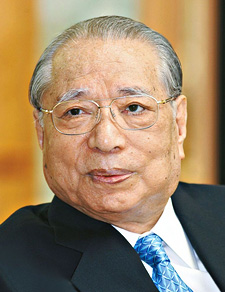
2012 Peace Proposal: Human Security and Sustainability: Sharing reverence for the dignity of life

By Daisaku Ikeda
President of Soka Gakkai International (SGI)

Every year Dr. Ikeda publishes his thoughts on what must be done to secure a better future for us all. He is a true contributor to the TFF pro-peace orientation that emphasizes how important it is to “imagine a better world”.
We are proud to have had this wise, visionary leader of what is probably the world’s largest peace movement, as TFF Associate over many years.
Much more about him here
.

The economist Amartya Sen, a renowned advocate of the methods and approaches of human security, has emphasized “the dangers of sudden deprivation.” Such unanticipated threats can take the form of natural disaster and conflict, and can also arise from economic crises and rapid environmental degradation brought about by climate change. It is crucial that we respond vigorously to such threats, which can grievously undermine people’s lives, livelihoods and dignity.Read More »

A nuclear nightmare in the making

NATO, Missile Defense and Russian Insecurity. And what if you look at it from their side now?

By David Krieger and Steven Starr

In the aftermath of the Cold War, the North Atlantic Treaty Organization (NATO), has become increasingly powerful. It was created in 1949 as an alliance of Western military forces to protect against the perceived military threat posed by the Soviet Union and the Eastern bloc countries.

With the breakup of the Soviet Union and the Warsaw Pact, NATO has expanded by adding former Soviet bloc countries, moving to the borders of Russia. It has also engaged in military actions, notably in the former Yugoslavia, Afghanistan and Libya.

For the past several years, the US and NATO have been pursuing the deployment of an integrated missile defense system in Western, Eastern and Southeastern Europe, as well as in surrounding waters. The Russians have protested vigorously that the planned system will undermine its nuclear retaliatory potential and thereby its security. Read More »

India set to take lead on abolishing nuclear weapons

By Shastri Ramachandaran*
IDN-InDepth NewsAnalysis

NEW DELHI (IDN) – The Government of India appears to be in right earnest about taking the lead in pursuing universal disarmament. The renewed vigour – for reviving the climate and conditions wherein the basic ideas and objectives of nuclear disarmament can be advanced – is evident in a series of engagements being lined up to carry forward former prime minister Rajiv Gandhi’s Action Plan (RGAP) for a nuclear-weapons-free world order.Read More »