TFF PressInfo # 302: Interview with “Iran Review” – and a word about intellectual freedom

By Jan Oberg

Jan Oberg

Lund, Sweden, January 21, 2015

I visited Iran for a third time in December last year, participating in the international UN-endorsed conference, WAVE – World Against Violence and Extremism.

I gave interviews to some ten agencies and media but the longest was this exclusive one by a passionate and very professional 24-year old Iranian journalist, Kourosh Ziabari, for the esteemed Iran Review.

The distorted image of Iran

TFF has been engaged with an in Iran the last three years. We believe that the general image in Western media – covering almost only Iran’s nuclear program, human rights violations and Iran as a threat to the world – is neither objective nor fair.

It conveniently omits the harmful effects on the Iranian society of Western policies since the days of the US-UK coup d’etat against the democratically elected President of Iran, Dr. Mossadegh, in 1953.

Whether intended or not, this type of media coverage risks contributing to deeper conflict and legitimise future violence – rather than mutual understanding and peace.

It is therefore imperative to go there and see for yourself. More about that in the next TFF PressInfo.

What TFF tries to do in Iran

TFF has these aims with its work in Iran:

a) Fact-finding: to simply learn first-hand about its history, culture, people and how they think on all levels; by traveling around and interviewing people, as many and different as possible.

b) To influence the image in the West of IranRead More »

Banning nuclear bombs

By Jonathan Power


January 7th 2015

“Ban the Bomb!” When we were students many of us marched behind that banner, stamped with the now iconic image of the white outlines of a rocket on a black background. Even the ex-prime minister of Britain, Tony Blair, who later joined President George W. Bush in going to war against Saddam Hussein, supported the cause when he was young.

Many of those students, now in their seventies, have given up the struggle. After all it seems unending with not too much to show for it, except it may have raised consciousness among Western leaders to attempt to limit proliferation.

President Barack Obama, winner of the Nobel Peace Prize, which cited his anti-nuclear efforts while a senator, has made cuts in nuclear weapons at a slower pace than preceding presidents, even than George W. Bush. Ironically it is Republican presidents- Reagan (who made a big push to abolish all of them) and father and son Bush who have cut the most. Conservatives have a better chance of carrying the day with popular, visceral, untrusting, opinion, the Congress and the military-industrial-academic complex than the liberals.

Critics of Obama point out that he is spending more than previous administrations to modernize the remaining arms and for authorizing a new generation of weapon carriers. It is the largest expansion of funding on nuclear weapons since the fall of the Soviet Union.

This sets a bad example to the other nuclear bomb nations, Russia, China, India, Pakistan, China, Israel, the UK and France. Ironically, Obama has said, “We have more nuclear weapons than we need”.

The White House defends its record. Read More »

Remembering 2014 (Badly)

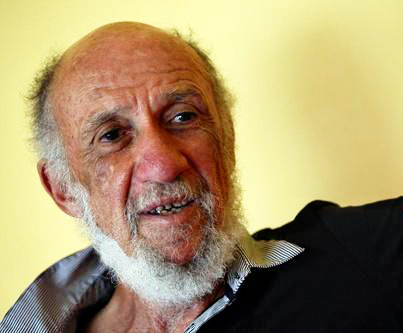
By Richard Falk

Richard Falk

Considering the year that is about to end is a time to pause long enough to take stock of what went wrong. In the United States not much went right aside from Barack Obama’s surprising initiative to normalize relations with Cuba after more than 60 years of hostile and punitive interaction. Although the sleazy logic of domestic politics kept this remnant of the worst features of Cold War diplomacy in being for a couple of extra decades, it is still worth celebrating Obama’s move, which when compared to the rest of his record, seems bold and courageous.

As well, Obama exhibited a strong commitment to doing more than previously on climate change, using his executive authority to circumvent Congressional unwillingness to act responsibly. Obama’s immigration reform proposals also seem on balance to be positive, although whether they will be implemented remains an open question.

Drifting Toward Cold War II: Remembering World War I

There are several signs of a worsening global setting that seemed to gain an ominous momentum during 2014. Perhaps, worst of all, is a steady drumbeat of anti-Russian rhetoric backed up by Western sanctions, that seems almost designed to produce Cold War II. Read More »

TFF PressInfo 297: Misleading the world on Iran’s “bomb”

By Jonathan Power

December 23, 2014

The negotiations over Iran’s supposed nuclear bomb-building abilities seem to be stuck in a rut. Given the detailed undertakings by Iran incorporated in the interim agreement made last year it should have only been a hop, skip and a jump to forge a final agreement.

In reality it hasn’t been so easy. Over many years the US with European connivance most – not always – of the time manufactured and manipulated the whole crisis. To overcome the suspicions aroused by that, now past, tactic is not easy. That is not just my opinion after following this subject for 30 years. It is that of the former vice-chair of the US National Intelligence Council, Graham Fuller.

Now a new book, “Manufactured Crisis” by the astute investigative journalist, Gareth Porter, has taken the lid off the attempt by the US, often in collusion with Israel, to paint Iran into a corner, whilst shunning any effort by Iran to resolve the dispute.

But before we get into that I want to make one point about the Islamic sense of morality. Ayatollahs Khomeini and Khamenei, the successive top clerics and paramount leaders of the country, have made it clear on a number of occasions that for their country to build a nuclear bomb would go against Islamic belief and jurisprudence.

I don’t find this difficult to believe – during the bitter and savage war with Saddam Hussein’s Iraq in 1980 when Iran lost 2 million people Iran refused to deploy chemical weapons even though Iraq did. They too were regarded as un-Islamic. Iran has been consistent in its morality. Iran’s religious practice today is about as far away from the Islamic State or Pakistan’s Taliban as you can get.Read More »

Is Russia on the warpath?

By Jonathan Power

Just before former Soviet president Mikhail Gorbachev on Saturday made his stunning criticism of the West that, since the fall of the Berlin Wall, it had engaged in “triumphalism”, I was in Moscow. Everyone I talked to said the West had set out to humiliate Russia (not to help rebuild it as it did in Germany after the Second World War).

Gorbachev has long been the West’s pet political darling, (although the New York Times didn’t report this speech) – for undoing the straitjacket that enveloped Soviet society, for allowing the reunification of Germany and for being the major contributor to ending the Cold War.

So the question is will the West listen to him now? Will it listen to his point that the expansion of NATO has made Russia feel threatened?

Will it understand that there is a good reason why he and an overwhelming majority of Russians support President Vladimir Putin’s foreign policy? Will it share his fear that “we are on the brink of a new Cold War”?

One of the people I talked to Read More »

TFF PressInfo 284: U.S. nuclear policy is taking the wrong road

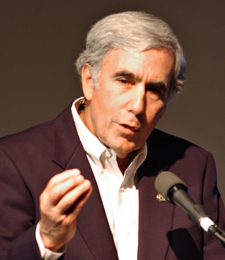
By David Krieger

Intro: The absurdities of the Nuclear Age

By Jan Oberg

We deny – every day – that we can all be gone today or tomorrow. Project humankind finished. Not by God but by ourselves. We also deny that we could live much more safely without these doomsday weapons.

The Nuclear Age Peace Foundation and its visionary leader, Dr. David Krieger, have devoted their energies since 1982 to tell the world that we must stop denying, stop taking huge risks and stop wasting incomprehensibly large sums so much needed for human welfare instead.

A nuclear-free world is eminently possible. And better. The nuclear states are committed to it through the Non-Proliferation Treaty and countless statements and UN resolutions. But they deny their responsibility.

There’s been enough documented technical and human failures with nuclear weapons. We ought to be scared.

Most media shed light on potential nuclear weapons, those Iran for instance don’t have. That’s the proliferation problem.

But non-existing nukes can’t kill everything we love. Existing nukes can. That’s the problem of possession.

And then there is state terrorism. Remember, until 9/11 nuclear arsenals were part of the ‘balance of terror’?

Terrorism is the deliberate wounding or killing of innocent people to achieve a political purpose and to instill fear.

No nuclear weapon can be used without deliberately killing millions of innocent people. Therefore, every nuclear state and nuclear-based alliance such as NATO subscribes to a philosophy similar to IS or Al-Qaeda. On a much larger scale.

It simply isn’t true that nuclear weapons are only for deterrence and would never be used. If adversaries knew that the other side would never use them, they would not deter. Deterrence means nuclear use under certain circumstances.

Nuclear weapons – weapons of mass terror – should be abolished.

They have no function, no ethical foundation and – like slavery or cannibalism – don’t fit human civilisation.

Isn’t it high time Western politics and our allegedly free media shed light on this issue? Give it priority?

Don’t they have a duty to inform us about the greatest danger of all?

In the pathbreaking article below one of the world’s leading experts on nuclear weapons, Dr. David Krieger who is also a TFF Associate for decades, tells you why we must wake up and why the U.S. should scrap its plan to modernise its nuclear arsenals at “up to a trillion dollars” over the next 30 years.

And here Gunnar Westberg, MD and TFF Board member tells you about Ukraine – once hosting the 3rd largest nuclear arsenals on earth. We should be happy that today’s Ukraine is nuclear-free and recognise that these weapons are useless.

By David Krieger

On September 21, 2014, the International Day of Peace, The New York Times published an article by William Broad and David Sanger, “U.S. Ramping Up Major Renewal in Nuclear Arms.” The authors reported that a recent federal study put the price tag for modernizing the U.S. nuclear arsenal at “up to a trillion dollars” over the next three decades.

It appears that Washington’s military and nuclear hawks have beaten down a president who, early in his first term of office, announced with conviction, “America’s commitment to seek the peace and security of a world without nuclear weapons.” Continue here

Ukraine and nuclear weapons – Scrap all nuclear weapons

By Gunnar Westberg

”Ukraine is going to make nuclear weapons. You’ll see. There is strong support in the parliament. All the intercontinental missiles in the Soviet Union were made in Ukraine, and there are at least 25 of them left. And we have uranium. And we have the know-how. Just wait, you’ll see!”

So said an officer in the Ukrainian army whom I met about a month ago. This prediction, that Ukraine is going to make nukes, can also be found in some Western news media.

Fortunately, this is not going to happen.

There is no uranium of weapons grade in the country. To produce a sufficient amount of high grade uranium thousands of centrifuges for enrichment are needed. Only Pakistan could sell them, as was done to Iran, but both the USA and Russia will stop this trade. Ukraine could Read More »

TFF PressInfo: Nuclear abolition now !

By TFF’s Board

Lund, Sweden August 6, 2014 – Hiroshima Day

The Nuclear Age – risk of omnicide and our new responsibilities

Nuclear weapons came into the world and were used for the first time in 1945. Their specific feature as weapons of mass destruction and “omnicide” – able to kill us all – has changed what it means to be alive on this earth and to be responsible for its existence.

Until nuclear weapons, human beings could not decide whether or not to end project humankind and project planet earth.

Today we know that the arsenals and missile projection methods are such that a few decision-makers, or a technical malfunction, could blow up enough of the world to make the living – if any – envy the dead.

We live in the Nuclear Age. It means living with the permanent daily threat of extinction.Read More »

Aage Bertelsen (1901 – 1980) – Danish educator for peace

By Jan Oberg & Johan Galtung*

Lund and Kuala Lumpur, July 2014

Introduction

He was a tall man and a great man, a visionary, pacifist, civil resister, educator and philosopher. He took life more seriously than most and he could be playful and fun like a child. His life’s guiding principle was ”Engage in your time!” and while he wrote and talked a lot he also did it. His name was Aage Bertelsen, he was born in Denmark in 1901 and died on August 15, 1980.

Bertelsen’s imprint on history is two-fold. First, with his wife Gerda he was a prime mover of one of the groups, the Lyngby Group, which organised the rescue of altogether 7.220 Danish Jews into safety in Sweden in October 1943 during the German occupation of Denmark – more here. The Lyngby Group – Lyngby is north of Copenhagen – got about 1.000 of these in safety by organising their nightly transport onboard small fisher boats over the Sound between Denmark and Sweden.

In this he deserves a place in international contemporary history for its humanity, civil courage and as an example of non-violent struggle against occupation.

Secondly, Bertelsen was an educator of and for peace. His life work educational efforts included his family and friends, his pupils over 22 years at the Aarhus Cathedral School in Aarhus, Denmark, the general public as well as national and international leaders.

He lived in pre-Internet times and very little is publicly available today about this renaissance man. From two rather different, but compatible, perspectives we’ve taken it upon us to remind the world about him – friends and colleagues of his as we happen to be.

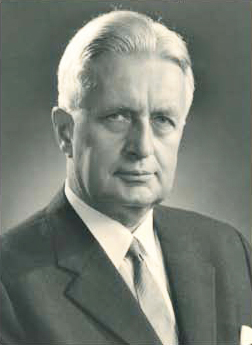
Headmaster Aage Bertelsen in 1961 Photo: Elfeldt, Copenhagen


Why now, over 30 years after his death? Read More »

The mouse that roared

By Gunnar Westberg

The Mouse that roared was a much acclaimed movie comedy from 1955 in which a small European Duchy tried in vain to get the attention of the USA for a trade conflict. To get the attention of the mighty superpower the Duchy finally declared war on the USA. And to its surprise, won!

The story to be told below is less funny.

The Minister of Foreign Affairs for the Marshall Islands, Mr. Tony de Brum, spoke at the recent conference on the treaty against nuclear weapons, NPT, in New York. He remembered his experience of nuclear weapon tests in his childhood:

“I have witnessed nuclear weapon explosions and my memories from the Lipiep atoll in Northern Marshall Islands are strong. I lived there as a boy during the 12 years of nuclear testing. I remember the blinding white light from the Bravo test on the Bikini atoll in 1954, a thousand times stronger than that over Hiroshima.

The Marshall Islands was used for 67 nuclear tests between 1946 and 1958, with an explosive yield corresponding to 1.6 Hiroshima bombs every day for twelve years. The consequences are still with us as a burden which no nation, no population, should be forced to bear.” Read More »