When a terrorist not a terrorist

By Richard Falk

Richard Falk

February 20, 2015

What the Chapel Hill police in North Carolina initially pitched to the world as ‘a parking dispute’ was the deliberate killing of three young and devout Muslim American students by an ideologically driven ‘new atheist’ killer named Craig Stephen Hicks.

What the The Economist unhesitatingly calls ‘terrorism in Copenhagen’ involved the attempted shooting of a Danish cartoonist who repeatedly mocks the Prophet and Islamic beliefs as well as the lethal shooting of a Jewish security guard outside a synagogue.

A friend understandably poses a serious question on Twitter that might have been dismissed as rhetorical overkill just a few years ago: “Are only Muslims capable of terrorism?”

I find it deeply disturbing that while the Chapel Hill tragedy is given marginal media attention except among groups previously worried about Islamophobia and racism, The Economist considers that important principles of Western liberal democracy are at stake apparently only in the European context.

In the words of Zanny Minton Beddoes, the new editor of the magazine: “Jacob Mchangama, a lawyer and founder of a human-rights think-tank called Justitia, told me it would be a disaster if his country were to grow faint-hearted in its defense of free speech. ‘There can be no truce in the struggle between secular democracy and extremism,’ he says. Above all, politicians should avoid the trap of saying or implying that violence was really the fault of provocateurs, or that religious insult was to be equated with physical injury. Giving in to that sort of relativism would be letting down those followers of Islam who were brave enough to stand up for free speech, and indulging in a sort of “bigotry of low expectations”, said Mr Mchangama, whose paternal forebears were Muslims from the Comoros Islands. A good point.”

I am quite sure that this is not a good point, at least as phrased by Mr. Mchangama.

Of course, governments should take action to protect all who are violently threatened, but to refuse to regard Islamophobic messaging as a species of hate speech while so regarding anti-Semitic slurs or Holocaust denial is to combine two things that are both unacceptable: ignoring the root causes of political extremism and pathological violence; and prohibiting and punishing anti-Semitic utterances as hate speech while treating anti-Islamic or Islamophobic speech as requiring protection from the perspective of ‘freedom of expression.’ Read More »
North Korea’s nuclear bomb once again

By Jonathan Power

17th February 2015

If there is such a thing as a “frozen conflict” the best place to look is not in Eastern Europe but in Korea where after years of merciless war that ended in 1953 there was an armistice, a line was drawn across the Korean peninsular and its two halves went their separate ways- one, the south, to fast capitalist development and the other, the north, to stultifying dictatorship that seemed to do only one thing competently – build nuclear bombs. Today there is no war on the Korean peninsular but there is no peace.

Presidents Bill Clinton, George W. Bush and Barack Obama have all tried to negotiate an end to North Korea’s nuclear bomb program and to bring to a close the military stand-off between north and south. All their attempts have come to naught, not just because of North Korean stubbornness but also because of Republican majorities in Congress which have constantly undermined what seemed to be breakthroughs in negotiations.

Now Obama has summoned up the strength to return to the ring. The two countries’ nuclear envoys have been discussing the idea of “talks about talks”. A majority of long time observers are doubtful that after two decades of on/off negotiations that real progress can be made.

But they forget the major progress made by Clinton Read More »

TFF PressInfo # 302: Interview with “Iran Review” – and a word about intellectual freedom

By Jan Oberg

Jan Oberg

Lund, Sweden, January 21, 2015

I visited Iran for a third time in December last year, participating in the international UN-endorsed conference, WAVE – World Against Violence and Extremism.

I gave interviews to some ten agencies and media but the longest was this exclusive one by a passionate and very professional 24-year old Iranian journalist, Kourosh Ziabari, for the esteemed Iran Review.

The distorted image of Iran

TFF has been engaged with an in Iran the last three years. We believe that the general image in Western media – covering almost only Iran’s nuclear program, human rights violations and Iran as a threat to the world – is neither objective nor fair.

It conveniently omits the harmful effects on the Iranian society of Western policies since the days of the US-UK coup d’etat against the democratically elected President of Iran, Dr. Mossadegh, in 1953.

Whether intended or not, this type of media coverage risks contributing to deeper conflict and legitimise future violence – rather than mutual understanding and peace.

It is therefore imperative to go there and see for yourself. More about that in the next TFF PressInfo.

What TFF tries to do in Iran

TFF has these aims with its work in Iran:

a) Fact-finding: to simply learn first-hand about its history, culture, people and how they think on all levels; by traveling around and interviewing people, as many and different as possible.

b) To influence the image in the West of IranRead More »

Memoir sketch: Championing lost causes

By Richard Falk

Richard Falk

By chance I was reading César Vallejo’s poem, “Black Stone on a White Stone,” in a translation by Geoffrey Brock, and was struck by the opening stanza:

I’ll die in Paris in the pouring rain

a day I have a memory of already.

I’ll die in Paris—I won’t try to run—

a Thursday perhaps, in Autumn, like today.

Without being literal, I was reminded that I could appraise my death while alive, and not leave a final reckoning to some solemn memorial event in which speakers are challenged to find humorous anecdotes to lighten the occasion, otherwise uttering honorific platitudes quite unrelated to the experiential core of my being.

I had been thinking quite a bit recently about ‘lost causes.’

Recently I gave a lecture at Columbia University on this theme, inspired by Edward Said’s seminal late essay “On Lost Causes” (1997) in which he ties together the ‘nobility of failure’ as portrayed in literature with his own unswerving dedication to the Palestinian struggle for a just peace. On that occasion, Read More »

Banning nuclear bombs

By Jonathan Power


January 7th 2015

“Ban the Bomb!” When we were students many of us marched behind that banner, stamped with the now iconic image of the white outlines of a rocket on a black background. Even the ex-prime minister of Britain, Tony Blair, who later joined President George W. Bush in going to war against Saddam Hussein, supported the cause when he was young.

Many of those students, now in their seventies, have given up the struggle. After all it seems unending with not too much to show for it, except it may have raised consciousness among Western leaders to attempt to limit proliferation.

President Barack Obama, winner of the Nobel Peace Prize, which cited his anti-nuclear efforts while a senator, has made cuts in nuclear weapons at a slower pace than preceding presidents, even than George W. Bush. Ironically it is Republican presidents- Reagan (who made a big push to abolish all of them) and father and son Bush who have cut the most. Conservatives have a better chance of carrying the day with popular, visceral, untrusting, opinion, the Congress and the military-industrial-academic complex than the liberals.

Critics of Obama point out that he is spending more than previous administrations to modernize the remaining arms and for authorizing a new generation of weapon carriers. It is the largest expansion of funding on nuclear weapons since the fall of the Soviet Union.

This sets a bad example to the other nuclear bomb nations, Russia, China, India, Pakistan, China, Israel, the UK and France. Ironically, Obama has said, “We have more nuclear weapons than we need”.

The White House defends its record. Read More »

Remembering 2014 (Badly)

By Richard Falk

Richard Falk

Considering the year that is about to end is a time to pause long enough to take stock of what went wrong. In the United States not much went right aside from Barack Obama’s surprising initiative to normalize relations with Cuba after more than 60 years of hostile and punitive interaction. Although the sleazy logic of domestic politics kept this remnant of the worst features of Cold War diplomacy in being for a couple of extra decades, it is still worth celebrating Obama’s move, which when compared to the rest of his record, seems bold and courageous.

As well, Obama exhibited a strong commitment to doing more than previously on climate change, using his executive authority to circumvent Congressional unwillingness to act responsibly. Obama’s immigration reform proposals also seem on balance to be positive, although whether they will be implemented remains an open question.

Drifting Toward Cold War II: Remembering World War I

There are several signs of a worsening global setting that seemed to gain an ominous momentum during 2014. Perhaps, worst of all, is a steady drumbeat of anti-Russian rhetoric backed up by Western sanctions, that seems almost designed to produce Cold War II. Read More »

TFF PressInfo 297: Misleading the world on Iran’s “bomb”

By Jonathan Power

December 23, 2014

The negotiations over Iran’s supposed nuclear bomb-building abilities seem to be stuck in a rut. Given the detailed undertakings by Iran incorporated in the interim agreement made last year it should have only been a hop, skip and a jump to forge a final agreement.

In reality it hasn’t been so easy. Over many years the US with European connivance most – not always – of the time manufactured and manipulated the whole crisis. To overcome the suspicions aroused by that, now past, tactic is not easy. That is not just my opinion after following this subject for 30 years. It is that of the former vice-chair of the US National Intelligence Council, Graham Fuller.

Now a new book, “Manufactured Crisis” by the astute investigative journalist, Gareth Porter, has taken the lid off the attempt by the US, often in collusion with Israel, to paint Iran into a corner, whilst shunning any effort by Iran to resolve the dispute.

But before we get into that I want to make one point about the Islamic sense of morality. Ayatollahs Khomeini and Khamenei, the successive top clerics and paramount leaders of the country, have made it clear on a number of occasions that for their country to build a nuclear bomb would go against Islamic belief and jurisprudence.

I don’t find this difficult to believe – during the bitter and savage war with Saddam Hussein’s Iraq in 1980 when Iran lost 2 million people Iran refused to deploy chemical weapons even though Iraq did. They too were regarded as un-Islamic. Iran has been consistent in its morality. Iran’s religious practice today is about as far away from the Islamic State or Pakistan’s Taliban as you can get.Read More »

TFF PressInfo # 294 – Change the Iran policy now

By Jan Oberg
TFF director

Jan Oberg

Tehran Dec 9, 2014

The First Conference on ”World Against Violence and Extremism” is inaugurated here in Tehran this morning by President Rouhani. His idea was endorsed unanimously by the UN General Assembly last year. This PressInfo was written before I came to Iran.

The last round of negotiations between Iran and the Five Permanent Members of the UN Security Council + Germany about the future possibility that Iran would acquire nuclear weapons should have resulted in no agreement but a 7 months postponement. It is a waste of everybody’s time in one of the most urgent issues on the international agenda.

An a-symmetric conflict

Here are 5 countries bristling with thousands of nuclear weapons themselves and planning to spend trillions of dollars on more and more sophisticated nukes – unanimous in telling a country that does not have nukes to not acquire them: ”What we can’t live without thou shall never have”.

Everybody knows but conveniently omit mention of the fact that Israel is a nuclear weapons power over 50 years with at least 200 nukes in contravention of UN resolutions that the whole region shall be free from such weapons. And it has not signed the Non-Proliferation Treaty.

In rough terms, Iran’s military expenditures is 2-3% of the United States’; with a population ten times that of Israel it spends about the same, and 4% of its GDP where Israel spends 6.

Israel is number 1 Read More »

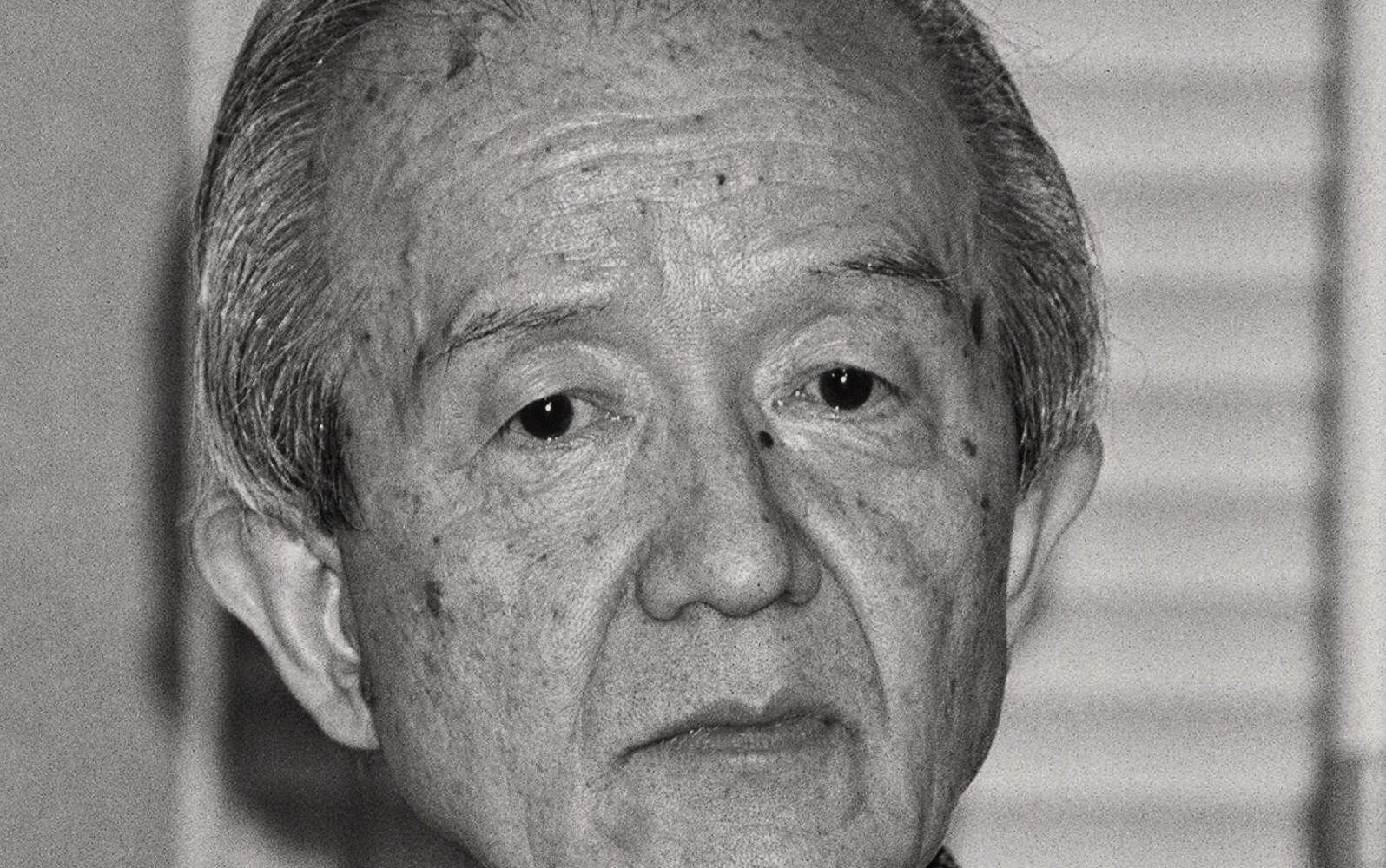
Remembering Yoshikazu Sakamoto 1927-2014 – also former TFF Associate

By Richard Falk

Richard Falk

TFF wants to express its gratitude to Yoshikazu Sakamoto who served for many years as TFF Associate.

Prefatory Note

This post is dedicated to my remembrance of Yoshi Sakamoto who died recently. Yoshi was a deeply valued friend and an important public intellectual in Japan who exerted a strong influence on the post-war generation. His political orientation, rejecting extremes of right and left, while questioning the militarist premises of the Cold War and Japan’s willingness to become America’s Asian poodle, gave him a distinctive political profile.

I am sharing these words of appreciation, and hope that anyone from Japan who comes across this text will contact me, especially if they have a way of putting me in touch with either Yoshi’s family or Japanese media. I would like to believe that ‘an American appreciation’ of Professor Sakamoto would be of interest to those who knew and admired him.

I first met Yoshi in the mid-1960s when he came to visit me at Princeton, expressing his concern about the Vietnam War and knowing of my anti-war activism. We bonded quickly and marched in a peaceful demonstration in New York City a few days later, and somehow managed to keep in fairly consistent contact until Yoshi’s death on October 2nd.

Yoshikazu Sakamoto 1927 - 2014
Read More »

Obama’s report card

By Jonathan Power

Will the real Barack Obama be allowed to stand up? The New York Times’ columnist and Nobel Prize winner for economics, Paul Krugman, writes in “Rolling Stone, “Obama has emerged as one of the most consequential presidents in American history”.

You wouldn’t know this if you observed the swing towards the Republicans in the recent Congressional elections – the same Republican Party that has implemented a scorched-earth policy against many of Obama’s initiatives.

The truth is he’s made more of a go of it than much of the media has reported.

He came into power inheriting the worst financial crisis since the Great Depression of the 1930s. He has emerged as the only full-bloodied KeynesianRead More »