Breaking free: Choosing a better human future

By Richard Falk

I have long believed that prospects for a hopeful human future depend on radical and visionary feelings, thought, and action. Such an outlook reflects my view that the major challenges of our time cannot be met by thinking within the box, or implementing the realist agenda of doing what it is feasible while disregarding what is necessary and desirable. For instance, with respect to climate change such a conventional approach avoids asking what needs to be done to give future generations positive life prospects, but seeks, at best, to do what seems politically feasible at the moment, that is, far too little.

This means not putting a cap on energy or water use, not limiting carbon emissions or prohibiting fracking, continuing to encourage economic growth, and refusing to question consumerism. In effect, this conventional approach does not meet challenges, but at most seeks to defer and mitigate harmful effects to the extent possible. In effect, it opts for a worse human future, and remains in bondage to the deformities wrought by clearly deficient neoliberal prescriptions for human fulfillment.

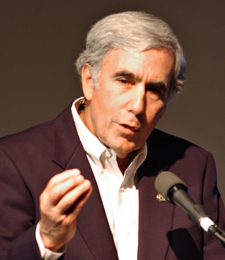
Against this background, it was a personal breakthrough to meet Jeff Wilson who is, Read More »

Pakistan – What Now?

By Johan Galtung


Islamabad, Ministry of Foreign Affairs, 28 Feb 2014

Your Excellencies,

The basic point is that Pakistan will not get that commodity called “peace” in Kashmir, Afghanistan and Central Asia by pursuing the ends and means of Washington and some local elites only. For peace to blossom the goals of other parties also have to be considered; and they are many. The logic of the political games pursued today presupposes some kind of victory or domination of “our side”: neither feasible nor desirable for peace. Hence, the need for some visions for peace politics is Kashmir, Afghanistan and Central Asia for tomorrow or the day after, with the hope that they can be useful when you have come to the end of the road with current policies. Nothing of this is easy; and without visions even impossible.

The fairly detailed, non-dogmatic vision appended (below) was my acceptance speech of the 2011 Abdul Ghaffar Khan International Peace-Builder Award by the Pakistan-American Muslim Association.

However, why do present policies so often seem to be non-starters?

The British empire drew three lines with disastrous effects for Pakistan: the Durand line in 1893, a 1,600-mile wound defining the border with Afghanistan, dividing the Pashtun nation – the biggest nation in the world without a state – into two parts; the McMahon line of 1914 defining the border with China in ways unacceptable to the Chinese; and the Mountbatten line of 1947 leading to the catastrophic violence of the partition. These lines have to be negated, liberating Pakistan from that past. Read More »

Criminalizing aggressive war

By Johan Galtung
Kuala Lumpur, February 24, 2014

Few, if anybody, today argue this so forcefully as Mahathir Mohammad, Malaysia’s fourth prime minister, for 22 years. He compares what we do when one person kills another to all we do not do when millions kill millions in aggressive wars. We have clear laws, we apprehend the suspect, weigh the evidence for or against in court, and, if found guilty, the murderer is punished. There may even be a system of compensation for the bereaved.

But in wars among states the murderers get medals and honors, and if victorious relish a post-glory exuberance disorder, nourishing a new aggression. And the bereaved are left with their grief and a post trauma stress disorder, nourishing the idea of revenge. Madness, irrationality, a social evil of top rank, to be abolished. As Mahathir says: “Peace for us simply means the absence of war. We must never be deflected from this simple objective”. An important reminder for all who broaden the concepts of violence and peace: remember the essence!

One approach is criminalization. For that clear laws are needed, meaning without loopholes. The UN Charter is an effort (Articles 1.1 and 2.4) prohibiting war and the threat of war among (member) states. Read More »

TFF PressInfo: Institute a course for all on what confront humanity in the 21st century

Open Letter to College and University Presidents Re: Global Security 101

By David Krieger

You are in a unique position of leadership to influence today’s youth to achieve a better tomorrow for America and the world. I am writing to enlist your help in educating young people to understand the survival challenges that face humanity in the 21st century.
Education is driven by values. Young people must learn to live with reverence for life, as did Albert Schweitzer, and to support equitable and nonviolent solutions to social problems, as did Gandhi and Martin Luther King, Jr. Young people must be imbued with compassion, commitment and courage. They must learn to use their imaginations to find creative and cooperative solutions to the great issues of our time. And they must find joy in the process and take time to celebrate the miracle of living on the only planet we know of in the universe that supports life. Continue here…

Learning the lesson of Libya

By Jonathan Power

On Saturday Libya beat Ghana to win the African Nations Football Championship. A return to normalcy? To win a team must have a first class pitch and a non-stressed out team. Does this indicate that Libya, two and a half years after the fall of dictator, Muammar Gaddafi, is getting back on its feet?

Alas, the football win is out of the ordinary in Libyan life, made by a team that has found a way to the top by hard practice and severe self-discipline. The rest of Libya is not like that. Its government is wobbly, self-appointed militias still rule in many parts and the rule of law is ignored as often as it’s obeyed. An increasing number of its people yearn for the peace and order of the dictatorial Gaddafi regime where the economy grew, life was improving and even human rights were being more respected.

Inspired by the Arab Spring in neighbouring Tunisia and Egypt, Libyans, so the accepted Western narrative went, rose up in non-violent protests. Gaddafi responded by ordering the protesters to be shot and ordered his troops to fire indiscriminately into residential areas. The protesters turned violent and the civil war began.

In truth, many of the protesters from day one used arms and the government at first responded with only rubber bullets and water cannons. Western television reported that Gaddafi’s forces had used live ammunition, showing a video of this. The BBC the next day, almost alone among news organisations, admitted it had made a reporting mistake. The video had been “uploaded more than a year ago”.

Nonetheless the situation quickly deteriorated and those that chose non-violence were pushed aside. The rebel militias faced the troops head on. The rebels called for the outside world to intervene.Read More »

Israel-Palestine: 1-2-6-20

By Johan Galtung

Washington and Tel Aviv make a mistake: the conflict between Israel and Palestine is only a small part of a complex between USA-Israel on one side against more or less all Arab and Muslim states and against the clear majority of UN member states in the UN General Assembly vote recognizing Palestine as a non-member state. A serious approach to peace includes Israel-Palestine negotiations without USA as “broker”; USA-Israel with Israel’s five Arab border states and the states bordering on them; and negotiations in UN regional and UNGA, in a Uniting for Peace setting. Peace calls on all levels.

An image of a reasonable solution with secure-recognized borders:

[1] Palestine fully recognized according to international law, as a UN member state, and bilaterally by an ever increasing number.

[2] A two-state Israel-Palestine nucleus with 1967 borders and some swaps, two Israeli cantons in sacred areas on the West Bank and two Palestinian cantons in Northwest Israel, heavily Palestinian before Naqba, capitals in both Jerusalems; defensive defense for Palestine.

[6] A Middle East Community modeled on the European Community of 1958 with Israel and the five Arab border countries, open borders for goods and people; a council of ministers and a commission for issues like water, return, joint patrolling; rule by consensus.

[20] A Conference, becoming Organization, for Security and Cooperation in the Middle East of the six, the countries bordering on them, and some of the countries bordering on them again (including Turkey, Cyprus, Greece) modeled on the OSCE-Organization for Security and Cooperation for Europe of 1975.

No one-state solution. Jews have a right to democracy with Jewish characteristics, but not to a state only for Jews. No modern state is only for one nation; and states are absorbed into regions anyhow.Read More »

Iran – P5+1 deal: Positive steps but hawks try to derail it

By Farhang Jahanpour

In his State of the Union Address on 28th February, President Barack Obama bluntly pointed out that if the hawks in Congress pushed for a bill to impose new sanctions on Iran he would veto that bill. This brave and almost unprecedented move by President Obama has silenced, at least for the time being, the opposition to the Joint Plan of Action that was agreed by Iran and the P5+1 (the five permanent Security Council members plus Germany) last November. This was a major setback for AIPAC (American Israeli Public Affairs Committee) and other pro-Israeli lobbies that had mobilized all their forces to block the deal.

In fact, some of the Democratic Senators that had sponsored the bill to impose additional sanctions on Iran have already distanced themselves from it. Furthermore, at least seventy Members of Congress are organizing a letter to the President supporting U.S.-Iran diplomacy and opposing new sanctions. (1)

New round of talks
Meanwhile, 20th January marked an historic turn in the Iranian nuclear dispute with the West, when both Iran and the West began to implement the terms of the agreement. The IAEA director general Yukiya Amano has said that he could report that “practical measures are being implemented as planned” by Iran, and that there would be new negotiations over the next phase on 8th February. Iran also has agreed to a new round of negotiations on 18th February with the P5+1. (2)


For his part, Iranian Foreign Minister Mohammad Javad Zarif has said: “What I can promise is that we will go to those negotiations with the political will and good faith to reach an agreement, because it would be foolish for us to only bargain for six months — that would be [a] disaster for everybody.”

Read More »

Iran’s elections matter

By Farhang Jahanpour

In a radio broadcast in October 1939, Winston Churchill described communist Russia as “a riddle, wrapped in a mystery, inside an enigma.” Many people in the West today have the same feeling about Iran under the ayatollahs. One hears many pundits refer to Iranian politics as mysterious, inscrutable, baffling and unpredictable. Churchill continued his sentence by adding, “but perhaps there is a key. That key is Russian national interest.” I believe that if we apply the same key to Iran it becomes much easier to understand Iranian policies and actions.

Although the Islamic revolution of 1978-79 brought about many political changes, yet many facts about Iran have remained the same. They include the main elements of Iranian culture, an attachment to Iran’s long history, and a desire for a better life. The main slogans chanted by the people on the eve of the revolution were “freedom, independence and social justice”. The first referred to freedom from domestic tyranny, the second to independence from foreign meddling, and the third to a fairer distribution of wealth. Read More »

Humorous nonviolent actions

By Majken Sørensen

Photo Jonas Jonzon

During martial law in the early 1980’s in Poland, graffiti in favour of the illegal trade union Solidarity was quickly painted over by the authorities. This left “blobs” on the walls, so that everyone knew that this was covered graffiti. Activists who identified with a new group called Orange Alternative started to work on these “blobs” by giving them arms and legs so that they became little elves. According to Kenney, who has written about the Orange Alternative and its place in the fall of the communist regimes in central Europe, elves made passers-by “consider the point of the struggle over wall space, and wonder why little elves were threatening to the communists”.(1)

Several years later, the elves came to life at an Orange Alternative happening on Children’s day, 1 June 1987, one of the happenings which became what Kenney calls a “catalyst” for the Orange Alternative. An invitation to the happening was distributed at schools and universities around the city of Wroclaw, and almost 1,000 young people showed up. There they got a red cap, and then they were elves.

Since it was Children’s day, the elves handed out candy to people, danced and sang children’s songs. When the police started to take some of the elves to the police cars they followed without protesting, kissing the police and throwing candy out through the windows. Then the crowd started to shout “Elves are real”. Accounts of this surreal celebration of Children’s day went around Poland in the underground press, providing new images of what protest could look like. (2)

Are activists more creative now?

Sometimes I hear people say that there is so much more humour and creativity in activism now than there was previously. Maybe they are right, but I’m not convinced. The more you start to look for humour and talk to experienced activists about it, the more your will find, also 40 years ago. However, humour is fleeting and difficult to catch.Read More »

Geneva II – The mismanagement of conflicts

By Johan Galtung

This is not the way to do it. A major party to the conflicts cannot be at the same time the conference manager; to the point of making the UN Secretary General disinvite a major invited party. Whether this is due to AIPAC-American Israel Public Affairs Committee buying US Senators, or whatever process internal to the USA-Israel system, or it comes out of Secretary Kerry’s genuine conviction, is immaterial.

This looks like a court where the prosecutor is also the judge, having decided who the major culprit is and instructed the judge to proceed accordingly from Court I to II, with only those agreeing to Court I being in the jury of Court II.

Had Ban Ki-moon been a man honoring UN authority he would have disinvited himself instead, claiming undue pressure. Disinvite a major party and two things are guaranteed: a lost chance to find a solution to what is also a sunni-shia conflict, and a major spoiler of whatever conclusions may be arrived at. There was a promising point: they will first talk with the parties separately to identify their positions–but, leaving out the major carrier of shia, no chance.

This foretold failure–barring a miracle–will probably not last long. The photo-card will be played out at an early stage. It looks ominous; but is an authoritarian regime like Assad’s compatible with its army taking so many potentially incriminating photos that could fall into the hands of a “self-styled defector”? Why make photos anyhow?

Let us say, brutally simplified, that there are seven conflicts, not only one, all directly or indirectly violent, unfolding in Syria.Read More »