The global power imbalance

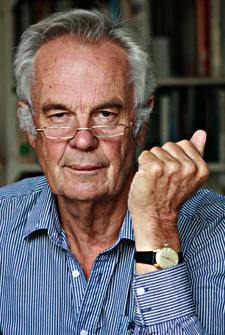
By Johan Galtung

Dear Reader: This editorial 444 – the number calls for attention – is dedicated to a global overview, the world “right now”, so unstable with imbalances everywhere that what we are living is fluxes and jumps.

Let us start with two major relations: Nature-human, the US-the Rest.

Look at the human-nature relations.

We are used to being on top, killing and taming animals, protected against many of nature’s hazards including micro-organisms. But nature comes up with ever smaller viri, and larger, or more, tsunamis and earthquakes, and an erratic climate.

We oscillate between blaming ourselves, including military scheming, and the anthropomorphic “Mother Nature is angry” (Evo Morales).

If nature is angry, she has good reasons for a good riddance of us. And we are slow at a deeper human-nature relations respecting and enhancing both.

Nature is on top and our natural sciences are simply not good enough, taken by surprise all the time. Meteorology is good at covering the whole Beaufort wind range from 0-12; others not.

Maybe we have desouled nature and besouled ourselves too much to establish our own Herrschaft (rule, dominance), at the expense of Partnerschaft (partnership).

Unless this changes, imbalance with nature on top, and surprises, will continue.

Maybe the opposite holds for the US-Rest imbalance; that US exceptionalism serves USA as badly as humans above nature serves us?Read More »

Too many American nuclear bombs – also in Turkey

By Jonathan Power

July 26th 2016

The Incirlik air base in southeast Turkey- from which U.S. pilots launch bombing raids on ISIS forces in Syria – is home to about 50 B-61 hydrogen bombs. That makes it NATO’s largest nuclear storage facility.

Each bomb has a yield of up to 170 kilotons, nearly a dozen times more powerful than the weapon that destroyed Hiroshima. The bombs are stored in underground vaults within aircraft shelters that in turn are protected by a security perimeter.

Last week Incirlik was in the headlines because it appears it was one of the command centres of the attempted coup, meant to topple President Recep Tayyip Erdogan.
After the coup had been put down the commander of Incirlik was arrested and charged with complicity in the overthrow attempt.

Jonathan Marshall in Consortium News, who has been researching this year the inner workings of the base, reports, “The security of the bombs is premised on them being defended by loyal NATO forces. In the case of Incirlik that loyalty proved uncertain at best. Power to the base was cut after mutinous troops used a tanker plane from the base to refuel F-16s that menaced Ankara and Istanbul”.

He goes on in his latest report to observe, “One can easily imagine a clique of Islamist officers in a future coup seizing the nuclear bombs as a bargaining chip with Ankara and Washington or, worse yet, to support radical insurgents in the region.”

Jeffrey Lewis, a nuclear proliferation expert at the Middlebury Institute of International Studies at Monterey, asks, “Does it seem like a good idea to station American nuclear weapons at an air base commanded by someone who may have just helped bomb his own country’s presidential palace?”Read More »

Escalating conflicts on the way to peace and justice


Photo Jonas Jonzon

By Majken Jul Sørensen & Jørgen Johansen

This article is a short version of a text which was first published with the title “Nonviolent Conflict Escalation” in Conflict Resolution Quarterly, 2016. DOI: 10.1002/crq.21173. In this longer article you can find references to all our sources.

”We have mapped all the conflicts in the world” a senior researcher at PRIO (Peace Research Institute Oslo) told one of the authors at a seminar a couple of weeks ago. If that was true, it would be pretty impressive.

Each of the seven billion people living on earth at the moment are likely to have a considerably number of conflicts every year with their partners, neighbours, friends and family members.

However, the large majority of these conflicts are dealt with in a peaceful and creative manner. Although they can feel burdensome in the heat of the moment, many of them are a way for people to grow as persons and learn more about themselves and each other.

But of course, it was not all these conflicts the senior researcher at the seminar had in mind. She was talking about the UCDP/PRIO Armed Conflict Dataset which includes violent conflicts involving at least one state. However, her statement is symptomatic for an attitude which seems to be widespread within mainstream peace and conflict studies: because they so often focus on violent and destructive conflicts, their language gets “contaminated”.

Thus there is a strong tendency to associate conflict with violence and something undesirable which should be avoided and de-escalated. Just as important, this perception of conflict also ignores all the large-scale societal conflicts fought along nonviolent lines.

In this text we examine some of the ways that nonviolent stakeholders have deliberately and persistently escalated conflicts, and show how such escalations have been fundamental for them to achieve their goals. These actors have created visibility for hardly recognised injustices and highlighted issues that have endured in the shadows of history.

This approach is the opposite of preventing conflicts; rather, it aims to escalate them in order to create change. It counters both the association of conflict with violence and contributes to a deeper understanding of nonviolent resistance. Read More »

20 years ago nuclear weapons were judged to be illegal

By David Krieger

July 7 , 2016

The International Court of Justice (“Court,” or “ICJ”), the world’s highest court, issued its Advisory Opinion on the legality of the threat or use of nuclear weapons on July 8, 1996. Thus, this week marks the 20th anniversary of that momentous opinion.

The Court found in a split vote (7 to 7), with the casting vote of the Court’s president Mohammed Bedjaoui deciding the matter, that the threat or use of nuclear weapons would generally be illegal under international law. The Court could not determine whether it would be legal or illegal to threaten or use nuclear weapons “in an extreme circumstance of self-defense, in which the very survival of a State would be at stake.”

Three of the judges voting to oppose general illegality, however, were concerned with the word “generally” and wanted the Court to go further and remove any ambiguity about the illegality of threat or use of nuclear weapons.

Judge C.G. Weeramantry, for example, argued in a brilliant dissenting opinion “that the use or threat of use of nuclear weapons is illegal in any circumstances whatsoever.”

Thus, in actuality, ten of the fourteen judges supported either general illegality or total illegality of the threat or use of nuclear weapons.

The Court also found unanimously that Read More »

Presidential Visit – A Poem


PRESIDENTIAL VISIT


The President went to Hiroshima,

the place of the first atomic attack.

He carried his heart in an old knapsack.


He went where no sitting president

ever ventured before, journeyed

through time to a long ago war.


He stood at the very place where death 

fell from the sky, where the mushroom cloud 

sucked up the earth, rose higher than high.


His words poured forth like a passionate poem,

a poem filled with power, as he placed 

a white wreath on a sea of white foam.


He bowed before the city’s eternal flame,

cried out for a world deeply in pain,

swore we must not let it happen again.


We must choose our vantage point well,

above the bomb or beneath, On one side

is hubris, on the other is grief.


David Krieger

June 2016


TFF PressInfo # 383 – Fearology and militarism but the real enemy is us

By Jan Oberg

Published on July 8, 2016, the day of the NATO Summit in Warsaw. It’s the 5th in the TFF Series “The New Cold War”

Russia and NATO have offensive capacities and MIMACs (Military-Industrial-Media-Academic Complex) but NATO’s is a much larger potential threat to Russia than the other way around

Why does an alliance with such an overwhelming superiority shout and scream and see ghosts on the horizon when, in reality, there are none?

Why does it seem to be intellectually unable to see things from the side of its opponent? Is the show of strength in reality a sign of weakness?

*

A threat consists of two main things: An intention to do something negative to you + a capability to actually carry it through – thus I + C.

Whenever NATO S-G Stoltenberg – a person who has gone through a serious personality change – speaks, he says nice things like: NATO does not seek confrontation and none of its moves are directed at Russia. NATO countries just have to protect themselves against Russia which they see as a threat.

Typically the talk is about an actor, a country, a leader – not about issues or trends that challenge the Alliance and certainly not that its own war adventures have weakened it in moral and legitimacy terms.

On their own side, NATO leaders buy none of – similar – Russian peace rhetorics. If you ask them why, they would say: Because as long as the Russians have offensive capabilities, there is also a risk that good/defensive official motives may – within weeks – be turned into an offensive, aggressive stance and we will be attacked. Can’t trust them!

But NATO itself excels in offensive projects, plans and capabilities – such as forward positioning, bases, long-range bomber and fighter planes, Ballistic Missile Defense and nuclear weapons – nuclear weapons are by definition never defensive because of their unlimited destructive capacity and because they can, by definition, not be used on one’s own territory.

To put it crudely: If you have no aggressive intentions directed at anyone – then scrap your offensive capabilities including long-range, particularly destructive and nuclear weapons and preserve only what can be used for defense – i.e. if you are attacked.

Why should you scrap the offensive elements? Because, no matter what you say about your intentions, the other side will see you as potential aggressive because you offensive weapons can reach them: If you don’t plan to come to our territory, then why do you have systems that can reach our territory and create unspeakable destruction on our people and culture??

Upholding offensive arsenals is a clear indicator of the possibility that officially stated defensive intentions can change to the opposite – how should NATO otherwise feel threatened by today’s Russia?

The eternal but non-credible threat needed by MIMAC

There are good-hearted people who believe that countries have competent experts who along a series of indicators measure and judge which security challenge are waiting in the future – and a series analyses of the threat towards their country on this or that time horizon.

The probability of each threat is also evaluated – to help politicians with limited budgets to allocate money to guard against some ‘realistic’ but not all possible/thinkable threats.

The – again very good-hearted – people believe that politicians and the industry then decide about the appropriate national defence, the necessary minimum of what we call a (military) defence policy and other measures to meet the challenges.

Unfortunately, as has been known since the last 50 years – except to politicians and the media – this description of security politics has nothing to do with reality.

Here is how it works, instead.Read More »

The Chilcot Inquiry must tell the truth

By Mairead Maguire

The long awaited Chilcot report (5 years) on the Invasion of Iraq will finally be released on 6th July, 2016.

The Report is to be welcomed and the hope expressed that this inquiry will tell the truth of what happened to the Iraqi people and clarify the UKs involvement, through an official Government recognition of facts of the wars, sanctions and invasion of Iraq and for transparency, accountability and reparation to be paid to the Iraqi people by the UK Government who participated in these illegal and immoral genocidal wars.

The story of what was done to the Iraqi people by UK and Western allies is shocking and deeply disturbing.

The two wars, the imposition of economic sanctions, causing the slow deaths of thousands of people, were indeed crimes against humanity, war crimes, breaking all international obligations and conducted with no respect for human life or the Iraqi people’s rights.

The UK/USA acted unilaterally ignoring the principal of multilateralism and irrespective of the enormous opposition to war against Iraq, articulated by millions of people around the world.

The invasion was carried out by US/UK NATO forces on the basis of a ‘lie’ that Iraq had nuclear weapons and was a threat to the US.

The foreign policy of the US/UK governments were for regime change and about Iraqi oil; the methods used were Read More »

TFF PressInfo # 380: Brex’it. So Be’it – And now what?

By Johan Galtung

The vote turned out like the two referenda held in Norway in 1972 and 1994. And much for the same reason: Protestant break with Rome – Catholic, imperial – Henry VIII made himself head of the Anglican Church in 1534.

Religion was not the only reason, there are Protestant Nordic members of EU, closer to the continent and closer to Russia. World history, a short while after Pope Francis – Patriarch Kirill also made world history, bridging the Catholic-Orthodox 395-1054 gap.

The Disunited Queendom is now London with surroundings; England. The implications are enormous, for UK-GB and the British Isles in general, for EU and Europe in general, USA and the world in general.

The US Trojan horse decided to leave the EU on 23 June 2016.

UK-GB and the British Isles in general:

Goodbye United Kingdom, UK, we may get United Ireland, UI, instead.

Goodbye Great Britain, GB, we may get Scotland in EU instead.

Welcome to Britain of England-Wales, if they care for that vocabulary.

Welcome to new-born England, 23 June being the Day of Independence.

Independence?

Washington, having lost its inside-EU ally,Read More »