TFF PressInfo # 328 – With another approach, we would have a deal with Iran today

By Jan Oberg

There could have been a deal with Iran today – to the benefit of everybody – if the nuclear issue had been approached in a fair, principled and visionary manner from Day One.

If there will be no deal later, one of the most important possible agreements in contemporary international history will have been lost, the risk of war will increase and the Iranians will suffer. And the United States and the EU (here France and Germany) will move further down in terms of relative global power and up in terms of self-isolation.

On the day of no deal, perhaps the Five Ps + Germany should spend a moment on self-reflection: What could we have done differently?

To the trained conflict- and peace-making eye, 99% of the Western commentators have failed to point out the benefits of a deal and, instead, devoted their creativity to find all kinds of possible negative aspects, details and – of course – on how the West should demand even more. They’ve suggested “red lines” at absurdum.

The fundamental a-symmetry of this whole conflict eludes them – or is conveniently left unmentioned.

At the table sit the five largest nuclear weapons powers which have, de facto and de jure, for decades completely and systematically ignored the provisions of the Non-Proliferation Treaty, NPT, and have repeatedly broken international law and conducted wars. They would never allow the type of inspections on their own territory that they demand of Iran. The U.S. issues threats – and plan a war – Iran has never threatened the U.S. And so on and so forth.

Absent from every nuclear discussion is Israel and other nuclear-armed countries which, in contrast to Iran, are not members of the NPT and have a record of warfare and occupation.

Imagine a world in which we had seen negotiations, for real, about reducing the possession of nuclear weapons as a quid pro quo of proliferation – exactly as stated in the NPT.

Imagine that we had required Iran to abstain from getting nuclear weapons as a quid pro quo of a promise by the nuclear “haves” that they would reduce their arsenals. Indeed, imagine that the United States which is Second to None in putting up demands on everybody “or else … and all options remain on the table” had promised the world that it would do something too to further the accepted and UN-based goal of general and complete nuclear disarmament. Imagine the recent NPT Review conference had resulted in something decent in a world order perspective. Indeed, imagine some kind of mutuality, fairness, and equivalence in the whole approach.

The approach was wrong from Day One. It was built on military and structural power, not on intellectual power.

What stands between the parties is Read More »

TFF PressInfo # 327 – Burundi heading for catastrophe with the world’s eyes wide shut

By Jan Oberg

The elections taking place in Burundi are no elections. The African Union, the European Union, NATO, BRICS and everybody else must know that by now. They are all turning their heads, pretending they just don’t see. When it comes to Burundi, the much celebrated Western concern about human rights and democracy is conventiently put aside.

However, since April developments in Burundi have taken only one direction: towards dictatorship and civil war and, in the worst of cases, a new genocide. If Burundi avoids that it’ll be by miracle and I shall be happy beyond words to be proven wrong.

Had this country had oil, important minerals or a significant strategic position – or had Burundi been situated in Europe – I am in no doubt that NATO countries would have conducted a “humanitarian” intervention already.

Now when a genuine humanitarian intervention is urgently needed to stop the descent into a hell and save about 10 million people from it, no one is doing anything but issuing hand-wringing, lame and woefully inadequate statements and appeals.

And by staying away from monitoring these “elections” and documenting the fraud they lend de facto support the emerging dictatorship.

Across social media TFF has so far posted 87 Burundi Warnings based on media reports. It has as issued its own warnings (see below) based on an long-term experience with Burundi that few have. Of among 4000 media recipients, two have shown any interest.

TFF has been engaged over 13 years (1999-2012) in that country. It’s work has covered a series of projects with leading civil society organisations, teaching at a university, work with media and consultancy with the Ministries of Higher Education and of Foreign Affairs.

That was when there was hope.

We did it because the rest of the world was interested only in neighbouring Rwanda, gave it all the attention and aid, the important embassies, Hollywood movies and books and because the world commemorated only its genocide, not Burundi’s. The two countries were once one and the problems the same.

And we did it because the peace process in Burundi was promising – at the time much more promising than Rwanda’s.

I met Pierre Nkurunziza shortly after he became President. At the time Read More »

TFF PressInfo # 326 – Outrageus attempt at killing a deal with Iran

By Jan Oberg

Internal elite power games in Washington are now putting Middle Eastern and global stability and peace at stake.

Here is the latest attempt at killing a deal with Iran that, to the sensitive reader with a minimum of knowledge of foreign policy and of the Iranian civilization, is little but one long argument for warfare on Iran in nobody’s interest – certainly also not in the interest of the citizens of Israel. 

Is it just because it is summer time that intellectuals, media commentators and diplomats as well as friends and allies of the US conveniently keep generally silent at such irresponsible statements – and the many before it?

Don’t they understand that the nuclear issue as such – not proliferation but possession – is humanity’s most important and that Iran has been the object of revengeful harrassment since 1953 and punished for years for not having nuclear weapons?Read More »

On Violence: Suicide, homicide and both/and

By Johan Galtung

Violence is to harm and hurt body, mind, spirit, even lethally, suicide, homicide, genocide (“cide”, from Latin “caedere”, falling). The focus here is on body violence, “sui” standing for Self, “homi” for Other. They do not exclude each other, they can be combined.

We have in mind US shootings-killings in recent decades, often at schools, spraying Others with bullets, in the end also Self, at his own hand or somebody else’s, with a gun. The killing by somebody else may or may not have been expected, but exposure to such extreme risk makes intention likely. In short, homicide and suicide. Both-And.

Hitler sacrificed millions of Germans and committed suicide.

We are used to seeing suicide as the consequence of life being intolerable: “I am better off leaving this world”; and homicide as other(s) being intolerable, “the world is better off without you”. These tragic, aggressive outcomes of double frustration may be rooted in unsolved problems and conflicts (dilemmas, disputes). Seeing it that way the “both-and” category makes sense: “I am a total failure; but you people betrayed me and deserve to be severely punished”.

Suicide can be combined with individual or collective homicide. The latter should not be confused with Durkheim’s distinction between egoistic suicide on behalf of oneself only, and altruistic suicide, Read More »

How the US Treasury Department promotes Israel’s propaganda lines

By Gareth Porter

In February, a US Department of the Treasury press release announced sanctions on three Lebanese in Africa it said were linked to a “Hezbollah terrorist cell.”

But behind that press release is a story of how the portrayal of the Lebanese by the Treasury Department was based entirely on a case constructed by Israel’s foreign intelligence agency Mossad through its Nigerian clients, and how that Treasury release suppressed publicly available facts, which made it apparent that those claims were false.

It was not the first time the Treasury Department had used its “designations” of foreign individuals and organizations to put out false and misleading information reflecting an Israeli propaganda line.

Continue here…

How to end the war in Ukraine

By Jonathan Power

According to BBC World in a broadcast yesterday morning its considered opinion is that the ceasefire in eastern Ukraine, where Russian-backed rebels battle US-backed Ukrainian forces, is working. There are still too many skirmishes, too many guns and mortars being fired but the big guns are largely silent. President Vladimir Putin said the other day that both sides have been guilty of transgressing the cease-fire.

Both the Russians on one side and the US and Nato on the other have been playing with fire with their support of the two sides. And who suffers?- the ordinary inhabitants of the eastern provinces. However pro-Russian they were before all the fighting began they are now largely convinced the rebels killing in their name no longer represent them. The businesses they work for or own are working at half power or less. Unemployment has soared. Homes have been decimated. Pensions are unpaid. Hospitals find it increasingly hard, struggling to deal with extra patients and a curtailed drug supply.

In Moscow, among thinking people, it has become clear that Russia should have no interest in taking over large swathes of Ukrainian territory Read More »

The Semantics of struggle

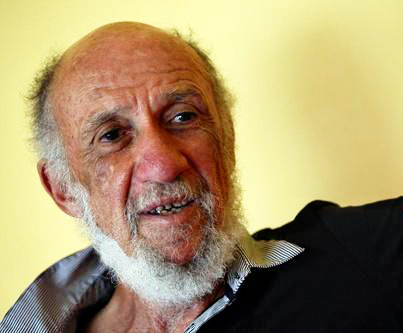
Richard Falk

By Richard Falk

Words Against the Grain

While reporting to the UN on Israel’s violation of basic Palestinian rights I became keenly aware of how official language is used to hide inconvenient truths. Language is a tool used by the powerful to keep unpleasant realities confined to shadow lands of incomprehension.

Determined to use the rather modest flashlight at my disposal to illuminate the realities of the Palestinian ordeal as best I could, meant replacing words that obscure ugly realities with words that expose as awkward truths often as possible. My best opportunity to do this was in my annual reports to the UN Human Rights Council in Geneva and the General Assembly in New York.

My courageous predecessor as Special Rapporteur, John Dugard, deserves credit for setting the stage, effectively challenging UN complacency with language that looked at the realities lurking below the oily euphemisms that diplomat seem so fond of.

Of course, I paid a price for such a posture as did Dugard for me. Your name is added to various black lists, and doors once open are quietly closed. If the words used touched enough raw nerves, you become a target of invective and epithets. In my case, this visibility meant being called ‘an anti-Semite,’ even ‘a notorious anti-Semite,’ and on occasion ‘a self-hating Jew.’

Strong Zionist pressures have now been brought to induce legislative bodies in the United States to brand advocacy of BDS or harsh criticism of Israel as prohibited form of ‘hate speech.’ In April of this year pressures broad to bear by the British Jewish Board of Deputies led the University of Southampton to cancel a major academic conference on the Israel/Palestine conflict.

In relation to Israel’s treatment of the Palestinians, the clarifying/offending words are ‘apartheid,’ ‘ethnic cleansing,’ ‘settler colonialism,’ and ‘annexation.’ The UN evades such invasions Read More »

Apartheid and the Palestinian National Struggle

Richard Falk

By Richard Falk

Editor’s note
This is a grand essay on the dimensions, history, structures of the Middle East/Palestine-Israeli-Western conflict over about 100 years. It is extraordinarily rich – but doesn’t cause the reader to drown in too many details. I highly recommend it to any student – young or old, journalist and politician – whose understanding of the issues may be based on the woefully biased, general account in Western mainstream media.
– Jan Oberg

Preliminary Observations

In this period when the centenary of the genocidal victimization of the Armenian people in 1915 is being so widely observed and discussed, it seems especially appropriate to call attention to the comparable victimization of the Palestinian people. This second story of prolonged collective victimization also received its jump start almost a century ago with the issuance by the British Foreign Office of the Balfour Declaration supporting the Zionist movement project of establishing a Jewish national home in historic Palestine.

The most striking difference between these two experiences of severe historical wrongs is that the Armenian people are seeking acknowledgement and apology for what was done to their ancestors a century ago, and possibly seeking reparations, while the Palestinian people may sometime in the future have the opportunity to seek similar redress for the past but now their urgent focus is upon liberation from present daily structures of acute oppression.

This Palestinian situation is tragic, in part, because there is no clear path to liberation, and the devastation of oppressive circumstances have gone on decade after decade with no end in view.

The political puzzle of the Israel/Palestine conflict continues to frustrate American policymakers despite their lengthy diplomatic engagement in the search for a peaceful future that satisfies both peoples. There are significant changes, of course, that have occurred as time unwinds.

Perhaps, the most crucial change has involved the gradual extension of Israeli control over virtually the whole of historic Palestine with American acquiescence. This coincides with a growing and more vivid awareness around the world of how much suffering and humiliation the Palestinian people have endured over the course of the last century, and the degree to which this frozen situation can be blamed on the unlimited willingness of the United States to deploy its geopolitical muscle on Israel’s behalf.

My approach to the Palestinian struggle reflects four points of departure: Read More »

TFF PressInfo 321 – Today’s V-Day as a lost opportunity for peace-making

Jan Oberg

By Jan Oberg

Today, May 9, the citizens and government of Russia commemorate V-Day – that it is 70 years ago they won over Nazi Germany. The price they paid were 20-26 million human beings of which 9 million soldiers. – in other European countries the victory has been celebrated this past week. The total casualties of the Second World War was at least 60 million, depending on how you count.

People and governments care about our own history and sacrifices. The implicit message of course is: Pay respect to those who sacrificed their lives and may it never ever happen again. And the world knows everything about the Holocaust/Shoah that cost the lives of 6 million Jews.

However, the world knows much less about the huge concentration camp in Jasenovac, Croatia, where at least 100.000 Serbs, Jews and Romas was exterminated. Serb suffering didn’t fit the Western narrative during the Yugoslav dissolution wars in which Crotia was only a historically innocent victim and Serbs the cause of it all.

The almost incomprehensible suffering of the Russian and other peoples in the Soviet Union also doesn’t fit the present Western narrative about Ukraine and the new Cold War-like period we are in Read More »

TFF PressInfo 319 – Burundi: Early warning and violence prevention

Jan Oberg

By Jan Oberg

See also TFF PressInfo 320.

The world’s leading countries are busy with ongoing conflicts and wars in areas of strategic importance to them. Organisations that work with humanitarian issues and post-war healing have exhausted their capacities long ago. It’s repair work but it must be done.

So there is hardly any capacity in the world to do what would be much more productive: Prevention of violence (yes, not of conflict but of violence). For decades there has been talk of early warning – but if it works at all, there is little or no early listening and even less early action.

If it all worked as it ought to, the world would have a violence-prevention machinery in place and it would, these very days, plan what to do before a catastrophe descends upon a small, beautiful African country – poor, mal-developed and of no strategic significance to bigger powers. That is, it would do a genuine humanitarian intervention to save lives in time.

The world’s neglect of Burundi

Since the genocide in the two neighbouring countries, Rwanda has probably been mentioned 100 times when Burundi was mentioned 1. Rwanda got the diplomatic attention, the investments, the aid, the Hollywood movies and books. Annually when the world commemorated the genocide that took place in both countries, everybody talked about Rwanda as if Burundi didn’t exist. One reason apart from sheer ignorance is that ”only” 300.000 were killed in Burundi’s genocidal civil war while three times more in Rwanda. About Burundi’s civil war.

Children in Muramviya, Burundi © Jan Oberg

Every year the development aid given to Burundi was around or less than 50% of what donor countries had pledged. Today, the two capitals Bujumbura and Kigali are like two different worlds. The best the world has done for Burundi was the remarkable UN mission which, regrettably, the Burundian government always wanted somehow to get rid of.

It can be argued the consequences of this relative neglect by the world are now becoming visible.

Combine that with the last few days of rioting against President Nkurunziza’s extremely dangerous manoeuvring to be elected for a third term and you have a situation that may soon present itself as yet another major human tragedy the world failed to do anything about before it was too late.

With the accumulated experience from TFF’s projects in Burundi from 1999-2012*, I believe there are extremely strong reasons to produce not only lame, standard diplomatic statements but to take action to prevent a new catastrophe.Read More »