Why foreign military intervention usually fails in the 21st century

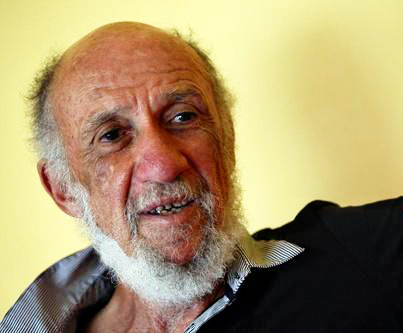
By Richard Falk

Richard Falk

When Nehru was taking a train on his return to India after studying abroad he read of the Japanese victory over Russia in the 1904-05 Russo Japanese War. At that moment he had an epiphany, realizing the hitherto unthinkable, that the British Empire was vulnerable to Indian nationalism. An earlier understanding of the colonial reality by native peoples generally subscribed to the postulates of hard power primacy making it futile or worse to challenge a colonial master, although throughout history there were always pockets of resistance.

This soft power attribute of colonial hard power by way of intimidation and a façade of invincibility is what made colonialism efficient and profitable for so long at the great expense of colonized peoples.

A traditional colonial occupation assumes that the foreign domineering presence, while oppressive and exploitative, refrains from ethnic cleansing or genocide in relation to the indigenous population.

When settler versions of colonialism emerged in relation to the Western Hemisphere and regions occupied by traditional peoples that were without either population density or some kind of industrial capability, the occupier managed to achieve enduring control Read More »

The Future of Mediation

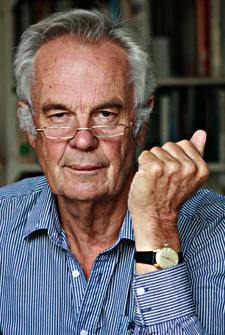
By Johan Galtung

Johan Galtung

Ludwigsburg, German Mediation Congress

Dear Colleagues; the future of mediation is to make ourselves redundant by spreading a conflict solution culture at all levels of social organization, enabling people to handle conflicts themselves. There will be counter-forces from professional mediators to monopolize the job and countercounter-forces from others to become ever better, to be ahead. The latter will win.

Model: the health professions.

Incredible gains were made in human health enabling people to take better care of their bodies: protection against contagious diseases through hygiene, washing hands, brushing teeth; keeping fit with adequate food, water, moving-walking –but care with jogging, unnatural, in the direction of a hospital– against the climate through adequate clothing and housing; against sepsis in wounds adequate cleaning: a minimum of health education. More than the complexities of surgery this gave us 25 more years of life.

For children and adolescents: watch the pathogens bringing illness from the outside as micro-organisms and violent encounters, shocks, excessive heat and cold, fire. After that come structural diseases–malignant tumors, cardiovascular, mental disorders–also rooted in the inside, with genetic predispositions. Too little adequate food and exercise; too much smoking, alcohol and other drugs can be handled with some will to get better. Equally important: an overload of stress and strain, problems and conflicts not handled: our task. Physicians have shared with people washing hands and brushing teeth as hygiene; it is our task to share conflict hygiene with everybody.Read More »

TFF PressInfo # 292: Brisbane – A show of Western weakness

By Jan Oberg

Jan Oberg

No matter what you may think of Putin and Russia this is simply not the way international politics should be conducted, particularly not at the personal level. If it wasn’t an offence to children, one would aptly characterise it as childish behaviour.

Western leaders ignored a brilliant opportunity to meet face-to-face with Vladimir Putin and move forward towards mutual understanding instead of signalling that they want a new Cold War.

Western leaders tell us that Russia is a ”threat to the world”. That obviously serves other purposes because you don’t bully someone you genuinely fear.

The G20 Brisbane should be remembered for its show of Western leaders’ personal display of weakness and conflict illiteracy.

Pummelled Putin punching bag

CNN reports that, during the meeting, Putin took ”pummelling” and was treated as a ”punching bag” by Western leaders from he set foot on Australian soil where his Australian host had sent a deputy minister of defence to receive him.

The Guardian reports that the Russian president approached Canadian Prime Minister Harper with his hand outstretched. Harper reluctantly shook it, then said “Well I guess I’ll shake your hand, but I only have one thing to say to you: you need to get out of Ukraine.” ”Bold words” – media called it.

Footage shows Putin sitting alone at a lunch table – like a naughty school boy put in the corner as by his teachers.

President Obama said that we are ”opposing Russia’s aggression in Ukraine which is a threat to the world as we saw in the appalling shoot down in the MH-17”.Read More »

Is Russia on the warpath?

By Jonathan Power

Just before former Soviet president Mikhail Gorbachev on Saturday made his stunning criticism of the West that, since the fall of the Berlin Wall, it had engaged in “triumphalism”, I was in Moscow. Everyone I talked to said the West had set out to humiliate Russia (not to help rebuild it as it did in Germany after the Second World War).

Gorbachev has long been the West’s pet political darling, (although the New York Times didn’t report this speech) – for undoing the straitjacket that enveloped Soviet society, for allowing the reunification of Germany and for being the major contributor to ending the Cold War.

So the question is will the West listen to him now? Will it listen to his point that the expansion of NATO has made Russia feel threatened?

Will it understand that there is a good reason why he and an overwhelming majority of Russians support President Vladimir Putin’s foreign policy? Will it share his fear that “we are on the brink of a new Cold War”?

One of the people I talked to Read More »

TFF PressInfo 291: Coping With the Loss of a Close Enemy

Perestroika as a Challenge to the West

By Jan Oberg

Jan Oberg

Written April 1990
Published in Bulletin of Peace Proposals 3-1990, pp 287-298 and on TFF’s homepage at the same time

1. Four hypotheses

The West has lost a close enemy, the Soviet Union and Eastern Europe. Which reactions can be discerned and what psycho-political emotions are they indicative of? How did the West cope with the first years of this new post-Cold War situation? Can we mourn the death of an enemy, can we heal ourselves after the loss? How does one learn to live a new life without a close enemy? Has the West done what it ought to do for itself and for the former enemy?

“The West” of course is a term hanging loose. We employ it in this article as meaning interchangeably “NATO, the Western hemisphere, the United States and Western Europe and a few cases, Western or Occidental culture”.

The first hypothesis of this essay is that the West, i.e. the Western part of the Occidental civilization, is traumatized by the loss of its Eastern brother.

The second is that we have discussed far too little what it means for the West and projected all our attention on the Soviet Union, i.e. acted as spectators in a certain sense.

The third hypothesis, therefore, is that the West is increasingly stuck in a self-congratulatory “we have won the cold war and socialism is dead” attitude which only increases the likelihood that it will be taken even more by surprise in the future.

And the fourth hypothesis is that the changes in the Eastern Occidental brother occur simultaneously with a number of challenges within the Western Occidental system and is bound, ultimately, to pose an overwhelming challenge to our own system. There is now an historical opportunity, a new political space and time to be filled by cooperation and exciting visions of a common future. We believe that the West has something to learn from the idea, not the content, of perestroika, i.e. experimenting with deep non-violent change in one’s own system the outcome of which cannot be known with any precision.

Czech playwright and president, Václav Havel, when in January 1990 adressing the Polish sejmen, argued that Eastern Europe should not be seen as a poor dissident or a bewildered prisoner set free but “as someone who has something to offer, namely spiritual and moral inspiration, daring peace initiatives, an unexploited creative potential, an ethos of new freedom and impulses toward bold and quick-moving solutions.” And he rounded off this speech with the following words (author’s translation again): “The most dangerous enemy today is not the dark forces of totalitarianism, intriguers or leagues of gangsters – it is our own dark sides. My program as president is therefore based on the principle of infusing spirituality, moral responsibility, humanity and humility into politics and, thus, insist on there being something higher than we humans, that our deeds shall not disappear into the dark holes of our time but be preserved, somewhere, investigated, evaluated – that we have neither a right nor a reason to maintain that we understand everything or can do everything.”

One may wonder with whom in the West Havel can have a dialogue at this level? Who in the West would respond in these existential and visionary terms? Why is the response of the West first of all Read More »

The Sunni-Shia conflict: Any solution?

By Johan Galtung
Kuala Lumpur

Johan Galtung

Islam, Christianity and Buddhism are religious cultural powers, deep, defining the ends and means of human lives. All three promise life after death – eternal salvation in paradise, eternal dissolution in nirvana – if rules are observed. Unlike Judaism and Hinduism, all three are universal, for all humans at all times. So, they caught on across faultlines, way beyond Arabia, Palestine, Nepal-India into other, even enemy, economic-political-military realities.

Arabia was Muslim; Islam expanded from Iberia to Delhi by 1192. Palestine became Muslim-Jewish; Christianity became the religion of the Roman Empire in 313; from 395 divided into Orthodox East and Catholic West, from around 1500 divided into Catholic South and Protestant North. Casteless Buddhism was evicted from Hindu Nepal-India to neighbors; a thousand years later it is rooted all over East Asia.

Three religions became three civilizations of three vast regions. Three successes? Yes, but at a price. The price was schisms inside all three, faultlines with hatred, violence, wars. What went wrong?Read More »

TFF PressInfo # 288 – Where it all went wrong and lessons were never learnt

By Jan Oberg

Jan Oberg

On November 9, it is 25 years the Berlin Wall came down. Seventeen months later, Yugoslavia’s dissolution began and various concepts and policies were introduced that fundamentally changed international politics ever since – more so than the fall of the Wall.

These features can be seen in the conflict (mis)management in later conflicts.

By now we should have accumulated enough evidence of how effective the various ”teatments” of the ”patient” called Yugoslavia were. To put it crudely: A unique country was destroyed – yes from the inside too, but that doesn’t reduce the responsibility of the West/NATO in its role as ”peacemaker”.

Today, Croatia is ethnically much more clean; Kosovo remains a failed state; the constituencies of the Dayton Accords for Bosnia (1995) still won’t live together as one state, as elections have just shown us. Macedonia’s problems have only deepened. The split between Serbia and Montenegro was enigmatic. Today’s Slovenia is the only unit that can be said to be in a better situation now than when part of Yugoslavia.

It is high time we get a critical discussion going of what the international so-called community chose to actually do – no matter the stated intentions – to help bring about peace in former Yugoslavia.

All of it must be re-assessed and lessons must be learned for governments to introduce a little modesty and recognise that they are not born peacemakers but rather war makers. And we need such a debate to go down another road than the one we took since 1999.

TFF maintains that the crisis in and around Yugoslavia is much more significant for international affairs than hitherto assumed because e.g.:

• The international so-called community’s attempt at being self-appointed conflict analysers and peacemakers with no prior education or training right after being Cold War warriors led to miserable results on the ground.

• Closely related: the amateurish idea that conflicts could be understood and treated as two parties, one good and one bad. The bad guys were the Serbs, of course, and Slobodan Milosevic became the new ”Hitler of Europe” after the West had used him as an ally.

• During this crisis Russia was sidetracked and humiliated. But in the Soviet Union era no one would have dared touch the Yugoslav space. Now the West could do what it wanted and Russia could do nothing to oppose it.

Violent humanitarian intervention was introduced and persuaded many,Read More »

Al-Baghdadi, Self-Proclaimed Caliph of the Islamic State (Part 2)

By Farhang Jahanpour

Part 1 of this series

A shorter version of this article has been published by IPS

When Ibrahim al-Badri al-Samarrai adopted the name of Abu-Bakr al-Baghdadi al-Husseini al-Quraishi and revealed himself to the world as the Amir al-Mu’minin (the Commander of the Faithful) Caliph Ibrahim of the self-proclaimed Islamic State, the whole world had to sit up and take notice of him.

The choice of the long title that he has chosen for himself is most interesting and symbolic. The title Abu-Bakr clearly refers to the first caliph after Prophet Muhammad’s death, the first of the four “Orthodox Caliphs”.

The term Husseini presumably refers to Imam Hussein, the Prophet’s grandson and Imam Ali’s son, who was martyred in Karbala on 13 October 680. His martyrdom is seen as a turning point in the history of Islam and is mourned in elaborate mourning ceremonies by the Shi’ites throughout the world on the 10th of Muharram each year, which is accompanied with many processions and self-flagellation.

Both Sunnis and Shi’is regard Imam Hussein as a great martyr, and as someone who gave up his life in order to defend Islam and to stand up against tyranny.

Finally, al-Quraishi refers to Quraish, the tribe to which the Prophet of Islam belonged.

Therefore, his chosen title is full of Islamic symbolism.

According to an alleged biography posted on jihadi Internet forums, al-Baghdadi is a direct descendant of the Prophet, but curiously enough his ancestors come from the Shi’a line of the Imams who descended from the Prophet’s daughter Fatimah.

According to this alleged biography, al-Baghdadi derives his lineage directly from nine Shi’a Imams, “Ali Al-Hadi, Muhammad al-Jawad, Ali al-Rida, Musa al-Kazim, Ja’far al-Sadiq, Muhammad al-Baqir, Ali Zayn al-Abidin, Husayn Bin-Ali, Ali Bin Abi-Talib, right up to the Prophet’s daughter Fatimah and ending in Prophet Muhammad himself.”

Despite his great hostility towards the Shi’is, is this genealogy a way of portraying himself as the true son of the descendants of the Prophet, thus appealing to both Shi’is and Sunnis?

According to the same biography, al-Baghdadi was born near Samarra, in Iraq, in 1971. It is alleged that he received BA, MA and PhD degrees in Islamic studies from the Islamic University of Baghdad. It is also suggested that he was a cleric at the Imam Ahmad ibn Hanbal Mosque in Samarra at around the time of the US invasion of Iraq in 2003. (1)

According to a senior Afghan security official, al-Baghdadi went to Afghanistan in the late 1990s, where he received his early jihadi training. He lived with the Jordanian militant fighter Abu Musab al-Zarqarwi in Kabul from 1996-2000. (2)

It is likely that al-Baghdadi fled Afghanistan with leading Taliban fighters after the US invasion of Afghanistan following 9/11.

After the US invasion of Iraq in 2003, Zarqawi and Read More »

TFF PressInfo # 285: What submarine in Sweden?

By Jan Oberg

Jan Oberg

You have heard that Sweden is hunting a ”submarine” and that it is ”presumed to be Russian”. Here is an example, Financial Times of October 21 – which incidentally also announces that the Swedish Prime Minister vows to increase defence spending.

Not the slightest evidence

There are only three problems with this:

1) There is not the slightest evidence of there being anything military, neither that it is a submarine nor that, whatever the object might be, it is Russian.

2) Even with CNN, BBC and AlJazeera this is nothing but speculative low-grade yellow press journalism. This is possible in the field of defence, security and peace because much less is required of journalists when they write about these matters than when they write about, say, domestic politics, economics, sports, books or food and wine. In these fields you are expected to have some knowledge and media consumers are able to check.Read More »

ISIS – Negotiations, not bombing

By Johan Galtung

Johan Galtung

More senseless bombing of Muslims, more defeats for USA-West, more ISIS-type movements, more West-Islam polarization. Any way out?

“ISIS, Islamic State in Iraq-Syria, appeals to a Longing for the Caliphate” writes TFF Associate Farhang Jahanpour in an IPS column. For the Ottoman Caliphate with the Sultan as Caliph – the Shadow of God on Earth – after the 1516-17 victories all over till the collapse of both Empire and Caliphate in 1922, at the hands of the allies England-France-Russia.

Imagine the collapse of the Vatican, not Catholic Christianity, at the hands of somebody, Protestant or Orthodox Christians, meaning Anglo-Americans or Russians, or Muslims. A center in this world for the transition to the next, headed by a Pope, the apostolic successor to The Holy Spirit, an emanation of God in Heaven. Imagine it gone.

And imagine that they who had brought about the collapse had a tendency to bomb, invade, conquer, dominate Catholic countries, one after the other, like after 2 Bush wars in Afghanistan-Iraq, 5 Obama wars in Pakistan-Yemen-Somalia-Libya-Syria, and “special operations”.

Would we not predict [1] a longing for the Vatican, and [2] an extreme hatred of the perpetrators? Fortunately, it did not happen.

But it happened in the Middle East: leaving a trauma fueled by killing hundreds of thousands.

The Sykes-Picot England-France agreement of 16 May 1916 led to Read More »