The Global Right and Left and Immanuel Wallerstein

By Johan Galtung

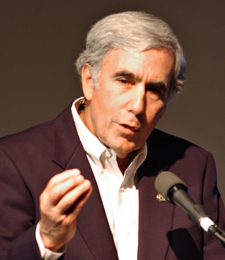
Immanuel Wallerstein is unique. Nobody else has presented such a coherent theory of what he calls the modern world-system, from “the long 16th century” up till today; essentially capitalist. There are ups and downs during those four centuries. He is very much at home in the economic Kondratiev cycles–A for up, B for down, but not that much down–and in the political-military hegemonic cycles of the would-be hegemons in the same period.

Read Immanuel Wallerstein and become wiser.

He warns against the Global Right “Lampedusa tactic” of “changing things so that they remain the same”. And insists on Liberty, Equality and Fraternity for the Global Left–but sees the French Revolution more as normalizing change than as people’s sovereignty. Like faith in the middle classes: they are actually helping the Global Right, when in minority they are enlarged by the majority working classes, when in majority they neglect the working class minority left behind.

Right now Wallerstein sees capitalism in crisis with no remedy – of which I am not so sure – and the US hegemony also in a crisis with no remedy – a view I share – as the fall of an empire with local elites killing for them; now they have to do most of the killing themselves.

The Global Right, in power for a long time, is now faltering. Time for the Global Left?

Or, does Zizek’s brilliant formula “the left never misses a chance to miss a chance” apply?

Wallerstein offers six Global Left proposals:Read More »

TFF PressInfo # 388: The War On Terror – A predictable fiasco

By Jan Oberg

This coming Sunday marks the 15th anniversary of what could be called the most counter-productive, if not stupid, war in modern history: The War On Terror. Today that war is much much more dangerous to the world’s future than the terrorists it is allegedly supposed to hunt down. And it has caused thousands of times more suffering, death and destruction – at least a million innocent people killed.

It’s not a war on terrorism but on terrorists and that is as smart as trying to fight all diseases by killing patients. It’s a war fought without any consideration of the one big question: Why did they do it and why do they do it? Media and politics only asking: Who did it? How was it done? Where? How to respond?

Without an intelligent, comprehensive diagnosis of 9/11 it could only go wrong. And it has.

The next problem was that ‘terrorism’ was suddenly defined by states as anything non-state that threatens society and states. Governments and the UN (which consists of them) conveniently omitted terrorism as a term for what states do and have done on a regular basis and on a much larger scale. Such as the nuclear balance of terror.

About 400 people were killed annually and worldwide before 9/11 according to US State Department statistics – reporting of that stopped in 2004 when figures soared after the War On Terror gained momentum. However, according to the 2015 Global Terror Index – the number is now 32,000 – and the far majority killed outside the West. So, the problem has increased exactly 80 times(!)

And the Western leaders who continue this war has no idea about how to stop it or do something more productive and intelligent to the world. Primitive tit-for-tat and disproportional responses has substituted what was once called statesmanship.

And it was predictable that it would be a fiasco!

Many both inside and outside the U.S. came up with Read More »

The sky above Turkey has much blue in it

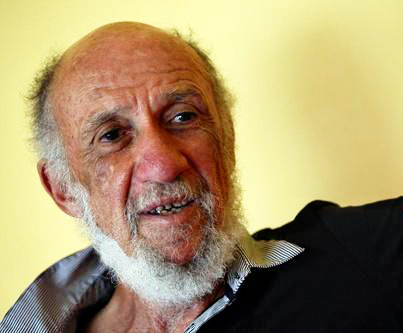
By Richard Falk

August 10, 2016

Prefatory Note
An earlier version was published by Middle East Eye on August 10, 2016. It seems so important at this time for the sake of the future of Turkey that the West look at the country and its political circumstances in a far more balanced way than how the situation has been portrayed since the coup. How to explain this imbalance is another matterthat should be explored at some point, but for now is largely put aside.

Much uncertainty remains in Turkey, but there is enough evidence of positive tendencies to raise a tentative banner of hope. Being a witness to the political atmosphere in Turkey that has emerged after the failed coup of July 15th puts me at odds with the secular consensus in the West, which looks up at the sky and sees only dark, ominous clouds of human rights abuse and autocratic leadership.

What I have experienced and observed so far is quite different, a sky with much blue in it.

There are two opposed, although overlapping, tendencies present that seemed to be responsive to the political priorities that top the post-coup government agenda: sustaining the anti-coup unity by shifting political gears within the AKP leadership circles in the direction of “inclusive democracy” and pragmatism, and with it, a retreat from the polarizing claims of “majoritarian democracy” that greatly intensified after the 2011 national elections and were particularly evident in the clumsy, unacceptable way the Turkish government handled the Gezi Park demonstrations two years later.

The most important concrete embodiment of this post-15 July move toward inclusiveness has been a series of initatives intended to create a common front between the three leading political parties in the country, including the CHP (secular mainstream) and MHP (nationalist rightest) opposition parties.

This has been reinforced by several other developments,Read More »

The global power imbalance

By Johan Galtung

Dear Reader: This editorial 444 – the number calls for attention – is dedicated to a global overview, the world “right now”, so unstable with imbalances everywhere that what we are living is fluxes and jumps.

Let us start with two major relations: Nature-human, the US-the Rest.

Look at the human-nature relations.

We are used to being on top, killing and taming animals, protected against many of nature’s hazards including micro-organisms. But nature comes up with ever smaller viri, and larger, or more, tsunamis and earthquakes, and an erratic climate.

We oscillate between blaming ourselves, including military scheming, and the anthropomorphic “Mother Nature is angry” (Evo Morales).

If nature is angry, she has good reasons for a good riddance of us. And we are slow at a deeper human-nature relations respecting and enhancing both.

Nature is on top and our natural sciences are simply not good enough, taken by surprise all the time. Meteorology is good at covering the whole Beaufort wind range from 0-12; others not.

Maybe we have desouled nature and besouled ourselves too much to establish our own Herrschaft (rule, dominance), at the expense of Partnerschaft (partnership).

Unless this changes, imbalance with nature on top, and surprises, will continue.

Maybe the opposite holds for the US-Rest imbalance; that US exceptionalism serves USA as badly as humans above nature serves us?Read More »

TFF PressInfo # 385 – How did Western Europe cope with a much stronger Soviet Union and Warsaw Pact?

By Jan Oberg

TFF Series ”The New Cold War” # 6

How did Western Europe survive the much stronger Soviet Union & Warsaw Pact 30-40 years ago? A pact that had about 70% of NATO’s military expenditures where today’s Russia has 8%? How did we get on after the Soviet invasion of Hungary and Czechoslovakia – and a Union with much more global military and political influence?

Europe did so through a well-maintained military capacity, or superiority, technical superiority and, of fundamental importance to security – confidence-building measures (CBM).

And through a political leadership by personalities who knew what the 2nd World War had implied and why it must never happen again. One towering figure of course being Willy Brandt, the German chancellor who had himself been a refugee in Norway during the war.

CBMs were meant to both uphold a high level of war-fighting capacity while also seeking military early information/warning, attending each other’s military exercises, etc. They resulted in the establishment of the very important OSCE – Organisation for Security and Co-operation (then C for Conference) in Europe with the Helsinki Final Act of 1 August1975. It contained politico-military, economic, environmental and human rights dimensions – ’baskets’ that were seen as related to each other and which served as dialogue points between the two blocs.

The visionary President Urho Kekkonen of Finland was credited as the main architect of the CSCE – and his Finland was neutral but upheld a co-operation agreement with the Soviet Union.

Finland was also the only country in the European space that could show opinions polls according to which the people felt equidistant to both blocs.

The simple but brilliant idea was this: We need dialogue to feel secure. It was also called Detente. And it implied a disarmament dimension – negotiations about how to mutually scrap weapons in a measured and verifiable manner that both sides had decided they no longer needed.

These negotiations included not only conventional weapons but also the arsenals of nuclear weapons.

In the domain of nuclear weapons, the Non-Proliferation Treaty, NPT, was signed in 1970 and carried four very important provisions:

1) the world shall move towards general and complete disarmament and the nuclear weapons shall be abolished;
2) those who have nuclear weapons shall negotiated them down, in principle to zero and
3) as a quid pro quo for that all non-nuclear weapons shall abstain from obtaining nuclear weapons – and
4) countries who want nuclear energy shall be assisted to introduce this civilian energy technology.

All this happened in the era of Detente and CBM. How had that become possible? Read More »

Escalating conflicts on the way to peace and justice


Photo Jonas Jonzon

By Majken Jul Sørensen & Jørgen Johansen

This article is a short version of a text which was first published with the title “Nonviolent Conflict Escalation” in Conflict Resolution Quarterly, 2016. DOI: 10.1002/crq.21173. In this longer article you can find references to all our sources.

”We have mapped all the conflicts in the world” a senior researcher at PRIO (Peace Research Institute Oslo) told one of the authors at a seminar a couple of weeks ago. If that was true, it would be pretty impressive.

Each of the seven billion people living on earth at the moment are likely to have a considerably number of conflicts every year with their partners, neighbours, friends and family members.

However, the large majority of these conflicts are dealt with in a peaceful and creative manner. Although they can feel burdensome in the heat of the moment, many of them are a way for people to grow as persons and learn more about themselves and each other.

But of course, it was not all these conflicts the senior researcher at the seminar had in mind. She was talking about the UCDP/PRIO Armed Conflict Dataset which includes violent conflicts involving at least one state. However, her statement is symptomatic for an attitude which seems to be widespread within mainstream peace and conflict studies: because they so often focus on violent and destructive conflicts, their language gets “contaminated”.

Thus there is a strong tendency to associate conflict with violence and something undesirable which should be avoided and de-escalated. Just as important, this perception of conflict also ignores all the large-scale societal conflicts fought along nonviolent lines.

In this text we examine some of the ways that nonviolent stakeholders have deliberately and persistently escalated conflicts, and show how such escalations have been fundamental for them to achieve their goals. These actors have created visibility for hardly recognised injustices and highlighted issues that have endured in the shadows of history.

This approach is the opposite of preventing conflicts; rather, it aims to escalate them in order to create change. It counters both the association of conflict with violence and contributes to a deeper understanding of nonviolent resistance. Read More »

Presidential Visit – A Poem


PRESIDENTIAL VISIT


The President went to Hiroshima,

the place of the first atomic attack.

He carried his heart in an old knapsack.


He went where no sitting president

ever ventured before, journeyed

through time to a long ago war.


He stood at the very place where death 

fell from the sky, where the mushroom cloud 

sucked up the earth, rose higher than high.


His words poured forth like a passionate poem,

a poem filled with power, as he placed 

a white wreath on a sea of white foam.


He bowed before the city’s eternal flame,

cried out for a world deeply in pain,

swore we must not let it happen again.


We must choose our vantage point well,

above the bomb or beneath, On one side

is hubris, on the other is grief.


David Krieger

June 2016


Russia and China right now

By Johan Galtung

The background is the two major communist parties in the world. Russia Communist Party-Bolshevik made the November 1917 revolution; from 1922 the Communist Party of the Soviet Union, CPSU(b). CPC, the Communist Party of China, now celebrating its 95th anniversary, made the 1 October 1949 revolution. World-shaking events; in the world’s biggest state in area and in the world’s biggest state in population.

The revolutions cut into the modernity contradictions in the State-Capital-People triangle by conquering State-military and police. Two lasting achievements of CPSU(b): State Planning of the economy – maybe five years at the time, pjatiletka – now found in most countries; and lifting some bottom up to meet basic needs, surprisingly quickly. But CPSU(b) exercised gross structural violence in the countryside. And CPC, imitating CPSU(b), made the same mistake to start with.

Then they became different. Russia got stuck with the Party on top of the State, for some people, but not by the people. CPC, like CPSU, did not – and still does not – permit FAFE, fair and free elections at the national level. But China gave People a voice in the 70,000 People’s Communes, helping them lift themselves up when in misery.

China did not see State and Capital as either-or; like Bolshevik Russia opting for State through expropriation, and neo-liberal USA for Capital through privatization, manipulating and spying on the People. China opened for the neither-nor local level, for the compromise of some welfare state, and for the both-and of their capi-communism.

This intellectual-political flexibility, rooted in daoist holism and an unending force-counter-force dialectic, not in Western faith in a final state, Endzustand, opened for two very different “communisms”.

How are they doing these days, those two communist parties?

The Russian party is out for the time being; and in came capitalism. But over and above that discourse looms the history of a huge Russian Orthodox empire attacked by Vikings, Mongols-Tatars, Turks, Napoleon and Hitler, Catholic Christianity, and Cold Wars with extremist US evangelism, now over Ukraine too.

Yeltsin – hated by Gorbachev (INYT, 3 Jun 2016) – gave the West what they wanted.

Popular Putin tries to build autonomous Russia without Western-capitalist imperialism, probably successful in the longer run. However, in Russia the long run is very long.Read More »

TFF PressInfo # 382: Cheating Moscow – NATO’s dangerous expansion

By Jonathan Power

June 28th 2016.

NATO has just announced a plan to send troops to the alliance’s eastern flank, close to the Russian border. NATO says it is attempting to deter potential Russian aggression.

The UK, the US, Canada and Germany will lead four battle groups to be based in Poland and the Baltic states. Diplomats say the troops will be a deterrent to Russian aggression by acting as a “tripwire” that would trigger a full response from the alliance if necessary

On Sunday the foreign minister of Germany, Frank-Walter Steinmeier, condemned Western “sabre-rattling and war cries”. He said, “Anyone who believes the symbolic tank parades on the Alliance’s eastern border will increase security is wrong”.

Apart from the appalling fact that the West is contemplating all out war against Russia there is the plain fact that it has expanded NATO in contravention of the solemn understandings given the Soviet Union at the end of the Cold War.

The deal was straightforward: The Soviet Union would agree to the reunification of East and West Germany and accept that East Germany would become part of NATO in return for a non-expansion promise.

It is the breaking of this promise that, more than any other one thing, has fuelledRead More »