Udsigten fra månen…

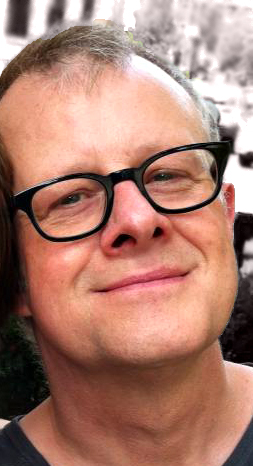
Af Claus Kold

Fra Månen kan man ikke se Danmark, lige meget hvor godt man kigger. Det kan man ikke, fordi Danmark er en kulturlig konstruktion, som er inde i danskernes hoveder, og som derfor ikke kan ses. Man kan heller ikke se Rusland, USA eller Indien.

Disse stater er nemlig også kun inde i hovederne på de mennesker, der tilfældigvis er født og opvokset i det, de har valgt at kalde fx Israel. Danmark er m.a.o. en tilfældighed. Det kunne lige så godt ikke eksistere, eller ligge et andet sted eller danskerne kunne tale et andet sprog, som de godt nok ville kalde dansk, men som ikke lød dansk – for os, de rigtige danskere.

Stater og statssystemer har ikke altid eksisteret, og op gennem tiden har de, der eksisterede, haft meget forskellige form. De har været religiøse, familieeje, enemandsvælder, étpartistater – i dag er det dominerende ideal territorialt afgrænsede demokratiske stater, hvor befolkningerne helt principielt skal inddrages i beslutningsprocesserne. De forskellige demokratiske stater, der udgør hovedparten af det internationale samfund i dag er dog langt fra ens, og det kan derfor være svært for staterne at forstå hinandens motiver og handlinger.

Til det tilfældige system af tilfældige stater hører lige så tilfældigt menneskeskabte systemer som politik, territorie, økonomi, sikkerheds- og forsvarspolitik, konkurrence, etc. Systemer som kunne være anderledes, men som i dag er bundet til sine egne logikker, som de er blinde for og derfor ikke sætter sig ud over. Systemer kan typisk ikke se og tænke ud over sig selv. Blindheden er farlig, for der tegner sig i stigende grad et billede af at disse tilfældige menneskelige systemer står i kviksand og kæmper med hinanden, uden at opdage at de synker dybere og dybere i, ligesom det heller ikke opdages at konflikterne ikke er nødvendige men systemskabte, kulturlige. Der er nok af globaliserede udfordringer: global opvarming, udryddelse af plante- og dyrearter, krige, terror og flygtninge.

Det statslige system, vi lever med i dag, blev til under helt andre befolkningsstørrelser, livs- og forbrugsformer, økonomier og teknologier end dem, der dominerer i dag. Overfor de globale udfordringer er disse stater på samme tid for store til hverdagens små problemer og for små til de globale udfordringer. I deres forsøg på at forholde sig til globale udfordringer, betjener politikere sig således af forældede instrumenter, og forsøgene på at forholde sig til de globale problemer falder tilbage på politikerne, der fremstår som utroværdige, som musikerne på Titanics stadig mere hældende dæk. Read More »

TFF PressInfo # 376: North and South Korea: Can be solved if…!

By Johan Galtung

Jeju Peace Forum, Kwangju National University, Seoul; South Korea

Like the Israel-Palestine conflict, the world has gotten tired of it, “what, the two Koreas still unable to sort it out”? Also, like Israel-Palestine, the USA is in it; making the situation complicated.

Never has the situation been so tense after the end of the war in Korea more than 60 years ago. Not only because of the nuclear bomb with missiles in North Korea, and the hawkish pro-nuke reaction in South Korea and Japan, but because of no moves forward to solve the underlying conflict. And where is that conflict? Not between North and South Korea, but between North Korea and USA that after 140+ years of victorious warfare had to accept armistice, not victory, in Korea.

Conflict means incompatible goals. Travel to Pyongyang and find that their goals are peace treaty, normalization of relations, and a nuclear free Korean Peninsula.

And the US goal is the collapse of the present NK regime; failing that, status quo. Given the threat of a major war, even nuclear war, that goal is untenable. Some points.

Why does NK have nuclear capability?

Because NK is threatened by the USA-South Korea alliance in general and their “Team Spirit” in particular to deter conventional, or nuclear attacks; failing that to fight back, and particularly against where the attack might come from: US bases in Okinawa-RyuKyu, and from Japan proper. Militarily trivial.

AND to have a bargaining chip in any denuclearization that of course has to be monitored; given the US cheating in connection with Austrian neutralization in 1955 focused particularly on that one.

AND to show that we are not collapsing, we are capable of making nuclear bombs and the missiles to carry them; far from collapsing.Read More »

TFF PressInfo # 375 Close calls: We were closer to nuclear destruction than we knew (2)

By Gunnar Westberg

The proposition that nuclear weapons can be retained in perpetuity and never used – accidentally or by decision – defies credibility”.

Other serious close calls

In November 1979, a recorded scenario describing a Russian nuclear attack had been entered into the US warning system NORAD. The scenario was perceived as a real full-scale Soviet attack. Nuclear missiles and bombers were readied. After six minutes the mistake became obvious. After this incident new security routines were introduced.

Despite these changed routines, less that one year later the mistake was repeated – this time more persistent and dangerous. Zbigniew Brzezinski, the US national security adviser, was called at three o’clock in the morning by a general on duty. He was informed that 220 Soviet missiles were on their way towards the USA. A moment later a new call came, saying that 2,200 missiles had been launched.

Brzezinski was about to call President Jimmy Carter when the general called for a third time reporting that the alarm had been cancelled.

The mistake was caused by a malfunctioning computer chip. Several similar false alarms have been reported, although they did not reach the national command.

We have no reports from the Soviet Union similar to these computer malfunctions. Maybe the Russians have less trust in their computers, just as Colonel Petrov showed? However, there are many reports on serious accidents in the manufacture and handling of nuclear weapons.

I have received reliable information from senior military officers in the Soviet Union regarding heavy use of alcohol and drugs among the personnel that monitor the warning and control systems, just as in the USA.

The story of the “Norwegian weather rocket” in 1995 is often presented as a particularly dangerous incident. Russians satellites warned of a missile on its way from Norway towards Russia. President Yeltsin was called in the middle of the night; the “nuclear war laptop” was opened; and the president discussed the situation with his staff. The “missile” turned out not to be directed towards Russia.

I see this incident as an indication that when the relations between the nuclear powers are good, then the risk of a misunderstanding is very small. The Russians were not likely to expect an attack at that time.

Indian soldiers fire artillery in northernmost part of Kargil region

Close calls have occurred not only between the two superpowers. India and Pakistan are in a chronic but active conflict regarding Kashmir. At least twice this engagement has threatened to expand into a nuclear war, namely at the Kargil conflict in 1999 and after an attack on the Indian Parliament by Pakistani terrorists in 2001.

Both times, Pakistan readied nuclear weapons for delivery. Pakistan has a doctrine of first use: If Indian military forces transgress over the border to Pakistan, that country intends to use nuclear weapons.

Pakistan does not have a system with a “permissive link”, where a code must be transmitted from the highest authority in order to make a launch of nuclear weapons possible. Military commanders in Pakistan have the technical ability to use nuclear weapons without the approval of the political leaders in the country. India, with much stronger conventional forces, uses the permissive link and has declared a “no first use” principle.

The available extensive reports from both these incidents show that the communication between the political and the military leaders was highly inadequate. Misunderstandings on very important matters occurred to an alarming degree. During both conflicts between India and Pakistan, intervention by US leaders was important in preventing escalation and a nuclear war.Read More »

Mass migration, the EU and European nationalisms

By Johan Galtung

Antwerpen & Alfaz

We are dealing with mass migration, basically into EU, and European nationalisms, many in favor of exits from the EU.

Why this mass migration, maybe to the point of Völkerwanderung, mainly into EU – but then what kind of EU? – and why the European nationalisms now found one way or the other in many member states?

The forecast for migration from Africa into Italy in 2016 is about 100,000; 28,000 already arrived in the first quarter, with 1,000 drowning in the Mediterranean (INYT, 6 May 2016). Big numbers. They knew the risks they were taking, so the push away from Africa and the pull towards Italy, and beyond, must have been considerable.

Better think in terms of 50 million migrants over 50 years, from regions considered uninhabitable to inhabitable regions. There seem to be five major causes underlying this basic world asymmetry:

Slavery, four centuries, depriving societies particularly of able-bodied males, by Arabs, then Westerners, cross-Atlantic transportation mainly by the English (Liverpool);

Colonialism, by Muslims after the death of the prophet in 632, from Casablanca to Southern Philippines, till the end of the 15th century, close to nine centuries, then by Christians close to five centuries, till colonialism was officially ended in the 1960s;

Robbery Capitalism, stealing or paying next to nothing for resources processed into manufactured goods, pocketing the value added;

Wars, mainly initiated by the West, killing millions (the USA more than 20 million in 37 countries after WWII), destroying property;

Ecological Factors, like depletion-pollution, often toxic for humans or nature, erratic climate partly due to climate gases, NOX, CO2, CH4.

These are the causes of poverty in some parts of the world but also of wealth in others; Read More »

About (pre-)Fascism: Israeli and US style

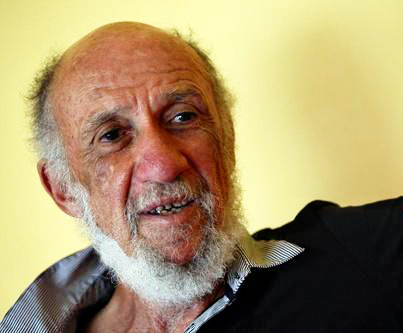
By Richard Falk

Recently I participated in a conference on global inequality and human rights held at the University of Texas in Austin, a lively quite cosmopolitan city. During the lunch break I was talking with a young PhD student from Israel who had just presented an informative paper on inequality in the Philippines. I asked her about her career plans and how it was like to be living in Israel these days. She told me that she was married to an Israeli and planned to return to finish her studies in Tel Aviv after a fellowship year at UT.

I tried to engage her in conversation about evolving Israeli attitudes toward the Palestinians and the related failed diplomacy, but she seemed rather uninformed and perhaps even disinterested as if the peace agenda was not really present in her active consciousness. Then all at once she said something that surprised me. “I am not looking forward to returning to Israel, it is becoming a fascist state.”

What made this strong statement surprising was that it contrasted with the blandness of everything that had preceded it. I asked inquisitively, neither agreeing nor disagreeing, “What makes you say that?”

She pondered the question as if it had come to her from the wild blue yonder. It seemed as if she had never thought about it before, and maybe it was just a spontaneous assertion that she was articulating for the first time. After a pause, she answered somewhat hesitantly: “Because the army is the most powerful and admired institution in Israel, and the government controls everything, it is acting as a totalizing force.”

I suppose that gets you to Franco-style fascism that prevailed for so long in Spain, but not the more virulent forms of fascism associated with Mussolini’s Italy and especially Hitler’s Germany.

I agreed with the young woman about the hegemony of the armed forces, both institutionally and psychologically, but I was less sure about the totalizing reach of the government. Read More »

Peace State Iceland – Meaning what?

By Johan Galtung
May 2, 2016

Dear Members of the Iceland Allthing Foreign Affairs Committee,

I have been asked to come to Iceland to answer that question; thanks indeed for inviting me to address you. And to apologize, as a Norwegian, for our occupation of Iceland 1262-1386 instead of sending mediators to help settle your civil war. Our century long colonization does not become better because Denmark colonized you five centuries, 1386-1918; and more deeply. But you are now your own, with a wonderful language and literature; right now with a problematic economy and polity.

Reykjavík has a very good name internationally as the venue of the 11-12 October 1986 summit meeting of the Cold War superpowers. The meeting of US President Ronald Reagan and the Soviet Secretary General Mikhail Gorbachev at Höfdi did not by itself end with an agreement. But it was the beginning of the end of the Cold War three years later, and as such made world history.

So why not build on that, making a Reykjavik Mediation Center, RMC, politically and internationally independent, and on Iceland’s location between West and East, USA and Russia? Look at the map.

For Reykjavík to invite USA and Russia, with Kiev and Donetsk. Maybe also Brussels, in the sense of NATO and EU. Issue: the conflict in and around Ukraine–meaning “at the border”, between two nations, Catholic-Ukrainian and Orthodox-Russian; with much hatred and violence.

Very dangerous, some speak of a Third World War coming. Inviting them would be a signal of world concern, offering a venue for open talks without conditions. Iceland has little mediation capacity today, but Icelanders would be present and learn from the occasion.

Add to this an invitation to the UN to station UN Peacekeeping Forces in Iceland, using the vast vacant lands between Keflavík and Reykjavík for training. That would add peace as a source of income to fisheries and tourism, and lift Iceland out of its Third World economy.

A peace state helps itself by helping others. Nevertheless, two problems:

First, a peace state can neither be allied to a state that killed more than 20 million in 37 countries since WWII nor member of an offensive alliance. Either the USA and NATO become more defensive or Peace State Iceland has to distance itself, gradually, carefully; keeping good relations. Iceland’s security would be better served by using Keflavík for UNPKF than for USA-NATO, and by solving conflicts.

Second, if you want to help solving conflicts start with your own. Read More »

TFF PressInfo # 372: Drop the Just War theory and abolish nuclear weapons!

By Mairead Maguire

Press Release 19th April, 2016

Nobel Peace Laureate, Mairead Maguire, co-founder of The Peace People and TFF Associate, says from Rome:

“I believe we are at an important and hopeful turning point in human history – from violence to nonviolence and from war to peace”

Laity and religious meeting in Rome appeal to Pope Francis to share with the world an encyclical on nonviolence and just peace and for the church to no longer use or teach ‘Just War theory’

It was a joy for me to join eighty people from around the world meeting in Rome 11-12th April, 2016, to contribute to the important discussion ‘Nonviolence and Just Peace Contributing to the Catholic Understanding of and Commitment to Nonviolence’.

Members of the three day event co-hosted by the Pontifical Council for Justice and Peace and the International Catholic Peace Movement Organization, Pax Christi, strongly called on Pope Francis ‘to share with the world an encyclical on nonviolence and Just Peace; and on the Church to ‘no longer use or teach ‘just war theory’; and continue advocating for the abolition of war and nuclear weapons’.

The statement of Appeal to the Pope also said:

‘We believe there is no ‘just war’. Too often the ‘just war theory’ has been used to endorse rather than prevent or limit war. Suggesting that a ‘just war’ is possible also undermines the moral imperative to develop tools and capacities for nonviolent transformation of conflict’.

The gathering in Rome consisted of lay people, theologians, members of religious congregations, priests and bishops from Africa, the Americas, Asia, Europe, the Middle East, and Oceania and the welcoming address was given by Cardinal Turkson of the Pontifical Council for Justice and Peace, who read a Statement from Pope Francis.

The Final Statement Read More »

A nonkilling, nonviolent world is not unrealistic – We can choose!

By Mairead Maguire

Address by Mairead Maguire, Nobel Peace Laureate and TFF Associate, to Rome Conference on NATO
Friday 29th January, 2016.

Dear Friends,
I believe we, the human family, have no less a task before us, than transforming our thinking and mind-sets of violence and war, and moving to a demilitarized Europe and World. Einstein once said that everything has changed but our thinking. However, there is hope as indeed our thinking is changing and there is a growing consciousness that violence, whether it comes from State or non-state actors, is wrong, violence does not work, violence is not the way.

However, around the world, we, the people, are in danger of being overpowered and dis-spirited by increasing violence, militarism and war. Many people can see that many Political Leaders can no longer imagine a just peace, and under the guise of allegedly ‘just wars’ and unbounded preparation for war, they are leading us into repeated cycles of violence profoundly counter to the spirit of love and friendship residing in the heart of humanity.

But there is Hope and it resides with the People, who are great and are mobilizing and uniting across the Globe to bring about much needed change, and rejecting violence and war.

The World Health Organization has said that ‘Violence is a preventable disease’ and people are not born violent, rather we all live in cultures of violence. This can be changed through nonviolent peacemaking and the pursuit of ‘just peace’ and nurturing of cultures of peace. Using active nonviolence, based on love of enemies and nonkilling, can bring about a real peace that is just, inclusive and sustainable.

In Northern Ireland we faced violence from all sides, for over thirty years, as we lived in a deep ethnic/political conflict. This violence only ended when everyone acknowledged that militarism and para-militarism could not solve our human problems, and only through unconditional, all inclusive dialogue and negotiations could we reach a political agreement based on nonviolence, forgiveness, compromise and co-operation.

We spoke to ‘our enemies’ and made peace with them, because we recognized that without Peace nothing is possible, and with Peace, everything is possible.

We also began to tackle the root causes of our violence, by making painful policy changes.

Today in Belfast, it is good for all its citizens to live in a City at Peace, but we all acknowledge that our Peace process is a work in progress and we continue to work on justice forgiveness and reconciliation.

We meet at a time when, I believe, Europe is facing a cross-roads and hard choices regarding policies and priorities have to be made by all. Today’s refugees, migrant challenge, has shown the best and the worst of European values, via television beamed onto our screens to the world.

The best have been the compassionates response Read More »

Remembering the 1916 Rising

By Mairead Maguire
Nobel Peace Laureate, Co-Founder Peace People, Ireland and TFF Associate

When the President of Ireland, Michael D. Higgins, the Irish Military, Government Members, and many Irish people gathered in Dublin, on Easter Sunday 27th March, 2016 to remember the Easter Rising of l9l6, some of his challenging words were addressed to the young generation.

He encouraged them ‘to imagine and to dream‘ and he said ‘we wish them well as they make music and continue to dream’. The Leaders of l9l6 had political hopes and dreams. President Higgins said ‘For the leaders of l9l6, their political hopes and aspirations for what a free Irish Republic might be, were linked to a rich Irish culture which they cherished and promoted.

Within that vision, their ancient Irish language and culture, informed by our history and migration, was central to everything for which they hoped and fought.’

I believe the men of l9l6 had a democratic right to their dreams of Irish self-determination and to work for Irish Freedom, but the violent method by which they fought for freedom was ethically and morally wrong. Read More »

TFF PressInfo # 370: If Obama visits Hiroshima (Part 1)

By Richard Falk

There are mounting hopes that Barack Obama will use the occasion of the Group of 7 meeting in Japan next month to visit Hiroshima, and become the first American president to do so.

It is remarkable that it required a wait of over 60 years until John Kerry became the first high American official to make such a visit, which he termed ‘gut-wrenching,’ while at the same time purposely refraining from offering any kind of apology to the Japanese people for one of the worse acts of state terror against a defenseless population in all of human history.

Let’s hope that Obama goes, and displays more remorse than Kerry who at least deserves some credit for paving the way.

The contrast between the many pilgrimages of homage by Western leaders, including those of Germany, to Auschwitz and other notorious death camps, and the absence of comparable pilgrimages to Hiroshima and Nagasaki underscores the difference between winning and losing a major war. This contrast cannot be properly accounted for by insisting on a hierarchy of evils that the Holocaust dominates.

The United States, in particular, has a more generalized aversion to revisiting its darker hours, although recent events have illuminated some of the shadows cast by the racist legacies of slavery.

The decimation of native Americans has yet to be properly addressed at official levels, and recent reports of soaring suicide rates suggests that the native American narrative continues to unfold tragically.

The New York Times in an unsigned editorial on April 12 urged President Obama to make this symbolic visit to Hiroshima, and in their words “to make it count” by doing more than making a ritual appearance. Recalling accurately that Obama “won the Nobel Peace Prize in 2009 largely because of his nuclear agenda” the editorial persuasively criticized Obama for failing to follow through on his Prague vision of working toward a world free of nuclear weapons.

A visit to Hiroshima is, in effect, a second chance, perhaps a last chance, to satisfy the expectation created early in his presidency.

When it came to specifics as to what Obama might do the Times offered a typical arms control set of recommendations of what it called “small but doable advances”: canceling the new air-launched, nuclear-armed cruise missile and ensuring greater compliance with the prohibition on nuclear testing by its endorsement coupled with a recommendation that future compliance be monitored by the UN Security Council.

The Times leaves readers with the widely shared false impression that such measures can be considered incremental steps that will lead the world over time to a nuclear-free world. Such a view is unconvincing, and diversionary.

In opposition, I believe these moves serve to stabilize the nuclear status quo have a negative effect on disarmament prospects. By making existing realities somewhat less prone to accidents and irresponsibly provocative weapons innovations, the posture of living with nuclear weapons gains credibility and the arguments for nuclear disarmament are weakened even to the extent of being irrelevant.

I believe that it is a dangerous fallacy to suppose that arms control measures, even if beneficial in themselves, can be thought of as moving the world closer to nuclear disarmament.

Instead, what such measures do, and have been doing for decades, is to reinforce nuclear complacency by making nuclear disarmament either seem unnecessary or utopian, and to some extent even undesirably destabilizing. In other words, contrary to conventional wisdom, moving down the arms control path is a sure way to make certain that disarmament will never occur!

As mentioned, many arms control moves are inherently worthwhile. It is only natural to favor initiatives that cancel the development of provocative weapons systems, disallow weapons testing, and cut costs. Without such measures there would occur a dangerous erosion of the de facto taboo that has prevented (so far) any use of nuclear weaponry since 1945.

At the same time it is vital to understand that the taboo and the arms control regime of managing the nuclear weapons environment does not lead to the realization of disarmament and the vision of a world without nuclear weapons.

Let me put it this way, if arms control is affirmed for its own sake or as the best way to put the world on a path of incremental steps that will lead over time to disarmament, then such an approach is nurturing the false consciousness that has unfortunately prevailed in public discourse ever since the Nonproliferation Treaty came into force in 1970.

The point can be express in more folksy language: we have been acting for decades as if the horse of disarmament is being pulled by the cart of arms control. In fact, it is the horse of disarmament that should be pulling the cart of arms control, which would make arms control measures welcome as place holders while the primary quest for nuclear disarmament was being toward implementation.

There is no reason to delay putting the horse in front of the cart, and Obama’s failure to do so at Prague was the central flaw of his otherwise justly applauded speech.

Where Obama went off the tracks in my view was when he consigned nuclear disarmament to the remote future, and proposed in the interim reliance on the deterrent capability of the nuclear weapons arsenal and this alleged forward momentum of incremental arms control steps.

What is worse, Obama uncritically endorsed the nonproliferation treaty regime, lamenting only that it is being weakened by breakout countries, especially North Korea, and this partly explains why he felt it necessary back in 2009 to consider nuclear disarmament as a practical alternative to a continued reliance on nonproliferation, although posited disarmament more as a goal beyond reach and not as a serious present political option.

He expressed this futuristic outlook in these words: “I am not naïve. This goal will not be reached quickly – perhaps not in my lifetime.” He never clarifies why such a goal is not attainable within the term of his presidency, or at least its explicit pursuit.

In this regard, and with respect to Obama’s legacy, the visit to Hiroshima provides an overdue opportunity to disentangle nuclear disarmament from arms control.

Part 2