The West is threatening Russia

By Jonathan Power

What would the conservative president, Ronald Reagan, have done if the Ukraine debacle had happened on his watch? I suspect he would have made sure it didn’t devalue relations between the US and Russia.

It wasn’t him nor his vice-president, George W.H Bush, who inflamed relations with a post-Cold War Russia, it was his successor the liberal, Bill Clinton, who, together with a supine EU membership, decided to expand NATO right up to Russia’s doorstep, despite a solemn US promise given personally to the Soviet president, Mikhail Gorbachev, by George H. W. Bush’s secretary of state, James Baker, that it wouldn’t.

And today President Barack Obama won’t say clearly and out loud that the US doesn’t expect that Ukraine will ever join NATO, a move that could de-escalate the crisis faster than you could say: “At last Obama understands where President Vladimir Putin is coming from”.Read More »

BRIC(K)S for a New World Economic Order!

By Johan Galtung
28 Jul 2014 – Kuala Lumpur

Johan Galtung

They made it, with constructive alternatives – the New Development Bank and the Contingency Reserve Agreement–to the US-dominated World Bank and International Monetary Fund. Those two parts of Bretton Woods were basic pillars in the economic infra-structure of the US Empire in the hands of the US Congress. Loans were disbursed in return for “structural adjustment” –privatization, budget cuts, devaluation, repatriation of profit, also against BRICS countries. US companies were commissioned for huge jobs serving local elites. Untold damage was done in spite of some recent changes in rhetoric.

The USA used them to export the US economic–and with it the social, political, cultural, military–order through loans, grafting it upon social bodies that after some time rejected the implants as foreign and incompatible. Even a decaying order however brilliant it may have looked to the untrained eye as late as the 1990s.

What remains today of that US “order” is the military part Read More »

TFF PressInfo: Use Malaysia’s MH17 to make peace instead

By Jan Oberg, TFF director

Jan Oberg

Tragic misuse of a tragedy

The government of Ukraine as well as the separatists, NATO/U.S. and very many leading Western mainstream media seem all to know who has caused the tragedy. Putin believes it was caused indirectly by the West.

Given the fact that very few, if any, people or institutions can know who did it with enough details, data and precision to accuse anyone, the MH17 tragedy has been misused to an extent that can itself only be termed tragic.

The misuse is tragic because it is a catastrophe for close to 300 people, their relatives and friends. Silence – of both verbal and military weapons – and empathy would have been appropriate.

Anyone pointing fingers and calling it a terrorist act at this point is irresponsibly or should present convincing evidence.

Secondly, the blame game makes the necessary road to peace and security even more difficult.

An All Party Peace Process should come out of MH17 and the civil war

It would have been so much more civilised to use the MH 17 tragedy to say:Read More »

Some people are exceptional

By Jan Oberg

Jan Oberg

July 20, 2014 – 12 days after Israel launched Operation Protective Edge, after Shejaiya and after 400 people on the Palestinian side have been killed.

Some people condemned what they called a planned Serb genocide on Albanians in Kosovo.

Some people were very upset about the siege of Sarajevo. And the massacre at Srebrenica.

Some people believed that the Yugoslav Army occupied Croatia and tried to create a Greater Serbia.

Some people condemned what was then called ethnic cleansing.Read More »

Aage Bertelsen (1901 – 1980) – Danish educator for peace

By Jan Oberg & Johan Galtung*

Lund and Kuala Lumpur, July 2014

Introduction

He was a tall man and a great man, a visionary, pacifist, civil resister, educator and philosopher. He took life more seriously than most and he could be playful and fun like a child. His life’s guiding principle was ”Engage in your time!” and while he wrote and talked a lot he also did it. His name was Aage Bertelsen, he was born in Denmark in 1901 and died on August 15, 1980.

Bertelsen’s imprint on history is two-fold. First, with his wife Gerda he was a prime mover of one of the groups, the Lyngby Group, which organised the rescue of altogether 7.220 Danish Jews into safety in Sweden in October 1943 during the German occupation of Denmark – more here. The Lyngby Group – Lyngby is north of Copenhagen – got about 1.000 of these in safety by organising their nightly transport onboard small fisher boats over the Sound between Denmark and Sweden.

In this he deserves a place in international contemporary history for its humanity, civil courage and as an example of non-violent struggle against occupation.

Secondly, Bertelsen was an educator of and for peace. His life work educational efforts included his family and friends, his pupils over 22 years at the Aarhus Cathedral School in Aarhus, Denmark, the general public as well as national and international leaders.

He lived in pre-Internet times and very little is publicly available today about this renaissance man. From two rather different, but compatible, perspectives we’ve taken it upon us to remind the world about him – friends and colleagues of his as we happen to be.

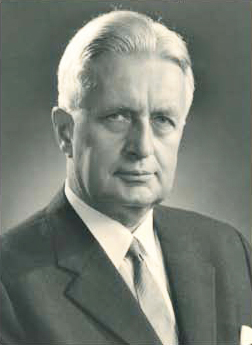
Headmaster Aage Bertelsen in 1961 Photo: Elfeldt, Copenhagen


Why now, over 30 years after his death? Read More »

The world right now: A Mid-Year Report

By Johan Galtung

Time to take stock. The shot in Sarajevo 100 years ago inspires narratives of 19-year old Gavrilo Princip killing the successor to the throne of an empire and his pregnant wife as the event unleashing mutual mass murder (INYT, FAZ 28-29 June 2014). Not the empire annexing Bosnia-Herzegovina on October 6, 1908 (Art. 25 of the 1878 Berlin Congress of “great powers”).

Maybe the inhabitants did not like it?

Moral of that stock-taking: watch out for terrorism, not for empires and occupation-colonialism; and protect leaders, not people.

ISIS (Islamic State of Iraq and the Levant, alternatively translated as Islamic State of Iraq and Syria and Islamic State of Iraq and al-Sham) comes up. TIME 30 June: The End of Iraq. Maybe Iraq – that highly artificial English colonial entity encasing Shia Arabs, Sunni Arabs and Sunni Kurds–never started?

Like its French colonial neighbor Syria – adding Alawite Arabs, Christians, Jews and others? Ever heard about Sykes-Picot and their czarist Russian allies?

Can such crimes just pass, with no counter-forces?

Watch out, a key point about ISIS – now comprising a major part of IS – is as a bridge over the English-French colonial divide, in favor of a Sunni Arab caliphate. Like it or not, these are very strong forces from the past in the daylight of the present. Read More »

TFF PressInfo: If militarism continues, humankind is doomed

By Jan Oberg

Both NATO and the EU has just announced that their members will now invest more in the military. It’s indicative of the lack of creativity in both organisations, it is self-defeating and counter-productive.

But have you seen it put on top of any agenda and debated? You haven’t, it is so normal – and the argument is that we are threatened. That’s called fearology: Making tax payers pay even more by making them scared.

The military sector is a parasite on society

The military sector produces much less employment than the civilian per invested dollar. It’s a huge burden on the economy because it swallows creativity, research and development badly needed to solve humankind’s real problems.

Weapons don’t belong to a market, there is no competition – the state is the only buyer – and thus tax payers must cover the systematic cost overruns.

We are told that there is economic crisis and we must cut down on hospitals, schools and human care everywhere. But this we can afford?

But what if the military did solve our problems?Read More »

Worse world or better world?

By Jonathan Power

War is all over the place. It seems. Not just Syria and Iraq but now inside Pakistan. Not to mention Somalia and Sudan. Yet paradoxically there has never been less war.

Sweden’s Uppsala University Conflict Data program is about to publish its results for 2013. It reports that the number of conflicts in the world increased by one between 2012 and 2013 – pace all the press and TV coverage which sometimes gives the impression that half the world is going up in smoke.

Since the Cold War ended the number of conflicts claiming more than 1,000 deaths has declined by 50%. There were 15 conflicts of this size in the early 1990s. Today there are only seven.

In 2013 six peace agreements were signed – which is two more than the year before.

The number of democratic countries was 69 at the end of the Cold War. Today there are around 120. The number of autocracies has declined in that time from 62 to 48.

The American foreign policy elite appears unaware of these trends. Read More »

Do Russia and China threaten the West?

By Jonathan Power

In recent months the scare-mongers have been at it again – Russia’s foray into Ukraine and China’s behaviour in the South China Sea have set their alarm bells ringing. But why?

Big power politics is not back. Indeed in the round it is rather subdued. Take the Russian-EU-US fracas over Ukraine at the moment. Does this compare with the Cold War when the West prepared itself for a Russian invasion of Europe, nuclear missiles were targeted on each other, and when the Soviet Union along with the US stirred up proxy civil wars in Central America and Africa?

Do the US and NATO fear such threats as these today? Of course not. Critics of President Barack Obama and denigrators of President Vladimir Putin badly need a sense of perspective.Read More »

Prosecuting Syrians for war crimes now

By Richard Falk

A major undertaking of the victorious powers in World War II was to impose individual criminal accountability upon political and military leaders for alleged crimes committed during wartime before a tribunal convened by the victors that gave those accused a fair opportunity to present a defense.

This application of this idea of accountability to German and Japanese surviving leaders at trials held in Nuremberg and Tokyo was hailed at the time as a major step in the direction of a ‘just peace.’

International law was treated as binding upon sovereign states and those that represented the government, conceived to be a major step in the direction of a global rule of law. The final decisions of these tribunals also produced a narrative as to why World War II was a necessary and just war. Such an outcome was both a vindication of the victory on the battlefield and a punitive repudiation of those who fought and lost. Significantly, this criminal process was formally initiated only after the combat phase of the war had ended and Germany and Japan had surrendered.Read More »