Iran – P5+1 deal: Positive steps but hawks try to derail it

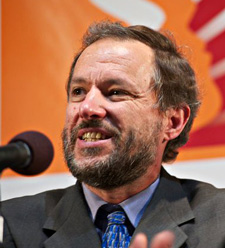
By Farhang Jahanpour

In his State of the Union Address on 28th February, President Barack Obama bluntly pointed out that if the hawks in Congress pushed for a bill to impose new sanctions on Iran he would veto that bill. This brave and almost unprecedented move by President Obama has silenced, at least for the time being, the opposition to the Joint Plan of Action that was agreed by Iran and the P5+1 (the five permanent Security Council members plus Germany) last November. This was a major setback for AIPAC (American Israeli Public Affairs Committee) and other pro-Israeli lobbies that had mobilized all their forces to block the deal.

In fact, some of the Democratic Senators that had sponsored the bill to impose additional sanctions on Iran have already distanced themselves from it. Furthermore, at least seventy Members of Congress are organizing a letter to the President supporting U.S.-Iran diplomacy and opposing new sanctions. (1)

New round of talks
Meanwhile, 20th January marked an historic turn in the Iranian nuclear dispute with the West, when both Iran and the West began to implement the terms of the agreement. The IAEA director general Yukiya Amano has said that he could report that “practical measures are being implemented as planned” by Iran, and that there would be new negotiations over the next phase on 8th February. Iran also has agreed to a new round of negotiations on 18th February with the P5+1. (2)


For his part, Iranian Foreign Minister Mohammad Javad Zarif has said: “What I can promise is that we will go to those negotiations with the political will and good faith to reach an agreement, because it would be foolish for us to only bargain for six months — that would be [a] disaster for everybody.”

Read More »

New sanctions will backfire

By Farhang Jahanpour

Despite strong opposition by the White House and the States Department and despite the pleadings of some of the most prominent bipartisan US foreign policy luminaries who have warned that additional sanctions would jeopardize ongoing diplomatic efforts, (1) many US senators are pushing forward with a new resolution that is supported by the same neocons that brought us the Iraq war. (2)

It seems that the majority of Congressmen and Senators know very little about Iranian history or what is going on in Iran at present. Read More »

Syria – how surprising!

By Jan Oberg

This Sunday morning, I stumble upon this article on BBC’s homepage – the French foreign minister is “pessimistic” about the negotiations to be held in January in Montreaux, Switzerland about Syria. This is a slightly expanded version on what I jotted down on TFF Facebook:

• Look: First you simplify the conflict beyond recognition, the usual two parties: one side with all the good people and one side with all the bad people – the type of conflict analysis that has proved to never work anywhere (but you learnt nothing from Somalia, Yugoslavia, Afghanistan, Iraq, or Libya).

• You set up the Friends of Syria – but with such friends, who need an enemy?

• You act as if you have noble motives but never recognize that the French, British and other interventionist and war history in Syria and surroundings is a main reason behind today’s terrible situation. And of course you never mention the words oil and gas.

• You say you can’t talk with the President, a main party to the conflict.

• Then you support some bad guys against some other bad guys and ignore civil society.

• Then you pour in weapons to have the maximum number of people killed and fleeing.

• Then you undermine the only realistic peace effort, that of Kofi Annan, forcing him to resign.

• Then you act surprised that Al-Qaeda & Co. appears on the scene.

• You consistently antagonize Russia which does have an influence on Assad and keep Iran out as a relevant mediator.

• Next, you threaten war on the country but – oh shoot – only France (France, look at this link, is Mr. Fabius an idiot?) and Denmark think it is a good idea.

• Then you get it wrong with the chemical attack, blaming Assad before anyone had investigated it.

• Next you arrange negotiations that ignore 95% of the Syrian people (civil society).

• Next you forget that you should have a cease-fire and some monitoring or ceasefire-keeping mechanism on the ground.

• And you ignore the basic role of thumb that negotiations is the last stage, the result of, comprehensive consultations and dialogues with numerous parties before you go to Montreux.

And then You are surprised and pessimistic that perhaps these negotiations won’t be a success !!

Is that because you really always wanted peace so much? Or are you just systematically behaving as conflict illiterates, doing more harm than good?

Soon an accord on Iran’s nuclear program?

By Jonathan Power

Now that Iran and the US have agreed to negotiate over Iran’s nuclear program hopes are rising that a deal can be made that will end the 34 year-long mutual estrangement.

But wait a minute. Before we discuss the possibilities of such a deal coming to fruition there is lurking in the wings a would-be putative saboteur – Israel. At the UN last September Prime Minister Benjamin Netanyahu presented to journalists a caricature of an Iranian nuclear bomb and with a marker pen drew a red line near the top. He made it clear there was a step in the Iranian nuclear program that would be a step too far. The implication was that Israel would make air strikes on Iran’s nuclear facilities, just as it did against Iraq’s Osirak reactor in 1981 and Syria’s in 2007. Netanyahu appears convinced that Iran is on the nuclear bomb route and that President Barack Obama is in danger of being irresponsible.

Israel did not inform the US in advance of the attacks on Osirak or the Syrian reactor. Perhaps, if it feels that the Americans have got it wrong in the present negotiations, it would do the same again. After all, say the Israelis, it is Israel that is the most likely target of an Iranian bomb.

This is ludicrous thinking since Israel could retaliate with its huge stock of nuclear weapons. That is deterrence enough.Read More »

US policy weakens Iran’s pro-democracy movement

By Stephen Zunes

While the outcome of the Iranian elections scheduled for June 14 may be hard to predict, it will make little difference as long as power remains firmly in the hands of Ayatollah Khamenei and other hard-line clerics. Indeed, while there are contending factions vying for the country’s relatively weak presidency, the narrow ideological spectrum within which candidates are allowed to run for public office offers little hope for change — at least through the electoral system.

Following the 2009 election, in which the incumbent right-wing president Mahmoud Ahmadinejad was declared the winner despite his apparent loss to the popular reformist Mir-Hossein Mousavi, the people of Iran rose up in a popular civil insurrection, which was brutally crushed.

While it is hard to guess how soon democracy will come to Iran, the government’s theft of the election and subsequent crackdown — shattering the illusion many Iranians still held that they could work within a rigged political system — may have brought that day closer. Read More »

Iraq – Ten years of stupidity

By Johan Galtung

Nobody celebrated the 10th anniversary of the 19-20 March 2003 coalition invasion of Iraq (not only the USA was responsible, the stupidity coalesced). Stephen Zunes [also TFF Associate, edit] summarizes the losses in one of his excellent articles in the Santa Cruz Sentinel[i]: “the death of up to half a million Iraqis, the vast majority of whom are civilians, leaving over 600.000 orphans. More than 1.3 million Iraqis have been internally displaced and nearly twice that many have fled into exile. Almost 4,500 Americans were killed and thousands more have received serious physical and emotional injuries that will plague them the rest of their lives. The war has cost US taxpayers close to $1.3 trillion”.

On top of killing 1.3 million in the UN-imposed sanctions.

To use expressions like “humanitarian intervention” or “human security” given such predictable insults to basic human needs and rights beats Orwell’s 1984 Newspeak. With nothing to justify this, the coalition should bow in Confession, Contrition and Compensation: 3C.

Iraq did not become a democracy as a result, Read More »

Iraq and the betrayal of a people – Impunity forever?

By Hans von Sponeck

Iraq’s recent history includes two far reaching events, on the 2 August 1990 Iraq’s invasion into Kuwait and on 19 March 2003 the US/UK invasion into Iraq. Whether political leaders will draw lessons from these events will be, at best, questionable. Iraqis continue to be wronged. Danger to life and turmoil remain a cruel part of Iraq’s reality in early 2013. The collective suffering of a nation is visibly all pervasive. It can not be hidden.

The Iraqi puzzle of life confirms an endless number of tragedies
Ethnic tension and sectarianism have become a major element in Iraqi politics since the US/UK invasion of 2003, a polarization of inter-group relations  Iraqis had not known before. This explains much of the existing hideous crime including murder, kidnapping, property destruction and, most noteworthy, the deteriorating relationships between Baghdad and the three northern Kurdish governorates.

Since the years of war, sanctions and occupation, Iraq’s once state-of-the-art medical system has all but collapsed. Malnutrition and diseases, almost forgotten in Iraq, such as respiratory infections; measles; typhoid fever and tuberculosis have re-emerged on a large scale. The planned destruction of water and sanitation facilities, especially in the 1991 war, and recurrent drug shortages, throughout the period of sanctions and after the 2003 invasion, promoted significantly ill-being, morbidity and mortality in the country (WHO). Read More »