TFF 30th Anniversary Benefit Event

Lund, Sweden, September 5, 2015
Updated September 5 and our apologies if you’ve received this before.
We want to catch all and miss no one over all these years.
Dear friend!

We are happy to invite you to the TFF 30th Anniversary Benefit Event !
September 11-12, 2015

Live Lectures by videostream
Exciting lectures on world affairs and peace over two days – See program below.

This is not an invitation to visit the foundation in person.
It is an online, live video streamed event that you will be able to follow from anywhere in the world
Here is the link and it’ll also be shown via Facebook, Twitter and on our website.
And all the lectures will be available later as videos on our own video channels.

Open House at the foundation
Saturday September 12 at 14:00-17:00
It’s at Vegagatan 25 in Lund, Sweden – deadline for your registration September 7.

1. Lectures on-site with live streaming

We’ll shortly tell you the links where you may see it all and where videos will later be available.

Lecture program

Friday September 11

Live, video streamed:

16:00
September 11: Alternatives to the devastating War On Terror – Jan Oberg

17:00
TFF 30 Perspectives – TFF Associates and Board on the better world we dream of – And cheers!

Saturday September 12

Live, video-streamed 10:00-18:00

10:00
Iran And the Nuclear Issues – Gunnar Westberg

11:00
Integration – Why and how? Example: Afghan Youth In Sweden – Christina Spännar, Sweden

12:00
Nuclear abolition is necessary and possible – Gunnar Westberg, Sweden

13:00
West and East: Ukraine and New Cold War? – Jan Oberg

14:00
Human Rights And War Crimes – Jonathan Power, UK/Sweden

15:00
Women, Self-Esteem and Violence – Annette Schiffmann, Germany

16:00
Yugoslavia – What Should Have Been Done? – Jan Oberg (in Memoriam Håkan Wiberg), DK/Sweden

17:00
Media and Peace – Sören Sommelius, Sweden

18:00
Burundi’s Crisis And Possible Ways Out – Burundi expert

2. Open House hours 14-17
Buffet, drinks, coffee and tea, cakes and other sweets.
You must register your visit by September 7 at the latest at TFF30@transnational.org or call 0046 738 525200.

3. Peace with peaceful means
The day is devoted to the – ongoing – struggle for ”peace by peaceful means“ as the UN Charter puts it. Gandhi said that the “means are goals in-the-making”. To realize that noble goal remains the mission of TFF. Today we show you how and promote all related activites with the help of social media and new video technologies.

4. This is a Benefit Event – Your support to TFF please!

TFF is unique in being totally independent of government and corporate funds. It’s people-financed. No one related to TFF has a salary; we’re all-volunteer.
This provides for truly free research and permit us to be critical and constructive and practise our freedom of expression. Not everyone can boast that today!
Wars, nuclear and conventional arms, bombing raids and occupations etc. are financed by your tax money. Sadly and unfairly, no tax funds go to realise the UN norm above.

We think that people who believe that peace is better than violence should also pay something to the research, education and activism in favour of that UN norm.
If you can come to Lund on our big day or sit somewhere following our rich lecture program, we urge you strongly to make a donation. Every day over 30 years, TFF has given the world something useful.

You can do it right in the middle of our homepage – click the “Give” button or under the headline “Support” in the right-hand column where many options exist, including PayPal. It easy, fast and secure!
Cash – but no cheques – can also be donated at the event.* *

Thank you so much!

5. Videos
We’re proud to present the first two short videos – 3 more to come – in which the founders talk about various aspects of 30 years in the service of peace on the basis of questions asked by board member Annette Schiffmann. Watch, comment and subscribe!

The First

The Second

6. Brand new Online Magazine
The announced online magazine launched to mark our Anniversary is now here!

“Transnational Affairs – TFF Magazine for conflict-resolution, non-violence and peace-building”

Excited as we are, we’ll be back to you soon with more details!

Yours truly

Christina & Jan
Founders

* If you are able to come in person, you must register to TFF30@transnational.org or call 0046 738 525200 by Tuesday September 8 at the latest.

* * This does not apply to you if you have already made a donation in 2015.

Our 30 years with peace – And what happened to world peace? Part II

By Christina Spannar and Jan Oberg, TFF founders

Part 1 here

TFF was established on September 12, 1985. We think that it’s 30th Anniversary is a fitting occasion to reflect on what has happened in the big world and in our lives with the foundation.

It is also a piece of Lund’s research history in general and of peace research and education in particular.

Part 2

Weak aspects of TFF

• Being outside many networks and institutions – it has become more and more difficult to influence the world if you are small, independent and don’t accept governmental and corporate funds.

• A perception that the interest/commitment of TFF is out of sync with the sentiments of times, of the Zeitgeist. In spite of that we maintain the fundamental belief that peace is essential and that we can forget about the rest if major wars or nuclear exchanges take place.

• Too ‘academic’/theoretical to forge deeper, permanent links with public opinion and movements.

• Too ‘radical’ or ‘idealistic’ to be interesting to governments and most mainstream media.

• A constant very hard work load – resting on a small international group and on the founders in Sweden – vulnerability also in the perspective of us having gotten 30 years older.

• The struggle for funds getting more and more tough and we are much more vulnerable than, say, ten years ago. Being all-volunteer, we still have to pay the bills for what enables us to do things: the Internet, computers, travels to conflict areas, insurance, bank fees, fund-raising, phones, sending out mails, using social media, etc. 
The generosity of yesterday has been replaced by a ”stingy” attitude of being entitled to get things free in the affluent Internet-based society. This attitude implies that it is not my responsibility to finance peace, somebody else does (and the somebody else is never me). Few citizens seem to recognise that they are the taxpayers who de facto finance all the weapons and wars. 
The far majority of those who support us are idealists without particular means – while wealthy people for peace a far and few between.

TFF’s stronger sides

• We are still here, operating with amazing TFF Associates around the world who share the commitment to ‘peace by peaceful means’.

• We have remained faithful over all these years to the original ideals, not succumbing to go mainstream/politically correct to achieve more funds or appearing acceptable to the masters of war, i.e. government – neither by the way in Sweden nor Denmark.Read More »

Our 30 years with peace – And what happened to world peace? Part I

By Christina Spannar & Jan Oberg, TFF founders

Part I

TFF was established on September 12, 1985. We think that it’s 30th Anniversary is a fitting occasion to reflect on what has happened in the big world and in our lives with the foundation.

It is also a piece of Lund’s research history in general and of peace research and education in particular.

Motivation

The 1980s was a decade of gross changes in Europe, the struggle against nuclear weapons in particular.

Lund University was predominantly about education and single research projects – while TFF could be more of an experimental playground. We wanted to do truly free research and not negotiate with higher levels at, say, the university what to do where, in which countries to work and what to say to the media.

Peace has always been controversial and there were – and remain – enough examples of places that become ‘mainstream’ and routine – rather than experimental and radically ’alternative.’

What we did not know back in 1985 was that Lund University wanted to get rid of all inter-disciplinary academic endeavours – women, environmental, human rights and peace studies – and closed down the Lund University Peace Research Institute of which Jan had been the director since 1983, in November 1989.

Being a private undertaking

The HQ is the first floor of a two-family house in a villa area of Lund. Visitors, board members etc. have held seminars there, eaten and often stayed with us. Board members were colleagues and personal friends and new board members were recruited from Associates who were also personal friends, like-minded colleagues or mentors one way or the other.
Our children and other friends were often involved in the things TFF did – including printing newsletters in the basement, gathering them, putting them in envelopes and fix address labels.

Goals

The permanent top priority has been to promote the UN Charter norm that ‘peace shall be created by peaceful means’ (Article 1).
This was promoted through traditional book-based research and later field work – i.e. conflict analyses and mediation and peace plans – in conflict zones, but also through intense public outreach/education such as newsletters, media participation, press releases – and, from 1997, the Internet and then social media.

Secondly, we wanted to integrate theory and practice. While it is good to do basic research in the laboratory, what is peace research really worth if it is never applied to real life’s tough situations?

The first five years we did book projects like everybody else in the trade. But in September 1991 TFF went on its first peace mission to former Yugoslavia. It is safe to say that we were among the first to embark on that in-the-field philosophy and practice it – with all the problems and risks that it entailed.

Foundation and management

The word ‘foundation’ does not mean that we had an endowment to start out with – and funding has been a constant problem every day and year ever since. And getting worse over time.
But it meant flexibility and – being and remaining small – quickly adapting to a changing world.

Being our own and not part of Lund University was another advantage – and a drawback in terms of finding funds. TFF had to build its own reputation from scratch rather than piggyback on that of the university’s. It was quite tough but also more rewarding in the long run.Read More »

The US’s wrong priorities on terrorism

By Jonathan Power

Were the killings in the church in Charleston terrorism, meant to intimidate the black population of America? Of course they were. Moreover, they were a reflection of the still widespread white hatred for America’s first black president, Barack Obama.

Indeed, as the New York Times editorialized last week, “The main terrorist threat in the US is not from violent Muslim extremists, but from right-wing extremists. (Many of them anti-black.) Just ask the police”. The New York Times has studied 382 police forces and 74% reported extremism by whites. Severe Muslim extremism was only 3% of the total.

The number of violent plots carried out by international terrorists remains very low and most attempts were disrupted. ‘

Last year not one US citizen at home died from international terrorism.Read More »

The GCC Summit: A Missed Opportunity

By Farhang Jahanpour

While hailing the so-called “framework agreement” on the nuclear deal with Iran reached in Lausanne on 2 April 2015 as a great political achievement, President Barack Obama also announced that he would invite the Gulf Cooperation Council (GCC) leaders to Washington and to Camp David to inform them about the deal and allay their fears.

Just like the Israeli Prime Minister Benjamin Netanyahu, some Arab leaders had also expressed their opposition to the deal. Netanyahu has often described Iran as an “existential threat” to Israel and has condemned the tentative deal between Iran and six global powers, the so-called P5+1 (the United States, China, Russia, the United Kingdom, France and Germany), as “a very bad deal”.

While not using Netanyahu’s over-the-top rhetoric, nevertheless, some Arab leaders have expressed the view that Iran’s re-entry into the international community after decades of relative isolation would mean that the West’s and particularly Washington’s loyalties would henceforth be divided between them and Iran, and that they would lose their pivotal position that they have held since Iran’s Islamic revolution.

This is why President Obama feltRead More »

The year 2015: First third report

By Johan Galtung

In my columns, “The Year 2015-What Are We in For?”, I identified four unfolding, dramatic processes: the West will continue fighting unsuccessfully and violently to keep their world grip; Eurasia will expand and consolidate successfully and nonviolently; Islam will expand and consolidate partly violently; Latin America and Africa will expand and consolidate, spearheaded by Brazil, South Africa, BRICS.

A third of the year 2015 has now passed; let us take stock.

Headlines in the International New York Times tell the story:

18-19 April 2015: “U.S. is said to risk losing economic leadership”; “–a divided nation shedding hard-won clout”, “We’re withdrawing from the central place we had on the world stage”.

And for the UK: 29 April: “Britain’s drift from the world stage looms over the vote”.

These are statements about leadership, about being the center as a model to emulate; controlling world stage politics; not about economic growth. Losing leadership and drifting away may actually increase growth: control is a costly, non-productive endeavor for most businesses. Sensing that may accelerate the decline as world power.Read More »

Apartheid and the Palestinian National Struggle

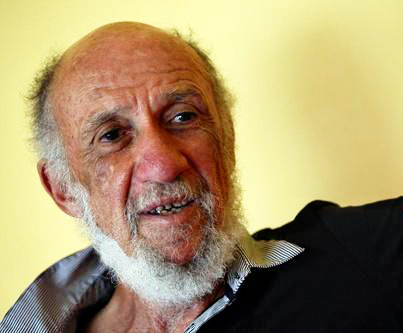
Richard Falk

By Richard Falk

Editor’s note
This is a grand essay on the dimensions, history, structures of the Middle East/Palestine-Israeli-Western conflict over about 100 years. It is extraordinarily rich – but doesn’t cause the reader to drown in too many details. I highly recommend it to any student – young or old, journalist and politician – whose understanding of the issues may be based on the woefully biased, general account in Western mainstream media.
– Jan Oberg

Preliminary Observations

In this period when the centenary of the genocidal victimization of the Armenian people in 1915 is being so widely observed and discussed, it seems especially appropriate to call attention to the comparable victimization of the Palestinian people. This second story of prolonged collective victimization also received its jump start almost a century ago with the issuance by the British Foreign Office of the Balfour Declaration supporting the Zionist movement project of establishing a Jewish national home in historic Palestine.

The most striking difference between these two experiences of severe historical wrongs is that the Armenian people are seeking acknowledgement and apology for what was done to their ancestors a century ago, and possibly seeking reparations, while the Palestinian people may sometime in the future have the opportunity to seek similar redress for the past but now their urgent focus is upon liberation from present daily structures of acute oppression.

This Palestinian situation is tragic, in part, because there is no clear path to liberation, and the devastation of oppressive circumstances have gone on decade after decade with no end in view.

The political puzzle of the Israel/Palestine conflict continues to frustrate American policymakers despite their lengthy diplomatic engagement in the search for a peaceful future that satisfies both peoples. There are significant changes, of course, that have occurred as time unwinds.

Perhaps, the most crucial change has involved the gradual extension of Israeli control over virtually the whole of historic Palestine with American acquiescence. This coincides with a growing and more vivid awareness around the world of how much suffering and humiliation the Palestinian people have endured over the course of the last century, and the degree to which this frozen situation can be blamed on the unlimited willingness of the United States to deploy its geopolitical muscle on Israel’s behalf.

My approach to the Palestinian struggle reflects four points of departure: Read More »

TFF PressInfo # 317 – Will Iran kill the nuclear bomb deal?

By Jonathan Power

Iran will find it easier to kill the nuclear bomb deal than will the Republicans in Congress. Why? Because the Republicans need some Democratic senators on their side to override a veto by President Barack Obama of a vote to bury the accord, whereas in Iran all that is needed is the decision of one man, the Supreme Leader, Ayatollah Ali Khamenei.

Iran is not a dictatorship – voters, parliament and president carry enormous weight but when it comes to the very big decisions it is Khamenei who decides. He has already said there is “no guarantee” of a final deal with the world powers, the US, the EU, Russia and China, who agreed the deal. President Hassan Rouhani, a liberally minded man, has also said that Iran would not sign up unless sanctions were lifted “on the first day” of implementation.

There is enough evidence around to suggest that Khamenei is unhappy with the Americans. Soon after the accord was publicized after the marathon negotiations in Lausanne, he tweeted, “Hours after the talks the Americans offered a fact sheet (of explanation of the terms of the agreement) – most of it was contrary to what was agreed. They always deceive and breach promises.”

To understand where Khamenei is coming from we have to separate the question Read More »

Time to give Palestinians their country back

By Miko Peled, TFF Associate

More than the threat of war on Iran, Netanyahu’s re-election is a call for war on Palestinians everywhere.
It is a call for war on human rights and international law. It is a mandate for the Israeli government to murder Palestinians. It gives Netanyahu license to continue Israel’s seven-decade policy of racism and apartheid towards the people from whom they stole the land.
It is also a call for people of conscience to impose boycotts and sanctions to divest and to isolation Israel. No more business as usual – it is time for outrage, for action, the type of action that brought down apartheid in South Africa.
It is a call to finally allow Palestinians to have their country back.
Continued reading in The Hill. Congress Blog

Iran Nuclear Deal: Can One Dare Hope?

By Farhang Jahanpour

After 36 years of hostility between Iran and the West and 13 years of nuclear negotiations, first involving Iran and the European Troika (Britain, France and Germany), followed by the P5+1 (the above countries plus the United States, Russia and China), it seems that finally one can start to be optimistic and hope that a long, dark chapter will come to an end.

The next few days up to the end of March are the most crucial days in this long road, but after many ups and downs and many false hopes the end may be in sight. To be sure, nothing is certain until the final announcement has been made. Still powerful forces are hard at work to prevent the success of the talks, but there is some room for optimism. The important point to bear in mind is that talks with Iran were never only about Iran’s nuclear program.

The victory of the Islamic revolution toppled the staunchly pro-Western Mohammad Reza Shah who was acting as the gendarme of the region on behalf of the West, and replaced him with intensely anti-Western Ayatollah Khomeini who wanted to spread the Islamic revolution and replace the existing order with a religious theocracy. The revolution created the biggest upset in the history of the Middle East since the end of the First World War, the collapse of the Ottoman Empire and the Sykes-Picot division of the Middle East among various European colonial powers.

With the start of the Cold War and the rise of the American superpower, the Middle East was divided between the two blocs, with some countries such as Egypt, Syria, Iraq, Libya and Algeria leaning towards the East and other countries such as Iran, Turkey and Persian Gulf monarchies leaning towards the West. Despite occasional upsets, that situation had remained fairly stable until the victory of the Iranian revolution.Read More »