Fears has been expressed in Europe about the recent EU parliament voting pattern. Instead of the fear and denouncing the winners we should ask: What causes such an outcome?
My short answer is this: Democracy itself is in deep crisis. It has become performance or ritual rather than something genuinely lived.
Two things stand out – one, the increase in votes going to nationalist, populist, right-wing and anti-Muslim parties as well as Euro-skeptics – particularly in Denmark, France, Greece and Britain.
Secondly, the voter turnout has fallen from 62 per cent in 1979 to 43% in 2009 and this year it increased only 0.09% in spite of the EU Commission’s attempt to increase it.
So while people struggle around the world for democracy, only 43% of the EU citizens find it meaningful to go and vote every 4th year. How tragic for an EU that tries to promote democracy everywhere, even by military force.
It is understandable that the two mentioned factors is a combination that make many in Europe – the seat of two world wars, NATO and some of the most armed and two nuclear-weapons states – concerned. Perhaps the rest of the world should be at least as concerned? Other countries such as Hungary and Spain have, on different dimensions, moved in a worrying authoritarian political direction.Read More »
In a speech by the President of the United States of America – read by millions in all corners of our world in minutes – rest assured that every single word has been weighed with utmost care.
With this in mind, Obama’s speech can be analysed as both offending to the rest of us and – exceptionally – weak.
It caused no enthusiasm among the future army officers he spoke to and no enthusiasm among leading Western media.
I will argue that
• Intellectually and morally the speech doesn’t have the basics – full of contradictions and imbued with unbearable self-praise.
• While there is a recognition of ”mistakes” such as ”our” war in Iraq and a potential step-back from interventionism, there is neither an adequate analysis of the past nor of what the future may need in terms of leadership.
Tiden för rationell politik, om begreppet någonsin funnits, är över .
”Realpolitik” har blivit en blandning av marknadsförda ord, propaganda och ledare som gör uttalanden som gränsar till absurd teater. Tunnare och tunnare länkar till Realiteten.
Detta är vad som händer när man förnekar nedgången.
Alla imperier går ner. Det amerikanska imperiet är på nedgång. Makrohistoriker (se t.ex. British Arnold Toynbee’s 12–volymarbete 1934-1961) berättar att det finns många skäl till att imperier faller:
• militarism med konstant krigföring;
• överutvidgning – försöka kontrollera mer än vad du kan hantera;
• förlust av legitimitet i andras ögon;
• strukturella ekonomiska kriser;
• moraliskt förfall;
• förlust av intellektuell och teknisk innovation;
• andra maktstrukturer ökar i styrka över tid och göra saker på nya, kreativa sätt .
Efter 1945 ansågs USA vara starkt på en rad olika maktdimensioner: militär, ekonomi, politik, legitimitet, kultur, innovation. Idag är de bara nummer ett på den militära dimensionen. När alla andra indikationer går ner, blir militären en stor börda som bara accelererar nedgången.
USA är på tillbakagång och i förnekelse. Så är även de flesta av dess allierade och sympatisörer .
Deras utrikes politiska beslutsfattare verkar tro att allt är bra och de kan ändå leda och forma världen enligt deras intresse och världsbild. Det är fortfarande i grunden en missionär .
Här är några delar av vad den består av:Read More »
The time of rational politics, if it ever existed, is over.
”Realpolitik” has become a mixture of marketing soundbites, propaganda and leaders making statement that borders on the Theatre of the Absurd. Thinner and thinner links to Real-ity.
This is what happens when decline in being denied.
All empires go down. The U.S. empire is in decline. Macro historians (see e.g. British Arnold Toynbee’s 12-volume work 1934-61) tell that there are many reasons when empires fall:
• militarism with constant warfare;
• overextension – trying to control more than you can manage;
• loss of legitimacy in the eyes of others;
• structural economic crisis;
• moral decay;
• loss of intellectual and technological innovation and
• simply other powers gaining strength over time and doing things in new, creative ways.
After 1945 the U.S. was considered strong on many power dimensions: military, economics, politics, legitimacy, culture, innovation. Today, it is only clearly Number One on the military dimension. When all the other indicators go down, the military becomes a huge burden and only accelerates the decline.
The U.S. is in decline and denial. So are most of its allies and sympathizers.
Its foreign policy-makers seem to assume that everything is fine and they can still lead and shape the world according to their interest and worldview. It remains fundamentally a missionary.
Here is some elements of what it consists of:Read More »
1. Welcome de-escalation
Vladimir Putin’s statements that separatists should not hold referendums on May 11, that he welcomes the elections in Ukraine on May 25 and that Russia is withdrawing troops from the border with Ukraine should be welcomed.
If he has been ”aggressive” and this is a ”turnabout” as many in the West believe, this turnabout is even more welcome.
If he hasn’t been aggressive but merely defensive, it is still helpful in terms of defusing the crisis.
2. Constructive response from the West
The only constructive approach so far seems to be OSCE chair Burkhalter’s “roadmap”. But it needs to get more concrete and detailed.
We now need some constructive response from the US, NATO and EU. It would be helpful if they announced that they will not try to include Ukraine in NATO or EU for that matter but respect the opinion of all Ukrainians. Read More »
On 30th April 2014, Saudi Arabia staged its largest-ever military exercises codenamed “Abdullah’s Shield” after the kingdom’s 91-year old ruler and coinciding with the ninth anniversary of his ascension to the throne. The exercises involved 130,000 Saudi troops and showcased some of the latest weapons purchased by the kingdom from the United States and China, including the Chinese CSS-2 intermediate-range ballistic missiles with a range of 2,650 kilometers (1,646 miles) which are capable of carrying nuclear warheads. The Chinese version of these missiles is already equipped with nuclear warheads. This was the first time that these missiles had been seen in public in Saudi Arabia.
Crown Prince Salman presided over the exercises, which were also watched by a number of prominent foreign guests, including King Hamad of Bahrain and more pointedly by Gen. Raheel Sharif, the Pakistani chief of the army Staff. There have been persistent rumors over many decades that in return for Saudi funding of the Pakistani nuclear weapons’ program, Pakistan had committed to provide nuclear warheads for CSS-2 missiles, should Saudi Arabia decide to have them. Earlier in the year when Prince Salman visited Pakistan, he personally invited Gen. Sharif to be his guest at the exercises. Pakistani media stressed the point that Gen. Sharif had gone to Jeddah “on the invitation of Crown Prince Salman bin Abdulaziz al Saud to witness the military exercise…” (1)
With the exception of Bahrain’s ruler, none of the other GCC rulers watched the exercises. The guests included the crown prince of the UAE, the prime minister of Jordan and military commanders from some GCC states, but Qatar pointedly did not send any representatives. This was yet another sign of a growing rift between Saudi Arabia and Qatar.
A unified GCC Command and Monetary Union
At the GCC summit held in Kuwait in December 2013, the Saudis called for a unified GCC military command to have 100,000 forces, half of which would be contributed by the Saudis. (2) However, other GCC members opposed the idea as they saw it as a way of consolidating Saudi domination of other GCC states and affirming Saudi Arabia’s position as the big brother. Many smaller GCC states value their independence, and while they would like to cooperate with other GCC members, they do not wish to be absorbed into a unified military alliance as junior partners. Oman openly expressed its opposition to the proposal and Qatar and Kuwait also followed suit. Read More »
Eliten i Sverige är mer lojal mot Nato, USA och EU än mot sitt folk
• Under de senaste 25-30 åren har Sveriges militära, säkerhets- och utrikespolitiska elit vridit Sveriges politik 180 grader.
• Dessa grundläggande förändringar inleddes av den socialdemokratiska regeringen under Göran Persson och utrikesminister Anna Lindh och har genomförts praktiskt taget utan offentlig debatt.
• Omsvängningen till interventionism, militarism och USA/Nato på alla områden har planerats gradvis, i smyg och ohederligt – kort sagt på ett sätt som är ovärdigt en demokrati.
• Denna elit är mer lojal mot Bryssel och Washington än mot svenskarna.
• Om din bild av Sverige är att det är ett progressivt, förnyande och fredsfrämjande land med global inställning som försvarar folkrätten så är den – tråkigt nog – föråldrad.
Hur Sverige har förändrats
Sverige är inte längre neutralt och det är bara formellt alliansfritt; det finns ingen mer närstående bundsförvant än USA/Nato. Landet har upphört att utveckla en egen politik och positionerar istället sig inom ramen för EU och Nato. Landet bidrar inte längre med betydelsefullt nytt tänkande – det sista var Olof Palmes kommission om gemensam säkerhet (1982).Read More »
Sweden’s elite more loyal with NATO, the US and EU than with its people
By Jan Oberg
May 2, 2014
• Over the last 25-30 years Sweden’s military, security and foreign policy elite has changed Sweden’s policy 180 degrees.
• These fundamental changes were initiated by the Social Democratic government under Goran Persson and foreign minister Anna Lindh and have been carried through virtually without public debate.
• The rapproachment with interventionism, militarism and US/NATO in all fields has been planned, incremental, furtive and dishonest; in short, unworthy of a democracy.
• This elite is more loyal with Brussels and Washington than with the Swedes.
• If your image of Sweden is that it is a progressive, innovative and peace-promoting country with a global mind-set and advocate of international law, it is – sad to say – outdated.
When it comes to Ukraine the US and the EU are adopting a holier than thou attitude which, unfortunately, leads them not to worship at the alter of truth.
Take the issue of the fuss made over alleged soldiers wearing Russian uniforms. They are not dressed in the smart fatigues of the unmarked Russian soldiers in Crimea, about which President Vladimir Putin has acknowledged he misled us. What these soldiers, leading the Russian-speaking revolt, are wearing can be bought in any army surplus store. As for the photos Western intelligence has persuaded much of the media to use as evidence, they are hazy and would not be admissible in a court of law.
The Ukranian Security Agency announced that it captured 20 of its Russian counterparts. But then it reduced the number to 10 and then to 3. But the last figure received much less highlighting from Western governments and media than the first.
How all this “Russian interference” compares with the post Cold War expansion by Nato forces up to Russia’s borders, senior Western politicians’ (including the US ambassador) provocative support for a revolutionary movement that included a healthy contingent of neo-fascists who now have seats in the Ukrainian cabinet, and the funding of opposition forces and NGOs, is to be wondered at. (I’ve long been surprised at the tolerance for Western NGOs based in Russia and China. Imagine the reverse.)Read More »
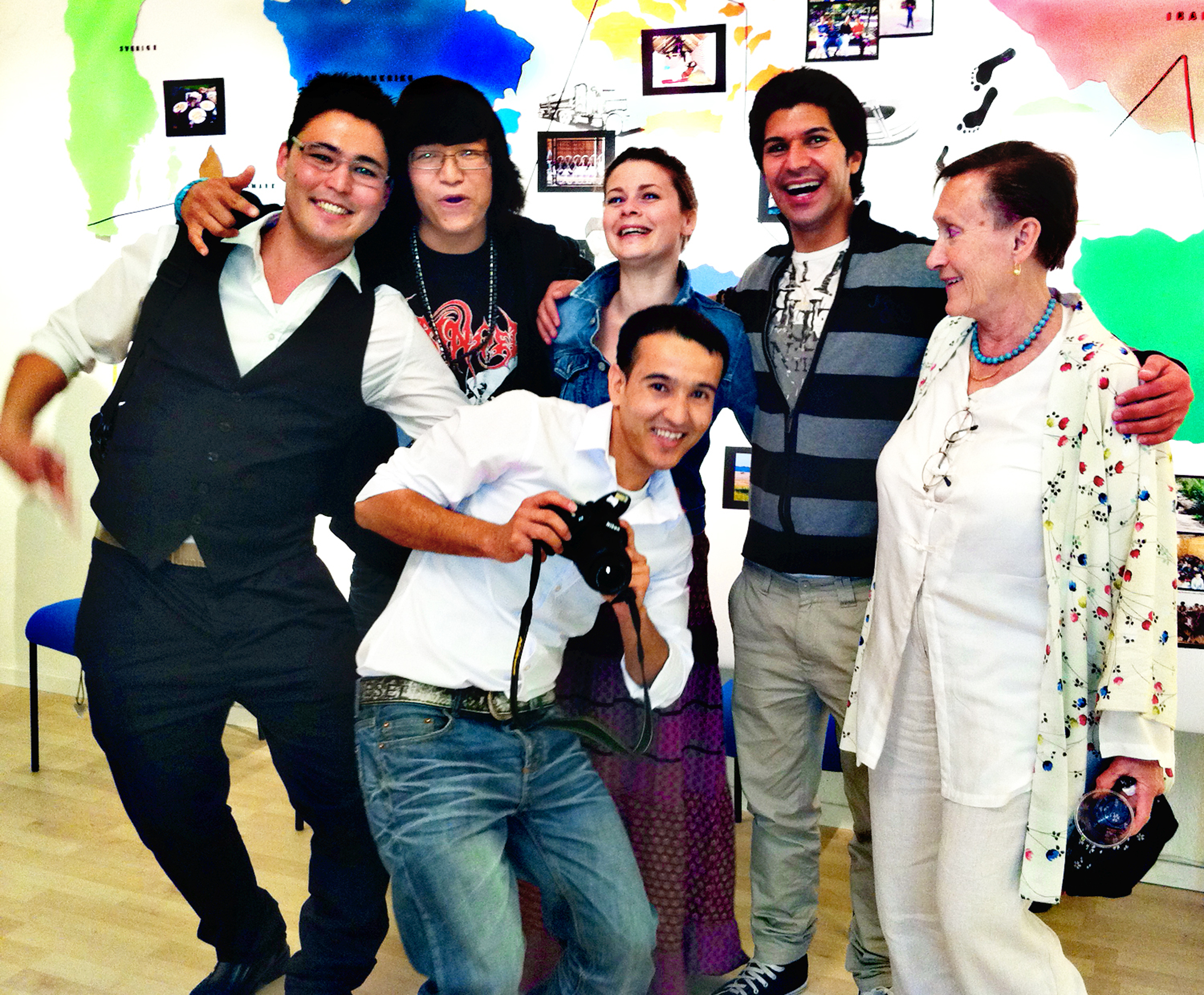
Kanske du associerar TFF med Jugoslavien, Burundi, Irak, Iran, ickevåld och fredsdebatt? Men vi har i tre år också arbetat med frågor kring integration med tonvikten lagd på ensamkommande barn från Afghanistan. Insatsen här har letts av författarna av denna projektsammanfattning.
“När vi åkte gummibåt över Turkiets hav till Samos i Grekland greps vi av Grekiska poliser. Poliserna kastade alla våra kläder i havet och gjorde små hål i vår båt.” Ali
“På kvällen satt vi i en båt. Vi åkte till Grekland. På vägen till Grekland fick vi problem med båten. En polisbåt kom och klippte sönder en del av motorn. Vi paddlade med händerna och fyra åror.” Hassan
Vi lever i en märklig tid. Framför våra ögon pågår en stor migrationsvåg av ensamma barn. Något liknande har inte hänt sedan de finska vinterkrigsbarnen kom till Sverige på 40-talet.
De barn, som utan föräldrar, nu flytt hit undan krigets fasor har gjort en annan resa. De kommer från länder vi inte vet mycket om. Vilka är dessa barn och ungdomar, vad tänker de på och hur är livet i Sverige? Vi har lärt känna och lyssnat till några av dem. De är alla från Afghanistan.
Hur deras berättelser kommit till och vad de har att säga kan man läsa i denna rapport, som summerar tre års projektarbete. Här kan man också få veta hur vi sökt arbetsformer som kan underlätta den svåra etableringsfasen.
Vid öppnandet av en utställning
Vi berör också det komplicerade i att återförenas som familj.
Vi vänder oss till alla som arbetar med barn, ungdomar och föräldrar. Men också till alla som är nyfikna på vad som sker i vår samtid.
Känns läsningen tung – bläddra vidare till pojkarnas berättelser och det öppnas en ny värld.
En av de unga sammanfattar vår tid tillsammans såhär:
– “Jag har fått hjälp, ni har fått hjälp, vi hade kul!”
Som broar över mörka vatten – ett integrationsprojekt har haft som övergripande syfte att stärka människor i övergångsskeden i livet. Målgrupper har varit nyblivna föräldrar, ensamkommande flyktingbarn/ungdomar samt föräldrar som kommit till Sverige som flyktingar eller som anhöriginvandrare till ensamkommande flyktingbarn och ungdomar.
De övergångsskeden som stått i fokus är att bli förälder och att migrera. I det senare fallet handlar det om att bryta upp från ett socialt sammanhang och finna sig till rätta i ett nytt. I migrationsprocessen ingår ofta också att återförenas som familj efter år av splittring.



 TFF Associates Blog 2011-2017