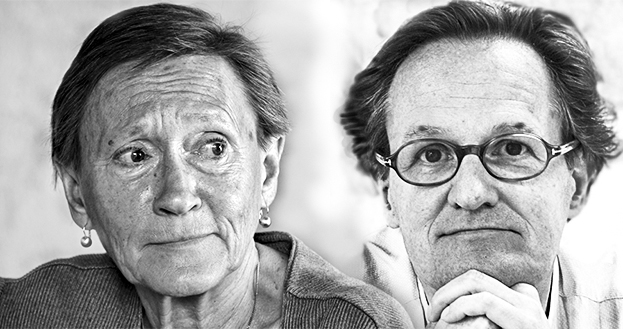
The Axis of Evil

By Johan Galtung

Do you remember the Axis of Evil – Iraq-Iran-North Korea?

George W. Bush, or his speechwriter rather, concocted that axis in 2002 as focus for a global war on terror. The key term is “evil”–not “enemy”, “hostile”–the connotation being “possessed by Satan”. The proof is opposition to a USA chosen by God, as God’s Own People, as “In God we trust”. To exorcise Satan only violence works.

In 1953 North Korea under Kim Il Sung did not capitulate to the USA, only cease-fire, the first US non-victory since 1812. Very evil.

In 1978-79, Iran, by the Khomeini Islamic revolution, decolonized Iran from US dominance and evicted the shah, who had been installed by a US-UK (CIA-MI6) coup in 1953; in fact undoing 1953. Very, very evil.

On 17 May 1987 Saddam Hussein, used by the USA to fight Iran with no gains for Iraq, fired on a US vessel (USS Stark incident). Very, very, very evil.

However, for a USA, never questioning bringing US style democracy and US free market to all countries in the world, this was not seen as others having their own goals. It was seen as exactly that, evil.Read More »

Peace Studies Epistemology: Descartes-Vico-Daoism; And Europe

By Johan Galtung

Keynote, European Peace Research Association – Tromsö, Norway, 7 Sep 2015

Epistemology is the branch of philosophy dealing with valid knowledge; and the focus of this conference is peace in Europe. We live in a wonderful world blessed with many civilizations each with an epistemology, and in a continent with rich diversity. My task is to draw on some of this, and apply it to the peace politics of Europe.

René Descartes, in Discours de la Méthode, Leiden 1637, had four basic rules; accepted, mainly unwittingly, by (North)Western science:

1. never to accept anything for true not clearly known to be such;
2. to divide difficulties examined into as many parts as possible;
3. start with the simplest and easiest, ascend to the more complex, pay attention to the asymmetric relation of antecedence and sequence;
4. make enumerations and reviews to assure that nothing was omitted.

Giambattista Vico, in Scienza Nuova, Napoli 1725: anti-Descartes for only reflecting empirical reality, not human ability to create new reality. Vico is a macro-historian, inspiring Marx, with three stages in human history, divine-heroic-human, envisaged by “poets” in the Greek sense of “creators”. He became the guru of historians, easily making the mistake of focusing only on the creativity of the powerful.

Daoism, thousands of years old, views reality in terms of holism and dialectics:…

Continued here.

TFF 30th Anniversary Benefit Event

Lund, Sweden, September 5, 2015
Updated September 5 and our apologies if you’ve received this before.
We want to catch all and miss no one over all these years.

Dear friend!

We are happy to invite you to the TFF 30th Anniversary Benefit Event !
September 11-12, 2015

Live Lectures by videostream
Exciting lectures on world affairs and peace over two days – See program below.

This is not an invitation to visit the foundation in person.
It is an online, live video streamed event that you will be able to follow from anywhere in the world
Here is the link and it’ll also be shown via Facebook, Twitter and on our website.
And all the lectures will be available later as videos on our own video channels.

Open House at the foundation
Saturday September 12 at 14:00-17:00
It’s at Vegagatan 25 in Lund, Sweden – deadline for your registration September 7.

1. Lectures on-site with live streaming

We’ll shortly tell you the links where you may see it all and where videos will later be available.

Lecture program

Friday September 11

Live, video streamed:

16:00
September 11: Alternatives to the devastating War On Terror – Jan Oberg

17:00
TFF 30 Perspectives – TFF Associates and Board on the better world we dream of – And cheers!

Saturday September 12

Live, video-streamed 10:00-18:00

10:00
Iran And the Nuclear Issues – Gunnar Westberg

11:00
Integration – Why and how? Example: Afghan Youth In Sweden – Christina Spännar, Sweden

12:00
Nuclear abolition is necessary and possible – Gunnar Westberg, Sweden

13:00
West and East: Ukraine and New Cold War? – Jan Oberg

14:00
Human Rights And War Crimes – Jonathan Power, UK/Sweden

15:00
Women, Self-Esteem and Violence – Annette Schiffmann, Germany

16:00
Yugoslavia – What Should Have Been Done? – Jan Oberg (in Memoriam Håkan Wiberg), DK/Sweden

17:00
Media and Peace – Sören Sommelius, Sweden

18:00
Burundi’s Crisis And Possible Ways Out – Burundi expert

2. Open House hours 14-17
Buffet, drinks, coffee and tea, cakes and other sweets.
You must register your visit by September 7 at the latest at TFF30@transnational.org or call 0046 738 525200.

3. Peace with peaceful means
The day is devoted to the – ongoing – struggle for ”peace by peaceful means“ as the UN Charter puts it. Gandhi said that the “means are goals in-the-making”. To realize that noble goal remains the mission of TFF. Today we show you how and promote all related activites with the help of social media and new video technologies.

4. This is a Benefit Event – Your support to TFF please!

TFF is unique in being totally independent of government and corporate funds. It’s people-financed. No one related to TFF has a salary; we’re all-volunteer.
This provides for truly free research and permit us to be critical and constructive and practise our freedom of expression. Not everyone can boast that today!
Wars, nuclear and conventional arms, bombing raids and occupations etc. are financed by your tax money. Sadly and unfairly, no tax funds go to realise the UN norm above.

We think that people who believe that peace is better than violence should also pay something to the research, education and activism in favour of that UN norm.
If you can come to Lund on our big day or sit somewhere following our rich lecture program, we urge you strongly to make a donation. Every day over 30 years, TFF has given the world something useful.

You can do it right in the middle of our homepage – click the “Give” button or under the headline “Support” in the right-hand column where many options exist, including PayPal. It easy, fast and secure!
Cash – but no cheques – can also be donated at the event.* *

Thank you so much!

5. Videos
We’re proud to present the first two short videos – 3 more to come – in which the founders talk about various aspects of 30 years in the service of peace on the basis of questions asked by board member Annette Schiffmann. Watch, comment and subscribe!

The First

The Second

6. Brand new Online Magazine
The announced online magazine launched to mark our Anniversary is now here!

“Transnational Affairs – TFF Magazine for conflict-resolution, non-violence and peace-building”

Excited as we are, we’ll be back to you soon with more details!

Yours truly

Christina & Jan
Founders

* If you are able to come in person, you must register to TFF30@transnational.org or call 0046 738 525200 by Tuesday September 8 at the latest.

* * This does not apply to you if you have already made a donation in 2015.

TFF PressInfo # 343: Can nuclear war be avoided?

By Gunnar Westberg

The Canberra Commission had as members former leading politicians or military officers, among others a British Field Marshal, an American General and an American Secretary of Defence and a French Prime minister.

The commission unanimously agreed in their report in 1996: The proposition that nuclear weapons can be retained in perpetuity and never be used – accidentally or by decision – defies credibility. The only complete defence is the elimination of nuclear weapons and assurance that they will never be produced again.

So that’s it: Nuclear weapons will be used if they are allowed to remain with us. And even a “small” nuclear war, using one per cent or less of the world’s nuclear weapons, might cause a world wide famine leading to the death of a billion humans or more.

Lt Colonel Bruce Blair was for several years in the 1970s commander of crews with the duty to launch intercontinental nuclear missiles. “I knew how to fire the missiles, I needed no permission,” he states. In the 1990s he was charged with making a review for the US Senate on the question: “Is unauthorized firing of US nuclear weapons a real possibility?”

Blair’s answer was Yes, and the risk is not insignificant.Read More »

Our 30 years with peace – And what happened to world peace? Part II

By Christina Spannar and Jan Oberg, TFF founders

Part 1 here

TFF was established on September 12, 1985. We think that it’s 30th Anniversary is a fitting occasion to reflect on what has happened in the big world and in our lives with the foundation.

It is also a piece of Lund’s research history in general and of peace research and education in particular.

Part 2

Weak aspects of TFF

• Being outside many networks and institutions – it has become more and more difficult to influence the world if you are small, independent and don’t accept governmental and corporate funds.

• A perception that the interest/commitment of TFF is out of sync with the sentiments of times, of the Zeitgeist. In spite of that we maintain the fundamental belief that peace is essential and that we can forget about the rest if major wars or nuclear exchanges take place.

• Too ‘academic’/theoretical to forge deeper, permanent links with public opinion and movements.

• Too ‘radical’ or ‘idealistic’ to be interesting to governments and most mainstream media.

• A constant very hard work load – resting on a small international group and on the founders in Sweden – vulnerability also in the perspective of us having gotten 30 years older.

• The struggle for funds getting more and more tough and we are much more vulnerable than, say, ten years ago. Being all-volunteer, we still have to pay the bills for what enables us to do things: the Internet, computers, travels to conflict areas, insurance, bank fees, fund-raising, phones, sending out mails, using social media, etc. 
The generosity of yesterday has been replaced by a ”stingy” attitude of being entitled to get things free in the affluent Internet-based society. This attitude implies that it is not my responsibility to finance peace, somebody else does (and the somebody else is never me). Few citizens seem to recognise that they are the taxpayers who de facto finance all the weapons and wars. 
The far majority of those who support us are idealists without particular means – while wealthy people for peace a far and few between.

TFF’s stronger sides

• We are still here, operating with amazing TFF Associates around the world who share the commitment to ‘peace by peaceful means’.

• We have remained faithful over all these years to the original ideals, not succumbing to go mainstream/politically correct to achieve more funds or appearing acceptable to the masters of war, i.e. government – neither by the way in Sweden nor Denmark.Read More »

Our 30 years with peace – And what happened to world peace? Part I

By Christina Spannar & Jan Oberg, TFF founders

Part I

TFF was established on September 12, 1985. We think that it’s 30th Anniversary is a fitting occasion to reflect on what has happened in the big world and in our lives with the foundation.

It is also a piece of Lund’s research history in general and of peace research and education in particular.

Motivation

The 1980s was a decade of gross changes in Europe, the struggle against nuclear weapons in particular.

Lund University was predominantly about education and single research projects – while TFF could be more of an experimental playground. We wanted to do truly free research and not negotiate with higher levels at, say, the university what to do where, in which countries to work and what to say to the media.

Peace has always been controversial and there were – and remain – enough examples of places that become ‘mainstream’ and routine – rather than experimental and radically ’alternative.’

What we did not know back in 1985 was that Lund University wanted to get rid of all inter-disciplinary academic endeavours – women, environmental, human rights and peace studies – and closed down the Lund University Peace Research Institute of which Jan had been the director since 1983, in November 1989.

Being a private undertaking

The HQ is the first floor of a two-family house in a villa area of Lund. Visitors, board members etc. have held seminars there, eaten and often stayed with us. Board members were colleagues and personal friends and new board members were recruited from Associates who were also personal friends, like-minded colleagues or mentors one way or the other.
Our children and other friends were often involved in the things TFF did – including printing newsletters in the basement, gathering them, putting them in envelopes and fix address labels.

Goals

The permanent top priority has been to promote the UN Charter norm that ‘peace shall be created by peaceful means’ (Article 1).
This was promoted through traditional book-based research and later field work – i.e. conflict analyses and mediation and peace plans – in conflict zones, but also through intense public outreach/education such as newsletters, media participation, press releases – and, from 1997, the Internet and then social media.

Secondly, we wanted to integrate theory and practice. While it is good to do basic research in the laboratory, what is peace research really worth if it is never applied to real life’s tough situations?

The first five years we did book projects like everybody else in the trade. But in September 1991 TFF went on its first peace mission to former Yugoslavia. It is safe to say that we were among the first to embark on that in-the-field philosophy and practice it – with all the problems and risks that it entailed.

Foundation and management

The word ‘foundation’ does not mean that we had an endowment to start out with – and funding has been a constant problem every day and year ever since. And getting worse over time.
But it meant flexibility and – being and remaining small – quickly adapting to a changing world.

Being our own and not part of Lund University was another advantage – and a drawback in terms of finding funds. TFF had to build its own reputation from scratch rather than piggyback on that of the university’s. It was quite tough but also more rewarding in the long run.Read More »

TFF PressInfo # 335 Greek debt and West-Russia-China-Japan

By Johan Galtung

The game is dirty and has lasted 70 years. It came with the idea of development as imitating, but not catching up, with the West, for all states, including the deluge of states due to decolonization.

The formula for big profit is simple: give credit to a country poor enough not to be able to pay it off quickly, yet not so poor that it cannot go on servicing the loan for years. To be worthwhile the project must be capital-intensive, like (air)ports and highways to the (air)ports for import-export, assembling cars–something for the rich. Investment to lift up people in misery, or ravished nature, makes no sense: the poor need very little capital and can only pay back in labor, whereas nature pays back but is not capitalized.

Ideally, the country asks for more credit to service the first, and a second, third loan is then offered at higher interest. Till the debt is non-sustainable; the debtor country is then squeezed dry.

Then comes the time for debt relief, provided the profit made on investment in debt exceeds the debt forgiven.

From Agence France Presse comes a study: Germany made € 100 billion on the Greek crisis since 2010 – amounting to 3% of the GDP – on the difference between interests paid to German banks and the interest they paid; from German banks to ECB 1%, to German banks from debtors, say, 6%.

Germany’s share of the total bailout package to Greece – with the latest for payment due August 20 – is € 90 billion, meaning a € 10 billion profit if Greece cannot be squeezed further. The money flowing into Greece is to keep banks, not people, afloat. And to benefit USA, France and the Netherlands, but to a lesser extent than Germany.

This is the way the Third World has been treated by the USA-based IMF and the World Bank; what is new is EU treating a fellow EU member like a Third World country (or worse).

Next in line is Ukraine, Read More »

TFF PressInfo # 333 – Look at nuclear weapons in new ways!

By Jan Oberg

It’s absolutely necessary to remember what happened 70 years ago in Hiroshima and Nagasaki, see the movies from then, listen to the survivors, the hibakusa. But it isn’t enough for us to rid the world of these crimes-against-humanity weapons. And that we must.

Hiroshima and Nagasaki is history and it is also the essence of the age you and I live in – the nuclear age. If the hypothesis is that by showing these films, we create opinion against nuclear weapons, 70 years of every more nuclearism should be enough to conclude that that hypothesis is plain wrong.

There is a need for a frontal attack on not only the weapons but on the nuclearism – the thinking/ideology on which they are based and made to look ‘necessary’ for security and peace.

Nuclear weapons – only for terrorists

At its core, terrorism is about harming or killing innocent people and not only combatants. Any country that possesses nukes is aware that nukes can’t be used without killing millions of innocent people – infinitely more lethal than Al-Qaeda, ISIS etc. Since 9/11 governments and media have conveniently promoted the idea that terrorism is only about small non-governmental groups and thus tried to make us forget that the nuclear ‘haves’ themselves practise state terrorism and hold the humanity hostage to potential civilizational genocide (omnicide).

Dictatorship

No nuclear state has ever dared to hold a referendum and ask its citizens: Do you or do you not accept to be defended by a nuclear arsenal? Nuclear weapons with the omnicidal -kill all and everything – characteristics is pure dictatorship, incompatible with both parliamentary and direct democracy. And freedom.

Citizens generally have more, or better, morals than governments and do not wish to see themselves, their neighbours or fellow human beings around the world burn up in a process that would make the Holocaust look like a cozy afternoon tea party. In short, nuclear weapons states either arrange referendums or must accept the label dictatorship.

The idea that a few hundred politicians and military people in the world’s nuclear states have a self-appointed right to play God and decide whether project humankind shall continue or not belongs to the realm of the civilisational perverse or the Theatre of the Absurd. Such people must run on the assumption, deep down, that they are Chosen People with a higher mission. Gandhi rightly called Western civilisation diluted fascism.

Unethical

Why? Because – simply – there can be no political or other goal that justifies the use of this doomsday weapon and the killing of millions of people, or making the earth uninhabitable.

Possession versus proliferation

The trick played on us all since 1945 is that there are some ‘responsible’ – predominantly Christian, Western – countries that can, should, or must, have nuclear weapons and then there are some irresponsible governments/leaders elsewhere that must be prevented by all means from acquiring them. In other words, that proliferation rather than possession is the problem. However, it is built into the Non-Proliferation Treaty, NPT, that those who don’t have nuclear weapons shall abstain from acquiring them as a quid pro quo for the nuclear-haves to disarm theirs completely.

That is, the whole world shall become a nuclear-weapons-free zone (NWFZ).

Those who have nuclear weapons provoke others to get them too. Possession leads to proliferation.

The recent negotiations with Iran is a good example of this bizarre world view: the five nuclear terrorist states, sitting on enough nukes to blow up the world several times over and who have systematically violated international law in general and the NPT in particular, tell Iran – which abides by the NPT and doesn’t want nuclear weapons – that it must never obtain nuclear weapons. Simultaneously, they turn a blind eye to nuclear terrorist state, Israel’s 50+ years old nuclear arsenals.

And it is all actively assisted by mainstram media who seem to lack the knowledge and/or intellectual capacity to challenge this whole set-up – including the racist belief structure that “we have a God-given right and are more responsible than everybody else – particularly non-Christians…”

But what about deterrence?

You’ve heard the philosophical nonsense repatedly over 70 years: Nuclear weapons are good to deter everyone from starting the ‘third world war’. That nukes are here to never be used. That no one would start that war because he/she would know that there would be a mass murder on one’s own population in a second strike, retaliation. But think! Two small, simple counterarguments:

a) You cannot deter anyone from doing something unless you are willing to implement your threat, your deterrent. If A knows that B would never use his nukes, A would not be afraid of the retaliation. Thus, every nuclear weapons state is ready to use nukes under some defined circumstance; if not there is no deterrence whatsoever.

b) The United States has long ago done two things (as the only one on earth): 1) decided on a doctrine in which the use of small nukes in a conventional role is fundamental, thus blurring the distinction between conventional and nuclear weapons; 2) its missile defence (that it also wants in Europe) is about preventing a second strike back – shooting down retaliatory missiles – so it can start, fight and win a nuclear war without being harmed itself. Or so it can hope.

There are many other aspects – but let’s mention just one more:

Nuclear weapons have already caused wars

The war on Iraq is a good example. If Iran will be bombed – which can’t be excluded at all – it’s about nuclear weapons. Ukraine is about expanding nuclear-based NATO and nuclear-based EU right up to the border of Russia. The enemy image of North Korea – where war can also not be excluded in the future – is mainly about it being a nuclear weapons state. The conflicts surrounding Israel are intimately connected with its nuclear weapons threatening everyone – non-nuclear – around it.

Hope

No, let’s rid the world of this civilisational mistake. Nuclearism and nuclear deterrence is the world most dangerous ideology comparable to slavery, absolute monarchy and cannibalism that we have decided – because we are humans and civilised and can think and feel – to put behind us.

There is no co-existence possible between nuclear weapons on the one hand and democracy, peace and civilisation on the other.

It’s time to regai hope by looking at all the – civilised – non-nuclear countries and follow their example. Thus, 99% of the southern hemisphere landmass is nuclear weapons free. 60% of the 193 states, with 33% of the world population, are included in this free zone.

And here are the countries which have contemplated to obtain – but decided to abstain from – nuclear weapons (including those who have had them and gotten rid of them): Sweden, Switzerland, Yugoslavia, South Africa, Libya, Austria, Mongolia, Ukraine, Kazakhstan, Japan, Antartica, the Seabed, Outer Space. Finally, dozens of countries have the technical capacity but would not dream of joining the nuclear club.

The West, the U.S. in particular, that started the terrible Nuclear Age should now follow the far majority of humanity, apologise for its nuclearism and move to zero.

Japan revisited – 70 years later

By Johan Galtung

70 years have passed since Japan capitulated to the Allies 15 August 1945. The key early postwar Japanese politicians, diplomats, academic advisers etc. have now retired and give highly interesting accounts, revealing some of the tricks and lies of the state system.

That may also apply to them if trying to relieve themselves of bad conscience. However, leaving that aside, the focus here is on how I myself, conventionally knowledgeable of Japan, revisit, and revise.

More particularly, on three aspects of Asia-Pacific history:

• I thought, “Asia for Asians” meant “Asia for Japan”; but what happened?

• Japan pre-1945; the economic-military-cultural-political legacy?

• Japanese atrocities particularly in Korea and China; apologies?

Only Japan in the whole world fought all Western colonial powers: Russia 1904-05, Germany WWI, USSR WWII, English-French-Dutch December 1941, USA after Pearl Harbor. For that, they all hated Japan. Other Asians, not China, fought their own: India-Malaya-Burma the English, Vietnam the French (and Japan-USA-China), Indonesia the Dutch-Portuguese.

Japan “advanced”, filling gaps left by West, occupied, extracted resources. Nevertheless, for those who experienced this for the longest time, Taiwan since 1895 and Korea since 1910, with obvious shortcomings, it was an inclusion in an expanding Japan, very different from Western colonization. Read More »