
Jan Oberg commenting on the emerging new Cold War on June 15, 2015
It isn’t helpful to pre-position heavy materiel in Eastern Europe if it is peace you want…
Jan Oberg commenting on the emerging new Cold War on June 15, 2015
It isn’t helpful to pre-position heavy materiel in Eastern Europe if it is peace you want…

Af Claus Kold
Kampflys opgaver
Hvis vi i Danmark står over for en anskaffelse af nye kampfly til omkring 40 milliarder, så må man gå ud fra at forholdet mellem det købte og opgave vejer tungt, og at dette forhold er blevet grundigt undersøgt. Det virker imidlertid ikke sådan. Nok er flyenes teknikker blevet grundigt diskuteret, men hvor er diskussionerne, om kampflyene passer på de opgaver, som fremtidens væbnede konflikter udgør?
Krig mellem stater – symmetrisk krig
Argumenterne for at anskaffe nye kampfly hviler på en bestemt stats- og samfundsmodel, med nogle tilhørende antagelser/faktorer. Disse faktorer er så at sige bygget ind i flyenes teknik, men de diskuteres som teknik og ikke som antagelser/formål.
I denne tekst vil jeg derfor tage udgangspunkt i denne tænknings egen logik, da det samtidig er den, der er herskende i Folketinget, i Forsvaret og i store dele af dansk sikkerhedspolitisk tænkning, og se om argumenterne holder, selv om vi bliver inden for denne måde at tænke stat, samfund og konflikthåndtering på.
Argumenterne for anskaffelsen af nye kampfly bygger på en tænkning, der fødtes med den Westphalske fredsslutning i 1648. Den Westphalske fred startede en periode fra 1648 til 1945, som ledte til skabelsen af en bestemt type stat, der (i princippet og i lovgivningen) adskilte regering, militær og civilbefolkning. Read More »

Af Jan Øberg
Det er utilstedeligt at vi endnu ikke har skyggen af en ordentlig, informeret debat om sikkerhedspolitikken og økonomien forud for beslutningen. Årsagen er at der ikke findes nogle for samfundet gode argumenter for dem.
Alle partier med undtagelse af Enhedslisten mener at Danmark bør anskaffe nye kampfly – der i bedste fald vil være i funktion om 5 år. Dagens pris – afhængig af antallet fly – er på 30 milliarder kroner – godt 5000 kroner per mand, kvinde og barn i vort land – og mindst 100 milliarder kroner til brugsomkostninger frem til 2045. I dagens tal kostede Storebæltsbroen 37 milliarder.
Debatten har hidtil ikke handlet om hvad i alverden vi skal med disse maskiner, kun om valget mellem tre typer. Fakta og problemer holdes helt bevidst i det dunkle og skal skydes ud til efter valget for derpå at træffe beslutningen hurtgit så ingen opdager gigantinvesteringen – i en tid hvor der skæres ned på alt andet.
Hvorfor mon? Fordi der ikke findes nogle for samfundet gode argumenter for kampfly!
En seriøs diskussion blandt politikere, medier og befolkning burde omfatte mindst disse punkter:
Prisen
Der findes ingen eksempler på at tilbudspris på den slags maskiner ligner slutprisen. Fordyrelser er indbygget i alle store militærindustrielle projekter – slag på tasken 25% fordyrelse mellem beslutning og leverance.Read More »

By Johan Galtung
Violence is to harm and hurt body, mind, spirit, even lethally, suicide, homicide, genocide (“cide”, from Latin “caedere”, falling). The focus here is on body violence, “sui” standing for Self, “homi” for Other. They do not exclude each other, they can be combined.
We have in mind US shootings-killings in recent decades, often at schools, spraying Others with bullets, in the end also Self, at his own hand or somebody else’s, with a gun. The killing by somebody else may or may not have been expected, but exposure to such extreme risk makes intention likely. In short, homicide and suicide. Both-And.
Hitler sacrificed millions of Germans and committed suicide.
We are used to seeing suicide as the consequence of life being intolerable: “I am better off leaving this world”; and homicide as other(s) being intolerable, “the world is better off without you”. These tragic, aggressive outcomes of double frustration may be rooted in unsolved problems and conflicts (dilemmas, disputes). Seeing it that way the “both-and” category makes sense: “I am a total failure; but you people betrayed me and deserve to be severely punished”.
Suicide can be combined with individual or collective homicide. The latter should not be confused with Durkheim’s distinction between egoistic suicide on behalf of oneself only, and altruistic suicide, Read More »
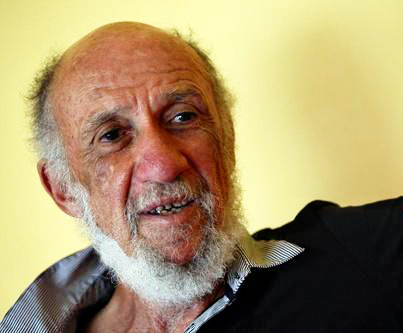
By Richard Falk
Editor’s note
This is a grand essay on the dimensions, history, structures of the Middle East/Palestine-Israeli-Western conflict over about 100 years. It is extraordinarily rich – but doesn’t cause the reader to drown in too many details. I highly recommend it to any student – young or old, journalist and politician – whose understanding of the issues may be based on the woefully biased, general account in Western mainstream media.
– Jan Oberg
Preliminary Observations
In this period when the centenary of the genocidal victimization of the Armenian people in 1915 is being so widely observed and discussed, it seems especially appropriate to call attention to the comparable victimization of the Palestinian people. This second story of prolonged collective victimization also received its jump start almost a century ago with the issuance by the British Foreign Office of the Balfour Declaration supporting the Zionist movement project of establishing a Jewish national home in historic Palestine.
The most striking difference between these two experiences of severe historical wrongs is that the Armenian people are seeking acknowledgement and apology for what was done to their ancestors a century ago, and possibly seeking reparations, while the Palestinian people may sometime in the future have the opportunity to seek similar redress for the past but now their urgent focus is upon liberation from present daily structures of acute oppression.
This Palestinian situation is tragic, in part, because there is no clear path to liberation, and the devastation of oppressive circumstances have gone on decade after decade with no end in view.
The political puzzle of the Israel/Palestine conflict continues to frustrate American policymakers despite their lengthy diplomatic engagement in the search for a peaceful future that satisfies both peoples. There are significant changes, of course, that have occurred as time unwinds.
Perhaps, the most crucial change has involved the gradual extension of Israeli control over virtually the whole of historic Palestine with American acquiescence. This coincides with a growing and more vivid awareness around the world of how much suffering and humiliation the Palestinian people have endured over the course of the last century, and the degree to which this frozen situation can be blamed on the unlimited willingness of the United States to deploy its geopolitical muscle on Israel’s behalf.
My approach to the Palestinian struggle reflects four points of departure: Read More »
By Jan Oberg
Today, May 9, the citizens and government of Russia commemorate V-Day – that it is 70 years ago they won over Nazi Germany. The price they paid were 20-26 million human beings of which 9 million soldiers. – in other European countries the victory has been celebrated this past week. The total casualties of the Second World War was at least 60 million, depending on how you count.
People and governments care about our own history and sacrifices. The implicit message of course is: Pay respect to those who sacrificed their lives and may it never ever happen again. And the world knows everything about the Holocaust/Shoah that cost the lives of 6 million Jews.
However, the world knows much less about the huge concentration camp in Jasenovac, Croatia, where at least 100.000 Serbs, Jews and Romas was exterminated. Serb suffering didn’t fit the Western narrative during the Yugoslav dissolution wars in which Crotia was only a historically innocent victim and Serbs the cause of it all.
The almost incomprehensible suffering of the Russian and other peoples in the Soviet Union also doesn’t fit the present Western narrative about Ukraine and the new Cold War-like period we are in Read More »
By Jan Oberg
Virtually everyone with an expertise in humanitarian crisis has warned about the unfolding catastrophe these very days in Burundi – the head of UNHCR, former UN Humanitarian chief Jan Egeland, the UN Secretary-General and his envoy, the International Crisis Group, specialists on Burundi, human rights organisations such as Human Rights Watch, civil society organisations inside Burundi, etc. TFF did it in PressInfo 319 of April 29, 2015.
Everyone who cares will see all the red lamps and hear the alarm bells. We have a history of genocide in this country and neighbouring Rwanda just a few years ago. There is something to build our early warnings on. But who is listening? Who is taking action, serious political action?
There have been meetings in the capital Bujumbura, regional leaders, the UN Envoy and a US Ambassador have met with the president and put pressure, urged, expressed concern or appealed. Unfortunately, it seems to be a display of powerlessness and lack of real political will.
This tired diplomacy might even convince the Burundian president that he can safey continue his stubborn policies because – and that’s his advantage – the country called Burundi is of so little real interest to anyone that those who could do something turn their heads and pretend they just don’t see.
We may of course sit and wait. Hoping it will all miraculously be good again tomorrow. Here are some more or less realistic hopes: Read More »
By Jan Oberg
The world’s leading countries are busy with ongoing conflicts and wars in areas of strategic importance to them. Organisations that work with humanitarian issues and post-war healing have exhausted their capacities long ago. It’s repair work but it must be done.
So there is hardly any capacity in the world to do what would be much more productive: Prevention of violence (yes, not of conflict but of violence). For decades there has been talk of early warning – but if it works at all, there is little or no early listening and even less early action.
If it all worked as it ought to, the world would have a violence-prevention machinery in place and it would, these very days, plan what to do before a catastrophe descends upon a small, beautiful African country – poor, mal-developed and of no strategic significance to bigger powers. That is, it would do a genuine humanitarian intervention to save lives in time.
The world’s neglect of Burundi
Since the genocide in the two neighbouring countries, Rwanda has probably been mentioned 100 times when Burundi was mentioned 1. Rwanda got the diplomatic attention, the investments, the aid, the Hollywood movies and books. Annually when the world commemorated the genocide that took place in both countries, everybody talked about Rwanda as if Burundi didn’t exist. One reason apart from sheer ignorance is that ”only” 300.000 were killed in Burundi’s genocidal civil war while three times more in Rwanda. About Burundi’s civil war.

Every year the development aid given to Burundi was around or less than 50% of what donor countries had pledged. Today, the two capitals Bujumbura and Kigali are like two different worlds. The best the world has done for Burundi was the remarkable UN mission which, regrettably, the Burundian government always wanted somehow to get rid of.
It can be argued the consequences of this relative neglect by the world are now becoming visible.
Combine that with the last few days of rioting against President Nkurunziza’s extremely dangerous manoeuvring to be elected for a third term and you have a situation that may soon present itself as yet another major human tragedy the world failed to do anything about before it was too late.
With the accumulated experience from TFF’s projects in Burundi from 1999-2012*, I believe there are extremely strong reasons to produce not only lame, standard diplomatic statements but to take action to prevent a new catastrophe.Read More »
By Richard Falk
The notorious, yet influential, German jurist, Carl Schmitt famously insisted that ‘a right of exception’ was the core reality of national sovereignty. By this he meant that internal law could be put aside by ‘the sovereign,’ inhering as the crux of the relationship between state and society. In this regard international law has no overriding claim of authority with respect to sovereign states, at least from the perspective of statist jurisprudence.
This discretion to ignore or violate law is distinct from submission to law as a realistic adaptation by weak states to political realities or compliance undertaken voluntarily for pragmatic reasons of convenience and mutual benefit.
When the UN was established, it was configured, to appeal both to realist minds who were eager to show that they had learned the lesson of Munich and to those architects of international cooperation that did not want the folly of the League of Nations, seen as a politically irrelevant sanctuary for utopians and dreamers to be repeated in this newly created organization.
To achieve these ends the UN Charter vested only the UN Security Council with the power of decision (as distinct from recommendations), and limited its membership originally to nine states of which the five designated winners of World War II were given both permanent membership, and more importantly, a right of veto.
In effect, the right of veto was a constitutional right of exception embedded in the UN Charter. It formulated the master procedural rule of the Charter as one that allowed permanent members of the Security Council to block any decision that was perceived to be sufficiently against their national interests or those of its friends. Read More »
By Johan Galtung
Mohandas Gandhi invented the nonviolent approach to basic social change, Satyagraha, in South Africa in the early 20th century; Nelson Mandela presided over the birth of a one person-one vote democracy at the end of the century. Both were lawyers, trained in English Common Law; good in the sense of a keen consciousness of what is right and wrong, bad in the sense of a court process identifying who is in the wrong rather than solving underlying conflicts, and wrong in the sense of punishing the wrong-doer; violence rather than cooperation.
Both built on the positive side of law – the indelible rights of the people for whom they were fighting by comparing empirical facts with normative rights; immigrant Indians in the case of Gandhi, original inhabitants in South Africa, the Blacks, in the case of Mandela.
Gandhi (1869-1948) did not live to see equality between Indians and whites in South Africa, but in India, his mother-father land; Mandela (1918-2013) did. They won their struggles – but the societies that emerged still suffer from other and major ones.
A deep culture united them: the culture of law. Read More »
 TFF Associates Blog 2011-2017