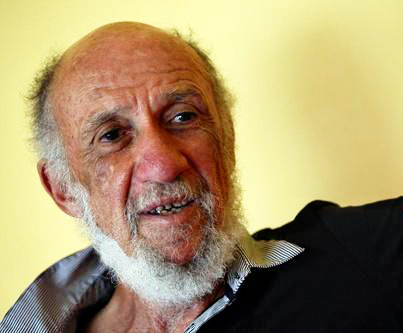
Opposing impunity for geopolitical criminality

Richard Falk

By Richard Falk

Responding to intense pressure from the usual sources William Schabas, a prominent and respected expert on international criminal law, recently resigned as Chair of the UN expert commission of inquiry into war crimes allegations arising from the massive Israeli military operations in Gaza during July and August of 2014.

These issues relating to international criminal accountability have also received recent prominence due to Palestine’s adherence to the Rome Treaty making it a party to the International Criminal Court, an initiative that generated an enraged punitive reaction on the part of Israel as well as an angry denunciation by Washington. On display in these instances is the struggle between extending the rule of law to international state crimes and the geopolitical resistance to such an effort whenever accountability to law is in tension with the pursuit of strategic interests.

Imposing international criminal responsibility upon political leaders and military commanders that occur in the aftermath of wars possesses a dual character from a geopolitical perspective: to vindicate major military undertakings of liberal democratic states and to ensure impunity for the leaders of these same states in the event that their behavior or that of their allies are alleged to be international crimes.

These efforts at vindication are associated with strengthening the global rule of law and validating the established order, while impunity is invoked to insulate powerful individuals and their governments from criminal accountability. The resulting pattern in international life is one of double standards at the level of implementation and hypocritical rhetoric about the importance of a global rule of law based on its universal applicability.

Contemporary experience with these issues is grounded in the aftermath of World War II.

In 1945 Read More »

Obama’s Middle East retreat – Remember Libya

By Jonathan Power

American Middle East interventionists chide President Barack Obama for not doing more. Why is the US running away from Yemen, why didn’t the US go into Syria and depose President Bashar al-Assad, why did Obama pull troops out of Iraq prematurely, why isn’t he putting “boots on the ground” in the fight against the Islamic State (ISIS)? Why, in short, doesn’t the US use its military might to subdue the stormy parts of the Middle East?

The first answer must be that he does not have to be George W. Bush’s surrogate. It was Bush who triggered much of the upheavals with his invasion of Iraq – although ex-President Jimmy Carter bears the responsibility for arming the Taliban and thus the establishment of Al Qaeda in Afghanistan. Why should Obama want to continue to try and mop up after Bush’s dirty work, especially as more intervention is likely to up the ante rather than calming the situation?

That said Obama made his own serious mistake of intervening to depose Muammar al-Qaddafi in Arab Libya. Although the UK and France led from the front the US was backing them up in every wayRead More »

Hitler and Stalin: Two Europeans

Johan Galtung

By Johan Galtung

Hitler was about race, Stalin about class. Their theories were based on one contradiction: Aryans vs non-Aryans for one; workers vs capitalists/landowners for the other. The ills of their countries followed from the contradictions at the top of their verbal pyramids. As Western intellectuals they tried to explain much from one axiom. Thus, to Hitler bolsheviks and plutocrats were both mainly Jewish.

Their utopias were contradiction-free, by cleansing; ethnic for Hitler, class for Stalin. Only Aryans; all others killed-expelled-marginalized by the power of the NSDAP, National-Socialist German Labor Party for one; all capitalists/landowners killed-expelled-marginalized by the power of the vanguard of the proletariat CPSU(B), the Communist Party of the Soviet Union (Bolshevik) for the other.

So similar that one may ask: did they imitate each other? Like armies becoming similar by fighting, so also the machines for reshaping societies in the European civil war 1917-1945 (plus minus some years?).

There is another, better explanation: if the theory is pyramidal, so also the practice, the policy machinery. The ultimate power should be in the hands of those licensed as ultimate truth-holders. Those lower down have to learn the smaller, specific truths and enact them.

That pattern identity, isomorphism, between theory and practice pyramids came from the same source in Germany and Russia: Churches, of two opposed Christianities: truth by revelations, articles of faith, commandments on top; enacted by pyramids with popes-patriarchs on top.

Stalin was even trained as Orthodox priest, changing from Christ revealing the truth about God the Father, to Marx revealing the truth about History. And Hitler? Martin Luther’s rabid anti-Semitism and axiomatic Christianity (catechism) played a major role. Why Germans? Very gifted in axiomatics–dictatorship easily follows by isomorphism.

Two genocidal secularisms poured into old Church bottles.Read More »

Iran’s nuclear program: Diplomacy, war, and (in)security in the Nuclear Age

Richard Falk

By Richard Falk
March 18, 2015

Perhaps, Netanyahu deserves some words of appreciation, at least from the Israeli hard right, for the temporary erasure of the Palestinian ordeal from national, regional, and global policy agendas. Many are distracted by the Republican recriminations directed at Obama’s diplomatic initiative to close a deal that exchanges a loosening of sanctions imposed on Iran for an agreement by Tehran to accept intrusive inspections of their nuclear program and strict limits on the amount of enriched uranium of weapons grade that can be produced or retained.

We can only wonder about the stability and future prospects of the United States if 47 Republican senators can irresponsibly further jeopardize the peace of the Middle East and the world by writing an outrageous Open Letter to the leadership of Iran.

In this reckless political maneuver the government of Iran is provocatively reminded that whatever agreement may be reached by the two governments will in all likelihood be disowned if a Republican is elected president in 2016, or short of that, by nullifying actions taken by a Republican-controlled Congress.

Mr. Netanyahu must be smiling whenever he looks at a mirror, astonished by his own ability to get the better of reason and self-interest in America, by his pyrotechnic display of ill-informed belligerence in his March 2nd address to Congress. Surely, political theater of sorts, but unlike a performance artist, Netanyahu is a political player whose past antics have brought death and destruction and now mindlessly and bombastically risk far worse in the future.

What interests and disturbs me even more than the fallout from Netanyahu’s partisan speech, are several unexamined presuppositions that falsely and misleadingly frame the wider debate Read More »

A presumption against intervention

Richard Falk

By Richard Falk

Prefatory Note: The post below is a revised and modified version of my chapter in David Held & Kyle McNally, eds., Intervention in the 21st Century – Online by Durham, UK: published by Smashwords for Global Policy Journal, 2015]

Participating in the intervention debates that have raged periodically ever since the Vietnam War in the 1960’s, and of course earlier in less contested settings, I have been struck by the defining encounter between those who are dogmatically opposed to intervention per se and those who rarely confront a call for intervention that they do not feel persuaded by, limiting any doubts as to matters of feasibility and strategic interest.

The traditional focus of policy discussion proceeds on the assumption that it is about forcible intervention by governmental actors to coerce some kind of change in a foreign sovereign state. Those in favor usually rely, at least in part, on a rationale that such an undertaking is necessary and desirable as it would rescue a captive people from a regime responsible for massive crimes against humanity or genocide, or operate as counter intervention (currently the controversy over intervening in the Ukraine to offset and discourage alleged Russian intervention) or as in relation to ISIS where the stated objective of the American led coalition is to destroy or defeat a non-political actor that is exercising governmental control over territory in portions of Iraq and Syria.

Systemic Developments

Four developments over the course of the last half-century are radically reshaping the debate on the viability and advisability of forcible intervention as a diplomatic option.

The first and most important, is the collapse of European colonialism, which has often motivated the West, and especially the United States, to assert its goalsf and protect their interests by way of intervention in what were formerly colonies or states whose sovereignty was curtailed by hegemonic authority. A feature of this post-colonial global setting is that the intervening state, if Western, will tend to justify its actions by setting forth an altruistic and self-justifying argument with strong moralizing overtones.

Related to this matter of motivation on the side of the intervener is the prospect of effective and persevering national resistance creating formidable obstacles to succeeding with an intervention even with the benefit of military dominance. The combination of motivation and anticipated resistance helps explain why so few major interventions have been viewed as successful. One notable continuity linking colonial memories to post-colonial realities is the invariable geographical location of the intervening political actor in the West and that of the target society being in the non-West.

The second development is the rise of human rights Read More »

The “New World Order”

Johan Galtung

By Johan Galtung Kuala Lumpur

…is the title of our conference. There will never be any such thing. “New”, yes; “World”, yes –“Order”, No. Wherever there is life there is contradiction, dialectic, forces and counter-forces. At the very obvious level the question arises – Order, in whose interest, against whom? Sow any new order and the seeds of its undoing are already taking root, sprouts are coming. As the Chinese say, “There are human beings without contradictions; they are called corpses.”

Follow that hint; go to the moon. New moons once a month, and order, the order of death, of non-life. The Old Moon Order.

As part of this Perdana Global Peace Foundation Conference, so well composed by Dr Hitam, President Tun Dr. Mahathir unveiled a giant copy of my book just published, Abolishing War: Criminalizing War, Removing War Causes, Removing War as an Institution (TPU and IIUM Press, 2015) together with a smaller book Clash of Civilizations[i]Read More »

TFF PressInfo # 314: From preventing to making peace in Ukraine

By Jan Oberg

Jan Oberg

Lund, Sweden, March 13, 2015

If the parties continue this way, there will be no peace in Ukraine but probably war in Europe. With a little out-of-the-box thinking, we could move in a safer direction.

You’ve heard everybody involved in the Ukraine conflict solemnly declare that there is no military solution.

And what do they all do? Right, they militarise the situation further, use bellicose language, speak bad about each other, take provocative steps, use propaganda and flex their military muscles. It’s thoughtprovokingly thoughtless.

These men – sorry, but the are all men – who are competent in war and other violence run our world. They are conflict and peace illiterates embedded with MIMACs – Military-Industrial-Media-Academic Complexes – which exist in both Russia, EU, NATO and the U.S.

It’s not about evil – they are probably all good spouses, nice to their children or grandchildren and enjoy literature, painting or music in their few hours of leisure. But the system they operate inside is as evil as it is dangerous for us all, for the world’s future.

Their problem – and thus your and my problem – is that they just don’t have a clue about peace-making. No education, institutions or advisers in civilian conflict-management.

And since they lack that they fall back on the convenient but proven illusion that peace will come if we just force “the other” to back down.

And since there is no lack of (tax payers’) money to fund weapons (only to fund social and cultural development) and these weapons are on the government shelves that’s what they use – instead of their intelligence and empathy. 

Far fetched?

If you think so, take a look at these facts:Read More »

The Von Weizsäckers, Germany’s Kennedys

By Johan Galtung

Johan Galtung

President Richard von Weizsäcker passed away 31 January and was very much celebrated in Germany for his brilliant presidency to normalize a Germany with a troubled past, even divided on top of that. But, by and large leaving out his global perspectives mentioned below.

His brother Car Friedrich was a nuclear physicist turned peace activist with a wonderful peace program, in one word: Weltinnenpolitik, world domestic policy (well, it depends on the country, some domestic policies are better than others; I would go for a Swiss coalition governance, federalism, direct democracy).

The president’s nephew Ernst Ulrich is an energy-environment leader, in Germany and through the UN in the world.

I have/had the privilege of knowing them all, and my tribute to Carl Friedrich when he passed away is an editorial dated 2 July 2012. Richard kindly sent greetings to the symposium on “Peace Studies and World Domestic Policy” on the occasion of my 80th birthday.

President John F. Kennedy also had a brother, Robert F. Kennedy; both murdered in (by?) the USA. The president’s nephew, Robert F. Jr., recently published three articles at Other News. Information That Markets Eliminate where, in a position to know, he tells the story of the USA-Cuba past: “JFK’s secret negotiations with Fidel”, “Sabotaging U.S.-Cuban detente in the Kennedy Era” and the future: “We have so much to learn from Cuba”. The titles say it all: efforts, thwarted by CIA; time to catch up.Read More »

I am not a Dane

By Jan Oberg

Jan Oberg

NO to being included in the Denmark of the Government and Parliament

Written in the wake of the official Danish reactions to the tragic, horrific murders in Copenhagen of a Danish film director and a Jewish Danish guard outside the synagogue in Copenhagen on Saturday February 14 – a crime committed by a 22 years old Danish Muslim with a heavy criminal record and one foot in Denmark and one in a Palestinian refugee camp in Jordan.

I’m a Danish citizen. I’ve worked for the UN Charter norm of peace by peaceful means for 40 years. Have been a member of the Danish government’s Commission for Disarmament and Security all through the 1980s. I’ve worked in war and conflict zones in Somalia, all parts of Yugoslavia, Burundi, Iraq, Georgia, Iran.

I have friends and colleagues in many countries and cultures. I know things can be seen in more than one way – and how the West may also be perceived from the outside.

I will use my freedom of expression and wisdom of expression and our democracy to struggle against the warring Denmark which Prime Minister Helle Thorning-Schmidt insists that we Danes shall all be united around.

Denmark is not only a victim. It has also caused many victims.

It has violated international law and participated in mass murders on the Iraqi and other people, innocent people. On the initiative of then prime minister Fogh Rasmussen it has fought a cultural battle (kulturkamp) not with but against other cultures – related to the Muhamad caricatures. His government was also responsible for dragging Denmark into being an occupation power during four dark years in Iraq – and thus co-responsible for today’s situation there. Likewise in Afghanistan and Libya.

Over a couple of decades Denmark has developed a political xenophobia which I would never have thought even remotely possible a couple of decades ago because of basic values such as welfare for all, solidarity, equality, peoples’ colleges, philosopher poet Grundtvig, disarmament, the compassion for the Jews in October 1943, the fundamental belief in human dignity and tolerance.

The Danmark which the Prime Minister demagogically includes ”all we Danes” in and insists that we all be united around in her misplaced, all-motherly manner, is not the Denmark I want to be included in.

If so, I am not a Dane these days.

I want a Denmark for peace by peaceful means – and in that struggle we dissidents may meet, however few or many we seem to be.

But I draw my line at a national(istic) forced inclusion in the warring, xenophobic and segregated Denmark that has been created the last few years.

And this is not easy for me to write.

PressInfo # 309: Learn conflict and peace in 20 minutes

By Jan Oberg

Jan Oberg

The world is full of unnecessary violence and human suffering. Do you know anyone who’d like it to continue like that?

If we educate ourselves and look outside the box, we can create a better world for all. Peace and security can be learnt, making conflict illiteracy and most of the violence a thing of the past.

Below is how – not in a column of 800 words but in a twice as long mini text book. It’ll enable you to think new thoughts and take the first steps into a hitherto closed but beautiful landscape.

Here we go:

Conflict happen. They are basically a good thing. There is no human community without conflict – and if there were it would be a dictatorship, or utterly boring. But how good are we – citizens, media and politicians – at dealing with conflict? Why do we often see violence where it could have been avoided and large violence where only a little, applied early, could have stopped large and long wars?

First a couple of ‘credos’ based on a few decades of experience:

• Conflicts are usually much more complex than presented by the parties and those who intervene in them; many have existential dimensions too.

• If we could learn to analyse and understand conflicts and reduce early, over-emotional side-taking – like we have medical expertise investigating diseases and treating patients instead of condemning them – we would have a more peaceful and just world with much less suffering.

• Conflicts is a problem standing between parties – their solution is not located only in individuals but in changing everybody’s goals, attitudes, behaviour and visions of the future.

• Conflicts can be solved/managed better if we address them sooner rather than later.

• The moment violence has been introduced we face a much bigger problem: the original issue plus the humiliation, anger and wish for revenge. Read More »