TFF PressInfo # 308: Minsk – A fragile 2nd step

By Jan Oberg

Jan Oberg

Let’s be cautiously optimistic; the meeting did not break down and a ceasefire document was signed. But that is a minimum in this extremely tense situation. One would have hoped for more than what seems to be a revision of the first Minsk agreement.

What are the next steps for this ceasefire agreement to lead to a peace plan, the two things being vitally different?

First, what no one talks about, it seems: A rather large UN peace-keeping and peace-making force with a unit of some 8.000-10.000 robust military from countries completely neutral to this conflict. The classical three legs: military, civil police and civil affairs, perhaps 20.000 in all.

Why the military component? Because the OSCE can monitor and report but it cannot enforce. And because the parties don’t trust each other. And why should this agreement be more durable than the first without it?

If on the 16th of February some shots are again fired by a madman on either side, hell will break lose and accusations fly. And if this agreement doesn’t hold either, we are close to a large-scale war and the U.S. will pour in its weapons (if not before).

What is needed is something like Read More »

TFF PressInfo # 307: This is no time to ship lethal arms to Ukraine

By Jonathan Power

February 10th, 2015

Please put your hand up if you support giving lethal arms to the Ukrainian army and also supported the US going to war with Iraq in 2003 and with Libya in 2011, the former which unbalanced much of the Middle East and the latter which has left a country almost destroyed, semi-ruled by malicious militias.

Also raise your hand if you supported in 1998 the West going to war against Serbia in order to wrest away its province of Kosovo and give it independence- a move which ironically Russia (and Spain, worried about its Basques) opposed, arguing that this would set a precedent for territorial separation by force of arms.

If you supported all these three interventions don’t take offence if I question your judgment on the issue of arms for Ukraine.

I am trying to work out where President Barack Obama stands on all this. His vice-president, Joe Biden, seems to be running with the foxes while he himself is running with the hares. Take the president’s interview on CNN the weekend before last. Until then the official White House line had been that the crisis was instigated by President Vladimir Putin to block Ukraine from creating a democratic government.

But in that broadcast, as my esteemed fellow columnist, William Pfaff, has observed, “Obama conceded to an American TV audience that the official US narrative concerning the war in Ukraine isn’t true”.Read More »

Viewing “American Sniper”

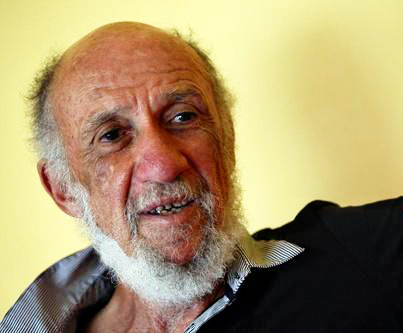
By Richard Falk

Richard Falk

American Sniper was released on Christmas Day, 2014. It is a movie version of Chris Kyle’s memoir, American Sniper: The Autobiography of the Most Lethal Sniper in U.S. Military History, with 255 kills, 160 officially confirmed by the Department of Defense. The movie set in Iraq is directed by Clint Eastwood, Bradley Cooper plays the part of Chris Kyle, and Sienna Miller is brilliantly cast in the role of his wife, Taya.

American Sniper is a fictionalized movie version of the war stories associated with Chris Kyle’s experience as a Navy SEAL in the Iraq War as recounted in his best-selling memoir. The film can be viewed from a variety of angles, including even as one more indictment of war as hell.

A second line of interpretation focuses on the intense psychological tensions experienced by this single American soldier and his comrades caught up in the horrors of urban warfare in Iraq. A connected theme are the adverse impacts of Kyle’s war service on his family that is made to cope with the complex and contradictory traumas of his absence (confronting his potential death on a distant battlefield) and his alienated presence whenever he returns, a scarred individual who longs to go back to Iraq to resume his assigned role as ‘legendary sniper.’

Multiple scenes in the movie portray Kyle as haunted by his service. In his book, Kyle consistently treats his victims as “savage, despicable.” At one pointRead More »

TFF PressInfo # 304: Wisdom of expression

By Jan Oberg

Jan Oberg

My answer is simple: the issues surrounding the horrific attack on Charlie Hebdo disappeared so fast because the general Western reaction was ill-considered/phony and therefore unsustainable. But there is actually still quite a lot to be discussed.

Secondly, European politicians and media chose – quite uniformly for a professed pluralist society – to not discuss the possible causes. The more convenient interpretation was that the perpetrators were just madmen and people like that should be hunted down and eliminated (like IS in Syria and Iraq).

Without causal analysis we can more easily go straight for more “security”, intelligence, surveillance and more police and military in the streets – in short, symptom treatment.

Further, when we deny human beings any motives we de-humanise them and then they don’t deserve to be heard or treated as humans. Evil is always ‘the other.’

The attack on Charlie Hebdo was not an attack on the entire Western culture, democracy or freedom of expression as such. The perpetrators would hardly know such a concept.

It was an attack at one weekly magazine for what it had misused freedom of expression to do.

Misused?

Freedom and wisdom of expression can be combined. There are at least 4 reasons why we should be proud of the principle of freedom of expression and therefore be wise enough to not misuse it or make it a weapon against others. Read More »

Positive peace – what is that?

By Johan Galtung

Johan Galtung

January 5, 2015

Yes, what is it? Let us start this New Year on a positive note. Keeping in mind that peace is an honor word, like health, salvation for many: a focus of dreams and wishes, a summum bonum that should be both very precise and amenable to professional peace work and kept open, filled with new dreams and aspirations. Like for health, new aspects come up all the time; for instance in positive psychology.

Peace presupposes absence, or low level, of violence, direct as well as structural, and of the cultural violence justifying the other two. But we can also go for a more limited concept: absence of direct violence, of killing and wounding with arms, hurting with words. And we should include the absence of the attitudinal side of that, hatred.

All these absences, or low levels we can live with, like mild diseases–myopia, having a cold–add up to negative peace. Peace as absence. Not to be scorned at in any way, but only a step to peace. The typical case would be two states having nothing to do with each other; whether because they never did or decided better so, like a couple separating or divorcing. Another typical case would be real armistice, ceasefire not used to smuggle in arms or combatant rest, for redeployment. “Passive co-existence” covers negative peace quite well.

But any theory of peace has to go beyond that, at the micro level within-between persons; meso between social groups across faultlines; macro between states, nations; mega between regions, civilizations. And yet peace is an almost uncharted territory. Many rest content with the formula “win-win”, but that only means that they achieved the goals in the underlying conflicts, nothing more, nothing less.Read More »

TFF PressInfo # 294 – Change the Iran policy now

By Jan Oberg
TFF director

Jan Oberg

Tehran Dec 9, 2014

The First Conference on ”World Against Violence and Extremism” is inaugurated here in Tehran this morning by President Rouhani. His idea was endorsed unanimously by the UN General Assembly last year. This PressInfo was written before I came to Iran.

The last round of negotiations between Iran and the Five Permanent Members of the UN Security Council + Germany about the future possibility that Iran would acquire nuclear weapons should have resulted in no agreement but a 7 months postponement. It is a waste of everybody’s time in one of the most urgent issues on the international agenda.

An a-symmetric conflict

Here are 5 countries bristling with thousands of nuclear weapons themselves and planning to spend trillions of dollars on more and more sophisticated nukes – unanimous in telling a country that does not have nukes to not acquire them: ”What we can’t live without thou shall never have”.

Everybody knows but conveniently omit mention of the fact that Israel is a nuclear weapons power over 50 years with at least 200 nukes in contravention of UN resolutions that the whole region shall be free from such weapons. And it has not signed the Non-Proliferation Treaty.

In rough terms, Iran’s military expenditures is 2-3% of the United States’; with a population ten times that of Israel it spends about the same, and 4% of its GDP where Israel spends 6.

Israel is number 1 Read More »

The Future of Mediation

By Johan Galtung

Johan Galtung

Ludwigsburg, German Mediation Congress

Dear Colleagues; the future of mediation is to make ourselves redundant by spreading a conflict solution culture at all levels of social organization, enabling people to handle conflicts themselves. There will be counter-forces from professional mediators to monopolize the job and countercounter-forces from others to become ever better, to be ahead. The latter will win.

Model: the health professions.

Incredible gains were made in human health enabling people to take better care of their bodies: protection against contagious diseases through hygiene, washing hands, brushing teeth; keeping fit with adequate food, water, moving-walking –but care with jogging, unnatural, in the direction of a hospital– against the climate through adequate clothing and housing; against sepsis in wounds adequate cleaning: a minimum of health education. More than the complexities of surgery this gave us 25 more years of life.

For children and adolescents: watch the pathogens bringing illness from the outside as micro-organisms and violent encounters, shocks, excessive heat and cold, fire. After that come structural diseases–malignant tumors, cardiovascular, mental disorders–also rooted in the inside, with genetic predispositions. Too little adequate food and exercise; too much smoking, alcohol and other drugs can be handled with some will to get better. Equally important: an overload of stress and strain, problems and conflicts not handled: our task. Physicians have shared with people washing hands and brushing teeth as hygiene; it is our task to share conflict hygiene with everybody.Read More »

TFF PressInfo 289: Why Russia is growing tough • Berlin Wall Down 25 Years #1

By Jonathan Power

President Vladimir Putin is often painted as an ogre in the world’s media. The seemingly eternal president of Russia has an iron grip on his nation and a foreign policy to match. Yet a large majority of Russians give him their support.

Is it his early economic success? Or is it because of a new stability? Or the nation’s growing self-respect after the ignominious years that followed the demise of the Soviet Union? Or is it a sense of besieged defensiveness because of the advantage the West undoubtedly took of Russia after that demise.

The answer is a bit of all these.

Few in the outside world seem to talk much about what happened after President Boris Yeltsin pushed aside Mikhail Gorbachev, the last president of the Soviet Union. Few recall the political and economic upheavals of that time and why the stability of Putin’s governance is welcomed by people at large. Perhaps it is because this was a quarter of a century ago and people now ruling the West, and the journalists who report on them, were only teenagers or in their twenties at the time – and suffer from that common Western political disease of lack of perspective and little knowledge of history.

Immediately after Gorbachev’s fall two things happened.Read More »

Al-Baghdadi, Self-Proclaimed Caliph of the Islamic State (Part 2)

By Farhang Jahanpour

Part 1 of this series

A shorter version of this article has been published by IPS

When Ibrahim al-Badri al-Samarrai adopted the name of Abu-Bakr al-Baghdadi al-Husseini al-Quraishi and revealed himself to the world as the Amir al-Mu’minin (the Commander of the Faithful) Caliph Ibrahim of the self-proclaimed Islamic State, the whole world had to sit up and take notice of him.

The choice of the long title that he has chosen for himself is most interesting and symbolic. The title Abu-Bakr clearly refers to the first caliph after Prophet Muhammad’s death, the first of the four “Orthodox Caliphs”.

The term Husseini presumably refers to Imam Hussein, the Prophet’s grandson and Imam Ali’s son, who was martyred in Karbala on 13 October 680. His martyrdom is seen as a turning point in the history of Islam and is mourned in elaborate mourning ceremonies by the Shi’ites throughout the world on the 10th of Muharram each year, which is accompanied with many processions and self-flagellation.

Both Sunnis and Shi’is regard Imam Hussein as a great martyr, and as someone who gave up his life in order to defend Islam and to stand up against tyranny.

Finally, al-Quraishi refers to Quraish, the tribe to which the Prophet of Islam belonged.

Therefore, his chosen title is full of Islamic symbolism.

According to an alleged biography posted on jihadi Internet forums, al-Baghdadi is a direct descendant of the Prophet, but curiously enough his ancestors come from the Shi’a line of the Imams who descended from the Prophet’s daughter Fatimah.

According to this alleged biography, al-Baghdadi derives his lineage directly from nine Shi’a Imams, “Ali Al-Hadi, Muhammad al-Jawad, Ali al-Rida, Musa al-Kazim, Ja’far al-Sadiq, Muhammad al-Baqir, Ali Zayn al-Abidin, Husayn Bin-Ali, Ali Bin Abi-Talib, right up to the Prophet’s daughter Fatimah and ending in Prophet Muhammad himself.”

Despite his great hostility towards the Shi’is, is this genealogy a way of portraying himself as the true son of the descendants of the Prophet, thus appealing to both Shi’is and Sunnis?

According to the same biography, al-Baghdadi was born near Samarra, in Iraq, in 1971. It is alleged that he received BA, MA and PhD degrees in Islamic studies from the Islamic University of Baghdad. It is also suggested that he was a cleric at the Imam Ahmad ibn Hanbal Mosque in Samarra at around the time of the US invasion of Iraq in 2003. (1)

According to a senior Afghan security official, al-Baghdadi went to Afghanistan in the late 1990s, where he received his early jihadi training. He lived with the Jordanian militant fighter Abu Musab al-Zarqarwi in Kabul from 1996-2000. (2)

It is likely that al-Baghdadi fled Afghanistan with leading Taliban fighters after the US invasion of Afghanistan following 9/11.

After the US invasion of Iraq in 2003, Zarqawi and Read More »

ISIS – Negotiations, not bombing

By Johan Galtung

Johan Galtung

More senseless bombing of Muslims, more defeats for USA-West, more ISIS-type movements, more West-Islam polarization. Any way out?

“ISIS, Islamic State in Iraq-Syria, appeals to a Longing for the Caliphate” writes TFF Associate Farhang Jahanpour in an IPS column. For the Ottoman Caliphate with the Sultan as Caliph – the Shadow of God on Earth – after the 1516-17 victories all over till the collapse of both Empire and Caliphate in 1922, at the hands of the allies England-France-Russia.

Imagine the collapse of the Vatican, not Catholic Christianity, at the hands of somebody, Protestant or Orthodox Christians, meaning Anglo-Americans or Russians, or Muslims. A center in this world for the transition to the next, headed by a Pope, the apostolic successor to The Holy Spirit, an emanation of God in Heaven. Imagine it gone.

And imagine that they who had brought about the collapse had a tendency to bomb, invade, conquer, dominate Catholic countries, one after the other, like after 2 Bush wars in Afghanistan-Iraq, 5 Obama wars in Pakistan-Yemen-Somalia-Libya-Syria, and “special operations”.

Would we not predict [1] a longing for the Vatican, and [2] an extreme hatred of the perpetrators? Fortunately, it did not happen.

But it happened in the Middle East: leaving a trauma fueled by killing hundreds of thousands.

The Sykes-Picot England-France agreement of 16 May 1916 led to Read More »