Aage Bertelsen (1901 – 1980) – Danish educator for peace

By Jan Oberg & Johan Galtung*

Lund and Kuala Lumpur, July 2014

Introduction

He was a tall man and a great man, a visionary, pacifist, civil resister, educator and philosopher. He took life more seriously than most and he could be playful and fun like a child. His life’s guiding principle was ”Engage in your time!” and while he wrote and talked a lot he also did it. His name was Aage Bertelsen, he was born in Denmark in 1901 and died on August 15, 1980.

Bertelsen’s imprint on history is two-fold. First, with his wife Gerda he was a prime mover of one of the groups, the Lyngby Group, which organised the rescue of altogether 7.220 Danish Jews into safety in Sweden in October 1943 during the German occupation of Denmark – more here. The Lyngby Group – Lyngby is north of Copenhagen – got about 1.000 of these in safety by organising their nightly transport onboard small fisher boats over the Sound between Denmark and Sweden.

In this he deserves a place in international contemporary history for its humanity, civil courage and as an example of non-violent struggle against occupation.

Secondly, Bertelsen was an educator of and for peace. His life work educational efforts included his family and friends, his pupils over 22 years at the Aarhus Cathedral School in Aarhus, Denmark, the general public as well as national and international leaders.

He lived in pre-Internet times and very little is publicly available today about this renaissance man. From two rather different, but compatible, perspectives we’ve taken it upon us to remind the world about him – friends and colleagues of his as we happen to be.
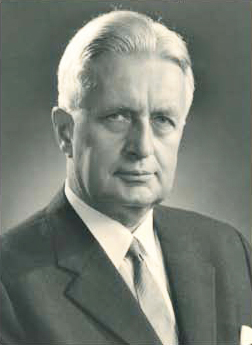
Headmaster Aage Bertelsen in 1961 Photo: Elfeldt, Copenhagen


Why now, over 30 years after his death? Read More »

The world right now: A Mid-Year Report

By Johan Galtung

Time to take stock. The shot in Sarajevo 100 years ago inspires narratives of 19-year old Gavrilo Princip killing the successor to the throne of an empire and his pregnant wife as the event unleashing mutual mass murder (INYT, FAZ 28-29 June 2014). Not the empire annexing Bosnia-Herzegovina on October 6, 1908 (Art. 25 of the 1878 Berlin Congress of “great powers”).

Maybe the inhabitants did not like it?

Moral of that stock-taking: watch out for terrorism, not for empires and occupation-colonialism; and protect leaders, not people.

ISIS (Islamic State of Iraq and the Levant, alternatively translated as Islamic State of Iraq and Syria and Islamic State of Iraq and al-Sham) comes up. TIME 30 June: The End of Iraq. Maybe Iraq – that highly artificial English colonial entity encasing Shia Arabs, Sunni Arabs and Sunni Kurds–never started?

Like its French colonial neighbor Syria – adding Alawite Arabs, Christians, Jews and others? Ever heard about Sykes-Picot and their czarist Russian allies?

Can such crimes just pass, with no counter-forces?

Watch out, a key point about ISIS – now comprising a major part of IS – is as a bridge over the English-French colonial divide, in favor of a Sunni Arab caliphate. Like it or not, these are very strong forces from the past in the daylight of the present. Read More »

Citizenship in the 21st century – reforms versus radical structural change

By Richard Falk

[ This post was previously published online at the website of the Global Transition Initiative, which is dedicated to promoting “Transformative Vision and Praxis.” It responds to an essay on global citizenship written by Professor Robert Paehlke, who cogently advocates the formation of a Global Citizens Movement, including indicating how it might become effective.
What seems important about such dialogue is the recognition that given the realities of this historical period, it is increasingly necessary for political thought and action to proceed by reference to human interests as well as being responsive to national, local, ethnic, and religious interests and values. A feature of modernity that is being rightly questioned from many angles is the presumed radical autonomy of human interests, especially the modernist illusion that the co-evolutionary dependence on nature and the environment was being superseded by the marvels of technological innovation.
One way back to the future is to rethink political community – its boundaries and essential features – from the perspectives of participants, with citizenship being the secular signature of belonging and engagement, and ultimately, the sustainability not just of the community, but of the species.
]

Reading Robert Paehlke’s carefully crafted essay on global citizenship provides the occasion both for an appreciation of his approach and some doubts about its degree of responsiveness to the urgencies of the present or more specifically its adequacy in relation to the call for ‘transformative vision and praxis’ that lies at the heart of the ‘Great Transition Initiative.’

Paehlke is on strong ground when he ventures the opinion that the planetization of citizenship is an indispensable precondition for the establishment of global governance in forms that are both effective and fair. His insistence that global governance to be legitimate must address ethical issues as well as functional ones associated with sustainability is certainly welcome. He is also persuasive in advocating the formation of a global citizens movement (GCM) that takes advantage of the networking and mobilizing potential of the Internet, combining an initial focus on local challenges while nurturing a global perspective.

His deepest sympathies clearly lie with a pluralistic and decentralized GCM that operates, at least for the foreseeable future, without leaders or a common program of action, and as such is likely in his words to be “less threatening” to the established order (p.3). But here is where my analysis and prescriptive horizons departs from his: if a transformative global movement is to emerge from current ferment, then it seems strategic to become more threatening, not less. Flying below the radar is not the kind of praxis that will awaken the human species from its long and increasingly dangerous world order slumber.Read More »

Peace Studies: Ten Basic Points

By Johan Galtung

Foreign Policy Studies, University of Malmö, Sweden

Thanks for wanting a summary of key points in “Galtung Peace Studies”. I was just honored with a “Lifetime Award” by world sociology, 60+ years; in short, time for summary with an author’s caveat: no substitute for reading books.

[1] 1951: Peace studies=peace theory+peace practice; applied science, with an explicit value–peace–with practice-indicative theories and theory-testing practice; like health studies, unlike social sciences. Model: peace to violence as health to illness; Diagnosis-Prognosis-Therapy produced health by weakening pathogens-strengthening sanogens; try the same for peace by weakening bellogens-strengthening paxogens. Mantra: through interdisciplinary, international, interlevel research.

[2] Like in illness violence=suffering of body-mind-spirit, also of the bereaved; unlike in illness, an intended act of commission, a perpetrator-victim relation, a crime, epitomized by aggressive war. Body wounds may be healed but stigma, shame, humiliation, hopelessness, hatred, fear, revenge may settle in mind and spirit as trauma. To judicial approaches, sentence and punishment–against theft of cherished property, violence to the body and sexual violence – add victim – and context-oriented approaches like having less property, more company, no provocation and context-oriented approaches as for instance un-uniformed citizens as vigilantes in public space, etc.

But the antidote to violence is peace: a structure of positive interaction, a culture of nonviolence, focus on the positive in the yin/yang of others and on change from violent to peaceful relations, rather than on party attributes; relations carry more causal weight and are irreducible to attributes: see relation logic-buddhism-daoism.

[3] Peace was liberated from the state focus to cover five levels:Read More »

TFF PressInfo: Psyko-politik i tiden för imperiets nedgång

Av Jan Öberg

Lund , Sverige – 23 maj 2014

Tiden för rationell politik, om begreppet någonsin funnits, är över .

”Realpolitik” har blivit en blandning av marknadsförda ord, propaganda och ledare som gör uttalanden som gränsar till absurd teater. Tunnare och tunnare länkar till Realiteten.

Detta är vad som händer när man förnekar nedgången.

Alla imperier går ner. Det amerikanska imperiet är på nedgång. Makrohistoriker (se t.ex. British Arnold Toynbee’s 12–volymarbete 1934-1961) berättar att det finns många skäl till att imperier faller:

• militarism med konstant krigföring;

• överutvidgning – försöka kontrollera mer än vad du kan hantera;

• förlust av legitimitet i andras ögon;

• strukturella ekonomiska kriser;

• moraliskt förfall;

• förlust av intellektuell och teknisk innovation;

• andra maktstrukturer ökar i styrka över tid och göra saker på nya, kreativa sätt .

Efter 1945 ansågs USA vara starkt på en rad olika maktdimensioner: militär, ekonomi, politik, legitimitet, kultur, innovation. Idag är de bara nummer ett på den militära dimensionen. När alla andra indikationer går ner, blir militären en stor börda som bara accelererar nedgången.

USA är på tillbakagång och i förnekelse. Så är även de flesta av dess allierade och sympatisörer .

Deras utrikes politiska beslutsfattare verkar tro att allt är bra och de kan ändå leda och forma världen enligt deras intresse och världsbild. Det är fortfarande i grunden en missionär .

Här är några delar av vad den består av:Read More »

TFF PressInfo: Sverige – inte längre aktör för en bättre värld

Av Jan Öberg
Dr.hc., direktör för TFF
4 maj 2014

Eliten i Sverige är mer lojal mot Nato, USA och EU än mot sitt folk

• Under de senaste 25-30 åren har Sveriges militära, säkerhets- och utrikespolitiska elit vridit Sveriges politik 180 grader.

• Dessa grundläggande förändringar inleddes av den socialdemokratiska regeringen under Göran Persson och utrikesminister Anna Lindh och har genomförts praktiskt taget utan offentlig debatt.

• Omsvängningen till interventionism, militarism och USA/Nato på alla områden har planerats gradvis, i smyg och ohederligt – kort sagt på ett sätt som är ovärdigt en demokrati.

• Denna elit är mer lojal mot Bryssel och Washington än mot svenskarna.

• Om din bild av Sverige är att det är ett progressivt, förnyande och fredsfrämjande land med global inställning som försvarar folkrätten så är den – tråkigt nog – föråldrad.

Hur Sverige har förändrats

Sverige är inte längre neutralt och det är bara formellt alliansfritt; det finns ingen mer närstående bundsförvant än USA/Nato. Landet har upphört att utveckla en egen politik och positionerar istället sig inom ramen för EU och Nato. Landet bidrar inte längre med betydelsefullt nytt tänkande – det sista var Olof Palmes kommission om gemensam säkerhet (1982).Read More »

TFF PressInfo: Sweden – no longer a force for good

Sweden’s elite more loyal with NATO, the US and EU than with its people

By Jan Oberg

May 2, 2014

• Over the last 25-30 years Sweden’s military, security and foreign policy elite has changed Sweden’s policy 180 degrees.

• These fundamental changes were initiated by the Social Democratic government under Goran Persson and foreign minister Anna Lindh and have been carried through virtually without public debate.

• The rapproachment with interventionism, militarism and US/NATO in all fields has been planned, incremental, furtive and dishonest; in short, unworthy of a democracy.

• This elite is more loyal with Brussels and Washington than with the Swedes.

• If your image of Sweden is that it is a progressive, innovative and peace-promoting country with a global mind-set and advocate of international law, it is – sad to say – outdated.

How Sweden has changed

Sweden is no longer neutral Read More »

Nonviolent Geopolitics: Law, Politics, and 21st Century Security*

By Richard Falk

In this short essay, my attempt will be to articulate a conception of a world order premised on nonviolent geopolitics, as well as to consider some obstacles to its realization. By focusing on the interplay of “law” and “geopolitics” the intention is to consider the role played both by normative traditions of law and morality and the “geopolitical” orientation that continue to guide dominant political actors on the global stage.

Such an approach challenges the major premise of realism that security, leadership, stability, and influence in the 21st century continue to rest primarily on military power, or what is sometimes described as “hard power” capabilities. [1]

From such a perspective international law plays a marginal role, useful for challenging the behavior of adversaries, but not to be relied upon in calculating the national interest of one’s own country. As such, the principal contribution of international law, aside from its utility in facilitating cooperation in situations where national interests converge, is to provide rhetoric that rationalizes controversial foreign policy initiatives undertaken by one’s own country and to demonize comparable behavior by an enemy state. This discursive role is not to be minimized, but neither should it be confused with exerting norms of restraint in a consistent and fair manner.

My intention is to do three things:

• to show the degree to which the victors in World War II crafted via the UN Charter essentially a world order, which if behaviorally implemented, would have marginalized war, and encoded by indirection a system of nonviolent geopolitics; in other words, the constitutional and institutional foundations already exist, but inert form;

• to provide a critique of the realist paradigm that never relinquished its hold over the imagination of dominant political elites, and an approach has not acknowledged the obsolescence and dangers associated with the war system;

• and, finally, to consider some trends in international life that make it rational to work toward the embodiment of nonviolent geopolitics in practice and belief, as well as in the formalities of international law.Read More »

The obsolescence of ideology: Debating Syria and Ukraine

By Richard Falk

I have been struck by the unhelpfulness of ideology to my own efforts to think through the complexities of recommended or preferred policy in relation to Syria, and more recently, the Ukraine. There is no obvious posture to be struck by referencing a ‘left’ or ‘right’ identity. A convincing policy proposal depends on sensitivity to context and the particulars of the conflict.

To insist that the left/right distinction obscures more than it reveals is not the end of the story. To contend that ideology is unhelpful as a guide for action is not the same as saying that it is irrelevant to the public debate. In the American context, to be on the left generally implies an anti-interventionist stance, while being on the right is usually associated with being pro-interventionist. Yet, these first approximations can be misleading, even ideologically. Liberals, who are deliberately and consigned to the left by the mainstream media, often favor intervention if the rationale for military force is primarily humanitarian.

Likewise, the neocon right is often opposed to intervention if it is not persuasively justified on the basis of strategic interests, which could include promoting ideological affinities. The neocon leitmotif is global leadership via military strength, force projection, friends and enemies, and the assertion and enforcement of red lines. When Obama failed to bomb Syria in 2013 after earlier declaring that the use of chemical weapons by the Assad regime was for him a red line this supposedly undermined the credibility of American power.

My point is that ideology remains a helpful predictor of how people line up with respect to controversial uses of force, although relying on ideology is a lazy way to think if the purpose is to decide on the best course of action to take, which requires a sensitivity to the concrete realities of a particular situation. Such an analysis depends on context, and may include acknowledging the difficulties of intervention, and the moral unacceptability of nonintervention. Read More »

Far from good enough, Mr. Putin !

By Johan Galtung

History matters, not only law; like how Crimea and Abkhazia-South Ossetia–basically Russian-Orthodox–became Ukrainian-Georgian. Two Soviet dictators, Khrushchev and Stalin, attached to Ukraine and Georgia, so decided, by dictate. The local people were not asked, nor were Hawaiians when the USA annexed their Kingdom in 1898–by dictate.

The first referendum in Crimea was held last Sunday, 16 March 2014: an overwhelming No to Ukraine and Yes to the Russian federation.

Khrushchev’s 1954 transfer of Crimea was within the Soviet Union, and under Red Army control. But the Soviet Union collapsed and the Red Army became the Russian army; the conditions were no longer valid. George W. Bush wanted Ukraine and Georgia to become NATO members, moving the Russian minorities two steps away from Russia. Nothing similar applies to the other Russian minorities in the former Soviet republics. They are people living on somebody else’s land, not people living on their own land.

What happened to Crimea was a correction of what had become a basic mistake. Although Russia moving into eastern Ukraine could be–as the West says–invasion-occupation-annexation. But highly unlikely.

Unless civil war breaks out between Ukraine West and East and the Russian minority in the East–Donetsk–is in danger. Russia will not stand by watching, just as NATO would not if something similar happened close to the Polish border in Lvov.

This simply must not happen; nevertheless it is getting close.Read More »