Criminalize the arms trade into hotspots

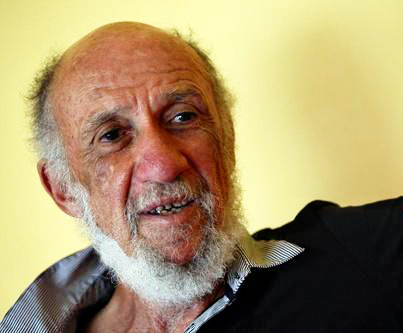
Jan Oberg comments on PressTV to Noam Chomsky’s criticism of Western support to terrorist groups in the Middle East.

Oberg maintains that the War on Terror is stupid in the sense of producing more of what it is supposed to combat and that arms traders – private as well as state – should be held accountable for their crimes, not only politicians and militaries.

Arms deliveries into hot spots ought to be criminalized too.

The global power imbalance

By Johan Galtung

Dear Reader: This editorial 444 – the number calls for attention – is dedicated to a global overview, the world “right now”, so unstable with imbalances everywhere that what we are living is fluxes and jumps.

Let us start with two major relations: Nature-human, the US-the Rest.

Look at the human-nature relations.

We are used to being on top, killing and taming animals, protected against many of nature’s hazards including micro-organisms. But nature comes up with ever smaller viri, and larger, or more, tsunamis and earthquakes, and an erratic climate.

We oscillate between blaming ourselves, including military scheming, and the anthropomorphic “Mother Nature is angry” (Evo Morales).

If nature is angry, she has good reasons for a good riddance of us. And we are slow at a deeper human-nature relations respecting and enhancing both.

Nature is on top and our natural sciences are simply not good enough, taken by surprise all the time. Meteorology is good at covering the whole Beaufort wind range from 0-12; others not.

Maybe we have desouled nature and besouled ourselves too much to establish our own Herrschaft (rule, dominance), at the expense of Partnerschaft (partnership).

Unless this changes, imbalance with nature on top, and surprises, will continue.

Maybe the opposite holds for the US-Rest imbalance; that US exceptionalism serves USA as badly as humans above nature serves us?Read More »

TFF PressInfo # 385 – How did Western Europe cope with a much stronger Soviet Union and Warsaw Pact?

By Jan Oberg

TFF Series ”The New Cold War” # 6

How did Western Europe survive the much stronger Soviet Union & Warsaw Pact 30-40 years ago? A pact that had about 70% of NATO’s military expenditures where today’s Russia has 8%? How did we get on after the Soviet invasion of Hungary and Czechoslovakia – and a Union with much more global military and political influence?

Europe did so through a well-maintained military capacity, or superiority, technical superiority and, of fundamental importance to security – confidence-building measures (CBM).

And through a political leadership by personalities who knew what the 2nd World War had implied and why it must never happen again. One towering figure of course being Willy Brandt, the German chancellor who had himself been a refugee in Norway during the war.

CBMs were meant to both uphold a high level of war-fighting capacity while also seeking military early information/warning, attending each other’s military exercises, etc. They resulted in the establishment of the very important OSCE – Organisation for Security and Co-operation (then C for Conference) in Europe with the Helsinki Final Act of 1 August1975. It contained politico-military, economic, environmental and human rights dimensions – ’baskets’ that were seen as related to each other and which served as dialogue points between the two blocs.

The visionary President Urho Kekkonen of Finland was credited as the main architect of the CSCE – and his Finland was neutral but upheld a co-operation agreement with the Soviet Union.

Finland was also the only country in the European space that could show opinions polls according to which the people felt equidistant to both blocs.

The simple but brilliant idea was this: We need dialogue to feel secure. It was also called Detente. And it implied a disarmament dimension – negotiations about how to mutually scrap weapons in a measured and verifiable manner that both sides had decided they no longer needed.

These negotiations included not only conventional weapons but also the arsenals of nuclear weapons.

In the domain of nuclear weapons, the Non-Proliferation Treaty, NPT, was signed in 1970 and carried four very important provisions:

1) the world shall move towards general and complete disarmament and the nuclear weapons shall be abolished;
2) those who have nuclear weapons shall negotiated them down, in principle to zero and
3) as a quid pro quo for that all non-nuclear weapons shall abstain from obtaining nuclear weapons – and
4) countries who want nuclear energy shall be assisted to introduce this civilian energy technology.

All this happened in the era of Detente and CBM. How had that become possible? Read More »

Escalating conflicts on the way to peace and justice


Photo Jonas Jonzon

By Majken Jul Sørensen & Jørgen Johansen

This article is a short version of a text which was first published with the title “Nonviolent Conflict Escalation” in Conflict Resolution Quarterly, 2016. DOI: 10.1002/crq.21173. In this longer article you can find references to all our sources.

”We have mapped all the conflicts in the world” a senior researcher at PRIO (Peace Research Institute Oslo) told one of the authors at a seminar a couple of weeks ago. If that was true, it would be pretty impressive.

Each of the seven billion people living on earth at the moment are likely to have a considerably number of conflicts every year with their partners, neighbours, friends and family members.

However, the large majority of these conflicts are dealt with in a peaceful and creative manner. Although they can feel burdensome in the heat of the moment, many of them are a way for people to grow as persons and learn more about themselves and each other.

But of course, it was not all these conflicts the senior researcher at the seminar had in mind. She was talking about the UCDP/PRIO Armed Conflict Dataset which includes violent conflicts involving at least one state. However, her statement is symptomatic for an attitude which seems to be widespread within mainstream peace and conflict studies: because they so often focus on violent and destructive conflicts, their language gets “contaminated”.

Thus there is a strong tendency to associate conflict with violence and something undesirable which should be avoided and de-escalated. Just as important, this perception of conflict also ignores all the large-scale societal conflicts fought along nonviolent lines.

In this text we examine some of the ways that nonviolent stakeholders have deliberately and persistently escalated conflicts, and show how such escalations have been fundamental for them to achieve their goals. These actors have created visibility for hardly recognised injustices and highlighted issues that have endured in the shadows of history.

This approach is the opposite of preventing conflicts; rather, it aims to escalate them in order to create change. It counters both the association of conflict with violence and contributes to a deeper understanding of nonviolent resistance. Read More »

Are we heading toward global autocracy, ecological collapse and political malaise?

By Richard Falk

What follows are preliminary reactions to both the BREXIT vote and the world according to Trump, but also a commentary on the related alienation of large segments of the public that are being badly served by both the established elites and their demagogic adversaries.

The failures of neoliberalism, the successes of digitization, the scourge of random violence, and more broadly, the dilemmas posed by late modernity are among the root causes of this global crisis of legitimate governance, which is deepened while being mishandled by unprecedented ecological challenges, extremely irresponsible geopolitical leadership, and a variety of ultra-nationalist backlashes against the encroachments of economic globalization.

Imagining the World After the Cold War

After the end of the Cold War there were various projections that tried to anticipate the likely future of the world in broad interpretative strokes. Three of the most influential conjectures by three prominent American authors received attention in the public sphere: those of Francis Fukuyama, Samuel Huntington, and Robert Kaplan.

Fukuyama challenged conventional political imagination with his provocative claim that with the collapse of the Soviet version of state socialism and the triumph of capitalist liberalism the world had reached ‘the end of history.’ It was also somewhat dubious that Fukuyama validated his views by reference to the Hegelian contention that history is made by the march and interplay of ideas rather than through the agency of material forces.

In this respect history came to a supposedly glorious end because there was no grander possible political vision than that of market-based constitutionalism, epitomized by the American political system. Even the most casual observer of the global scene must have noticed the befogged Western optic through which Fukuyama saw the world.

Huntington, no less provocative or biased, although less comforting for the West, anticipated a ‘the clash of civilizations’ as the sequel to the Cold War, especially stressing the confrontation between the liberal West and the non-West or simply ‘the rest.’ His suggestive emphasis was on blood-soaked fault lines between states, civilizations, and peoples associated with Islam and the Western polities descending from the Enlightenment tradition as it unfolded in Europe, taking root in North America and elsewhere.

Kaplan, also punctured the Fukuyama triumphalist tone of geopolitical serenity, by writing Read More »

The Positive Peace Index is charlatanism

By Johan Galtung

PPI pretends to be an index of positive peace/peaceful society. But is more like an index of “positive for business environment”; by the Institute for Economics & Peace, more economics than peace.

To explore this, imagine we want an index of health. Obviously, we need criteria of health to know what we are talking about, like:

For negative health: absence of illness from the outside–contagion- shocks–and structural from the inside–cardiovascular-tumors-mental.
For positive health: balance in body-mind-spirit and socially; a sense of wellness being alive using body-mind-spirit at work, and in love.
Then, the indicators, the index, the forefinger pointing the way: preventive health, protection–distance–inoculation-quarantine, of the body with clothes-housing; avoiding fire and shocks (not falling for elderly!); adequate sewage-personal hygiene-nutrition-exercise; curative health for acute and chronic diseases.

However, we also need an index of illness to know what we are up against, defined as inability to work, to love, morbidity.

And all of this for individuals, aggregated to groups in society, for states, for groups of states (regions), for the world; per capita.

Then, the correlates, factors that “have something to do with it” but the relation is problematic. Take number of dentists. A criterion of health is caries-free teeth; dentists manage that. Nevertheless, so does personal hygiene-brushing teeth-adequate nutrition. Stone Age people had, like animals, good teeth: adequate nutrition. Dentists can help; but increase dentists per capita and we have a typical correlate that may even be counter-productive: “I do not take care of my health because dentists-physicians will take care of me”. Is that health?

Of indicators, we expect “the more the better”–up to a point. Not necessarily linear, could be exponential, then flatten out. But correlates are often A-shaped: productive, then counter-productive.

Over to peace

We need an index of Read More »

Russia and China right now

By Johan Galtung

The background is the two major communist parties in the world. Russia Communist Party-Bolshevik made the November 1917 revolution; from 1922 the Communist Party of the Soviet Union, CPSU(b). CPC, the Communist Party of China, now celebrating its 95th anniversary, made the 1 October 1949 revolution. World-shaking events; in the world’s biggest state in area and in the world’s biggest state in population.

The revolutions cut into the modernity contradictions in the State-Capital-People triangle by conquering State-military and police. Two lasting achievements of CPSU(b): State Planning of the economy – maybe five years at the time, pjatiletka – now found in most countries; and lifting some bottom up to meet basic needs, surprisingly quickly. But CPSU(b) exercised gross structural violence in the countryside. And CPC, imitating CPSU(b), made the same mistake to start with.

Then they became different. Russia got stuck with the Party on top of the State, for some people, but not by the people. CPC, like CPSU, did not – and still does not – permit FAFE, fair and free elections at the national level. But China gave People a voice in the 70,000 People’s Communes, helping them lift themselves up when in misery.

China did not see State and Capital as either-or; like Bolshevik Russia opting for State through expropriation, and neo-liberal USA for Capital through privatization, manipulating and spying on the People. China opened for the neither-nor local level, for the compromise of some welfare state, and for the both-and of their capi-communism.

This intellectual-political flexibility, rooted in daoist holism and an unending force-counter-force dialectic, not in Western faith in a final state, Endzustand, opened for two very different “communisms”.

How are they doing these days, those two communist parties?

The Russian party is out for the time being; and in came capitalism. But over and above that discourse looms the history of a huge Russian Orthodox empire attacked by Vikings, Mongols-Tatars, Turks, Napoleon and Hitler, Catholic Christianity, and Cold Wars with extremist US evangelism, now over Ukraine too.

Yeltsin – hated by Gorbachev (INYT, 3 Jun 2016) – gave the West what they wanted.

Popular Putin tries to build autonomous Russia without Western-capitalist imperialism, probably successful in the longer run. However, in Russia the long run is very long.Read More »

TFF PressInfo # 383 – Fearology and militarism but the real enemy is us

By Jan Oberg

Published on July 8, 2016, the day of the NATO Summit in Warsaw. It’s the 5th in the TFF Series “The New Cold War”

Russia and NATO have offensive capacities and MIMACs (Military-Industrial-Media-Academic Complex) but NATO’s is a much larger potential threat to Russia than the other way around

Why does an alliance with such an overwhelming superiority shout and scream and see ghosts on the horizon when, in reality, there are none?

Why does it seem to be intellectually unable to see things from the side of its opponent? Is the show of strength in reality a sign of weakness?

*

A threat consists of two main things: An intention to do something negative to you + a capability to actually carry it through – thus I + C.

Whenever NATO S-G Stoltenberg – a person who has gone through a serious personality change – speaks, he says nice things like: NATO does not seek confrontation and none of its moves are directed at Russia. NATO countries just have to protect themselves against Russia which they see as a threat.

Typically the talk is about an actor, a country, a leader – not about issues or trends that challenge the Alliance and certainly not that its own war adventures have weakened it in moral and legitimacy terms.

On their own side, NATO leaders buy none of – similar – Russian peace rhetorics. If you ask them why, they would say: Because as long as the Russians have offensive capabilities, there is also a risk that good/defensive official motives may – within weeks – be turned into an offensive, aggressive stance and we will be attacked. Can’t trust them!

But NATO itself excels in offensive projects, plans and capabilities – such as forward positioning, bases, long-range bomber and fighter planes, Ballistic Missile Defense and nuclear weapons – nuclear weapons are by definition never defensive because of their unlimited destructive capacity and because they can, by definition, not be used on one’s own territory.

To put it crudely: If you have no aggressive intentions directed at anyone – then scrap your offensive capabilities including long-range, particularly destructive and nuclear weapons and preserve only what can be used for defense – i.e. if you are attacked.

Why should you scrap the offensive elements? Because, no matter what you say about your intentions, the other side will see you as potential aggressive because you offensive weapons can reach them: If you don’t plan to come to our territory, then why do you have systems that can reach our territory and create unspeakable destruction on our people and culture??

Upholding offensive arsenals is a clear indicator of the possibility that officially stated defensive intentions can change to the opposite – how should NATO otherwise feel threatened by today’s Russia?

The eternal but non-credible threat needed by MIMAC

There are good-hearted people who believe that countries have competent experts who along a series of indicators measure and judge which security challenge are waiting in the future – and a series analyses of the threat towards their country on this or that time horizon.

The probability of each threat is also evaluated – to help politicians with limited budgets to allocate money to guard against some ‘realistic’ but not all possible/thinkable threats.

The – again very good-hearted – people believe that politicians and the industry then decide about the appropriate national defence, the necessary minimum of what we call a (military) defence policy and other measures to meet the challenges.

Unfortunately, as has been known since the last 50 years – except to politicians and the media – this description of security politics has nothing to do with reality.

Here is how it works, instead.Read More »

TFF PressInfo #381: Much stronger than during the First Cold War. Why is NATO so irrational?

By Jan Oberg

The third article in the TFF series on The New Cold War

We are witnessing a remarkable increase in tension between the US/NATO and Russia these years – and it can not only be explained by whatever we choose to think happened in Ukraine and Crimea. We find a totally new effort on both sides to use social and other media to tell how dangerous “they” are to “us”. There is a clear tendency to “fearology” – to instill fear in the citizens on both sides about the capabilities and intentions of the other side.

We find deeply concerned articles about the possibility of war between the two parties – a quarter of a century after the Berlin Wall tumbled.

Why is the new tension rising in Europe between US/NATO and Russia so manifestly dangerous and – with the exception of the Cuban Missile Crisis worse than during the First Cold War?

On a series of indicators, the political Western world – US/NATO/EU and Christian (Orthodox, Protestant, Catholic with sects) – is becoming weak relative to other players in the global society.

The West has engaged in a series of wars that turned into very costly fiascos – from what followed from Sykes-Picot which turned 100 in May 2016 over Vietnam to the destruction of Afghanistan, Iraq, Libya and Syria.

The West is still the largest economic bloc and the 28 NATO members cover about 70% of the world’s mind-boggling US $ 1700 billion military expenditures. Africa as a continent, BRICS countries – China in particular – are making progress, also in fields where the West has failed; for instance, China has lifted 400 million Chinese out of poverty in a couple of decades. The wealthy West has done nothing of the sort over centuries but produced a grotesquely, perversely unequal income distribution.

Take a look at the graphs linked to this summary page from SIPRI. They will tell you how world military expenditures in constant prices have risen since 1996 even though the Warsaw Pact had been dissolved. In 2015, the US alone stands for 36% of the world’s military expenditures, China for 13% and Russia for4%.

President Obama stated recently that the US military is stronger than the next 8 – here is what he said in his State of the Union Address on January 12th, 2016:

“I told you earlier all the talk of America’s economic decline is political hot air. Well, so is all the rhetoric you hear about our enemies getting stronger and America getting weaker,” Obama said in his last annual State of the Union address Jan. 12, 2016. “Let me tell you something: The United States of America is the most powerful nation on Earth. Period. Period. It’s not even close. It’s not even close. We spend more on our military than the next eight nations combined.”

In spite of these fact that prove the overwhelming and increasing superiority of today’s NATO, we see a constantly increasing propaganda coming out of NATO circles to the effect that NATO is getting weaker and that Russia a formidable, unreliable power just waiting for the next opportunity to invade some country in the West.

Let’s take a look back in time.Read More »

TFF PressInfo # 380: Brex’it. So Be’it – And now what?

By Johan Galtung

The vote turned out like the two referenda held in Norway in 1972 and 1994. And much for the same reason: Protestant break with Rome – Catholic, imperial – Henry VIII made himself head of the Anglican Church in 1534.

Religion was not the only reason, there are Protestant Nordic members of EU, closer to the continent and closer to Russia. World history, a short while after Pope Francis – Patriarch Kirill also made world history, bridging the Catholic-Orthodox 395-1054 gap.

The Disunited Queendom is now London with surroundings; England. The implications are enormous, for UK-GB and the British Isles in general, for EU and Europe in general, USA and the world in general.

The US Trojan horse decided to leave the EU on 23 June 2016.

UK-GB and the British Isles in general:

Goodbye United Kingdom, UK, we may get United Ireland, UI, instead.

Goodbye Great Britain, GB, we may get Scotland in EU instead.

Welcome to Britain of England-Wales, if they care for that vocabulary.

Welcome to new-born England, 23 June being the Day of Independence.

Independence?

Washington, having lost its inside-EU ally,Read More »