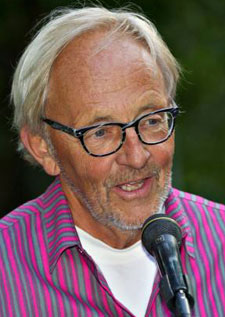
USA Right Now, Worse Than Ever, But?

By Johan Galtung

Take the candidate debate about nomination and election, focused on Trump’s buffoonery and Sanders’ ineligibility. Hillary?–on using a private account. Few words wasted on her foreign policy of massive belligerence, warfare. In the tradition, Zoltan Grossman [i] documents: 151 military interventions from Wounded Knee in 1890; and in spite of the war fatigue expressed by Trump, Cruz, Sanders – even by Obama.

And US reality? John Pilger [ii]: “Nuclear warhead spending alone rose higher under Obama than under any American president”. The Wall Street Journal (30 May 2016) had a full page on the new Navy railgun projectiles with ultra-speed that can penetrate any armor.

No peacefare; no sign of conciling trauma, of solving conflicts.

Take foreign policy. C. W. Freeman Jr.: “The End of the American Empire”; Noam Chomsky: “How Imperial Violence Backfires–Lessons from the Middle East”, Zalmay Khalilzad: “De-Ba’athification was a recipe for disaster” (english@other-news.info, 13 Apr, 19 May, 19 May 2016). Anatol Lieven, “What Chance for Afghanistan?” (NYRB 21 Apr 2016): none. A foreign policy in shambles, generally; Middle East, Afghanistan.

Cuba? In the balance, can be undone by a Republican Congress.

Saudi Arabia? May “wreck the U.S. economy”; USA gives in, as does the UN.

Take terrorism.

Peter Bergen, CNN’s national security expert, in “Why do terrorists commit terrorism” (INYT, 16 Jun 2016) focuses only on individual motivation. He rejectsRead More »

Brexit and What it Means for Britain and for Europe

By Farhang Jahanpour

Today (16 June 2016), Jo Cox, the 41-year old Labor MP, was killed after she was shot and stabbed in her constituency in Yorkshire. A 52-year old man was arrested in the area. The suspect was named locally as Tommy Mair.

There is as yet very little concrete information about him or his motives, and it is too early to jump to a conclusion and link his dastardly act with the referendum, but some eyewitnesses have said that before shooting Jo Cox twice, Mair shouted “Britain first”. Clearly, he is a deranged individual, but if he uttered those words, it is possible to conclude that the assault was connected with the referendum.

The fact remains that the assassination of such a strongly pro-EU MP is a big shock, a major loss and of course the source of great grief for her husband and her two small children. Before being elected as an MP in the last general election, Jo Cox had been a charity worker and a human rights campaigner all her life. Her husband, Brendan, used to work for Save the Children. They and their two little children lived a quiet and unassuming life in a barge on the Thames near the Houses of Parliament.

Her husband released the following touching statement after her death:

“Today is the beginning of a new chapter in our lives. More difficult, more painful, less joyful, less full of love. I and Jo’s friends and family are going to work every moment of our lives to love and nurture our kids and to fight against the hate that killed Jo.
Jo believed in a better world and she fought for it everyday of her life with an energy and a zest for life that would exhaust most people. She would have wanted two things above all else to happen now, one that our precious children are bathed in love and two, that we all unite to fight against the hatred that killed her. Hate doesn’t have a creed, race or religion, it is poisonous.
Jo would have no regrets about her life, she lived every day of it to the full.”

In any case, this ugly deed provides an extreme example of the acrimonious debates that are held over the referendum. All campaigning has been suspended as a sign of respect for the death of the MP.

On June 23, the British people take part in a rare referendum Read More »

East Asia: Four formulas for peace

By Johan Galtung

Kyoto, Japan

An East Asia of 6 states, 5 from the 6-Party Talks + Taiwan. The 6 in East Asia divide into South Korea-Taiwan-Japan in the US-led alliance AMPO+ (USA-Japan Security Treaty+); North Korea; China-Russia with others in SCO (Shanghai Cooperation Organization). AMPO+ with US “nuclear umbrella”, the other two may acquire nukes; North Korea with nukes; and SCO with two nuclear powers. Put it all together: A nuclear arms race.

Arms races may deter, but often end with wars. Wars mean trauma for losers and glory for winners. PTSD – post trauma stress disorder – may lead to thirst for revenge, and PGED – post glory exuberance disorder – to thirst for more glory. War, war, war. Worse than ever since WWII.

East Asia badly needs another approach.

As a minimum, the four tasks in the TRANSCEND peace formula: the negative peace of conciling traumas and solving conflicts; the positive peace of cooperation for mutual and equal benefit-equity-and harmony based on empathy.

Unconciled traumas and unsolved conflicts:

Japan/USA over FDR provoking Japan into war, Pearl Harbor, fire-bombing/nuclear genocide (Obama fell far short of Willy Brandt genuflexing in Warsaw for the genocide on Jews); Japan/Russia over Russian expansionism and the war; Japan/Taiwan-Korea-parts of China for uninvited, not colonialism, but japanization; Japan/SK – a carbon copy of Japan – with hysterically anti-Japanese policies (not in Pyonyang) demanding ever more apology and money. But Japan-SK “comfort women”, like Japan-China Nanjing, are complex; international commissions may sort facts from fiction.

Japan/China slave labor seems solved (Japan Times 2 Jun 2016).

NK/USA-SK: normalization-nuclear free Korea vs NK collapse.

Then Japan vs Russia, Chinas, Koreas over the contested islands.

Then USA polarizing East Asia, more tension, micro-managing.

Most problematic: Japan, USA; least: Russia. Read More »

TFF PressInfo # 377- Intro to a series: The New Cold War

By Farhang Jahanpour

The first article in a TFF Series on The New Cold War

There are many ominous signs that dark clouds are gathering over international relations, from the South China Sea, Taiwan, Vietnam, Japan and South Korea to the Middle East, and to Ukraine and the Baltics. We are entering a new and perhaps a more ominous Cold War.

This is something that will affect all our lives and will plunge us into a new era of East-West confrontation that none of us wants and that all of us should try hard to prevent.

Many young people were born after the end of the Cold War or were too young to remember its horrors, and how the world was on a knife’s edge about a possible global confrontation between the two superpowers with thousands of nuclear weapons whose use could have ended human civilization. We, who remember those days, should make sure that we do not see a repetition of that dark period in human history.

Yet, sadly, a Cold War mentality is once again creeping back into political discourse.

The Second World War that killed more than 60 million people and devastated many countries had hardly ended when new hostilities emerged. The dropping of the atomic bombs on Hiroshima and Nagasaki was not so much the final act in the Second World War as the opening shot in the Cold War. Contrary to the stated justifications for the dropping of the bombs as a means of forcing Japan to surrender, it is now clear that Japan was ready to surrender before the use of those awful weapons.

Many historians believe that the real reason for the use of nuclear weapons was to prevent Japan falling into the hands of the Soviet Union, as the Red Army was poised to take on Japan’s remaining army in Manchuria, thus forcing Japan to surrender to Russia. Furthermore, it was a clear signal of the West’s possession of the new devastating weapons.

For instance, the scientist Leo Szilard who met with US Secretary of State James F. Byrnes in May 1945, reported later: “Byrnes did not argue that it was necessary to use the bomb against the cities of Japan in order to win the war … Mr. Byrnes’ view was that our possessing and demonstrating the bomb would make Russia more manageable.” (1)

Therefore, far from wanting to save lives, the use of nuclear weapons was to demonstrate America’s overwhelming military might, and to issue a warning to Russia.

The war had hardly ended when in a speech in the British House of Commons on 16 August 1945 Winston Churchill referred to “the iron curtain which at the moment divides Europe in twain.”

It was in view of those ominous events that mankind decided to create international organizations that would “save succeeding generations from the scourge of war, which twice in our lifetime has brought untold sorrow to mankind.” The Charter of the United Nations aimedRead More »

Udsigten fra månen…

Af Claus Kold

Fra Månen kan man ikke se Danmark, lige meget hvor godt man kigger. Det kan man ikke, fordi Danmark er en kulturlig konstruktion, som er inde i danskernes hoveder, og som derfor ikke kan ses. Man kan heller ikke se Rusland, USA eller Indien.

Disse stater er nemlig også kun inde i hovederne på de mennesker, der tilfældigvis er født og opvokset i det, de har valgt at kalde fx Israel. Danmark er m.a.o. en tilfældighed. Det kunne lige så godt ikke eksistere, eller ligge et andet sted eller danskerne kunne tale et andet sprog, som de godt nok ville kalde dansk, men som ikke lød dansk – for os, de rigtige danskere.

Stater og statssystemer har ikke altid eksisteret, og op gennem tiden har de, der eksisterede, haft meget forskellige form. De har været religiøse, familieeje, enemandsvælder, étpartistater – i dag er det dominerende ideal territorialt afgrænsede demokratiske stater, hvor befolkningerne helt principielt skal inddrages i beslutningsprocesserne. De forskellige demokratiske stater, der udgør hovedparten af det internationale samfund i dag er dog langt fra ens, og det kan derfor være svært for staterne at forstå hinandens motiver og handlinger.

Til det tilfældige system af tilfældige stater hører lige så tilfældigt menneskeskabte systemer som politik, territorie, økonomi, sikkerheds- og forsvarspolitik, konkurrence, etc. Systemer som kunne være anderledes, men som i dag er bundet til sine egne logikker, som de er blinde for og derfor ikke sætter sig ud over. Systemer kan typisk ikke se og tænke ud over sig selv. Blindheden er farlig, for der tegner sig i stigende grad et billede af at disse tilfældige menneskelige systemer står i kviksand og kæmper med hinanden, uden at opdage at de synker dybere og dybere i, ligesom det heller ikke opdages at konflikterne ikke er nødvendige men systemskabte, kulturlige. Der er nok af globaliserede udfordringer: global opvarming, udryddelse af plante- og dyrearter, krige, terror og flygtninge.

Det statslige system, vi lever med i dag, blev til under helt andre befolkningsstørrelser, livs- og forbrugsformer, økonomier og teknologier end dem, der dominerer i dag. Overfor de globale udfordringer er disse stater på samme tid for store til hverdagens små problemer og for små til de globale udfordringer. I deres forsøg på at forholde sig til globale udfordringer, betjener politikere sig således af forældede instrumenter, og forsøgene på at forholde sig til de globale problemer falder tilbage på politikerne, der fremstår som utroværdige, som musikerne på Titanics stadig mere hældende dæk. Read More »

TFF PressInfo # 376: North and South Korea: Can be solved if…!

By Johan Galtung

Jeju Peace Forum, Kwangju National University, Seoul; South Korea

Like the Israel-Palestine conflict, the world has gotten tired of it, “what, the two Koreas still unable to sort it out”? Also, like Israel-Palestine, the USA is in it; making the situation complicated.

Never has the situation been so tense after the end of the war in Korea more than 60 years ago. Not only because of the nuclear bomb with missiles in North Korea, and the hawkish pro-nuke reaction in South Korea and Japan, but because of no moves forward to solve the underlying conflict. And where is that conflict? Not between North and South Korea, but between North Korea and USA that after 140+ years of victorious warfare had to accept armistice, not victory, in Korea.

Conflict means incompatible goals. Travel to Pyongyang and find that their goals are peace treaty, normalization of relations, and a nuclear free Korean Peninsula.

And the US goal is the collapse of the present NK regime; failing that, status quo. Given the threat of a major war, even nuclear war, that goal is untenable. Some points.

Why does NK have nuclear capability?

Because NK is threatened by the USA-South Korea alliance in general and their “Team Spirit” in particular to deter conventional, or nuclear attacks; failing that to fight back, and particularly against where the attack might come from: US bases in Okinawa-RyuKyu, and from Japan proper. Militarily trivial.

AND to have a bargaining chip in any denuclearization that of course has to be monitored; given the US cheating in connection with Austrian neutralization in 1955 focused particularly on that one.

AND to show that we are not collapsing, we are capable of making nuclear bombs and the missiles to carry them; far from collapsing.Read More »

TFF PressInfo # 375 Close calls: We were closer to nuclear destruction than we knew (2)

By Gunnar Westberg

The proposition that nuclear weapons can be retained in perpetuity and never used – accidentally or by decision – defies credibility”.

Other serious close calls

In November 1979, a recorded scenario describing a Russian nuclear attack had been entered into the US warning system NORAD. The scenario was perceived as a real full-scale Soviet attack. Nuclear missiles and bombers were readied. After six minutes the mistake became obvious. After this incident new security routines were introduced.

Despite these changed routines, less that one year later the mistake was repeated – this time more persistent and dangerous. Zbigniew Brzezinski, the US national security adviser, was called at three o’clock in the morning by a general on duty. He was informed that 220 Soviet missiles were on their way towards the USA. A moment later a new call came, saying that 2,200 missiles had been launched.

Brzezinski was about to call President Jimmy Carter when the general called for a third time reporting that the alarm had been cancelled.

The mistake was caused by a malfunctioning computer chip. Several similar false alarms have been reported, although they did not reach the national command.

We have no reports from the Soviet Union similar to these computer malfunctions. Maybe the Russians have less trust in their computers, just as Colonel Petrov showed? However, there are many reports on serious accidents in the manufacture and handling of nuclear weapons.

I have received reliable information from senior military officers in the Soviet Union regarding heavy use of alcohol and drugs among the personnel that monitor the warning and control systems, just as in the USA.

The story of the “Norwegian weather rocket” in 1995 is often presented as a particularly dangerous incident. Russians satellites warned of a missile on its way from Norway towards Russia. President Yeltsin was called in the middle of the night; the “nuclear war laptop” was opened; and the president discussed the situation with his staff. The “missile” turned out not to be directed towards Russia.

I see this incident as an indication that when the relations between the nuclear powers are good, then the risk of a misunderstanding is very small. The Russians were not likely to expect an attack at that time.

Indian soldiers fire artillery in northernmost part of Kargil region

Close calls have occurred not only between the two superpowers. India and Pakistan are in a chronic but active conflict regarding Kashmir. At least twice this engagement has threatened to expand into a nuclear war, namely at the Kargil conflict in 1999 and after an attack on the Indian Parliament by Pakistani terrorists in 2001.

Both times, Pakistan readied nuclear weapons for delivery. Pakistan has a doctrine of first use: If Indian military forces transgress over the border to Pakistan, that country intends to use nuclear weapons.

Pakistan does not have a system with a “permissive link”, where a code must be transmitted from the highest authority in order to make a launch of nuclear weapons possible. Military commanders in Pakistan have the technical ability to use nuclear weapons without the approval of the political leaders in the country. India, with much stronger conventional forces, uses the permissive link and has declared a “no first use” principle.

The available extensive reports from both these incidents show that the communication between the political and the military leaders was highly inadequate. Misunderstandings on very important matters occurred to an alarming degree. During both conflicts between India and Pakistan, intervention by US leaders was important in preventing escalation and a nuclear war.Read More »

TFF PressInfo # 374: Close calls: We were closer to nuclear destruction than we knew (1)

By Gunnar Westberg

The proposition that nuclear weapons can be retained in perpetuity and never used – accidentally or by decision – defies credibility”.

This unanimous statement was published by the Canberra Commission in 1996. Among the commission members were internationally known former ministers of defense and of foreign affairs and generals.

The nuclear-weapon states do not intend to abolish their nuclear weapons. They promised to do so when they signed the Nuclear Non-Proliferation Treaty (NPT) of 1970.

Furthermore, the International Court in The Hague concluded in its advisory opinion more than 20 years ago that these states were obliged to negotiate and bring to a conclusion such negotiations on complete nuclear disarmament.

The nuclear-weapon states disregard this obligation. On the contrary, they invest enormous sums in the modernization of these weapons of global destruction.
It is difficult today to raise a strong opinion in the nuclear-weapon states for nuclear disarmament. One reason is that the public sees the risk of a nuclear war between these states as so unlikely that it can be disregarded.

It is then important to remind ourselves that we were for decades, during the Cold War, threatened by extinction by nuclear war. We were not aware at that time how close we were.

In this article I will summarize some of the best-known critical situations. Recently published evidence shows that the danger was considerably greater than we knew at the time.

The risk today of a nuclear omnicide – killing all or almost all humans – is probably smaller than during the Cold War, but the risk is even today real and it may be rising. That is the reason I wish us to remind ourselves again: as long as nuclear weapons exist we are in danger of extermination.

Nuclear weapons must be abolished before they abolish us.

Stanislav Petrov: The man who saved the world

1983 was probably the most dangerous year for mankind ever in history. We were twice close to a nuclear war between the Soviet Union and the USA. But we did not know that.

The situation between the USA and the Soviet Union was very dangerous. In his notorious speech in March 1983, President Reagan spoke of the “Axis of Evil” states in a way that seriously upset the Soviet leaders. The speech ended the period of mutual cooperation, which had prevailed since the Cuba Missile Crisis.

In the Soviet Union many political and military leaders were convinced that the USA would launch a nuclear attack. Read More »

Mass migration, the EU and European nationalisms

By Johan Galtung

Antwerpen & Alfaz

We are dealing with mass migration, basically into EU, and European nationalisms, many in favor of exits from the EU.

Why this mass migration, maybe to the point of Völkerwanderung, mainly into EU – but then what kind of EU? – and why the European nationalisms now found one way or the other in many member states?

The forecast for migration from Africa into Italy in 2016 is about 100,000; 28,000 already arrived in the first quarter, with 1,000 drowning in the Mediterranean (INYT, 6 May 2016). Big numbers. They knew the risks they were taking, so the push away from Africa and the pull towards Italy, and beyond, must have been considerable.

Better think in terms of 50 million migrants over 50 years, from regions considered uninhabitable to inhabitable regions. There seem to be five major causes underlying this basic world asymmetry:

Slavery, four centuries, depriving societies particularly of able-bodied males, by Arabs, then Westerners, cross-Atlantic transportation mainly by the English (Liverpool);

Colonialism, by Muslims after the death of the prophet in 632, from Casablanca to Southern Philippines, till the end of the 15th century, close to nine centuries, then by Christians close to five centuries, till colonialism was officially ended in the 1960s;

Robbery Capitalism, stealing or paying next to nothing for resources processed into manufactured goods, pocketing the value added;

Wars, mainly initiated by the West, killing millions (the USA more than 20 million in 37 countries after WWII), destroying property;

Ecological Factors, like depletion-pollution, often toxic for humans or nature, erratic climate partly due to climate gases, NOX, CO2, CH4.

These are the causes of poverty in some parts of the world but also of wealth in others; Read More »