Can cyber warfare prevent wars?

By Gunnar Westberg

Can cyber warfare prevent wars?

This is a call for information. An appeal to people who know more abou cyber warfare!

As long as there are armies the threat of war remains.

As long as there are nuclear weapons the threat of extermination of mankind from nuclear war remains.

It is sometimes said that nuclear weapons will be with us until we find something more effective.

Could cyber warfare be an alternative?

The U.S. together with Israel delayed the development of the uranium enrichment facilities in Iran through the use of a virus introduced into the centrifuges. Iran may have been behind a cyber attack on computers in Saudi Arabia that interfered with oil refineries and oil transport.

Can cyber warfare prevent a military attack? Here an attempt to illustrate the idea:Read More »

Twenty pious wishes for 2016: Mind the minds

By Johan Galtung

According to UNESCO, wars start in the minds of men. Well, something–like unsolved conflicts and unconciled traumas–passes minds on the way to war. But UNESCO got the unintended focus on male humans right.

Minds matter, above all pre-programmed minds. This New Year 2016 editorial minds minds and mind-sets, the set minds. For peace culture.

1. A case: New York Times editorial 30 Dec 2015, “The Importance of Retaking Ramadi”. Being the capital of a governorate–IS uses them as building blocks–this was a major military victory. However, the mind-set of the writer confuses retaking space with retaking minds. Sunni Arab minds. “Liberated” by a Shia army and infidel US bombs? They might even be against both. The military come and go. Minds often stay.

2. Can we map minds? Well, to standard world maps with 200 states at least add maps of 2000 nations, showing those who would like to be more together, like in federations and confederations, and less, more apart, like in states. Nations are more cultural. Closer to “mind”.

3. The military have maps of hardware capability; “hammers in search of nails”. An example of intention: Pentagon had in the early 1960s “Project Camelot” to map with public opinion data revolutionary ideas. At least add maps of capacity for doing good to others, not only harm.Read More »

ISIS and the Sykes-Picot backlash

By Richard Falk

Part 1

One of the seemingly permanent contributions of Europe to the manner of organizing international society was to create a strong consensus in support of the idea that only a territorially delimited sovereign state is entitled to the full privileges of membership. The United Nations, the institutional embodiment of international society recognizes this principle by limiting membership in the Organization to ‘states.’

Of course, there is an enormous variation in the size, population, military capabilities, resource endowments, and de facto autonomy among states. At one extreme are gigantic states such as China and India with populations of over 1 billion, while at the other are such tiny countries such as Liechtenstein or Vanuatu that mostly rely on diplomacy and police rather than gun powder and armies for security.

All four of these political entities have the same single vote when it comes to action in the General Assembly or as participants at global conferences such at the recently concluded Paris Summit on climate change, although the geopolitics is supreme in the Security Council and the corridors outside the meeting rooms.

From the point of view of international law and organizational theory we continue to live in a state-centric world order early in the 21st century. At the same time, the juridical notion of the equality of states that is the foundation of diplomatic protocol should not lead us astray.

The shaping of world order remains mainly the work of the heavyweight states that act on the basis of geopolitical calculations with respect for international law and morality displayed only as convenient. Yet the political monoculture of territorial states remains formally the exclusive foundation of world order, but its political reality is being challenged in various settings, and no where more so than in the Middle East.

This is somewhat surprising. It might have been Read More »

Despair and hope for 2016

Richard Falk

W.H. Auden wrote these suggestive lines in the poem ‘Lament for a Lawgiver’ that can be found in his Age of Anxiety:

‘The gods are wringing their great worn hands

for their watchman is away, their world engine

Creaking and cracking…’

If we pause to look about the world, we will observe many signs of creaking and cracking.

Among the most alarming forms of creaking and cracking is the appalling failure of political leadership. Where are the Roosevelts, DeGaulles, Chou En-Lais, Sukarnos, Titos, and Nehrus? Is the dumbing down of political leadership a consequence of the reordering of the world economy in ways that constrain and corrupt the role of governments?

Or has the technology of control, surveillance, and destruction become so overwhelming as to make the moral and political imagination seem irrelevant, giving exclusive historical agency to those who propose doing nothing while the fires ravaging the earth burn out of control?

Or even propose pouring more and more oil on the fires? In this respect, should we not regard the ‘climate denier’ as the true hero of our time, he that worships that which destroys, and so distresses the wearying gods.

Or should we blame the structures that have evolved to constitute modernity, especially the fragmenting impact of the sovereignty of states as reinforced by the passions of tribalizing nationalisms?

This optic of the national tribalized self that controls our visionary capabilityRead More »

Edward Said’s humanism versus the US State Department’s Anti-semitism

By Richard Falk

Prefatory Note
This post consists of my written text for a public presentation on the theme of “Edward Said’s Humanism and the Rejection of the State Department’s Definition of Anti-Semitism” at a conference at Fresno State University, Nov. 6, 2015 bearing the title “Universities at the Crossroads: The Assault on Academic Freedom,” which was the last event of the “Edward Said Lecture Series” organized by Professor Vida Samiian of the Department of Linguistics at FSU. My talk as given departed considerably from this text.

In these remarks, I will present the following analysis:

(1) The most ardent Zionist forces have longed tried to conflate criticism of Israel and Zionism with hatred of Jews, the traditional understanding of anti-Semitism, but this effort has intensified recently, and even has been endorsed by the US Government and is currently under consideration by the University of California and elsewhere;

(2) Examine the definition of anti-Semitism adopted by the U.S. State Department, and discuss briefly why it has pernicious implications for academic freedom, and indeed even for an understanding of the genuine nature of anti-Semitism;

(3) Show why Edward Said despite his intense opposition to anti-Semitism would nevertheless be vulnerable to allegations of being an anti-Semite if the State Department definition were to be applied to his writings and activities;

(4) And finally to point out that according to the imperatives most influentially expressed by Noam Chomsky and Said, the ‘responsibility of the intellectual’ would perversely require them to be ‘anti-Semitic’ according to this pernicious wider conception.

My personal experience with this theme of anti-Semitism and Israel can be summarized by recalling two different occasions:

The first was in Greek Cyprus more than a decade ago at a meeting of the Inter-Action Council (composed of ex-heads of states) devoted to conflict resolution in the Middle East. I had been invited as a resource person. At a session devoted to Israel/Palestine the Israeli ambassador to Greece spoke at some length, insisting that it was anti-Semitic to express strong criticisms of Israel and Zionism. As the only other Jew at the table I felt it to be almost a duty to clarify what I believed to be a mischievous manipulation of ideas.

In my intervention I explained that Zionism was a project or ideology, Israel was a state, and that Jews were a people or persons. I attempted to explain that to disagree with Zionism or to criticize Israeli policies and practices as a state was not at all anti-Semitic, but to exhibit hostility, hatred, and discrimination against Jews as a people or as individuals was indeed anti-Semitism. Recall that Hitler did not persecute Jews for being Zionists, but for being Jews, for partaking of a race or ethnicity.

After the meeting recessed, several participants thanked me for my comments, indicating that only a Jew could offer this kind of clarification, which they found persuasive.

In contrast, the Israeli ambassador and his NGO sidekick Read More »

China versus Russia versus USA: Xi versus Putin versus Obama

By Johan Galtung

From very high up three major countries-states stand out clearly: China, the most populous; Russia, the largest; USA, the most military. With three leaders, Xi, Putin, Obama, with much power on their hands.

And here is the key hypothesis, presumably more right than wrong: China-Xi: positive peace; Russia-Putin: negative peace; USA-Obama: war.

We have in mind China – also a region – building relations for reasonably mutual and equal benefit with China all over the world, spinning Asia-Europe-Africa together in a road-rail-ship-air Silk network available to all (with major mistakes in the South China Sea).

We have in mind Russia – itself also a region – calling to Russia leaders in violent conflict from all over the world, seeking cease-fires and accommodation (making itself a major mistake in Syria).

And we have in mind USA – more than a state, less than a region – since WWII ended killing more than 20 million people in 37 countries:

Afghanistan, Angola, Argentina, Bangladesh, Bolivia, Brazil, Cambodia, Chad, Chile, China, Colombia, Cuba, Democratic Republic of Congo, Dominican Republic, East Timor, El Salvador, Grenada, Guatemala, Haiti, Honduras, Hungary, Indonesia, Iran, Iraq, Israel-Palestine, Korea North-South, Laos, Nepal, Nicaragua, Pakistan, Panama, Paraguay, Sudan, Vietnam, Yugoslavia Not included: daily USA mass shootings.

And weaving the world together with the incredible internet (making a major mistake, using it for spying, betraying us all).Read More »

What drives religious extremism?

By Jonathan Power

What drives people to extremes? Why do the people behind Al-Qaeda or the Islamic State (IS) get so charged up and angry?

Perhaps to understand we should go back to the 16th century in Europe and the furious debate about the “divine right of kings”. For decades the royal houses of Europe had been becoming less accessible to their subjects. William of Orange, ruler of the powerful Netherlands, said he had “received his power from God and God alone.”

Philip II of Spain was also a principle protagonist of this theme. Indeed, when Spain conquered Holland, Philip tried to squash the new Protestant “heresy”, using the brutal practices of the Spanish Inquisition.

It is no wonder that the Dutch were ready for a bloody revolt. They would no longer accept the prerogatives of rulers who claimed a “divine right”.

In 1581 the Dutch withdrew their allegiance from Philip II. Accountability of a ruler to his subjects not to his God was the new dispensation.

Meanwhile, England, under the rule of Elizabeth 1 and James 1, continued to believe in the divine right of the monarch. Only when James’s son came to the throne, Charles 1, was the belief overturned. Parliament raised an army. Seven years of war was followed by the king’s trial, conviction and execution in 1649.

The poet John Milton wrote at the time, “All men naturally were born free”. John Locke wrote 40 years later that “The very objective of government is setting up a known authority to which everyone of that society may appeal upon any injury received…The legislative power should be placed in collective bodies of men, call them senate, parliament, or what you please”.

From then on, over the course of two centuries, very much influenced by Locke and other Enlightenment thinkers, a constitutional form of government was slowly built across much of Europe. However, it was the United States that first became a full democracy, with separation of church and state.

But, despite the great advance from the days of “divine rule”, parliaments and governments regularly failed the people. Parliaments were often dominated, or at least greatly influenced, by those with inherited titles, people with money, the army and even criminal gangs.

Much of the struggle against the divine right of kings and the corrupt policies of the Pope in Rome had led Martin Luther in 1517 to nail his handbill to the doors of a church in Wittenberg in Germany. Faith in God, not in pope or king, was the only way to gain heavenly salvation, he preached. No wonder that Philip II savagely repressed the profession and declarations of Protestant faith in Holland.

It was in Holland that some Protestants became extremists. In the late 1560s Protestant iconoclasts went into the catholic churches and destroyed the statues of Mary and the saints. They also destroyed any manifestation of the wealth and riches that the church had been extorting for so long.

Their anger was such that we would call them today “violent, religious extremists”.

Sarah Chayes points out in her excellent new book “Thieves of State”, “We can see parallels between the 16th century struggles in Europe against the kings and Catholic Church and the religious militancy of Al Qaeda and IS. The resemblance between the language used to explain their violence and that of the earlier Protestant insurrectionists castigating the acute corruption of the Catholic Church and its royalist allies (with their belief in the divine right of kings) is unmistakable.”

Jonathan Power
jonatpower@aol.com

The clouds are dark and getting darker

By Johan Galtung

The process has now gone full circle, from Sykes-Picot Agreement negotiated from 1915 to 16 May 1916, about control of the Ottoman Empire, when beaten, to England now joining France in bombing Syria. “Violence In and By Paris” two weeks ago was wrong about England wanting to stay out: the House of Commons on 02 Dec 2015 voted 397 to 223 for bombing; 56 Labor MPs for, only 7 Conservative MPs against.

Russia played a minor role in Sykes-Picot as now also in bombing maybe mainly the opposition to Assad.

As Robert Savio points out, “They all fight to the last Syrian.”

The likelihood of an atrocious Paris 13 November type violence in London went up many points. And Russia had a civilian plane bombed.

The USA is as addicted to bombing as a hammer to a nail, not only to use allies and train locals. James A. Lucas, “The United States has killed more than 20 million people in 37 nations since WWII”, in 1945 (jlucas511@woh.rr.com) seems not to be enough; they just go on and on. More than a million Muslims killed in West Asia mainly by the USA since 1991. In San Bernardino, somebody may have killed 14 in revenge.

The new name for what they fight, after jihadism, is the Islamic State, calling it sometimes IS, ISIS, ISIL. What is it, this Daesh?

There seem to be heavy elements of Saddam’s army, the Baath secular party (also Assad’s), and the Tikrit clan from the recent past–now adding maybe ten fighters for each killed by the West. Daesh seems toRead More »

Responding to Megaterrorism after Paris

By Richard Falk

Prefatory Note
The article below is based on an opinion piece published by Middle East Eye on December 1, 2015 under the title “A Different Response to ISIS after Paris.” My modified text places its focus on the originality of megaterrorism and its distinctive challenges, suggesting that the choice of response needs to be extended beyond the iron cage of militarism and vengeance. Also, it is essential for analysts and leaders to envision the response to the response as well as being preoccupied with how best to hit back. Increasingly, American politicians treat the challenge as if playing poker whereas the realities of the situation call for a chess players’ natural disposition to think ahead as many moves as possible. Finally, given the religious and civilizational dimensions of current versions of megaterrorism, it is vital to guard against various manifestations of Islamophobia.

What separates megaterrorism from other more customary forms of terrorism is the theme of this post. It is not possible to give a precise definition of megaterrorism by pointing to a threshold of casualties or the magnitude of response. Each megaterrorist event is decisively shaped by its distinctive sociopolitical and psychological context.

The focus here is to take account of this radical new category of threat posed in a variety of settings, critique the ‘war’ reflex and the war/crime binary, briefly consider alternate paths of response, and recommend risk and cost assessments that take into account adversary responses to the prescribed response. The 21st century experience with responding to megaterrorist events does not create confidence in either most conceptualizations of the challenges being posed or the responsive strategies chosen to be implemented.

The horrific Paris attacks of November 13th challenge the West more deeply in some ways than did the 9/11 attacks 14 years ago. Read More »

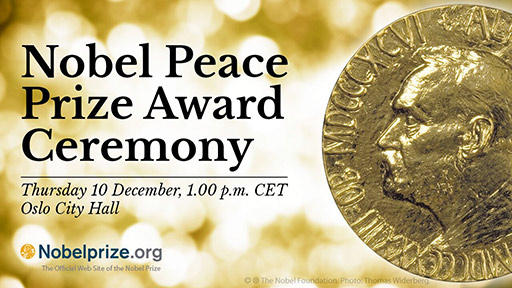
TFF PressInfo # 351: The Nobel Foundation taken to court on the Peace Prize

Lund, December 10, 2015

On the day of the Nobel Peace Prize Award Ceremony at Oslo City Hall

To whom it may concern, including the media

We know – and Alfred Nobel knew – how devastating war and arms races are, and how little security we get for all the money we spend on military forces.

The campaign to reclaim the Nobel Peace Prize is first and foremost a campaign to revive the idea that global peace requires global cooperation on disarmament and replacing the law of force with the force of law. Every day more and more of us see, from the Middle East warfare, from the refugee crisis, and many other chilling reminders, the mandatory urgency of a change in world politics.

Alfred Nobel decided to give one fifth of his fortune for a prize to promote disarmament and resolution of all conflicts through negotiations and legal means, never through violence.

Can such a prize, with a so clearly stated goal, be turned to serve the opposite idea and be given again and again to recipients who promote arms races and believe in militarism and war?

This question will soon be answered, after Mairead Maguire, Jan Oberg, Davis Swanson, and Lay Down Your Arms took the case to the Stockholm District Court on Friday 4th of December 2015. Here is the full text of the summons.
and all other relevant information is available at the Nobel Peace Prize Watch.

Test case: the award to the European Union in 2012

The court case will test one of the most obvious violations of the Nobel idea Read More »