Our 30 years with peace – And what happened to world peace? Part I

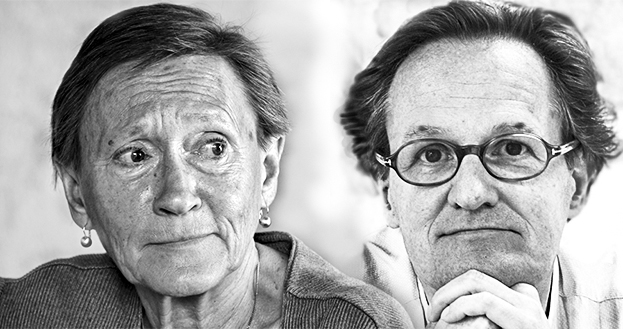
By Christina Spannar & Jan Oberg, TFF founders

Part I

TFF was established on September 12, 1985. We think that it’s 30th Anniversary is a fitting occasion to reflect on what has happened in the big world and in our lives with the foundation.

It is also a piece of Lund’s research history in general and of peace research and education in particular.

Motivation

The 1980s was a decade of gross changes in Europe, the struggle against nuclear weapons in particular.

Lund University was predominantly about education and single research projects – while TFF could be more of an experimental playground. We wanted to do truly free research and not negotiate with higher levels at, say, the university what to do where, in which countries to work and what to say to the media.

Peace has always been controversial and there were – and remain – enough examples of places that become ‘mainstream’ and routine – rather than experimental and radically ’alternative.’

What we did not know back in 1985 was that Lund University wanted to get rid of all inter-disciplinary academic endeavours – women, environmental, human rights and peace studies – and closed down the Lund University Peace Research Institute of which Jan had been the director since 1983, in November 1989.

Being a private undertaking

The HQ is the first floor of a two-family house in a villa area of Lund. Visitors, board members etc. have held seminars there, eaten and often stayed with us. Board members were colleagues and personal friends and new board members were recruited from Associates who were also personal friends, like-minded colleagues or mentors one way or the other.
Our children and other friends were often involved in the things TFF did – including printing newsletters in the basement, gathering them, putting them in envelopes and fix address labels.

Goals

The permanent top priority has been to promote the UN Charter norm that ‘peace shall be created by peaceful means’ (Article 1).
This was promoted through traditional book-based research and later field work – i.e. conflict analyses and mediation and peace plans – in conflict zones, but also through intense public outreach/education such as newsletters, media participation, press releases – and, from 1997, the Internet and then social media.

Secondly, we wanted to integrate theory and practice. While it is good to do basic research in the laboratory, what is peace research really worth if it is never applied to real life’s tough situations?

The first five years we did book projects like everybody else in the trade. But in September 1991 TFF went on its first peace mission to former Yugoslavia. It is safe to say that we were among the first to embark on that in-the-field philosophy and practice it – with all the problems and risks that it entailed.

Foundation and management

The word ‘foundation’ does not mean that we had an endowment to start out with – and funding has been a constant problem every day and year ever since. And getting worse over time.
But it meant flexibility and – being and remaining small – quickly adapting to a changing world.

Being our own and not part of Lund University was another advantage – and a drawback in terms of finding funds. TFF had to build its own reputation from scratch rather than piggyback on that of the university’s. It was quite tough but also more rewarding in the long run.Read More »

Why a simple life matters

By Kamran Mofid

The Path to peace and happiness lies in the simple things in life

Ever wish you had a few more hours in the day so you could get everything done you need to get finished?

What if, instead of always trying to do more, we slowed down a little and embraced a slower paced life. What if we didn’t try to do everything, but slowed down and concentrated only on the things that are truly valuable and important to us.

A slower paced life introduces margin and gives us more awareness about how we spend our time. Slow doesn’t happen naturally. In fact, our lives tend to pile more and more on because we rarely remove commitments even if we add new ones. It’s almost like that old computer that just keeps piling on junk and virus’ until it gets so slow it needs a reformat or a trip to the trash can. Is your life ready for a reboot? Are you ready to embrace a slower paced life?

Continued here…

TFF PressInfo # 333 – Look at nuclear weapons in new ways!

By Jan Oberg

It’s absolutely necessary to remember what happened 70 years ago in Hiroshima and Nagasaki, see the movies from then, listen to the survivors, the hibakusa. But it isn’t enough for us to rid the world of these crimes-against-humanity weapons. And that we must.

Hiroshima and Nagasaki is history and it is also the essence of the age you and I live in – the nuclear age. If the hypothesis is that by showing these films, we create opinion against nuclear weapons, 70 years of every more nuclearism should be enough to conclude that that hypothesis is plain wrong.

There is a need for a frontal attack on not only the weapons but on the nuclearism – the thinking/ideology on which they are based and made to look ‘necessary’ for security and peace.

Nuclear weapons – only for terrorists

At its core, terrorism is about harming or killing innocent people and not only combatants. Any country that possesses nukes is aware that nukes can’t be used without killing millions of innocent people – infinitely more lethal than Al-Qaeda, ISIS etc. Since 9/11 governments and media have conveniently promoted the idea that terrorism is only about small non-governmental groups and thus tried to make us forget that the nuclear ‘haves’ themselves practise state terrorism and hold the humanity hostage to potential civilizational genocide (omnicide).

Dictatorship

No nuclear state has ever dared to hold a referendum and ask its citizens: Do you or do you not accept to be defended by a nuclear arsenal? Nuclear weapons with the omnicidal -kill all and everything – characteristics is pure dictatorship, incompatible with both parliamentary and direct democracy. And freedom.

Citizens generally have more, or better, morals than governments and do not wish to see themselves, their neighbours or fellow human beings around the world burn up in a process that would make the Holocaust look like a cozy afternoon tea party. In short, nuclear weapons states either arrange referendums or must accept the label dictatorship.

The idea that a few hundred politicians and military people in the world’s nuclear states have a self-appointed right to play God and decide whether project humankind shall continue or not belongs to the realm of the civilisational perverse or the Theatre of the Absurd. Such people must run on the assumption, deep down, that they are Chosen People with a higher mission. Gandhi rightly called Western civilisation diluted fascism.

Unethical

Why? Because – simply – there can be no political or other goal that justifies the use of this doomsday weapon and the killing of millions of people, or making the earth uninhabitable.

Possession versus proliferation

The trick played on us all since 1945 is that there are some ‘responsible’ – predominantly Christian, Western – countries that can, should, or must, have nuclear weapons and then there are some irresponsible governments/leaders elsewhere that must be prevented by all means from acquiring them. In other words, that proliferation rather than possession is the problem. However, it is built into the Non-Proliferation Treaty, NPT, that those who don’t have nuclear weapons shall abstain from acquiring them as a quid pro quo for the nuclear-haves to disarm theirs completely.

That is, the whole world shall become a nuclear-weapons-free zone (NWFZ).

Those who have nuclear weapons provoke others to get them too. Possession leads to proliferation.

The recent negotiations with Iran is a good example of this bizarre world view: the five nuclear terrorist states, sitting on enough nukes to blow up the world several times over and who have systematically violated international law in general and the NPT in particular, tell Iran – which abides by the NPT and doesn’t want nuclear weapons – that it must never obtain nuclear weapons. Simultaneously, they turn a blind eye to nuclear terrorist state, Israel’s 50+ years old nuclear arsenals.

And it is all actively assisted by mainstram media who seem to lack the knowledge and/or intellectual capacity to challenge this whole set-up – including the racist belief structure that “we have a God-given right and are more responsible than everybody else – particularly non-Christians…”

But what about deterrence?

You’ve heard the philosophical nonsense repatedly over 70 years: Nuclear weapons are good to deter everyone from starting the ‘third world war’. That nukes are here to never be used. That no one would start that war because he/she would know that there would be a mass murder on one’s own population in a second strike, retaliation. But think! Two small, simple counterarguments:

a) You cannot deter anyone from doing something unless you are willing to implement your threat, your deterrent. If A knows that B would never use his nukes, A would not be afraid of the retaliation. Thus, every nuclear weapons state is ready to use nukes under some defined circumstance; if not there is no deterrence whatsoever.

b) The United States has long ago done two things (as the only one on earth): 1) decided on a doctrine in which the use of small nukes in a conventional role is fundamental, thus blurring the distinction between conventional and nuclear weapons; 2) its missile defence (that it also wants in Europe) is about preventing a second strike back – shooting down retaliatory missiles – so it can start, fight and win a nuclear war without being harmed itself. Or so it can hope.

There are many other aspects – but let’s mention just one more:

Nuclear weapons have already caused wars

The war on Iraq is a good example. If Iran will be bombed – which can’t be excluded at all – it’s about nuclear weapons. Ukraine is about expanding nuclear-based NATO and nuclear-based EU right up to the border of Russia. The enemy image of North Korea – where war can also not be excluded in the future – is mainly about it being a nuclear weapons state. The conflicts surrounding Israel are intimately connected with its nuclear weapons threatening everyone – non-nuclear – around it.

Hope

No, let’s rid the world of this civilisational mistake. Nuclearism and nuclear deterrence is the world most dangerous ideology comparable to slavery, absolute monarchy and cannibalism that we have decided – because we are humans and civilised and can think and feel – to put behind us.

There is no co-existence possible between nuclear weapons on the one hand and democracy, peace and civilisation on the other.

It’s time to regai hope by looking at all the – civilised – non-nuclear countries and follow their example. Thus, 99% of the southern hemisphere landmass is nuclear weapons free. 60% of the 193 states, with 33% of the world population, are included in this free zone.

And here are the countries which have contemplated to obtain – but decided to abstain from – nuclear weapons (including those who have had them and gotten rid of them): Sweden, Switzerland, Yugoslavia, South Africa, Libya, Austria, Mongolia, Ukraine, Kazakhstan, Japan, Antartica, the Seabed, Outer Space. Finally, dozens of countries have the technical capacity but would not dream of joining the nuclear club.

The West, the U.S. in particular, that started the terrible Nuclear Age should now follow the far majority of humanity, apologise for its nuclearism and move to zero.

From Security to Peace: A paradigm shift

By Johan Galtung

Look at the trauma ; the issues of the past. Iran, one of the world’s oldest civilizations was greatly humiliated by the CIA-MI6 coup in 1953, and now by a “deal” singling out Iran as the problem. And USA, the most powerful, was humiliated by the Khomeini revolution. And so on, all the way down. Something must, and can be, done.

One useful approach is an international truth commission about what really happened; better an exchange of their narratives with dialogue; best a violent party wishing what happened undone.

The peace formula says, Go beyond!, eg., by building togetherness across the have-have not faultline; a Middle East nuclear-free zone. In addition, security through peace for Israel, not the unfeasible opposite. The formula says: clear past traumas, open for future projects. Not in the same document, different experts negotiate, but parallel.

Continue reading here…

Aesthetics as One Road to Peace?

By Johan Galtung

The eminent historian of Central and South India, William Dalrymple, had a remarkable article in The New York Review of Books (June 25, 2015): “The Renaissance of the Sultans”. Being a fan myself, this editorial column is very much based on that eye-opener.

The focus is on one Sultan, Ibrahim Adil Shah II, of the central Indian kingdom of Bijapur, between Mumbai and Goa; we are talking about early 17th century. The Sultan is described as “an erudite scholar, a lute player, poet, singer, calligrapher, chess master and aesthete”. How different from Western rulers with military-political skills; how similar to many Chinese rulers, emperors, mandarins with poetry, calligraphy and more as indelible part of their legitimacy.

However, the point of the story, as told by Dalrymple on the basis of the impressive works he reviews, goes far beyond describing what must have been a remarkable ruler. That ruler himself also goes beyond, even beyond this statement that “the two most beautiful things in the world are a lute and a beautiful woman”. He has a theory:

“Bringing together Hindu and Muslim traditions in an atmosphere of heterodox learning, and uniting Persians, Africans and Europeans in a cosmopolitan artistic meritocracy, Ibrahim presided over a free-thinking court in which art was a defining passion. For Ibrahim was literally obsessed with the power of art. In his poems he dwells on its ability to bring people together, and on the way that art, and particularly music, acted on the body and was capable of moving an individual to tears, or ecstasy, or a deep melancholic sadness”.

How true. We notice that he is not only bridging geographical gaps but also gaps in the body, seeking to reconcile “the old Greek medical ideas of the humors of the body” with Hindu ideas of reaching the human spirit through aesthetic appreciation.

Moreover, “through music and art he believed that his people could learn to look at each other with mutual understanding: They speak different languages, But they feel the same thing, The Turk and the Brahmin.”

Well, they hardly feel “the same thing”; but they feel, and good art engenders good feelings, visible to each other.

Nevertheless, art bringing people together Read More »

TFF PressInfo # 330 – Iran’s Nuclear Deal: A great achievement, but hard work ahead

By Farhang Jahanpour

The announcement of the nuclear deal between Iran and six world powers is a rare moment in history that gives us hope and provides a basis for optimism.

By contemplating what the alternative would have entailed, any agreement, no matter how defective, is a great achievement and has to be welcomed.

However, the indications are that, as the Iranian Foreign Minister Mohammad Javad Zarif has declared at a joint press conference with the EU High Representative for Foreign Affairs, there has been a win-win agreement that will benefit everyone. In short, they have made history.

Ms. Mogherini said: “It is a decision that can open the way to a new chapter in international relations. I think this is a sign of hope for the entire world.” The Iranian foreign minister echoed those sentiments and described the deal as “a historic moment”.

He continued: “Today could have been the end of hope, but now we are starting a new chapter of hope.” Zarif rightly pointed out that the deal has ended an unnecessary conflict. As the TFF Associate Gareth Porter has shown in his book of the same title, it was in fact “A Manufactured Crisis”.

It should be remembered that Iran had been ready since 2003 to reach a nuclear deal when she agreed to ratify the Additional Protocol and voluntarily suspended enrichment for two years. The Bush Administration killed that deal by illegally stating that, contrary to the NPT regulations, Iran was not allowed to have any enrichment on her soil. Read More »