The fifth anniversary of the Egyptian Uprising

By Farhang Jahanpour

Since achieving their independence from Western colonialism, most Arab countries have never experienced events such as they have seen during the past few years. The demonstrators in Tunisia got rid of their autocratic ruler in a remarkably short time.

And the events in Egypt starting exactly five years ago today (25 January, 2015) spelled the end of Hosni Mubarak’s regime. The fire of revolutions and uprisings spread to other Arab countries, and are still continuing.

Although those revolutions have not yet led to any lasting democracy or improvements in the lives of their citizens, nevertheless, what has happened during the past five years cannot be reversed, no matter how hard the autocratic rulers try to set the clock back.

For better or worse, the Arab world is undergoing profound changes, which will affect both the lives of Arab citizens and the relations between those countries and the rest of the world for a long time to come.

Let us remember that the Prague Spring began on 5 January 1968, but it took more than another two decades for East European countries to achieve their independence and a greater degree of democracy. The Prague Spring was short-lived, as was the Arab Spring, but the spark that it ignited never died.

The spark of the revolution in Tunisia was an Read More »

Improving democracy

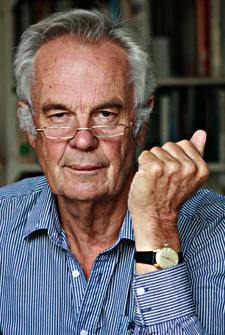
By Johan Galtung

Democracy is rule–decision-making–by the consent of the people, the demos. There is a very good argument: the people will suffer the consequences. Hence rule of, by, and for the people.

But the problem is: which level dominates the decision-making?

Level [4] national (government-parliament-courts); [3] regional (provinces-departments), [2] local (LAs, municipalities), level [1] individuals?

In theory [1] is primary, basic, sovereign; in practice level [4]. Through elected representatives, packaged in electoral districts; representing individual preferences, packaged in party programs.

Comment, from Germany: “The sovereignty comes from the people – and never comes back” (“vom Volke raus, und kommt niemals zurück“).

The representatives kindly open a window every 4 years or so, 8-12 hours, 1-2 days, for the people to confirm or disconfirm the government. so the degree of democracy looks like 1-2 days out 4 x 365 = 1460 (+1): around 1 per mille.Read More »

Twenty pious wishes for 2016: Mind the minds

By Johan Galtung

According to UNESCO, wars start in the minds of men. Well, something–like unsolved conflicts and unconciled traumas–passes minds on the way to war. But UNESCO got the unintended focus on male humans right.

Minds matter, above all pre-programmed minds. This New Year 2016 editorial minds minds and mind-sets, the set minds. For peace culture.

1. A case: New York Times editorial 30 Dec 2015, “The Importance of Retaking Ramadi”. Being the capital of a governorate–IS uses them as building blocks–this was a major military victory. However, the mind-set of the writer confuses retaking space with retaking minds. Sunni Arab minds. “Liberated” by a Shia army and infidel US bombs? They might even be against both. The military come and go. Minds often stay.

2. Can we map minds? Well, to standard world maps with 200 states at least add maps of 2000 nations, showing those who would like to be more together, like in federations and confederations, and less, more apart, like in states. Nations are more cultural. Closer to “mind”.

3. The military have maps of hardware capability; “hammers in search of nails”. An example of intention: Pentagon had in the early 1960s “Project Camelot” to map with public opinion data revolutionary ideas. At least add maps of capacity for doing good to others, not only harm.Read More »

ISIS and the Sykes-Picot backlash

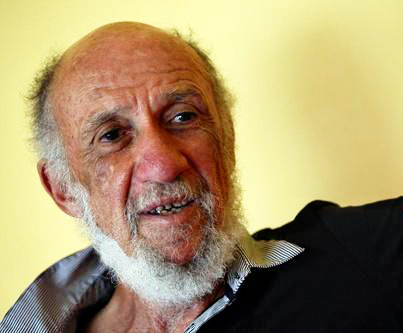
By Richard Falk

Part 1

One of the seemingly permanent contributions of Europe to the manner of organizing international society was to create a strong consensus in support of the idea that only a territorially delimited sovereign state is entitled to the full privileges of membership. The United Nations, the institutional embodiment of international society recognizes this principle by limiting membership in the Organization to ‘states.’

Of course, there is an enormous variation in the size, population, military capabilities, resource endowments, and de facto autonomy among states. At one extreme are gigantic states such as China and India with populations of over 1 billion, while at the other are such tiny countries such as Liechtenstein or Vanuatu that mostly rely on diplomacy and police rather than gun powder and armies for security.

All four of these political entities have the same single vote when it comes to action in the General Assembly or as participants at global conferences such at the recently concluded Paris Summit on climate change, although the geopolitics is supreme in the Security Council and the corridors outside the meeting rooms.

From the point of view of international law and organizational theory we continue to live in a state-centric world order early in the 21st century. At the same time, the juridical notion of the equality of states that is the foundation of diplomatic protocol should not lead us astray.

The shaping of world order remains mainly the work of the heavyweight states that act on the basis of geopolitical calculations with respect for international law and morality displayed only as convenient. Yet the political monoculture of territorial states remains formally the exclusive foundation of world order, but its political reality is being challenged in various settings, and no where more so than in the Middle East.

This is somewhat surprising. It might have been Read More »

What drives religious extremism?

By Jonathan Power

What drives people to extremes? Why do the people behind Al-Qaeda or the Islamic State (IS) get so charged up and angry?

Perhaps to understand we should go back to the 16th century in Europe and the furious debate about the “divine right of kings”. For decades the royal houses of Europe had been becoming less accessible to their subjects. William of Orange, ruler of the powerful Netherlands, said he had “received his power from God and God alone.”

Philip II of Spain was also a principle protagonist of this theme. Indeed, when Spain conquered Holland, Philip tried to squash the new Protestant “heresy”, using the brutal practices of the Spanish Inquisition.

It is no wonder that the Dutch were ready for a bloody revolt. They would no longer accept the prerogatives of rulers who claimed a “divine right”.

In 1581 the Dutch withdrew their allegiance from Philip II. Accountability of a ruler to his subjects not to his God was the new dispensation.

Meanwhile, England, under the rule of Elizabeth 1 and James 1, continued to believe in the divine right of the monarch. Only when James’s son came to the throne, Charles 1, was the belief overturned. Parliament raised an army. Seven years of war was followed by the king’s trial, conviction and execution in 1649.

The poet John Milton wrote at the time, “All men naturally were born free”. John Locke wrote 40 years later that “The very objective of government is setting up a known authority to which everyone of that society may appeal upon any injury received…The legislative power should be placed in collective bodies of men, call them senate, parliament, or what you please”.

From then on, over the course of two centuries, very much influenced by Locke and other Enlightenment thinkers, a constitutional form of government was slowly built across much of Europe. However, it was the United States that first became a full democracy, with separation of church and state.

But, despite the great advance from the days of “divine rule”, parliaments and governments regularly failed the people. Parliaments were often dominated, or at least greatly influenced, by those with inherited titles, people with money, the army and even criminal gangs.

Much of the struggle against the divine right of kings and the corrupt policies of the Pope in Rome had led Martin Luther in 1517 to nail his handbill to the doors of a church in Wittenberg in Germany. Faith in God, not in pope or king, was the only way to gain heavenly salvation, he preached. No wonder that Philip II savagely repressed the profession and declarations of Protestant faith in Holland.

It was in Holland that some Protestants became extremists. In the late 1560s Protestant iconoclasts went into the catholic churches and destroyed the statues of Mary and the saints. They also destroyed any manifestation of the wealth and riches that the church had been extorting for so long.

Their anger was such that we would call them today “violent, religious extremists”.

Sarah Chayes points out in her excellent new book “Thieves of State”, “We can see parallels between the 16th century struggles in Europe against the kings and Catholic Church and the religious militancy of Al Qaeda and IS. The resemblance between the language used to explain their violence and that of the earlier Protestant insurrectionists castigating the acute corruption of the Catholic Church and its royalist allies (with their belief in the divine right of kings) is unmistakable.”

Jonathan Power
jonatpower@aol.com

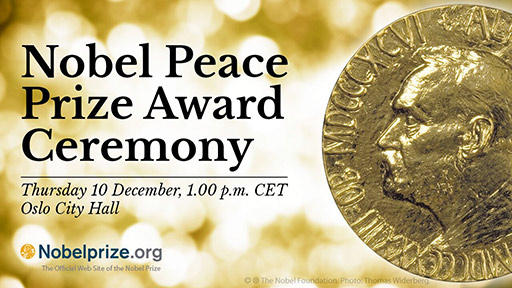
TFF PressInfo # 351: The Nobel Foundation taken to court on the Peace Prize

Lund, December 10, 2015

On the day of the Nobel Peace Prize Award Ceremony at Oslo City Hall

To whom it may concern, including the media

We know – and Alfred Nobel knew – how devastating war and arms races are, and how little security we get for all the money we spend on military forces.

The campaign to reclaim the Nobel Peace Prize is first and foremost a campaign to revive the idea that global peace requires global cooperation on disarmament and replacing the law of force with the force of law. Every day more and more of us see, from the Middle East warfare, from the refugee crisis, and many other chilling reminders, the mandatory urgency of a change in world politics.

Alfred Nobel decided to give one fifth of his fortune for a prize to promote disarmament and resolution of all conflicts through negotiations and legal means, never through violence.

Can such a prize, with a so clearly stated goal, be turned to serve the opposite idea and be given again and again to recipients who promote arms races and believe in militarism and war?

This question will soon be answered, after Mairead Maguire, Jan Oberg, Davis Swanson, and Lay Down Your Arms took the case to the Stockholm District Court on Friday 4th of December 2015. Here is the full text of the summons.
and all other relevant information is available at the Nobel Peace Prize Watch.

Test case: the award to the European Union in 2012

The court case will test one of the most obvious violations of the Nobel idea Read More »

School shootings in the USA: 10 points

By Johan Galtung

The Oregon community college was “the 45th school shooting this year in America; the 142nd school shooting since the Newton massacre in 2012”, Matthew Albracht–Peace Alliance–who adds: 25% of women experience domestic violence, 6 million children witness it every year, 28% of children are bullied during the year and they are 2 to 9 times more likely to commit suicide.

What can be done? Here 10 points:

Gun control, of course.
But the point is not only sales control but possession control with very strict laws for possession and making illegal possession a federal crime. With an average of at least one lethal weapon per citizen, there are enough arms to continue shootings; sales control is insufficient. States and municipalities can endorse this ahead of time for Weapons Free Zones in America, as places where life is safer. There will still be armed police around.

Less violent foreign policy, of course.
Believing that serious change in domestic violence is possible without serious change from violent to solution-oriented foreign policy is unspeakably naive. “If my government can kill whoever stands in our way so can I; if we think we are exceptional, above the law, so am I, as a US citizen” is a psycho-mechanism that can only be beaten by destroying the premise. A government solving problems instead of bombing their way through will have an equally strong effect on the citizens, but this time positive.

Less violent media, of course.
The point is not only less violence, with copycat danger. The point is deeper: media that focus on solutions; journalists who systematically ask politicians “what is Read More »

Peace Studies Epistemology: Descartes-Vico-Daoism; And Europe

By Johan Galtung

Keynote, European Peace Research Association – Tromsö, Norway, 7 Sep 2015

Epistemology is the branch of philosophy dealing with valid knowledge; and the focus of this conference is peace in Europe. We live in a wonderful world blessed with many civilizations each with an epistemology, and in a continent with rich diversity. My task is to draw on some of this, and apply it to the peace politics of Europe.

René Descartes, in Discours de la Méthode, Leiden 1637, had four basic rules; accepted, mainly unwittingly, by (North)Western science:

1. never to accept anything for true not clearly known to be such;
2. to divide difficulties examined into as many parts as possible;
3. start with the simplest and easiest, ascend to the more complex, pay attention to the asymmetric relation of antecedence and sequence;
4. make enumerations and reviews to assure that nothing was omitted.

Giambattista Vico, in Scienza Nuova, Napoli 1725: anti-Descartes for only reflecting empirical reality, not human ability to create new reality. Vico is a macro-historian, inspiring Marx, with three stages in human history, divine-heroic-human, envisaged by “poets” in the Greek sense of “creators”. He became the guru of historians, easily making the mistake of focusing only on the creativity of the powerful.

Daoism, thousands of years old, views reality in terms of holism and dialectics:…

Continued here.

TFF 30th Anniversary Benefit Event

Lund, Sweden, September 5, 2015
Updated September 5 and our apologies if you’ve received this before.
We want to catch all and miss no one over all these years.

Dear friend!

We are happy to invite you to the TFF 30th Anniversary Benefit Event !
September 11-12, 2015

Live Lectures by videostream
Exciting lectures on world affairs and peace over two days – See program below.

This is not an invitation to visit the foundation in person.
It is an online, live video streamed event that you will be able to follow from anywhere in the world
Here is the link and it’ll also be shown via Facebook, Twitter and on our website.
And all the lectures will be available later as videos on our own video channels.

Open House at the foundation
Saturday September 12 at 14:00-17:00
It’s at Vegagatan 25 in Lund, Sweden – deadline for your registration September 7.
1. Lectures on-site with live streaming

We’ll shortly tell you the links where you may see it all and where videos will later be available.

Lecture program

Friday September 11

Live, video streamed:

16:00
September 11: Alternatives to the devastating War On Terror – Jan Oberg

17:00
TFF 30 Perspectives – TFF Associates and Board on the better world we dream of – And cheers!

Saturday September 12

Live, video-streamed 10:00-18:00

10:00
Iran And the Nuclear Issues – Gunnar Westberg

11:00
Integration – Why and how? Example: Afghan Youth In Sweden – Christina Spännar, Sweden

12:00
Nuclear abolition is necessary and possible – Gunnar Westberg, Sweden

13:00
West and East: Ukraine and New Cold War? – Jan Oberg

14:00
Human Rights And War Crimes – Jonathan Power, UK/Sweden

15:00
Women, Self-Esteem and Violence – Annette Schiffmann, Germany

16:00
Yugoslavia – What Should Have Been Done? – Jan Oberg (in Memoriam Håkan Wiberg), DK/Sweden

17:00
Media and Peace – Sören Sommelius, Sweden

18:00
Burundi’s Crisis And Possible Ways Out – Burundi expert

2. Open House hours 14-17
Buffet, drinks, coffee and tea, cakes and other sweets.
You must register your visit by September 7 at the latest at TFF30@transnational.org or call 0046 738 525200.

3. Peace with peaceful means
The day is devoted to the – ongoing – struggle for ”peace by peaceful means“ as the UN Charter puts it. Gandhi said that the “means are goals in-the-making”. To realize that noble goal remains the mission of TFF. Today we show you how and promote all related activites with the help of social media and new video technologies.

4. This is a Benefit Event – Your support to TFF please!

TFF is unique in being totally independent of government and corporate funds. It’s people-financed. No one related to TFF has a salary; we’re all-volunteer.
This provides for truly free research and permit us to be critical and constructive and practise our freedom of expression. Not everyone can boast that today!
Wars, nuclear and conventional arms, bombing raids and occupations etc. are financed by your tax money. Sadly and unfairly, no tax funds go to realise the UN norm above.

We think that people who believe that peace is better than violence should also pay something to the research, education and activism in favour of that UN norm.
If you can come to Lund on our big day or sit somewhere following our rich lecture program, we urge you strongly to make a donation. Every day over 30 years, TFF has given the world something useful.

You can do it right in the middle of our homepage – click the “Give” button or under the headline “Support” in the right-hand column where many options exist, including PayPal. It easy, fast and secure!
Cash – but no cheques – can also be donated at the event.* *

Thank you so much!

5. Videos
We’re proud to present the first two short videos – 3 more to come – in which the founders talk about various aspects of 30 years in the service of peace on the basis of questions asked by board member Annette Schiffmann. Watch, comment and subscribe!

The First

The Second

6. Brand new Online Magazine
The announced online magazine launched to mark our Anniversary is now here!

“Transnational Affairs – TFF Magazine for conflict-resolution, non-violence and peace-building”

Excited as we are, we’ll be back to you soon with more details!

Yours truly

Christina & Jan
Founders

* If you are able to come in person, you must register to TFF30@transnational.org or call 0046 738 525200 by Tuesday September 8 at the latest.

* * This does not apply to you if you have already made a donation in 2015.

Our 30 years with peace – And what happened to world peace? Part II

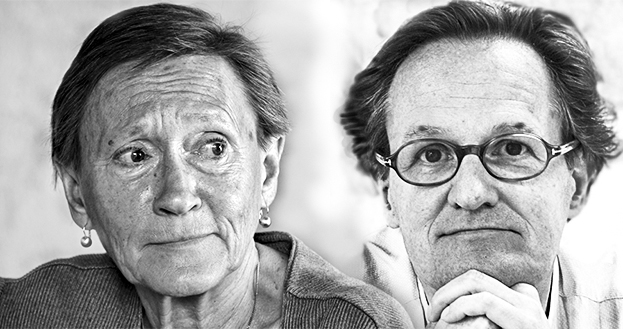
By Christina Spannar and Jan Oberg, TFF founders

Part 1 here

TFF was established on September 12, 1985. We think that it’s 30th Anniversary is a fitting occasion to reflect on what has happened in the big world and in our lives with the foundation.

It is also a piece of Lund’s research history in general and of peace research and education in particular.

Part 2

Weak aspects of TFF

• Being outside many networks and institutions – it has become more and more difficult to influence the world if you are small, independent and don’t accept governmental and corporate funds.

• A perception that the interest/commitment of TFF is out of sync with the sentiments of times, of the Zeitgeist. In spite of that we maintain the fundamental belief that peace is essential and that we can forget about the rest if major wars or nuclear exchanges take place.

• Too ‘academic’/theoretical to forge deeper, permanent links with public opinion and movements.

• Too ‘radical’ or ‘idealistic’ to be interesting to governments and most mainstream media.

• A constant very hard work load – resting on a small international group and on the founders in Sweden – vulnerability also in the perspective of us having gotten 30 years older.

• The struggle for funds getting more and more tough and we are much more vulnerable than, say, ten years ago. Being all-volunteer, we still have to pay the bills for what enables us to do things: the Internet, computers, travels to conflict areas, insurance, bank fees, fund-raising, phones, sending out mails, using social media, etc. 
The generosity of yesterday has been replaced by a ”stingy” attitude of being entitled to get things free in the affluent Internet-based society. This attitude implies that it is not my responsibility to finance peace, somebody else does (and the somebody else is never me). Few citizens seem to recognise that they are the taxpayers who de facto finance all the weapons and wars. 
The far majority of those who support us are idealists without particular means – while wealthy people for peace a far and few between.

TFF’s stronger sides

• We are still here, operating with amazing TFF Associates around the world who share the commitment to ‘peace by peaceful means’.

• We have remained faithful over all these years to the original ideals, not succumbing to go mainstream/politically correct to achieve more funds or appearing acceptable to the masters of war, i.e. government – neither by the way in Sweden nor Denmark.Read More »