Make the most of your visit to Hiroshima, Mr. President !

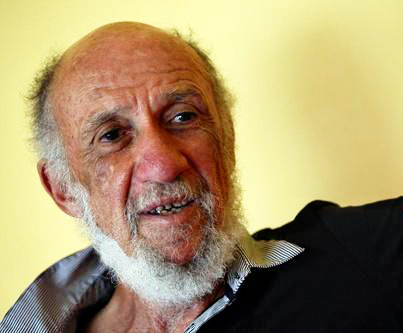
By Richard Falk

Message to President Barack Obama with respect to forthcoming Hiroshima visit

Prefatory Note
I sent the following message to the White House today, and encourage readers of this blog to do the same

This symbolic visit by Obama creates a major opportunity to advance a denuclearization agenda, and we should take as much advantage as possible. I am against the mainstream advice that suggests that the best way to give meaning to the event would be to announce the adoption of arms control measures such as suspending development of a new nuclear cruise missile.

These measures, while intrinsically valuable, have the downside of stabilizing the nuclear weapons status quo.

What would be most helpful would be a step, as suggested below, that gives primacy to nuclear disarmament instead of continuing the deceptive practice of taking prudent steps to cut risks of accidental use and curtail provocative developments and deployments.

These steps take the public eye off the supposed target of nuclear disarmament. The only was to honor the memory of Hiroshima and Nagasaki is by moving toward Nuclear Zero, and President Obama is one of the few persons on the planet that has this precious chance to aim at the true target.

Of course, it would be appropriate, and long overdue, to apologize to the Japanese public for the ghastly suffering inflicted by the atomic attacks, but that is more than we can reasonably expect a cautious president to do.

Message to President Barack Obama upon the announcement of his intended Visit to Hiroshima

Mr. President:

I applaud your decision to visit Hiroshima during your upcoming visit to Japan.

I would encourage you to supplement your acknowledgement of a MORAL responsibility of the U.S. in your 2009 Prague Speech with an acknowledgement of a LEGAL responsibility to seek in good faith nuclear disarmament, a point unanimously asserted by the International Court of Justice in its Advisory Opinion of 1996. Such a move would also recognize the legal obligation embedded in Article 6 of the NPT.

Making such an historic affirmation would give new life to the pledge to give real meaning to the vision of a world without nuclear weapons, and act to heighten your legacy in this vital area of your presidency. It would put legal, as well as moral, pressure on all nine nuclear weapons states to comply with their obligations under international law, and in the American case, since the since the NPT is a duly ratified treaty, to act in accordance with the Constitution’s recognition of treaties as ‘the supreme law of the land.’

Respectfully,

Richard Falk

Mass migration, the EU and European nationalisms

By Johan Galtung

Antwerpen & Alfaz

We are dealing with mass migration, basically into EU, and European nationalisms, many in favor of exits from the EU.

Why this mass migration, maybe to the point of Völkerwanderung, mainly into EU – but then what kind of EU? – and why the European nationalisms now found one way or the other in many member states?

The forecast for migration from Africa into Italy in 2016 is about 100,000; 28,000 already arrived in the first quarter, with 1,000 drowning in the Mediterranean (INYT, 6 May 2016). Big numbers. They knew the risks they were taking, so the push away from Africa and the pull towards Italy, and beyond, must have been considerable.

Better think in terms of 50 million migrants over 50 years, from regions considered uninhabitable to inhabitable regions. There seem to be five major causes underlying this basic world asymmetry:

Slavery, four centuries, depriving societies particularly of able-bodied males, by Arabs, then Westerners, cross-Atlantic transportation mainly by the English (Liverpool);

Colonialism, by Muslims after the death of the prophet in 632, from Casablanca to Southern Philippines, till the end of the 15th century, close to nine centuries, then by Christians close to five centuries, till colonialism was officially ended in the 1960s;

Robbery Capitalism, stealing or paying next to nothing for resources processed into manufactured goods, pocketing the value added;

Wars, mainly initiated by the West, killing millions (the USA more than 20 million in 37 countries after WWII), destroying property;

Ecological Factors, like depletion-pollution, often toxic for humans or nature, erratic climate partly due to climate gases, NOX, CO2, CH4.

These are the causes of poverty in some parts of the world but also of wealth in others; Read More »

About (pre-)Fascism: Israeli and US style

By Richard Falk

Recently I participated in a conference on global inequality and human rights held at the University of Texas in Austin, a lively quite cosmopolitan city. During the lunch break I was talking with a young PhD student from Israel who had just presented an informative paper on inequality in the Philippines. I asked her about her career plans and how it was like to be living in Israel these days. She told me that she was married to an Israeli and planned to return to finish her studies in Tel Aviv after a fellowship year at UT.

I tried to engage her in conversation about evolving Israeli attitudes toward the Palestinians and the related failed diplomacy, but she seemed rather uninformed and perhaps even disinterested as if the peace agenda was not really present in her active consciousness. Then all at once she said something that surprised me. “I am not looking forward to returning to Israel, it is becoming a fascist state.”

What made this strong statement surprising was that it contrasted with the blandness of everything that had preceded it. I asked inquisitively, neither agreeing nor disagreeing, “What makes you say that?”

She pondered the question as if it had come to her from the wild blue yonder. It seemed as if she had never thought about it before, and maybe it was just a spontaneous assertion that she was articulating for the first time. After a pause, she answered somewhat hesitantly: “Because the army is the most powerful and admired institution in Israel, and the government controls everything, it is acting as a totalizing force.”

I suppose that gets you to Franco-style fascism that prevailed for so long in Spain, but not the more virulent forms of fascism associated with Mussolini’s Italy and especially Hitler’s Germany.

I agreed with the young woman about the hegemony of the armed forces, both institutionally and psychologically, but I was less sure about the totalizing reach of the government. Read More »

Review of Jeff Halper’s “War Against The People: Israel, the Palestinians and Global Pacification”

By Richard Falk

Prefatory Note
The review below was published in the current issue of Journal of the Society for Contemporary Thought and Islamic World. I am posting it here because I believe that Jeff Halper’s book deserves the widest possible reading. It explains clearly and convincingly one of the deepest and least understood roots of Israel’s diplomatic support throughout the world, which is its role as a niche arms supplier and influential tactical specialist in waging wars against peoples who dare offer resistance to state power as variously deployed against them.
The Israeli experience in exerting oppressive control of the Palestinian people provides the foundation of Israel’s international credibility and perceptions of effectiveness in disseminating for economic and political profit its hardware and software associated with managing and suppressing the resistance of popular movements fighting for their rights.
The Israeli stress on pacification rather than victory exposes the true nature of what Halper identifies so vividly and comprehensively as the distinctive character of waging ‘war against the people.’

Jeff Halper
War Against the People: Israel, the Palestinians and Global Pacification
Pluto Press, 2015, 296 pp.,
$25.00 US (pbk), ISBN 9780745334301.

Jeff Halper is an unusual hybrid presence on both the scholarly and political scene. He describes himself as an “activist-scholar” (6), which adopts a controversial self-identification. The conventional stance erects a high wall between scholarship and activism.

To his credit and for our benefit, Halper excels almost equally in both roles. He is one of the most lucid speakers on the lecture circuit combining clarity with wisdom and a rich fund of information and firsthand experience, and his work as a writer is influential and widely known.

His activist credentials have been built up over many years, especially in his work as co-founder and leader of the Israeli Committee Against House Demolitions, which has bravely confronted Israeli demolition crews and IDF soldiers, helped Palestinians on multiple occasions to rebuild their destroyed homes, thereby responding humanely to one of Israel’s cruelest occupation practices, an instance of unlawful collective punishment.

Halper has estimated that less than 2% of demolitions can lay claim to a credible security justification (the respected Israeli human rights NGO, B’Tselem, estimates 1.3% of demolitions are justified by security, while the rest are punitive or 621 of 47,000 since 1967). As an author his main prior book makes an unsurprisingly strong pitch for activism as the most reliable foundation for analysis and prescription.

His important and incisive title gave the theme away – An Israeli in Palestine: Resisting Dispossession, Redeeming Israel.1 This earlier book remains valuable as testimony by a progressive Zionist in Israel that with good faith Jews and Palestinians might yet learn to live together, including finding a formula for sharing the land.

Halper’s own life experience makes this blend of scholarship and activism particularly compelling. He is an American born Jew who grew up in the Midwest and studied anthropology in Wisconsin, taught at a Quaker university for several years, and then moved to Israel where he married an Israeli and has three grown children. What particularly sets Halper apart from most other principled Jews in the ranks of critics of Israel is the striking combination of the radicalism of his opposition to the policies and practices of the Israeli state together with his evident commitment to remain in Israel no matter how far right the governing process drifts.

Most other prominent Jewish critics of Israel have remained outside the country throughout their life (e.g. Noam Chomsky) or were born in Israel and then chose to become expatriate critical voices (e.g. Daniel Levy, Ilan Pappé, Gilad Azmun). There are a few internationally prominent Israeli journalists and cultural figures who have sustained sharply critical commentary (e.g. Gideon Levy, Amira Hass) and kept their Israeli residence despite harassment and threats.

In the book under review Halper broadens his own distinctive identity while enlarging the apertures of perception by which he views the Israeli state.

He focuses attention on the Israeli arms industry, security doctrines, and policies, and examines Israel’s acquisition of formidable diplomatic influence grossly disproportionate to its size and capabilities. It is this gap between Israel’s significant impact on current world history and the modest scale of its territorial reality and its outsider status in most global settings that is the core mystery being explicated by Halper.

He starts the book with some provocative questions that put the underlying puzzle before us in vivid language: “How does Israel get away with it? In a decidedly post-colonial age, how is Israel able to sustain a half-century occupation over the Palestinians, a people violently displaced in 1948, in the face of almost unanimous international opposition” (1)?

He indicates that this phenomenon cannot be adequately “explained by normal international relations” nor by the strength of the Israel lobby in the United States nor by strong Israeli pushback to discredit critics by invoking the Holocaust as an indefinite source of impunity (3).

What the book demonstrates very persuasively is that Israeli influence is a result of its extraordinary, partially hidden and understated role as arms supplier to more than 130 countries and as an increasingly significant mentor of national police forces and counter-terrorist operations and practices in many countries, including the United States.

Israel as Arms Merchant and Pacification Ideologue

Without exaggeration, War Against the People, is really three books in one.Read More »

Peace State Iceland – Meaning what?

By Johan Galtung
May 2, 2016

Dear Members of the Iceland Allthing Foreign Affairs Committee,

I have been asked to come to Iceland to answer that question; thanks indeed for inviting me to address you. And to apologize, as a Norwegian, for our occupation of Iceland 1262-1386 instead of sending mediators to help settle your civil war. Our century long colonization does not become better because Denmark colonized you five centuries, 1386-1918; and more deeply. But you are now your own, with a wonderful language and literature; right now with a problematic economy and polity.

Reykjavík has a very good name internationally as the venue of the 11-12 October 1986 summit meeting of the Cold War superpowers. The meeting of US President Ronald Reagan and the Soviet Secretary General Mikhail Gorbachev at Höfdi did not by itself end with an agreement. But it was the beginning of the end of the Cold War three years later, and as such made world history.

So why not build on that, making a Reykjavik Mediation Center, RMC, politically and internationally independent, and on Iceland’s location between West and East, USA and Russia? Look at the map.

For Reykjavík to invite USA and Russia, with Kiev and Donetsk. Maybe also Brussels, in the sense of NATO and EU. Issue: the conflict in and around Ukraine–meaning “at the border”, between two nations, Catholic-Ukrainian and Orthodox-Russian; with much hatred and violence.

Very dangerous, some speak of a Third World War coming. Inviting them would be a signal of world concern, offering a venue for open talks without conditions. Iceland has little mediation capacity today, but Icelanders would be present and learn from the occasion.

Add to this an invitation to the UN to station UN Peacekeeping Forces in Iceland, using the vast vacant lands between Keflavík and Reykjavík for training. That would add peace as a source of income to fisheries and tourism, and lift Iceland out of its Third World economy.

A peace state helps itself by helping others. Nevertheless, two problems:

First, a peace state can neither be allied to a state that killed more than 20 million in 37 countries since WWII nor member of an offensive alliance. Either the USA and NATO become more defensive or Peace State Iceland has to distance itself, gradually, carefully; keeping good relations. Iceland’s security would be better served by using Keflavík for UNPKF than for USA-NATO, and by solving conflicts.

Second, if you want to help solving conflicts start with your own. Read More »

TFF PressInfo # 372: Drop the Just War theory and abolish nuclear weapons!

By Mairead Maguire

Press Release 19th April, 2016

Nobel Peace Laureate, Mairead Maguire, co-founder of The Peace People and TFF Associate, says from Rome:

“I believe we are at an important and hopeful turning point in human history – from violence to nonviolence and from war to peace”

Laity and religious meeting in Rome appeal to Pope Francis to share with the world an encyclical on nonviolence and just peace and for the church to no longer use or teach ‘Just War theory’

It was a joy for me to join eighty people from around the world meeting in Rome 11-12th April, 2016, to contribute to the important discussion ‘Nonviolence and Just Peace Contributing to the Catholic Understanding of and Commitment to Nonviolence’.

Members of the three day event co-hosted by the Pontifical Council for Justice and Peace and the International Catholic Peace Movement Organization, Pax Christi, strongly called on Pope Francis ‘to share with the world an encyclical on nonviolence and Just Peace; and on the Church to ‘no longer use or teach ‘just war theory’; and continue advocating for the abolition of war and nuclear weapons’.

The statement of Appeal to the Pope also said:

‘We believe there is no ‘just war’. Too often the ‘just war theory’ has been used to endorse rather than prevent or limit war. Suggesting that a ‘just war’ is possible also undermines the moral imperative to develop tools and capacities for nonviolent transformation of conflict’.

The gathering in Rome consisted of lay people, theologians, members of religious congregations, priests and bishops from Africa, the Americas, Asia, Europe, the Middle East, and Oceania and the welcoming address was given by Cardinal Turkson of the Pontifical Council for Justice and Peace, who read a Statement from Pope Francis.

The Final Statement Read More »

A nonkilling, nonviolent world is not unrealistic – We can choose!

By Mairead Maguire

Address by Mairead Maguire, Nobel Peace Laureate and TFF Associate, to Rome Conference on NATO
Friday 29th January, 2016.

Dear Friends,
I believe we, the human family, have no less a task before us, than transforming our thinking and mind-sets of violence and war, and moving to a demilitarized Europe and World. Einstein once said that everything has changed but our thinking. However, there is hope as indeed our thinking is changing and there is a growing consciousness that violence, whether it comes from State or non-state actors, is wrong, violence does not work, violence is not the way.

However, around the world, we, the people, are in danger of being overpowered and dis-spirited by increasing violence, militarism and war. Many people can see that many Political Leaders can no longer imagine a just peace, and under the guise of allegedly ‘just wars’ and unbounded preparation for war, they are leading us into repeated cycles of violence profoundly counter to the spirit of love and friendship residing in the heart of humanity.

But there is Hope and it resides with the People, who are great and are mobilizing and uniting across the Globe to bring about much needed change, and rejecting violence and war.

The World Health Organization has said that ‘Violence is a preventable disease’ and people are not born violent, rather we all live in cultures of violence. This can be changed through nonviolent peacemaking and the pursuit of ‘just peace’ and nurturing of cultures of peace. Using active nonviolence, based on love of enemies and nonkilling, can bring about a real peace that is just, inclusive and sustainable.

In Northern Ireland we faced violence from all sides, for over thirty years, as we lived in a deep ethnic/political conflict. This violence only ended when everyone acknowledged that militarism and para-militarism could not solve our human problems, and only through unconditional, all inclusive dialogue and negotiations could we reach a political agreement based on nonviolence, forgiveness, compromise and co-operation.

We spoke to ‘our enemies’ and made peace with them, because we recognized that without Peace nothing is possible, and with Peace, everything is possible.

We also began to tackle the root causes of our violence, by making painful policy changes.

Today in Belfast, it is good for all its citizens to live in a City at Peace, but we all acknowledge that our Peace process is a work in progress and we continue to work on justice forgiveness and reconciliation.

We meet at a time when, I believe, Europe is facing a cross-roads and hard choices regarding policies and priorities have to be made by all. Today’s refugees, migrant challenge, has shown the best and the worst of European values, via television beamed onto our screens to the world.

The best have been the compassionates response Read More »

TFF PressInfo # 371: If Obama visits Hiroshima (Part 2)

By Richard Falk

Part 1

In Prague, Obama significantly noted that “..as the only nuclear power to have used a nuclear weapon, the United States has a moral responsibility to act.” [emphasis added]

In the 1996 Advisory Opinion of the International Court of Justice (ICJ) on the legality of the threat or use of nuclear weapons, the judges unanimously concluded that there was a legal responsibility to seek nuclear disarmament with due diligence. The language of the 14-0 ICJ finding is authoritative: “There exists an obligation to pursue in good faith and bring to a conclusion negotiations leading to nuclear disarmament in all aspects under strict and effective international control.”

In other words, there is a legal as well as a moral responsibility to eliminate nuclear weapons, and this could have made the Prague call for a world without nuclear weapons more relevant to present governmental behavior.

The Prague speech while lauding the NPT never affirmed the existence of a legal responsibility to pursue nuclear disarmament. In this respect an official visit to Hiroshima offers Obama a golden opportunity to reinvigorate his vision of a world without nuclear weapons by bringing it down to earth.

Why is this? Read More »

Review of “The Need for a New Economic System”

Review of John Avery’s book by Dorothy Guyot

A Scientist Presses for Action on Many Fronts: A review of the book

The Need for a New Economic System
By John Scales Avery
Selected Works Volume 1, 291 pages
Irene Publishing
Sparsnäs, Sweden 2015

The Need for a New Economic System by John Scales Avery is an important book for everyone concerned over the future of humanity. The urgent voice of the book stems from Dr. Avery’s seeing the discontinuity between the loving care that people bestow on their children and their failure to reduce the harm to their children from a destructive economic system, climate change, resource depletion, and war.

This book of advocacy demonstrates the need for solutions to problems created under the present economic system. Political-economic analyses of the causes of the problems and of solutions are outside of the scope of the book. Scattered through the book are a few general policy suggestions. At the center is Avery’s assessment sector by sector of the critical problems that must be solved to avert disasters.

The book first demonstrates the impossibility of sustaining growth economies on our finite planet. The central three chapters analyze the damage from climate change and war. Globalization, population growth, and the food crisis are the last problems Avery analyzes.

He builds toward his conclusions by sketching the nineteenth century cooperative movement and Gandhian economics. The concluding chapter revisits the problems to advocate change.

The premise of the book is that when people face up to the extent and nature of world problems, people can act creatively and effectively.

John Avery is thinker and writer. Read More »

John Avery’s CV

John Scales Avery

John Scales Avery received a B.Sc. in theoretical physics from MIT and an M.Sc. from the University of Chicago. He later studied theoretical chemistry at the University of London, and was awarded a Ph.D. there in 1965.

He is now Lektor Emeritus, Associate Professor, at the Department of Chemistry, University of Copenhagen.

Fellowships, memberships in societies
Since 1990 he has been the Contact Person in Denmark for Pugwash Conferences on Science and World Affairs. Member of the Danish Peace Commission of 1998. Technical Advisor, World Health Organization, Regional Office for Europe (1988- 1997). Chairman of the Danish Peace Academy, April 2004-.

You’ll find a lot about this eminent scholar at Wikipedia. Avery is also a leading peace researcher and activist – “Since 1990, Avery has been the Contact Person for Denmark the Pugwash Conferences on Science and World Affairs. In 1995, Avery was part of a group that shared in the Nobel Peace Prize for their work in the 1990s in organizing the Pugwash Conferences on Science and World Affairs.

In 1998, Avery was elected to the Danish Peace Commission. During the years 1988-97, Avery was the Technical Advisor at the World Health Organization, Regional Office for Europe. In 2004, Avery became the Chairman of the Danish Peace Academy.

In his usual humble and plain style John tells the story of his life – his personal life, his scholarly life and his peace life – here.

Publications
Dr. Avery seems to have ben writing day and night throughout his life – here is his amazing list of books, chapters and articles on world affairs.

In early 2016, Irene Publishing – run by TFF Associates Jørgen Johansen and Majken Jul Sørensen – published Avery’s Collected Essays as well as The Need For A New Economic System.

John joined TFF as TFF Associate in March 2016.