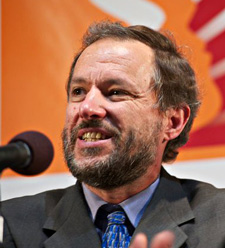
Iraq and the betrayal of a people – Impunity forever?

By Hans von Sponeck

Iraq’s recent history includes two far reaching events, on the 2 August 1990 Iraq’s invasion into Kuwait and on 19 March 2003 the US/UK invasion into Iraq. Whether political leaders will draw lessons from these events will be, at best, questionable. Iraqis continue to be wronged. Danger to life and turmoil remain a cruel part of Iraq’s reality in early 2013. The collective suffering of a nation is visibly all pervasive. It can not be hidden.

The Iraqi puzzle of life confirms an endless number of tragedies
Ethnic tension and sectarianism have become a major element in Iraqi politics since the US/UK invasion of 2003, a polarization of inter-group relations  Iraqis had not known before. This explains much of the existing hideous crime including murder, kidnapping, property destruction and, most noteworthy, the deteriorating relationships between Baghdad and the three northern Kurdish governorates.

Since the years of war, sanctions and occupation, Iraq’s once state-of-the-art medical system has all but collapsed. Malnutrition and diseases, almost forgotten in Iraq, such as respiratory infections; measles; typhoid fever and tuberculosis have re-emerged on a large scale. The planned destruction of water and sanitation facilities, especially in the 1991 war, and recurrent drug shortages, throughout the period of sanctions and after the 2003 invasion, promoted significantly ill-being, morbidity and mortality in the country (WHO). Read More »


Crying wolf over Iran’s nuclear program

By Farhang Jahanpour

Crying wolf – the evidence

After producing his comic diagram during his speech at the United Nations General Assembly last September, drawing a red line in order to stop Iran’s alleged imminent nuclear bomb, the Israeli Prime Minister Benjamin Netanyahu called for immediate action against Iran before it was too late.

However, as the result of President Barack Obama’s insistence that he wanted to resolve the dispute by peaceful means, the war fever subsided to some extent. However, on the eve of the meeting between Iran and the P5+1 in Almaty, Kazakhstan, and the forthcoming visit of President Obama to Israel, Netanyahu has once again started to press the panic button about Iran’s nuclear intentions.

Referring to Iran’s announcement that she was installing new centrifuges for enriching uranium, and undaunted by his earlier false predictions, Netanyahu once again claimed that the new centrifuges could cut by a third the time needed to create a bomb.1)

However, when Israel’s intense campaign to start a war with Iran stalled, Israeli officials said that their original assessment about the deadline for dealing with Iran had been false. As Jacques E. C. Hymans points out in his recent article in Foreign Affairs, Israeli intelligence officials have now downgraded their assessment of Iran’s ability to build a nuclear bomb.2) Now, they say: “Iran won’t be able to build a nuclear weapon before 2015 or 2016, pushing back by several years previous assessments of Iran’s nuclear ambitions.”3)Read More »

Cambodia leaves the darkness behind

By Jonathan Power

Dateline: Phnom Penh, Cambodia, March 5th 2013

Cambodia has lain for too long under the black umbrella of its past. But Cambodia is waking up, has looked the evil one in its eye and, re-born, found its strength.

Cambodia has been to hell and back – 2 million of its people killed out of population of 8 million, with 500,000 of them executed, the consequence of a fanatical communist movement, the Khmer Rouge, led by Pol Pot and a group of henchmen now being tried in the UN War Crimes Court. (Pol Pot himself is dead.)

The Khmer Rouge violently took power in 1975 and fell in 1979. They wanted a classless society. They abolished money, property and religious practices. Family relationships were criticised and people were forbidden from even showing the slightest affection. The work day in the fields was 12 hours long without pause. Torture and the bullet were the instant punishment for deviance. Anybody educated was singled out for death.Read More »

What’s The Problem With Iran?

TFF PressInfo 1-2013

On Tuesday February 26, in Kazakhstan, a new round of negotiations are due between Iran and the Five Permanent UN Security Council members + Germany. We’d like to bring the following expert statement to your attention.

Contacts for interviews as well as analytical sources below the statement.

Summary

The problem is not nuclear weapons, essentially. It’s strategic interests such as control of oil and gas and that requires a change of Iran’s ‘obstinate’ and ‘defiant’ regime.


The present US/NATO/EU policy is based on escalating threats without an exit strategy. This increases the risk of war, whether intended or not. If that is not the deliberate purpose, an entirely new Western policy vis-a-vis Iran must be developed.

The Transnational Foundation in Sweden – an independent think tank with 27 years of experience – provides you with the diagnosis, the prognosis and the proposals for improved relations built on trust.
 (See below.)Read More »

Room for optimism in Iran and the P5-plus-1 talks

By Farhang Jahanpour*

Iran and the P5-plus-1, which includes the United States, will meet again on 26 February in Kazakhstan. This is the first time that the two sides will meet in an atmosphere of continuing mutual suspicion since the third round of talks held in Moscow on 18-19 June 2012 ended in stalemate.

Iran believes that the West, particularly the United States, is using the talks as a pretext to increase the sanctions until Tehran bends to its will; whereas Washington holds that Iran is prolonging the talks in order to continue its uranium enrichment with the aim of producing a nuclear weapon. The fact of the matter is that neither side is sincere in their remarks and both sides are engaged in a cat and mouse game trying to use the talks for domestic purposes and for pursuing other goals, rather than finding a mutually acceptable solution to Iran’s nuclear program.Read More »

The Mali Blowback – More to come?

By Stephen Zunes

The French-led military offensive in its former colony of Mali has pushed back radical Islamists and allied militias from some of the country’s northern cities, freeing the local population from repressive Taliban-style totalitarian rule. The United States has backed the French military effort by transporting French troops and equipment and providing reconnaissance through its satellites and drones. However, despite these initial victories, it raises concerns as to what unforeseen consequences may lay down the road.

Indeed, it was such Western intervention—also ostensibly on humanitarian grounds—that was largely responsible for the Malian crisis in the first place.

The 2011 NATO military intervention in Libya effort went well beyond the UN Security Council mandate to protect civilian lives, as the French, British and U.S. air forces—along with ground support by the Saudi and Qatari dictatorships—essentially allied themselves with the rebel armies. The African Union—while highly critical of Qaddafi’s repression—condemned the intervention, fearing that the resulting chaos would result in the Libya’s vast storehouse of arms might fueling local and regional conflicts elsewhere in Africa and destabilize the region.

This is exactly what happened.Read More »

Hillary Clinton’s legacy as Secretary of State

By Stephen Zunes

Zunes challenges what he calls “the myth that Hillary Clinton is a figure who deserves support or admiration for her role of Secretary of State, or that she deserves another opportunity for influencing US foreign policy.”

Hillary Clinton leaves her position as Secretary of State with a legacy of supporting autocratic regimes and occupation armies, opposing enforcement of international humanitarian law, undermining arms control and defending military solutions to complex political problems. She was appointed to her position following eight years in the US Senate, during which she became an outspoken supporter of the invasion and occupation of Iraq, lied about Iraq’s military capabilities to frighten the public into supporting the illegal war, unleashed repeated attacks against the United Nations, opposed restrictions on land mines and cluster bombs, defended war crimes by allied right-wing governments and largely embraced Bush’s unilateralist agenda.

Despite this, Clinton is receiving largely unconditional praise from liberal pundits and others for her leadership, some even claiming that she is some kind of role model for young women! Continue

First published at truthout, February 7, 2013

Iran and the Cuban nuclear missile crisis

By Jonathan Power

It’s always better to talk than be super-tough. But Iran’s supreme leader, Ayotollah Ali Khamenei, last week firmly rejected the US attempt to resume negotiations over its suspected nuclear bomb making.

This is nothing short of disastrous. The Ayotallah must know that now Barack Obama has been re-elected not only has he got much more room to compromise but he has effectively seen off the attempt of Benjamin Netanyahu, the Israeli prime minister, to persuade the US to attack Iran.

The Ayotallah probably thinks by going eyeball to eyeball with the US he is going to win more than even Obama is prepared to give. This is nonsense and the attitude of both sides reminds me of the negotiating tactics of President John Kennedy and Soviet Premier, Nikita Khrushchev, during the Cuban missile crisis in 1963 which nearly brought the superpowers to a nuclear war.Read More »

An indispensable book on Palestine/Israel

By Richard Falk

Fast Times in Palestine: A Love Affair with a Homeless Homeland
By Pamela Olson (Berkeley, CA: Seal Press)

I realize that without knowing it, I have long waited for this book, although I could not have imagined its lyric magic in advance of reading. It is a triumph of what I would call ‘intelligent innocence,’ the great benefits of a clear mind, an open and warm heart, and a trustworthy moral compass that draws sharp lines between good and evil while remaining ever sensitive to the contradictory vagaries of lives and geographic destinies.

Pamela Olson exhibits an endearing combination of humility and overall emotional composure that makes her engaged witnessing of the Palestinian ordeal so valuable for me as I believe and hope it will be for others.

Early on, she acknowledges her lack of background with refreshing honesty: “Green and wide-eyed, I wandered into the Holy Land, an empty vessel.” But don’t be fooled. Olson, who had recently graduated from Stanford, almost immediately dives deeply into the daily experience of Palestine and Palestinians, with luminous insight and a sensibility honed on an anvil of tenderness, truthfulness, and a readiness for adventure and romance. Read More »