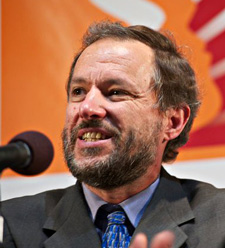
Forget ‘normal’ politics

By Richard Falk

Political life is filled with policy choices that are made mainly on the basis of calculations of advantage, as well as reflecting priorities and values of those with the power of decision. In a constitutional framework of governance the rule of law sets outer limits as to permissible outcomes. The legitimacy of the decision depends on adhering to these procedural guidelines, and the fact that if the societal effects turn out badly it can be corrected by altering the ‘law.’

Of course, all sorts of special interests behind the scene manipulate this process, and the public debate mirrors these pressures. The results of highly contested policy choices usually reflect the power structure (class, race, ideology) more than they do the outcome of rational detached assessments of the public good.

At present, the national public good in the United States is being held hostage to the lethal extremism of the gun lobby as led by the National Rifle Association (NRA), Read More »
Obama – Fulfill your promise of nuclear disarmament!

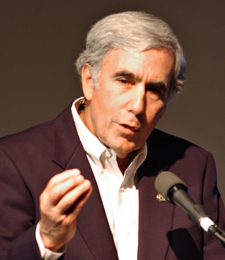
Richard Falk and David Krieger

This article was originally published by Truthout.

Any great and important goal requires boldness to be achieved. Leadership itself requires boldness and persistence. Shortly after assuming office in 2009, President Obama demonstrated this boldness in a widely acclaimed speech in Prague. To rousing applause, he said, “So today, I state clearly and with conviction America’s commitment to seek the peace and security of a world without nuclear weapons.”

Unfortunately, in the next breath, he reversed direction, offering a familiar reassurance to the military-industrial-governmental complex: “I’m not naïve,” he said. “This goal will not be reached quickly — perhaps not in my lifetime. It will take patience and persistence.” Before finishing this coded message to the security establishment back home, he reversed direction once again, declaring, “But now we, too, must ignore the voices who tell us that the world cannot change. We have to insist, ‘Yes, we can.’”

In a matter of seconds, less time than it would take to launch America’s civilization-destroying (or omnicidal) nuclear arsenal, the new President seemed to engage in a debate with himself. America has a commitment to zero nuclear weapons. However, it won’t happen quickly. But, on the other hand, the world can change and it can happen. It was perhaps an unintended glimpse of the incoherence that results from trying to blend Obama the visionary with Obama the realist. Read More »

Slavery, colonialism and the church

By Johan Galtung

From Liverpool-UK, 31 Jan 2013

The uncontested center of the world slave trade, 40%, well documented in the International Slavery Museum in the port where slave ships docked.

The trade was triangular: from Liverpool (Bristol, London) with Manchester textiles, metals, beads, alcohol and guns for slave traders in the Bay of Guinea; with slaves from there to the Caribbean, the Middle Passage; and from there with sugar, coffee and cotton grown by slaves back to England.

To stealing people, 2/3 young men ages 15-25, and killing their societies, they added stealing raw materials in return for cheap manufactures. Hand in hand they went; from the beginning by the Portuguese in 1502 till the slave trade was forbidden in England in 1807–continued in other ways, also today.

We talk about millions of slaves landed in the arch from Rio to Washington with the point of gravity in the Caribbean, and some south of Rio, north of Washington and around the coast to the Pacific side of Latin America. An unspeakable crime against humanity.

Another unspeakable crime to remember, the shoa, has its Holocaust Memorial Day on 27 January; but somebody else’s, Germany’s, enemy of England, comes easier. No Slavery Memorial Day, no Colonialism Memorial Day. Nor any memorial to the 10 million killed in King Leopold’s Congo, in Antwerp, the port for shipping guns to Africa in return for rubber. More easily understood than manufactured goods converted into slaves converted into commodities.
Read More »

Zero Dark Thirty – ZD30 – and American exceptionalism

By Richard Falk

ZD30 is the film narrative that tells the dramatic story of the special forces operation that on May 2, 2011 located and killed Osama Bin Laden in a compound on the outskirts of the Pakistani city of Abbottabad, which is not far from Islamabad.

It is directed by the prominent director, Kathryn Bigelow, who had won big Hollywood awards for her brilliant 2008 film, Hurt Locker, about the impact of combat experience in Iraq on the American soldiers taking part. She knows her craft, and ZD30 is captivates an audience due to its screenplay, virtuoso acting, taut plot, vividly contoured characters, insight into the mentality of CIA operatives and their bosses, and the evidently realistic portrayal of grisly torture scenes.

These filmic virtues have been displaced by a raging controversy as to whether ZD30 endorses torture as a valued and effective tool against extremist enemies of the United States and seems to imply that torture was instrumental in the successful hunt for Bin Laden.

Certainly President Obama claimed and received much credit in the United States for executing this mission, and it has received very little critical scrutiny. It is hard to calculate the impact of this strike that killed Bin Laden on the 2012 election, but it many believe it made a crucial difference, at least psychologically, and particularly in relation to the outcome in swing states and with respect to the last minute decisions reached by independent voters.Read More »

The Arab-Muslim awakening – and Greater Israel?

By Johan Galtung

The Middle East-North Africa–MENA–is Arab-Muslim with a growing Jewish island in its midst. Former colonial territory – under Sunni Ottoman Turks for four centuries+ and the secular West, England-Italy-France, for half a century–now under Jewish colonialism and US imperialism. They have controlled MENA through dictatorships, condoning violence and corruption as long as they support US-Israel policies in the area.

The Arab awakening is against the violence and corruption in favor of democracy, against corruption in favor of growth and jobs, and against US-Israel domination. There is also a Muslim awakening – to believe that Islam tolerates imposed secularism is incredibly naive. But there are many Islams; like there are Christianities and Judaisms.

How do USA-Israel react, and what would be a positive reaction to their reaction–keeping in mind that this is old colonial territory?Read More »

On Syria: What to do in 2013

By Richard Falk

I took part last week in an illuminating conference on Syria sponsored by the new Center of Middle East Studies that is part of the Josef Korbel School of International Studies at the University of Denver. This Center has been recently established, and operates under the excellent leadership of Nader Hashemi and Danny Postel, who previously together edited the best collection of readings on the Green Revolution in Iran published under the title The People Reloaded.

The conference brought together a mixture of Syrian specialists, Syrian activists, and several of us with a more general concern about conflict in the region, as well as with human rights and as participants in the heated debates of recent years about the virtues and vices of ‘humanitarian intervention’, what is now being called ‘Responsibility to Protect’ of ‘R2P’ in UN circles and among liberals.

I came to the gathering with a rather strong disposition to present myself as a confirmed R2P skeptic, regarding it as a cynical geopolitical euphemism for what Noam Chomsky labeled as ‘military humanism’ in the context of the controversial NATO Kosovo War of 1999. Ever since the Vietnam War I have viewed all Western claims to use force in the post-colonial non-West with suspicion. Read More »

Russia and China: Arms around the Middle East

By Sharmine Narwani

Russia and China have drawn a great deal of censure this past year for resisting UN Security Council resolutions to intervene in the domestic affairs of Syria and Iran.

Why, many ask, would this duo leverage their growing global political clout for two Mideast states that have been so actively marginalised by the other UN Security Council permanent members – the US, UK and France?

And do these new Russian and Chinese positions place them on a collision course with Washington – in the Middle East and elsewhere?

Continue reading at The BRICS POST

The US cliff, swamp, quagmire: Two major proposals

By Johan Galtung

There is more than the fiscal cliff to meet the naked eye.

Wise people – Borosage, Krugman, Stiglitz – some of them economists, see neither the fiscal deficit nor the US debt but the lack of growth as the key problem. They point to Clinton years and how, through growth, the Debt/GDP ratio went from a half to a third. This is important, but then there is a fourth consideration: some Americans are suffering out there. “16 percent” comes up very often, of people and families below the poverty line, not knowing for sure where the food comes from the next day, not having medical insurance. Macroeconomics is blind to human basic needs, yet there may even be solutions hidden in it.

But after the Clinton years came somebody else; increasing expenditure with enormously costly wars making conflicts even worse, and in addition lowering the revenue by reducing taxes on the super-rich. That a fiscal deficit would rear its ugly head, fed by such policies year after year, was a foretold conclusion. Democracy protects the president with a golden parachute, similar to that enjoyed by the CEO of a bankrupt company. But rightly so: he was elected, even re-elected. US voters, you asked for it and you got it!Read More »

The case against Kerry

By Stephen Zunes

President Obama’s selection of John Kerry as the next secretary of state sends the wrong signal to America’s allies and adversaries alike. Kerry’s record in the United States Senate, where he currently chairs the Foreign Relations Committee, has included spurious attacks on the International Court of Justice, unqualified defense of Israeli occupation policies and human rights violations, and support for the U.S. invasion and occupation of Iraq, thereby raising serious questions about his commitment to international law and treaty obligations.

Furthermore, his false claims about Iraqi “weapons of mass destruction” and his repeated denials of well-documented human rights abuses by allied governments raise serious questions about his credibility.Read More »

Sover du gott efter detta, Bildt?

Av Sören Sommelius

De svenska stridsflygplan som sattes in i Libyen borde användas till att också angripa mål på marken i offensiv krigföring. Det tyckte Folkpartiets militante ledare Jan Björklund, när den svenska insatsen i Libyen diskuterades i mars 2011.

Så blev det dessbättre inte. Men Sverige deltog, med brett parlamentariskt stöd, i ett krig som efteråt alltför lite har ifrågasatts. Sverige svarade för en fjärdedel av flygspaningen för att lokalisera bombmål.

Kriget kallades ”humanitär intervention” och genomfördes av Nato med stöd av FN-resolution nummer 1 973.

Men i själva verket var det inget annat än ett traditionellt kolonialkrig, sammanfattar den norske fredsforskaren Ola Tunander i sin bok Libyenkrigets geopolitik, som är en svidande genomgång av krigets förutsättningar och konsekvenser. Det här är en bok som politiker som Björklund och Bildt borde läsa. Om de gör det tvivlar jag på att de kommer att sova gott efteråt.Read More »