Reciprocity, lawfare and self-defence: Targeted killing

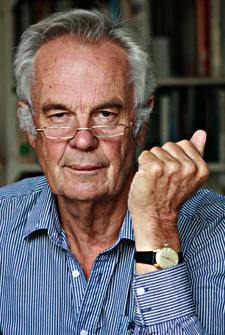
By Richard Falk

This post is a modified and expanded text of a contribution to a Jadaliyya roundtable on targeted killing posted on March 5, 2012, and responding to the article by Lisa Hajjar referred to in the opening paragraph.

**********************

There is an emergent Israeli/American controversy on the lawfulness of targeted killing. Although the policy has not yet attained the status of being a national debate, there are signs that it may be about to happen, especially in light of the Attorney General, Eric Holder’s Northwestern Law School speech on March 5, 2012 outlining the Obama’s administration’s controversial approach to targeted killing in some detail. Lisa Hajjar convincingly narrates how the “legalization” of targeted killing has evolved over the course of the last twenty years. [Hajjar, “Lawfare and Targeted Killing Developments in the Israeli and U.S. Contexts,” Jadaliyya, Jan. 15, 2012] She there calls attention to the analogy to the torture debate that, in many ways, defined the political and moral identity of the Bush presidency in the aftermath of the 9/11 attacks, and even caused moral and legal fissures to develop that divided the American people unto this day.

Hajjar shows that it was Israel that first crossed the threshold of legality in response to a wave of suicide bombings that traumatized Israeli society in the 1990s. In other words, targeted killing became a tactic of choice for both the Israel and the United States as part of the preventive logic of counter-terrorism, that is, placing a premium on eliminating threats before harm is inflicted rather than the reactive logic of striking back and retaliating. The upsurge in targeted killing seems responsive to the belief that neither defensive strategies nor deterrence, nor massive retaliation are appropriate or effective against a terrorist adversary, especially if the violence might accompanied by the readiness of a perpetrator to die while carrying out a mission.Read More »

The U.S. – from Empire to Global Fascism?

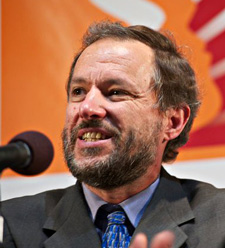
By Johan Galtung

In The Fall of the US Empire-And Then What?[i] a subtitle is US Fascism or US Blossoming? Of blossoming there seems to be none, with the Dow Jones crossing the 13,000 border, the real economy still mostly in bad shape, the Republican candidates embracing the economic system that produced the crisis, and Obama running the progressive rhetoric trick that brought him into power in 2008. By midterm 2010 the bluff was called, with a landslide. The OWS, Occupy Wall Street, is in the first three stages, consciousness-formation, mobilization and some confrontation; but not yet in the real struggle with massive nonviolent practice of alternatives.

Fascism? There is a domestic and a global variety and the latter is Obama’s foreign policy, with domestic elements. Read More »

Tonight I lost my last bit of sympathy for President Obama

By Jan Oberg

A man shall be judged more by his deeds than by his words, says President Obama. That is what I do to him here. On the basis of what he has done and says he will do.

This is President Obama’s most nasty, bellicose, one-sided and perversely power-arrogant speech ever. The Nobel Committee ought to revoke its Prize to him, but of course it won’t.

This cynical man speaks about the goodness of even more “crippling” sanctions on a country of 75 million people of which 25 % are children under 14.

At every single aspect he touches upon, he takes the wrong path: towards making war irreversible. There is no excuse that it was for AIPAC. In contrast to George W. Bush, he is neither ignorant, under-educated, or un-intelligent. That’s what makes it so serious, so tragic.

Among several remarkable things is that the President here also gives a carte blanche to Israel deciding alone what it will do in the future vis-a-vis Iran.

Under no circumstance can the U.S. under this man serve in a peaceful role, and it’s laughable to argue that it can be a mediator in the Middle East.
Pray that I am wrong but this speech, combined with everything else that goes on these months, makes me predict war on Iran within 4-6 months.

Addendum:
Of course this speech figures only on 2-3 front pages of the Western mainstream press the day after; they are more interested for a 2nd day in the likely, but so far undocumented, election fraud in Russia. Most editors probably don’t know what AIPAC is, or why Obama’s words in that forum are so important.

Japan’s spiritual crisis

By Johan Galtung

From Kyoto, Japan: A grey, cold Sunday morning, fitting the sad theme.

The Japan Times, an excellent middle wing newspaper, came in the middle of the night, with four typical stories, for a starter.

We approach the 3/11 anniversary. The earthquake struck on 11 March 2011, followed by the tsunami and the near meltdown of Fukushima No. 1 nuke plant. On 11 March 2004, terrorism struck the Atocha train station in Madrid. A bad date; may inspire somebody.

We read: “Worker at No. 1 nuke plant died from ‘overwork’. He was dispatched by a subcontractor, a construction firm based in Shizuoka, and started working at Fukushima No. 1 on May 13. On his first day he engaged in piping and other work in a waste disposal facility at the complex, but complained of not feeling well the following morning. He was immediately taken to a hospital and died shortly afterwards–radiation still high around Fukushima No. 1–640 km off the coast of Fukushima.” A private construction firm.Read More »

When is an ‘NGO’ not an NGO?

Twists and turns beneath the Cairo skies

By Richard Falk, writing from Cairo

A confusing controversy between the United States and Egypt is unfolding. It has already raised tensions in the relationship between the two countries to a level that has not existed for decades.

It results from moves by the military government in Cairo to go forward with the criminal prosecution of 43 foreigners, including 19 Americans, for unlawfully carrying on the work of unlicensed public interest organizations that improperly, according to Egyptian law, depend for their budget on foreign funding. Much has been made in American press coverage that one of the Americans charged happens to be Sam LaHood, son of the present American Secretary of Transportation, adopting a tone that seems to imply that at least one connected by blood to an important government official deserves immunity from prosecution.Read More »

Ten questions for coming Chinese and US leaders

By Johan Galtung, writing from Kyoto, Japan

Japanese media make it look as if China attacked Japan in the 1930s-1940s, massacred a major city, with a concentration camp beating Auschwitz in cruelty. And, Japan fears a repetition. Well, Japan fears something, probably what Western aggressors fear too: Of course, we never did anything wrong, but one day they may come and treat us the way we treated them.

In 2012 the power will/may change in both superpowers, and we have a right to know how the power-wielders look at some basic issues. Read More »

Iran, Israel and the USA

How to prevent the war that is becoming more likely?

By Gunnar Westberg
TFF Board member who has visited Iran a number of times the last few years

The threat of a war involving Iran, Israel and USA is discussed with increasing intensity. At this time an attack by Israel is seen as the most likely risk.

Do I, decidedly not an expert, have the right to say that most contributions are lacking in depth and there is little attempt to understand the other parties? I say so, and I hope to be proven wrong.Read More »

Ban the Bomb!

By Jonathan Power

If in 2012 and 2013 the big nuclear weapons powers and UN Security Council permanent members – the U.S., Russia, China, Britain and France – don’t make significant reductions with their nuclear weapons then an important opportunity will be lost.

Presidents Barack Obama and Dmitri Medvedev appear to be of a mind on this.

One has to go back to the presidencies of John F. Kennedy and Lyndon Johnson to get the full picture on the dismal progress on nuclear disarmament. Their Defence Secretary, Robert McNamara, told both presidents nuclear weapons were unusable. Read More »

Israel-USA vs Iran: Talk Peace!

By Johan Galtung

The state system at its worst: trading insults and threats, sanctions, readiness to use extreme violence, forward deployment of US troops in Israel as hostages to guarantee US involvement, disregard for common people and the effects of warfare in the Middle East and the world. The options are harder sanctions, or war. The far better option, sitting down, with mediators, talking and searching for solutions, is absent. Polarization, escalation, the material of which wars are made fill the media. What a shame.Read More »

Syrian Repression, the Chinese-Russian Veto, and U.S. Hypocrisy

By Stephen Zunes

As the Syrian regime continues to slaughter unarmed civilians, the major powers at the United Nations continue to put their narrow geopolitical agenda ahead of international humanitarian law. Just as France shields Morocco from accountability for its ongoing occupation and repression in Western Sahara and just as the United States shields Israel from having to live up to its obligations under international humanitarian law, Russia and China have used their permanent seats on the UN Security Council to protect the Syrian regime from accountability for its savage repression against its own citizens.Read More »