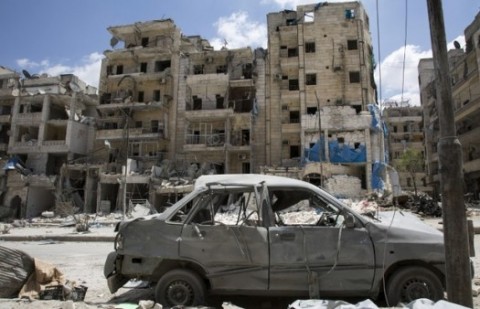
International Women’s boat to Gaza

By Mairead Maguire
Thursday 29th September, 2016 – Wed.,5th October, 2016

Participant on board Zaytoouna-Oliva boat

A few weeks ago, the US Government agreed to give Israel $38 billion dollars, the largest military funding package the U.S. has given any Nation. This $38 billion in military and other type of Aid, will be used to imprison the Palestinians of Gaza, and continue Israel’s military occupation, and imposition of an apartheid state, upon the Palestinian people.

This money will be used in the training fields of Israeli military which are in Gaza, where military experiments are done, using US military weaponry, by the Israeli Occupation Forces.

The U.S. military and Government is complicit in the crimes against the people of Gaza and the Palestinian occupied territory by the use of military hardware given by USA and the training that the Israelis give USA and USA gives to them.

It is also estimated that some 70% of European humanitarian aid to Palestine ends up in Israeli pockets.

Gaza continues to suffer from the continuing Israeli blockade, naval and land, and this 25-mile-long tiny strip, 5 miles wide, with l.9 million people, living in it, is a brutal blockade and Israel controls everything including, all the electricity, the food, etc. Indeed, everything which comes into Gaza comes through Israeli hands. Gaza’s only airport was completely destroyed in 2002 by Israeli jets and ground forces.

Egypt continues to be a part of this blockade as they have blocked Gaza’s southern border and Egypt continues to receive USA military funding. Medical authorities have reported that the time for operations in Gaza now goes up to 2025 as so many are awaiting health care, and the increasing issues around food, water, sewage, electricity, all of these mounting problems have led the U.N. to declare in their latest Report, that by the year 2020 Gaza will be uninhabitable. What hope is there for the Palestinians of Gaza, the vast majority of whom are young people.?

In order to give Hope to the people of Gaza by showing solidarity and support the Women’s Boat to Gaza sailed to Gaza in September, 2016.

Also we sailed in order to challenge this illegal and immoral blockade and occupation of Palestine by Israel, and draw international attention to the fact that under Geneva conventions it is illegal to punish civilians, which is what Israeli government policies continues to do. Read More »
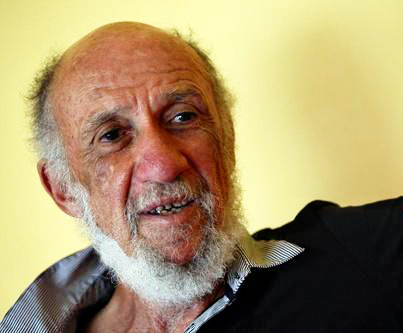

Trump and Clinton: National versus global perspectives

By Richard Falk

November 6, 2016

It is not often that Medea Benjamin, the charismatic founder of Code Pink, offers us her insight into a troublesome American reality that is almost simultaneously confirmed by the New York Times, the virtual bible for secular liberals in the United States.

Yet it happened, most surprisingly, in a positive portrayal of one thin slice of Trump loyalists – veterans of recent foreign wars.

Medea reports on a conversation with such a veteran on a train out West, and was impressed that he felt Clinton much more likely than Trump to get Americans killed in a future distant war disconnected from any reasonable defense of the homeland.

The New York Times in a front-page feature article reached this same plausible conclusion on the basis of a wider scan of relevant evidence.

Here are two disturbing realities Read More »

Imagine a Middle East with no weapons

Here a few comments on Erdogan’s recent attack on the West for supplying arms to the Kurds.

Funny that Turkey’s president should accuse someone else for weaponizing a conflict. At the same time as Turkey does it and is also involved in two wars outside itself – Iraq and Syria – and one inside against the Kurds.

In this short interview I seek to raise the imagination: Since the weaponization of conflicts is a cancer on the world, imagine that a God-like magnetic force that could suck up each and every weapon in the Middle East, what would happen?

They would be forces to sit down and talk!

And one more point I did not get around to say: The world’s cancerous arms industry and criminal arms traders – governmental as well as private – would go out of business and many end up behind bars.

In short, a much better world.

If Obama stayed in power?

By Jonathan Power

November 8th 2016.

An interesting question is what would happen to American foreign policy if President Barack Obama were allowed to have another four year term in office?

It would be a less interventionist presidency than what is about to become. This is not to say that I think the way Obama has handled the war in Afghanistan has been successful. Nor do I believe the attack on Libya was a sensible idea. Nor do I think the way he dealt with Russia and Ukraine in the last four years has been anything but counterproductive.

But I do believe the world would be an even messier place if he had not been president. Syria would have been invaded with ground troops. Iraq would have been replicated.

I think confrontation with China over the ownership of the contested islands in the South China and East China seas would have been more serious than it has been.

There would have been no bringing back Cuba in from the cold. (Cuba was the home of the missile crisis of 1962 when the world came terrifyingly near to a nuclear war.)

Most important, there would have been no nuclear deal with Iran. Iran’s research which could have led to the making of a nuclear bomb (not that I think it had any intention of going that far) would have continued.

At some point Israel would have bombed Iran’s reactors Read More »

From regionalization to globalization: Problematic

By Johan Galtung

“Future of the World between Globalization and Regionalization”
European Center for Peace and Development
Belgrade, 2-29 Oct 2016

Summary
Most states are too small given the speeds of transportation and communication–hence regionalization of neighbors with cultural similarities. The biggest states, China-India-Russia-USA-Indonesia-Australia-Brazil, are in fact regions. The next step, globalization, is very problematic. We have overcome geographical distance but not cultural distance. And USA uses globalization for world hegemony financially. Better would be a North American region with Canada, for dialogue with other regions.
The Rest will work on globalization, but how?

We are witnessing these years a historical transition from a world state system to a world region system. There are about 7:

ELAC-Latin America-Caribbean, AU-African Unity, EU-European Union, SAARC-South Asian Association for Regional Cooperation, ASEAN-Association of Southeast Asian Nations, OIC-Organization of Islamic Cooperation, SCO-Shanghai Cooperation Organization. Mostly recent, so many believe the logical step from a region system to a global system, globalization, is around the corner. Two major problems, though.

First, humanity is very diverse. The state system, based on the cultures of their dominant nations, accommodates much diversity, less than the primitive tribal and traditional village systems. However, will globalization also accommodate diversity or impose uniformity?

Second, the USA may use globalization to impose a global market with no state and regional borders for financial objects, derivatives, through privatization of all central banks, coordinated by the Bank for International Settlements, BIS, the bank of banks in Basel, Switzerland.

Many states, adapted in size to 20 km/h means of transportation, not to what is now possible, have joined others with similar cultures within the same civilization. The civilizations are still different, giving rise to several and diverse regions. However, we have only one globe to globalize. There is something final about globalization. It may protect diversity. But it may also be uniform, one design only.

Such designs exist. They come from the religions claiming to be single and universal truths, for all, forever: Christianity and Islam.

They have messages about Read More »

“Humanity Knows No Borders”

By Hans Graf Sponeck

Freiburg, 1 October 2016

1. The global sky is full of dark clouds. There is reason, there must be reason, for concern. Humanity has to take time out to reflect. To-day is a good occasion to do so, especially since we have among us Haifa al Mansour and Solmaz Panahi who, together with her mother, has joined us on behalf of Jafar Panahi, her father.

The Kant Foundation is honouring two artists from the Middle East, one from Saudi Arabia, the other from Iran. They have taken Immanuel Kant’s demand of yesteryear seriously and have shown the courage to use their minds with all the consequences that this has entailed. They have been swimming against the currents, they have built bridges and they have climbed mountains that try to separate people.

2. The community of nations has created an impressive body of law which is as densely woven as the most magnificent carpets one can find in the Middle East. Life in all its facets is well protected by such law – or so it seems! The UN Charter remains the supreme road map for human life with peace. It echoes what many thinkers and humanists throughout centuries have proclaimed. Can there be any disagreement that the usefulness of a map lies in its use?

3. Emotions? Feelings? – important as they are, must be in harmony with reason! The irrational rejection of Europe by Britain would not have happened if feelings and reason had been in balance! How much more evidence do we need to accept that humanity knows no borders?

4. Let me pause here for a moment and interject… Read More »

US hypocrisy: Bombing of Aleppo is no worse than what happened in Gaza and Iraq

By Gareth Porter

The Russian-Syrian bombing campaign in eastern Aleppo, which has ended at least for the time being, has been described in press reports and op-eds as though it were unique in modern military history in its indiscriminateness.

In an usual move for a senior US official, Secretary of State John Kerry called for an investigation of war crimes in Aleppo.

As terrible as that toll of civilian lives is, the United States should drop the stance of moral superiority.

The Al-Quds hospital building on 28 April 2016, a day after air strikes (AFP)

The discussion has been lacking in historical context, however. Certainly the civilian death toll from the bombing and shelling in Aleppo has been high, but many of the strikes may not be all that dissimilar from the major US bombing campaign in Iraq in 2003, nor as indiscriminate as Israel’s recent campaigns in densely populated cities.

The impression that the bombing in Aleppo was uniquely indiscriminate was a result of news reporting and commentary suggesting, by implication, that there are no real military targets in east Aleppo.

Continue reading here…

TFF PressInfo # 392: Just how grey are the White Helmets and their backers?

By Jan Oberg

Added at the bottom on November 23, 2016:

The – bizarre – White Helmet Mannequin Challenge video;

The Swedish Institute of International Affairs’s event with the White Helmets on November 24;

The Right Livelihood Award Foundation’s Award Ceremony to take place on November 25

While thousands of humanitarian organisations around the world are struggling fiercely with diminishing support from governments and the public, one has achieved a surprising amount of support from Western governments in a surprisingly short period of time and gained a surprising attention from mainstream media and ditto political elites: The Syrian Civil Defence or White Helmets.

Their name of course makes you think of the UN’s Blue Helmets and white is the colour of those who should be protected in harm’s way – and the colour of innocence. However, for many years there has been an Argentinian relief organisation with the same name.

The SCD or White Helmets counts nearly 3.000 rescue workers who operate in very dangerous areas in rebel-held territories in Syria and claims that it has, in three years, rescued about 70.000 lives according to its Twitter account (or 65 per day).

Contrary to what you might think, it isn’t a Syrian organisation because Syria has its own organisation, incidentally also called Syria Civil Defence, which was established in 1953 and is registered with ICDO, the International Civil Defence Organisation, since 1972.

The White Helmets seems to have an annual budget of US$ 30 million and has raised a total support of well over US$ 100 million. And it seems that they operate exclusively in war zones in which the fighting against the Syrian government and the Syrian Arab Army takes place, i.e. in ‘liberated’ areas where hundreds of groups and some 80 countries, mainly NATO members, Gulf states and Saudi-Arabia, operate.

On the White Helmets’ briefing page it is stated that “funding for their humanitarian relief work is received from the aid budgets of Japan, Denmark, the Netherlands, the United Kingdom and the United States.”

Here is how the Foreign Ministry in Copenhagen explains the roughly US$ 9 million to the White helmets from Denmark, a country that bombs in both Iraq and Syria.

Other civil society and humanitarian organisations inside Syria have not been so fortunate. You’ve probably not heard that much about the Syrian Arab Red Crescent and its work? How much/little support have they received from Western humanitarian-concerned governments? And in general, civil society organisations in Syria – women, peace, human rights, culture, etc. – have received nothing like US$ 100 million in a few years and no one has such a flashy media appearance as the White Helmets.

Photo from the White Helmets’ homepage

The White Helmets was started in 2013 by James Le Mesurier who seems to have tried a little of everything everywhere, including the grey zones of special forces and intelligence in virtually all NATO wars, Yugoslavia in particular. He later set up a foundation in Holland to gather the funds. Here is a recent account by Scott Ritter, former US Marine Corps intelligence officer and weapons inspector in Iraq with tremendous knowledge of things Middle East:

“The organizational underpinnings of the White Helmets can be sourced to a March 2013 meeting in Istanbul between a retired British military officer, James Le Mesurier—who had experience in the murky world of private security companies and the shadowy confluence between national security and intelligence operations and international organizations—and representatives of the Syrian National Council (SNC) and the Qatari Red Crescent Society. Earlier that month, the SNC was given Syria’s seat in the Arab League at a meeting of the league held in Qatar.

At that meeting, the SNC assumed Syria’s seat, and the Arab League authorized member states to actively provide support, including arms and ammunition, to the Syrian rebels. The Qataris, working through the SNC, helped assemble for Le Mesurier $300,000 in seed money from Japan, the United States and the United Kingdom for a seven-day course designed to train and equip a 25-person rescue team, recruited by the SNC, for duty in so-called “liberated areas” of Syria. The SNC made available a pair of Syrian activists—Raed Saleh and Farouq Habib—to assist Le Mesurier in this work.

The group is – as will be seen below – treated as uncontroversial in virtually all Western mainstream media. However, there is enough material with documentation to merit caution. Read More »

Den nye verden

Af Jan Øberg

Den nuværende periode i menneskehedens historie vil blive svær at forklare for fremtidens historikere – hvis der da findes nogle.

Hvordan kunne det gå så skridt så hurtigt og på alle fronter for dén Vestverden, der efter 2. verdenskrig stod med alle kortene på hånden? Hvordan kunne det amerikanske imperium, der byggede på frihed og demokrati, overhovedet styrte sammen dér tilbage i 2026?


Den vestlige NATO-baserede verden kunne ånde lettet op da Sovjetunionen og Warszawapagten var blevet opløst i 1989. Den havde vundet ideologisk – ingen ville siden have sovjetkommunisme – og økonomisk – Rusland producerede ingen attraktive forbrugsvarer – og militært.

Ruslands militærudgifter var bare 8% af NATOs mod Warszawapagtens 75% af NATO førhen.

Den Kolde krig forsvandt lykkeligt nok uden Varm Krig eller atomvåbenbrug. En ny verden blev mulig. Ondskabens imperium, som præsident Reagan havde kaldt Kreml-systemet, var borte. Alle talte om fredens ”dividende”.

Men kun godt 25 år senere var verden gennemsyret af angst,Read More »

Russia-NATO games in Europe

October 26, 2016

Yet another example of how tension build up in this New Cold War situation – instead of doing what we did during the first Cold War: trying confidence-building measures.

Today too BBC announced that the US will deploy – permanently – 300 US soldiers to norther Norway, a break with Norway’s policies since it became a NATO member. And Reuters brought the news that NATO will deploy thousands of new soldiers in the Baltic countries and in Poland and, next year, planes to Romania – on top of the reinforcements already made.

The above short interview contains comments on these dangerous steps too.