
Category: US Empire
TFF PressInfo # 369 – A Sunni-Salafist-Zionist Coalition Changing Middle East?

By Jan Oberg
Please try Google “Gulf states want nuclear weapons against Iran – Israel “ and only one Western mainstream media will appear, an excellent article by The Telegraph’s Raf Sanchez in Jerusalem.
The only other media carrying the story is Russia Today and Vigilant Citizen and MintPress News also carries the story and offers a wider background
What is this about?A new coalition?
So the usual Western media filter, meaning it must be interesting. And it is a quite sensational story: Saudi Arabia and Israel are up to a nuclear mischief against a country that has just been prevented from acquiring nuclear weapons by means of a huge legally binding document, UN Security Council endorsement and extremely tight monitoring mechanism. What’s it about?
It’s about Israel’s defence minister Moshe Ya’alon saying in public at the recent Munich conference that Arab states are “not willing to sit quietly with Iran on the brink of a nuclear bomb”.
He thinks that Iran was liable to break the agreement as their economic situation improves with the lifting of international sanctions. Ya’alon is quoted as saying that “I speak about the Gulf states and North African states too…For them, Iran and the Muslim Brotherhood are the enemy. Iran is the bad guy for us and for the Sunni regimes. They are not shaking hands [with Israelis] in public, but we meet in closed rooms.”
So not only Jordan’s monarchy and Egypt’s dictatorship but also Gulf and North African states: A coalition lead by Saudi Arabia and Israel – Israel as the only nuclear weapons power in the region and Saudi Arabia as the most likely next nuclear weapons state.
For much too long the world’s attention has been on Iran’s imagined nuclear weapons, not on the dozens or hundreds real nukes that Israel possesses as a non-member of which is the Non-Proliferation Treaty (NPT).
One can say that Israel and Saudi Arabia lost the political battle against the nuclear deal with Iran concluded with the five permanent UNSC members and Germany last year – and now will do their utmost to use Iran’s non-nuclear weapons status as a pretext for others going nuclear against, predominantly, Iran.
Propaganda hysteria dominates in an age where knowledge plays a diminishing role
The problem for them, however, is that Iran will be difficult to sell as a real threat – but we live of course in Read More »
The USA – What Next?

By Johan Galtung
March 21, 2016 Washington, DC
Nobody knows. But under US presidentialism presidents matter; close to a dictatorship for one administration. That is where democracy–for, by if not of the delegates, it seems–enters; with a painstaking nomination process, like nothing in the rest of the world. And then the elections in November, after party conventions in July.
There are three parties in the USA: Democrats, Republicans; and Democrats in the South, loyal to the party leadership DNC and vice versa, Southern Baptist conservative, traditionally for blacks, women, working class, minorities (Southern Republicans are white Anglo men). Very different from Yankee democrats up in the North producing Bernie.
So we get a South-North gradient Hillary-Bernie, with exceptions. However, there is also an age gradient for both genders even if more for men: the older the more Hillary, the younger the more Bernie. If, likely, Hillary is nominated, Bernie will leave an imprint on US politics and many states in the North, and more so as time passes. But socialism, age and vague foreign policy rule him out as president.Read More »
Short comments on the situation in Europe
March 28, 2016
Jan Oberg’s comments on the EU, the Pope, refugees and the weakening of the US Empire
TFF PressInfo # 366: Russian Withdrawal from Syria: Could it be the beginning of the end?

By Farhang Jahanpour
On Monday 14 March, in a surprise move and without any warning to Western leaders, President Vladimir Putin ordered the withdrawal of the “main part” of Russian forces from Syria, and instructed his diplomats to speed up the push for peace. “The effective work of our military created the conditions for the start of the peace process,” he said. “I believe that the task put before the defense ministry and Russian armed forces has, on the whole, been fulfilled.”
He added that with the participation of the Russian military, Syrian armed forces “have been able to achieve a fundamental turnaround in the fight against international terrorism.”
According to Western reports, Russian forces are already being prepared for flights back to Russia and equipment is being loaded onto cargo planes.
Although President Putin’s sudden announcement has given rise to a great deal of surprise and some false assumptions in the mainstream Western media and among political pundits, his decision is a timely, bold and constructive move that may result in some positive developments in the long-running catastrophe in Syria.
One of the reasons for the negative and cynical comments about the Russian move is that in five months President Putin has achieved more in halting the advance of the terrorists in Syria than the West had achieved in five years, if indeed it had been the West’s real intention to defeat the terrorists.
The Syrian uprising started with demonstrations on 28 January 2011 in Damascus and Aleppo in the wake of the “Arab Spring” in Tunisia and Egypt.Read More »
Two ways of looking at the race for the American presidency
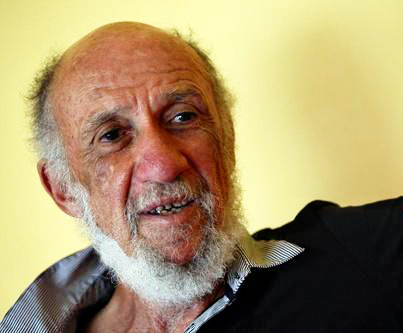
By Richard Falk
#1: as an incredibly dumbing down of the political process, turning the presidential campaigns for the nomination as heavily financed shadow shows, hiding special interests and money management, all about selling the candidate by boast and bluster;
#2: as pre-revolutionary ferment, mobilizing the young, and confronting the established order, finally, with non-establishment choices between the radical right of Trump & Cruz and the moderate social democratic left of Sanders.
This tedious struggle for political prominence and historical name recognition is being played out against a backdrop of the three pillars of America’s global role: the Pentagon, Wall Street, and Israel.
No candidate has managed to shake the pillars, although this time around Sanders has at least launched a genuine attack on the Wall Street pillar, and Trump has gestured toward what might be a mild push against the Israel pillar. This alone makes Sanders and Trump the first outsiders to compete seriously for a run at the White House.
Of course, since Sanders has done so much better than expected, Clinton makes some noises as if she is also taking on Wall Street, but as her unreleased transcripts of her gilt talks at Goldman-Sachs no doubt confirm, no one think she means it, and she doesn’t. This is her way of harmlessly sparring with the man from Vermont until she locks up the machine-driven nomination.
When we look at the candidates from a Hollywood central casting point of view, we have to wonder who is running the show, especially on the Republican side.
Senator Ted Cruz appears to be a credible reincarnation of Tomás de Torquemada, Read More »
Why Democratic Party Foreign Policy Fails and Will Continue to Fail
By Richard Falk
Prefatory Note:
An earlier version of this essay appeared on March 2, 2016 in The Progressive Magazine. It tries to explain the entrapment of liberal Democrats in an iron cage of militarism when it comes to international security policy. The explanation points in two directions: the militarized bureaucracy at home and the three pillars of credibility constraining elected political leaders—unquestioning support for high Pentagon budgets, opposition to stiff regulation of Wall Street abuses, and any expression of doubts about unconditional support of Israel.
Why Democratic Party Foreign Policy Fails and Will Continue to Fail
For six years (2008-2014) I acted as UN Special Rapporteur for Occupied Palestine, and found myself routinely and personally attacked by the top UN diplomats representing the U.S. Government. Of course, I knew that America was in Israel’s corner no matter what the issue happened to be, whether complying with a near unanimous set findings by the World Court in the Hague or a report detailing Israeli crimes committed in the course of its periodic unlawful attacks on Gaza.
Actually, the vitriol was greater from such prominent Democratic liberals as Susan Rice or Samantha Power than from the Republican neocon stalwart John Bolton who was the lamentable U.S. ambassador at the UN when I was appointed. I mention this personal background only because it seems so disappointingly emblematic of the failure of the Democratic Party to walk the walk of its rule of law and human rights talk.
From the moment Barack Obama stepped into the Oval Office he never tired of telling the country, indeed the world that we as a nation were different because we adhered to the rule of law and acted in accord with our values in foreign policy. But when it came down to concrete cases, ranging from drone warfare to the increasingly damaging special relationships with Israel and Saudi Arabia, the policies pursued seemed almost as congenial to a Kissinger realist as to an Obama visionary liberal.
Of course, recently the Republicans from the comfort zone of oppositional irresponsibility chide the government led by a Democrat for its wimpy approach whether in response to Russia’s involvement in the Ukraine, China’s moves in the Pacific, and especially the emergence of ISIS.
The Republicans out of office want more bombs and more wars in more places, Read More »
TFF PressInfo # 365: Denmark to attack in Syria – too
By Jan Oberg
Something is rotten in the State of Denmark and the world will increasingly see it. It’s an unpleasant combination of Islamophobia, militarism and a peculiar ethical and intellectual self-destructive obedience to US/NATO all wrapped up in a pseudo-humanitarian flag.
It’s important that intellectuals criticise the policies of their native country and not only and politically correctly criticise that of others. In the case of Danish foreign and security policy it is fairly easy to do so provided you are supported neither by that country’s state nor its corporations.
Denmark to be aggressor in Syria – too
On March 4, 2016 a large majority of Danish political parties agreed to send F16s and special forces to Syria. The decision is likely to soon be confirmed by the Danish parliament.
The most important decision any government can take is the one to go to war. But that sort of thing is now routine in H.C. Andersen’s anything but idyllic rogue state. When the Danish MPs decided that Denmark should bomb in Libya an MP told me that they did so on the basis of 1,5 A4 pages memo drafted by the Ministry of Foreign Affairs.
So here Denmark is off again, this time to Syria. It’s the 6th time – Serbia in 1999, Afghanistan 10/7 2001, Iraq occupation power 2003-2007 – under non-convicted war criminal prime minister Anders Fogh Rasmussen who was rewarded by an academic title in the U.S. and then kicked upwards to the post of NATO’s S-G and in which capacity he took responsibility (without any later regret later for that or Iraq) for the pulverisation of Libya way beyond the UN mandate; then a second time in 2014-15 in Iraq bombing against ISIS/Daesh. And now Syria.
All these wars have been exemplary political and moral fiascos – if not deliberate killing missions for strategic and naked power reasons.
In none of these conflicts has Denmark that boasts an active foreign policy taken any constructive initiatives of the type that is needed – mediation, consultation, negotiations, large-scale humanitarian aid, violence-prevention, reconciliation or presented any innovative thoughts, peace plans or similar.
In no case has it argued for a large international peace-keeping presence, e.g. UN and/or regional organisations with predominantly civilian elements. And in no case has it dared criticise U.S. foreign policy in even the mildest of words.
Denmark’s humanitarianism flies F16
Prime minister Løkke Rasmussen’s argument for aggression on Syria now Read More »
An Open Letter to Ban Ki-moon
By Richard Falk
The post that follows is a modified version of an opinion piece published by Middle East Eye on 6 February 2016. Its focus on the metaphor of ‘shooting the messenger’ has usually been reserved for critics of Israel, and it is only when high officials depart from their scripted roles as faithful servants of the established order that their behavior results in demeaning rebukes.
Israel and its most ardent defenders have been repeatedly guilty of shooting the messenger, thereby diverting attention from the damaging message by defaming the agent who delivered the message. It is a tactic that works, partly because the media finds character assassination more marketable than substantive commentary of a controversial nature.
In my case, being frequently a messenger due to my UN role for six years, the nastier side of the attack tactics was to describe me (and others) as ‘a self-hating Jew’ or ‘anti-Semite.’ I tried to stay on message, largely ignoring the attacks, especially within the UN itself, but media coverage was preoccupied with an assessment of the personal vendetta that was difficult to ignore altogether without seemingly to acquiesce in the allegations.
I should add that my tormenters extended beyond Mr. Ban Ki-moon and included others on the UN Watch mailing list including Susan Rice, then U.S. Ambassador at the UN, and high officials from other white settler countries, including Canada and Australia.
Even the supposedly liberal Samantha Power, although previously a friendly acquaintance, joined the party, calling me biased and ill-suited for the position in statements to the press. She based her attack on the harshness of my criticisms leveled at Israel in my reports that highlighted the mismatch between their policies and practices as the Occupying Power in Palestine with the standards, duties, and principles set forth in the Geneva Conventions.
Dear Mr. Ban Ki-moon, Secretary General of the United Nations:
Having read of the vicious attacks on you for venturing some moderate, incontestable criticisms of Israel’s behavior, I understand well the discomfort you clearly feel. Not since Richard Goldstone chaired the group that released the report detailing apparent Israeli war crimes during its massive attack on Gaza at the end of 2008 have Israel’s big political guns responded with such unwarranted fury, magnified as usual by ultra-Zionist media commentary.
Netanyahu has the audacity to claim that your acknowledgement that it is not unnatural for the Palestinians oppressed for half century to resist and resort to extremism is tantamount to the encouragement of terrorism, what he described as giving a “tailwind to terrorism.”
The fact your intention was quite the opposite hardly matters. Read More »
TFF PressInfo # 363: Can we give meaning to the destruction of Syria?
By Jan Oberg
Five years ago
In 2011 when it all began, an educated conflict analyst or otherwise conflict competent person would have said about the conflict in Syria that it was a very complex thing, caused by history, environment, traumas, external factors, the economic situation, etc. And that al-Assad and his government was certainly an important reason but far from the only one.
The conflict expert would have warned against at last four ways of thinking:
a) any interpretation that put all the good people on one side and all the bad people on the other – because there are no conflicts in the world with only two such parties;
b) any idea that the conflict could be solved by siding with the presumed good ones and going against the bad one(s);
c) every attempt to ‘weaponise’ the conflict and increase the level of violence, the duration of the conflict and the human suffering;
d) any and every idea that foreigners would know better than the Syrians themselves – government, opposition and citizens in civil society – what should be a solution.
Finally – the professional conflict and peace worker would have maintained that you can’t make peace by asking one person – not even brilliant ones like Kofi Annan or Staffan di Mistura – with a small team around him and some shuttle diplomacy to succeed with facilitation, consultations, brainstorming, proposal-making, mediation and, finally, some kind of negotiations leading to a peace agreement in what is undoubtedly one of the most complex and ‘hard’ conflicts on earth.
Peace-making requires a completely different approach to not just be a pawn in the wider war game – a game that according to Al-Jazeera today encompasses some 900 military groups – add to that government forces and all the political and civil groups that don’t carry weapons: 1500?
Five years later – at least 250.000 dead people, 3 million refugees and 6,5 million internally displaced people, cities, economy, cultural heritage destroyed – anyone can see that no one listened to such simple conflict rules of thumb.
Conflict and peace illiteracy
The self-appointed and completely un-educated, peace-makers of the international community – presidents, prime and foreign ministers of the US, NATO, Russia, etc. – did about everything else.
It seems to not even occur to them or to the media that Read More »
 TFF Associates Blog 2011-2017