Iran won upfront sanctions relief, but with potential snags

Gareth Porter

By Gareth Porter, TFF Associate*

The framework agreement reached on Thursday night clearly gives the P5+1 a combination of constraints on Iran’s nuclear programme that should reassure all but the most bellicose opponents of diplomacy. It also provides the basis for at least a minimum of sanctions relief in the early phase of its implementation that Iran required, but some of the conditions on that relief are likely create new issue between Iran and the Western powers over the process.

The agreement’s dependence on decisions by the International Atomic Energy Agency (IAEA) and the penchant of Israeli intelligence for discovering new evidence of illicit Iranian activities will encourage moves to delay or obstruct relief of sanctions.

US and European officials had been telling reporters that they would phase out their sanctions on oil and banking in return for Iranian actions to modify its programme only gradually over several years, and made it clear that the purpose of this strategy was to maintain “leverage” on Iran.

Iran, however, was demanding that those sanctions be lifted immediately upon delivering on their commitments under agreement. Read More »
Obama’s Middle East retreat – Remember Libya

By Jonathan Power

American Middle East interventionists chide President Barack Obama for not doing more. Why is the US running away from Yemen, why didn’t the US go into Syria and depose President Bashar al-Assad, why did Obama pull troops out of Iraq prematurely, why isn’t he putting “boots on the ground” in the fight against the Islamic State (ISIS)? Why, in short, doesn’t the US use its military might to subdue the stormy parts of the Middle East?

The first answer must be that he does not have to be George W. Bush’s surrogate. It was Bush who triggered much of the upheavals with his invasion of Iraq – although ex-President Jimmy Carter bears the responsibility for arming the Taliban and thus the establishment of Al Qaeda in Afghanistan. Why should Obama want to continue to try and mop up after Bush’s dirty work, especially as more intervention is likely to up the ante rather than calming the situation?

That said Obama made his own serious mistake of intervening to depose Muammar al-Qaddafi in Arab Libya. Although the UK and France led from the front the US was backing them up in every wayRead More »

Stalin the Communist and Mao the Commune-ist

Johan Galtung

By Johan Galtung

Churchill and Hitler made history but did not change it; after the war their societies found their old forms. Stalin and Mao changed their much bigger societies basically, and gave the Westphalian state system new fault-lines, alliances: anti-Russia-USSR, anti-China-DPRC.

There was also a short lasting USSR-DPRC alliance 1949-53, when Stalin was alive. But when he was murdered the banner as leader of the rapidly expanding Communist World was not passed on to the biggest country, but stayed in Moscow. The new leader was not Mao Zedong but the colorless Malenkov. Surface level conflict; and important.

But the concept of a monolithic Communist as opposed to a Free world survived in a US mind slow at capturing or admitting deeper aspects of reality, but quick at projecting themselves on the world.

The deep differences between the Western civilization of which Russia was and is a part, and Chinese civilization of course also affected their communisms. So let us explore what happened to these two huge projects.

They were similar on three basic points: ending feudalism in the countryside; capitalism in the cities down; and imperialists – foreign forces – out. This is already a lot, and since the imperialism was mainly Western forces strongly linked to feudal-capitalist economic interests and systems – also culturally in both cases – strong political and military cleavages took shape; with the USA playing double roles.Read More »

TFF PressInfo # 316: Iran nuclear deal – They’ve done it!

By Farhang Jahanpour*

At last they have done it! After 36 years of hostility between Iran and the West, 12 years of nuclear negotiations initially between Iran and the European Troika (Britain, France and Germany), followed by talks between Iran and the P5+1, finally the two sides have agreed on a framework for a final, comprehensive agreement before the end of June.

It is clear that this agreement falls short of both side’s maximum expectations. It will be strongly opposed by the hardliners in Iran who believe that, as an NPT member, Iran is entitled to the full range of nuclear activities and, therefore, they will accuse the Iranian negotiators of a sell out.

On the other hand, the Israeli Prime Minister and his supporters in the US Congress, who are not satisfied with any agreement with Iran short of the cessation of all forms of nuclear enrichment in Iran, even at the cost of a war, will blame the Obama Administration of appeasement.

It is also clear that both sides have achieved their minimum demands. The West can be sure that Iran will not Read More »

Iran Nuclear Deal: Can One Dare Hope?

By Farhang Jahanpour

After 36 years of hostility between Iran and the West and 13 years of nuclear negotiations, first involving Iran and the European Troika (Britain, France and Germany), followed by the P5+1 (the above countries plus the United States, Russia and China), it seems that finally one can start to be optimistic and hope that a long, dark chapter will come to an end.

The next few days up to the end of March are the most crucial days in this long road, but after many ups and downs and many false hopes the end may be in sight. To be sure, nothing is certain until the final announcement has been made. Still powerful forces are hard at work to prevent the success of the talks, but there is some room for optimism. The important point to bear in mind is that talks with Iran were never only about Iran’s nuclear program.

The victory of the Islamic revolution toppled the staunchly pro-Western Mohammad Reza Shah who was acting as the gendarme of the region on behalf of the West, and replaced him with intensely anti-Western Ayatollah Khomeini who wanted to spread the Islamic revolution and replace the existing order with a religious theocracy. The revolution created the biggest upset in the history of the Middle East since the end of the First World War, the collapse of the Ottoman Empire and the Sykes-Picot division of the Middle East among various European colonial powers.

With the start of the Cold War and the rise of the American superpower, the Middle East was divided between the two blocs, with some countries such as Egypt, Syria, Iraq, Libya and Algeria leaning towards the East and other countries such as Iran, Turkey and Persian Gulf monarchies leaning towards the West. Despite occasional upsets, that situation had remained fairly stable until the victory of the Iranian revolution.Read More »

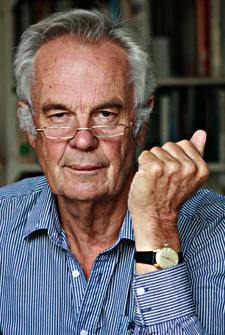
Nato and Russia – a tragedy unfolding

By Gunnar Westberg

In the antique Greek tragedy the end is often predetermined by the initial conditions. The King may have committed an unforgiveable transgression and the consequences are born by him and his House.

Step follows upon step, each step decided by Fate, and the characters have little choice, given their nature and their perception of the situation. In the end Fate brings destruction upon the King and his House.

Prologue

In 1984 a group from IPPNW Sweden met with the Norwegian general Tönne Huitfeldt, at that time Chief of the Military Staff of Nato. He was a man with great confidence in himself and in the military system.

“General Huitfeldt”, we asked, “when you work with your war scenarios in the Nato Headquarters, with the destruction of the world through a nuclear war looming as a possible outcome, are you not scared?”. “Oh no, never,” he responded. “The Russians are as rational as we are. They will never let it go too far. I am never scared”.Read More »

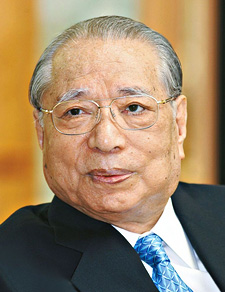
Calling for an early Japan-China-South Korea summit

By Daisaku Ikeda

SPECIAL TO THE JAPAN TIMES
MAR 5, 2015

As this year marks the 70th anniversary of the end of World War II, I believe that Japan should take this as an opportunity to renew its pledge to build lasting peace and step up its efforts to contribute to stability and development throughout Asia. Strengthening of cooperation to address environmental problems and disaster risk reduction is a particularly urgent priority.

In November last year… continued here >

TFF PressInfo 315: Happy Norooz – peace in the new year?

Jan Oberg

By Jan Oberg

Today is New Year – Norooz – for 300 million people. It is Equinox. It is International Day of Happiness – and it is the 12th Anniversary of the US-led war on Iraq

The nuclear deal and Israel

One must hope that the new year brings a fair deal concerning the nuclear issues between Iran and the members of the UN Security Council + Germany.

If the U.S. will not sign because it insists that the counterproductive and unfair sanctions shall not be lifted completely and as soon as technically possible, the deal should be signed with the other parties. The US must have no monopoly on this.

One must also hope that Israel will not attack Iran – but with the re-election of PM Netanyahu that risk has increased.

He seems to be obsessed about a threat from Iran, a country that has not invaded any other country for more than 250 years, has no nuclear weapons and considers nuclear weapons “haram” – strictly forbidden.

With a 10 times larger population Iran has roughly the same military expenditures as Israel.Read More »