Joint Declaration by International Law Experts on Israel’s Gaza Offensive

By Richard Falk
July 28, 2014
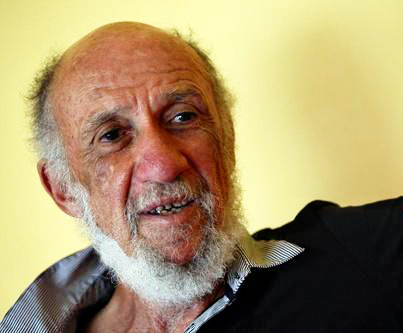
Richard Falk

Prefatory Note
Posted here is a Joint Declaration of 142 (as of now) international law experts from around the world who are listed below as endorsers. I am among the endorsers, and the text was initially drafted by Chantal Meloni who has served as rapporteur.
We welcome additional signatures that can be sent to me at falk@global.ucsb.edu with affiliation noted for identification, and names will be periodically added to the text.
I view this as an important expression of professional judgment and individual conscience relating to Israeli behavior in Gaza commencing on 8 July that has already taken so many innocent lives and caused such widespread devastation. Please join us and spread the word!

The International Community Must End Israel’s Collective Punishment of the Civilian Population in the Gaza Strip

As international and criminal law scholars, human rights defenders, legal experts and individuals who firmly believe in the rule of law and in the necessity for its respect in times of peace and more so in times of war, we feel the intellectual and moral duty to denounce the grave violations, mystification and disrespect of the most basic principles of the laws of armed conflict and of the fundamental human rights of the entire Palestinian population committed during the ongoing Israeli offensive on the Gaza Strip. We also condemn the launch of rockets from the Gaza Strip, as every indiscriminate attack against civilians, regardless of the identity of the perpetrators, is not only illegal under international law but also morally intolerable. However, as also implicitly noted by the UN Human Rights Council in its Resolution of the 23th July 2014, the two parties to the conflict cannot be considered equal, and their actions – once again – appear to be of incomparable magnitude.

Once again it is the unarmed civilian population, the ‘protected persons’ under International humanitarian law (IHL), who is Read More »

No exit from Gaza: A new war crime?

By Richard Falk

Richard Falk

Prefatory Note July 17, 2014 written before the ground invasion

This is a modified version of a post published online, July 15, 2014, at the recently established very informative website, Middle East Eye; as the casualty totals continue to mount while the world looks on in stupefied inaction, the attacks go on.

At the very least, from a humanitarian perspective, there should be a global outcry demanding that children, mothers, and those sick and disabled be allowed to leave the Gaza Strip until current hostilities end. Yet this is a gap in international humanitarian law, refugee law, and the moral sensibilities of the combatant states.

• As the hideous Israeli assault on Gaza, named Operation Protective Edge, by the IDF enters its second week, overdue international appeals for a ceasefire fall on deaf ears. The short lived July 15th ceasefire arranged by Sisi’s Egypt had many accompanying signs of bad faith from its inception, including the failure to allow Hamas to participate in the process, insultingly conveying the proposed terms of the ceasefire through public media.

The vague terms depicted, alongside the failure to take any account of Hamas’ previously announced conditions, suggest that this initiative was not a serious effort to end the violence, but rather a clever ploy to regain moral credibility for Israel thereby facilitating the continuation and even intensification of its violent military campaign that was never defensive in conception or execution.

Rather than being a real effort to end the violence, such a ‘ceasefire’ seems best understood as a sophisticated for form of escalation produced by a descent into the lower depths of Israeli hasbara. Such an Israeli tactic was facilitated by the active complicity of the Egyptian government that shares with Israel an undisguised wish to destroy Hamas.

Cairo regards Hamas as an offshoot of the Egyptian Muslim Brotherhood, an organization that has been criminalized and viciously repressed, and has collaborated with Tel Aviv ever since Sisi took over control of the Egyptian government.

Throughout Protective Edge Bibi Netanyahu has been telling the world Read More »

Three elections, three reactions: Ukraine, Egypt and Syria

By Farhang Jahanpour

On Friday 27 June, Ukraine’s new president Petro Poroshenko signed a trade and economic pact with the European Union. It was the same deal that his predecessor, Viktor Yanukovych, was prepared to sign in November 2013 provided that he could also maintain economic links with Russia, but he eventually backed out from signing it due to US and EU insistence that he had to choose between the two.

That event led to violent street demonstrations that forced Yanukovych to flee, pushing his troubled country towards upheaval and a virtual civil war.

On Thursday 26 June, President Obama requested $500 million from Congress to train and arm what the White House called “appropriately vetted” members of the Syrian opposition to fight against President Bashar Assad.

This is despite the fact that the insurgents fighting in Syria have morphed into Al-Qaeda-affiliated Jabhat al-Nusra and even into ISIS, the Islamic State in Syria and Sham or greater Syria that has overrun parts of both Syria and Iraq and has been even disowned by Al-Qaeda for being too violent!

A week earlier, during a tour of the Middle East, US Secretary of State John Kerry met with the new Egyptian President, the former Army Chief, General Abdel Fattah el-Sisi, pledging American help and support for his government. Officials accompanying Kerry on the trip told reporters that Washington had quietly restored all but about 78 million dollars of the 650 million dollars of US aid to Egypt earlier this month.

Kerry told reporters in Cairo after meeting Sisi that he was “absolutely confident” that all of the aid would soon be restored. (1) Washington has provided Cairo with an average of about 1.3 million dollars in military aid annually over the past three decades as part of the Camp David Accord signed by the late President Muhammad Anwar Sadat and the late Israeli Prime Minister Menachem Begin at Camp David under President Jimmy Carter.

As it happens, there have been elections in all the three countries in June, and it is useful to study the circumstances surrounding those elections and the West’s reactions to those elections.Read More »

What was history about? Look at the Histomap

By Johan Galtung

Johan Galtung

John B. Sparks made a histomap in 1931—updated in 2010 (Metro Books) – a long, vertical chart covering “peoples and nations for 4,000 years”.

Time, history, is on the vertical axis, listing when of events and where in the space of peoples and nations. The chart starts with the Chinese, the Indians, Amorites (Babylon), Aegeans (Minoans and Mycenaeans), Hittites (Anatolia), Iranians and Greeks, goes on to the Romans, the British, the Huns (Mongols) and ends with Latin America, Europeans West and East (the EU is absent), the Middle East, sub-Sahara Africa, Russians and Americans, Asia as India, China and Japan; each part proportionate to their significance at the time. Debatable.

But let us focus on something crucial: the shape of the “peoples-nations” bubbles in world history, from a beginning to an end?

By and large exactly like that: a birth somewhere in this Einsteinian timespace, and a death. Two points, and between them: growth-maturity/flourishing-decline and fall. Expansion to a maximum, and contraction to a minimum. The law of anything organic? Given that they often thought they were forever, gifted with eternal life, history is about great expectations, glories–and great traumas.Read More »

Netanyahu’s ugly Gaza game

By Stephen Zunes

The murder by unknown assailants of three Israeli teens who were members of an Israeli settlement in the occupied West Back would normally have been treated by both sides as simply another senseless loss of innocent young life experienced too often by Israelis and Palestinians alike. But the right-wing Israeli government took advantage of the tragedy to whip up ultra-nationalist sentiments, engage in a new wave of repression in the occupied West Bank, launch heavy mortar attacks and air strikes against civilian targets in the besieged Gaza Strip, and now to threaten all-out war.

This latest round of violence came on the heels of failed peace negotiations in which the Palestine Authority agreed to unprecedented concessions, including accepting a settlement in which their state would be demilitarized and would encompass just 22 percent of historic Palestine, militias would be dismantled, Israeli and international forces could guard all borders, Jerusalem would be shared as both nations’ co-capital, 80 percent of Israeli colonists would be allowed to stay in their illegal settlements, and the Palestinians would renounce the right of return of refugees expelled from their homes during Israel’s 1947-49 war of independence.Read More »

Tormenting Gaza

By Richard Falk

Prefatory Note:
The Israeli military operation, code name Operation Protective Edge by Israel, being carried out in the Gaza Strip continues, and seems poised to mount a ground attack that will further intensify the suffering of the Palestinian people, and lend additional credibility to the accusation of ‘collective punishment,’ both a grave breach of international humanitarian law and a crime against humanity.
The article below is a somewhat edited re-publication of an opinion piece published in AlJazeera English several days ago at the start of Operation Protective Edge.

For the third time in the last six years Israel has cruelly unleashed the full fury of its military machine against the defenseless 1.7 million people of Gaza, inflicting heavy civilian casualties and further devastation on the long besieged and impoverished Gaza Strip.

With cynical disregard of the realities of this latest one-sided confrontation between Israel and Palestine, instead of condemning such recourse to massive violence as ‘aggression’ that violates the UN Charter and fundamental international law principles, the reaction of Western diplomats and mainstream media has so far perversely sided with Israel, citing the bland rationalization repeatedly stressed by Netanyahu that ‘every nation has the right to defend itself.’

And so it does, but not by way of aggression!

From the UN Secretary General to the President of the United States, the main insistence has been that Hamas stop must all rocket attacks while Israel is requested ever so politely to show “maximum restraint.”Read More »

Aage Bertelsen (1901 – 1980) – Danish educator for peace

By Jan Oberg & Johan Galtung*

Lund and Kuala Lumpur, July 2014

Introduction

He was a tall man and a great man, a visionary, pacifist, civil resister, educator and philosopher. He took life more seriously than most and he could be playful and fun like a child. His life’s guiding principle was ”Engage in your time!” and while he wrote and talked a lot he also did it. His name was Aage Bertelsen, he was born in Denmark in 1901 and died on August 15, 1980.

Bertelsen’s imprint on history is two-fold. First, with his wife Gerda he was a prime mover of one of the groups, the Lyngby Group, which organised the rescue of altogether 7.220 Danish Jews into safety in Sweden in October 1943 during the German occupation of Denmark – more here. The Lyngby Group – Lyngby is north of Copenhagen – got about 1.000 of these in safety by organising their nightly transport onboard small fisher boats over the Sound between Denmark and Sweden.

In this he deserves a place in international contemporary history for its humanity, civil courage and as an example of non-violent struggle against occupation.

Secondly, Bertelsen was an educator of and for peace. His life work educational efforts included his family and friends, his pupils over 22 years at the Aarhus Cathedral School in Aarhus, Denmark, the general public as well as national and international leaders.

He lived in pre-Internet times and very little is publicly available today about this renaissance man. From two rather different, but compatible, perspectives we’ve taken it upon us to remind the world about him – friends and colleagues of his as we happen to be.

Headmaster Aage Bertelsen in 1961 Photo: Elfeldt, Copenhagen


Why now, over 30 years after his death? Read More »

TFF PressInfo: “The human price of the war on Iraq” Hearing Statement

Comments by Hans-C. von Sponeck
Former UN Assistant Secretary General, UN Humanitarian Coordinator for Iraq & TFF Associate


Hearing at the UK House of Commons, London June 10, 2014

Intro
1. HoC/HoL have repeatedly held Iraq hearings as have British NGOs such as CASI (Campaign Against Sanctions on Iraq) and Stop the War Coalition/UK. In Europe these are considered models for responsible public action.

2. My contribution at this hearing is not about the crimes of dictatorship or the details of Iraqi suffering. For both well researched data is available. The objective of my participation is to make two detailed observations about externally-driven Iraq politics during the period 1990-2014.

Observation 1

3. Today’s tragic Iraq reality can only be understood if the additive impact of the years before and the years following the US/UK Governments’ illegal invasion and occupation is fully taken into account.Read More »

Doing Business with Israel: Increasingly Problematic

By Richard Falk

Note
Published below is a letter prepared by the European Coordination of Committee and Associations for Palestine (ECCP) and endorsed by John Dugard, Michael Mansfield, Eric David, and myself; it urges adherence to guidelines relating to corporate and financial activity with unlawful economic activities in Israel and occupied Palestine, and is guided by principles similar to the BDS campaign; it is notable that today the Presbyterian Church by a close vote (310-303) voted to divest itself of shares in three corporations engaged in legally and morally objectionable activities in Israel. There is a growing momentum associated with this new nonviolent militancy associated with the global solidarity movement supportive of the Palestinian struggle to gain a just peace, including realization of rights under international law.

European Coordination of Committees and Associations for Palestine (ECCP)

On 24-26 June, 37 European companies from 11 EU Member States will travel to Israel as a part of an EU led “Mission for growth” project that aims to “promote partnerships between Israeli and European companies 
active in sectors identified as leading and developing industries in Israel.”

Among Israeli companies participating in the “Mission for growth” are those deeply complicit in Israel’s occupation and apartheid policy. The previous delegation of “Mission for growth” took place on 22-23 October last year in Israel, where 97 european companies from 23 EU Member States meet with 215 Israeli companies from the different industrial sectors.

In this open letter supported by Richard Falk, John Dugard, Michael Mansfield and Eric David, ECCP member organisations call on the European companies to abandon their plans to be involved in the project. Read More »

Israel-Palestine: Beyond the liberal imaginary

By Richard Falk

Prefatory Note:
What follows is a letter to the NY Times responding to their editorial of June 6, 2014, which was not accepted for publication. I publish it here as a post because I believe it identifies some of the continuing ways in which public opinion on the relationship between Israel and Palestine continues to be distorted on Israel’s behalf in American media sources that have the undeserved reputation of being objective and trustworthy. The New York Times has long ranked high on this list, if not at its top!

This letter is particularly concerned with the misleading characterizations of Hamas, and the failure to pass judgment on the Netanyahu leadership as ‘extremist.’

*****************

To the Editor, New York Time

Re “Israeli-Palestinian Collision Course” (editorial, June 6, text reproduced below):

You are correct that this is an opportune time to take account of Israel-Palestine peace prospects in light of failed direct negotiations and subsequent developments. It is misleading, however, to equate Israel’s accelerated expansion of settlements with the formation of the Fatah-Hamas unity government. Israeli action continues a pattern of flagrant violation of the 4th Geneva Convention while the Palestinian action is a constructive move that could finally make diplomacy on behalf of all Palestinians legitimate and effective.Read More »