Humankind 2050: Making peace with our futures

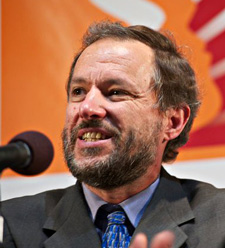
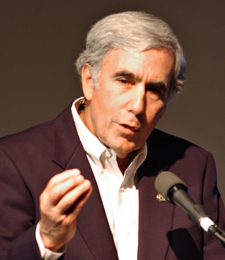
By Johan Galtung

Keynote Speech, World Futures Studies Federation 40th anniversary – Bucuresti, România

Future studies, like peace-development-environment studies, is an inter-disciplinary, inter-national effort to get a grip on key issues; divided into preferred futures–utopias–whose?; predicted futures–forecasting–who does it for whom?; and future practice–scenarios bending the predicted toward the preferred–by and for whom?

The title of Ravi Morey’s Looking Backward: 2050-2013 catches future studies in a nutshell: exploring intermediate stages between a fully democratic world government and our 2013 present. The road may pass through a bankrupt USA bailed out by a democratic China in 2025. Some may argue that is already happening, with China – more democratic than the West knows – being creditor No. 1, and the USA – more bankrupt than the USA admits – debtor No. 1; Nos. 1 and 190 among 190 countries.

Like in 1967, in Oslo, for the predecessor organization Mankind 2000 this keynote is on international futures. Preferred futures:Read More »

The U.S.’s Afghan exit depend on a Syrian one

By Sharmine Narwani

Washington’s options in Syria are dwindling – and dwindling fast.

Trumped up chemical weapons charges against the Syrian government this month failed to produce evidence to convince a skeptical global community of any direct linkage. And the US’s follow-up pledge to arm rebels served only to immediately underline the difficulty of such a task, given the fungibility of weapons-flow among increasingly extremist militias.

Yes, for a brief few days, Syrian oppositionists congratulated themselves on this long-awaited American entry into Syria’s bloodied waters. They spoke about “game-changing” weapons that would reverse Syrian army gains and the establishment of a no-fly zone on Syria’s Jordanian border – a la Libya. Eight thousand troops from 19 countries flashed their military hardware in a joint exercise on that border, dangling F-16s and Patriot missiles and “superb cooperation” in a made-for-TV show of force.

But it took only days to realize that Washington’s announcement didn’t really have any legs.

Forget the arguments now slowly dribbling out about why the US won’t/can’t get involved directly. Yes, they all have merit – from the difficulties in selecting militia recipients for their weapons, to the illegalities involved in establishing a no-fly zone, to the fact that more than 70% of Americans don’t support an intervention.

The single most critical reason for why Washington will not risk entering the Syrian military theater – almost entirely ignored by DC policy wonks – may be this: the 2014 US military withdrawal from Afghanistan.

“Help, we can’t get out”Read More »

No to US military intervention in Syria

By Jonathan Power

The fog of war in Syria descends. Alliances on the ground come and go. America wobbles. Europe wrings its hands. Russia ups its military commitment, fearful of an arc of Sunni militancy that will make common cause with Russia’s own fundamentalists in Chechnya and Dagestan. Much of the rest of the world looks on with half shut eyes.

The debate swirls. Can the West have any profound impact on the Syrian civil war? Can it help depose the Assad regime? Does it really think it can influence the making of a democratic, multi-ethnic, multi-religious, Syria? Is President Barack Obama, after months of resisting the sirens calling for military support of the rebels, beginning to think it can play a more important part than hitherto? With the direct provision of American (and British and French) arms is he coming to believe that this will tilt the balance in the insurgents’ favour?Read More »

Reinventing Fascism

By Johan Galtung

The atrocious Second World War left behind lasting damage by lowering our standards for what is marginally acceptable. War is bad; but if it is not nuclear, the limit has not yet been reached. Fascism is bad; but if it does not come with dictatorship and the elimination of a category of people, the limit has not yet been reached. Hiroshima, Hitler, Auschwitz are deeply rooted in our minds, distorting them.

Hiroshima makes us disregard the state terrorism against German and Japanese cities, killing citizens of any age and gender. And Hitler and Auschwitz make us disregard fascism as the pursuit of political goals by means of violence and the threats of violence. It takes two to make a war, by whatever means. But it takes only one to make fascism, against one’s own people, and/or against others.

What is the essence of fascism? Read More »

The last colony: Beyond dominant narratives on the Western Sahara roundtable

By Stephen Zunes

This is one of seven pieces in Jadaliyya’s electronic roundtable on the Western Sahara. Moderated by Samia Errazzouki and Allison L. McManus, it features contributions from John P. Entelis, Stephen Zunes, Aboubakr Jamaï, Ali Anouzla, Allison L. McManus, Samia Errazzouki, and Andrew McConnell.

Western Sahara is a sparsely-populated territory about the size of Italy, located on the Atlantic coast in northwestern Africa, just south of Morocco. Traditionally inhabited by nomadic Arab tribes, collectively known as Sahrawis and famous for their long history of resistance to outside domination, the territory was occupied by Spain from the late 1800s through the mid-1970s. With Spain holding onto the territory well over a decade after most African countries had achieved their freedom from European colonialism, the nationalist Polisario Front launched an armed independence struggle against Spain in 1973. This—along with pressure from the United Nations—eventually forced Madrid to promise the people of what was then still known as the Spanish Sahara a referendum on the fate of the territory by the end of 1975.
More…

Whose ‘Two State’ solution? End game or intermission?

By Richard Falk

From many sources there is a widespread effort to resume a peace process that has in the past led to failure, frustration, and anger, and often to renewed violence. The newly appointed American Secretary of State, John Kerry, is about to make his fifth trip to Israel since the beginning of 2013, insisting that the two sides try once more to seek peace, and warning if this doesn’t happen very soon, the prospects for an agreed upon solution will be postponed not for just a year or two, but for decades.

Kerry says if this current effort does not succeed, he will turn his attention elsewhere, and that the United States will make no further effort. So far, aside from logging the air miles, seems perversely to be responsive to Tel Aviv’s demands for land swaps to allow settlement blocs to be incorporated into Israel and to promote further Palestinian concessions in relation to security arrangements, and totally unresponsive to Ramallah’s demands for some tangible signs from the Israeli government that resumed negotiations will not be another slammed door. In this vein, Kerry’s most ardent recent plea was at the Global Forum, an annual event organized under the auspices of the American Jewish Committee. Kerry told this audience that they possessed the influence to make the peace talks happen.

Somewhat surprisingly, even Marwan Barghouti writing from prison, Read More »

Today the world was blessed with a new hero: Edward Snowden

By Jan Oberg

Spontaneous thoughts at having seen this interview three times in a row.

One moral individual standing up for true democracy and freedom against one of the most evil systems the world has ever seen.

The Guardian: “Snowden will go down in history as one of America’s most consequential whistleblowers, alongside Daniel Ellsberg and Bradley Manning. He is responsible for handing over material from one of the world’s most secretive organisations – the NSA.

In a note accompanying the first set of documents he provided, he wrote: “I understand that I will be made to suffer for my actions,” but “I will be satisfied if the federation of secret law, unequal pardon and irresistible executive powers that rule the world that I love are revealed even for an instant.”

I am deeply moved by Edward Snowden. Very deeply. Such civil courage. Such moral awareness. Such knowledge. Such intellectual clarity. Such determination combined with the humility of serving a higher cause.

Do I at all understand what this one single, determined individual is up against? How he dares? No, I don’t think I do. It is too great, too unique, too rare in a world of so much opportunism and “somebody else must do what must be done”.

I’m reminded of Gandhi’s dictum that “A burning passion coupled with absolute detachment is the key to all success.”

Today the world was blessed with a hero of such proportions that it is hard to believe it is true. As long as there is an Ellsberg, a Manning and now a Snowden – and thousands of other courageous unsung heroes fighting for a better world, I will not abandon my hope.

For years I have ended my courses and public lectures by saying that I don’t believe much in peace movements but I believe that every human being is, potentially, a peace movement. Snowden is yet another living proof of this.

– Jan Oberg

Lessons from the U.S.-Korea nuclear crisis

By David Krieger

The high-profile nuclear crisis on the Korean Peninsula, pitting the reigning heavyweight nuclear champion, the United States, against the bantamweight nuclear contender, North Korea, is not finished and is deadly serious. The posturing and exchanges that the world has been witnessing are capable of spiraling out of control and resulting in nuclear war. Like the Cuban Missile Crisis more than half a century ago, this crisis demonstrates that nuclear dangers continue to lurk in dark shadows across the globe.

This crisis, for which the fault is shared by both sides, must be taken seriously and viewed as a warning that nuclear stability is an unrealistic goal. The elimination of nuclear weapons, an obligation set forth in the Non-Proliferation Treaty and confirmed by the International Court of Justice, must be a more urgent goal of the international community. The continued evasion of this obligation by the nuclear weapon states makes possible repeated nuclear crises, nuclear proliferation, nuclear terrorism and nuclear war.

Lessons can be drawn Read More »

America’s war criminals

By Jonathan Power

Someone, somewhere, has to say it – that the U.S. harbours war criminals of its own and they have served not that long ago at the apex of power in the American government.

Alas, no one is going to act like the recently deceased Robert McNamara who served as Secretary of Defence under presidents John F. Kennedy and Lyndon Johnson. In one speech he described himself as a war criminal – for being party to the nuclear bombing of Hiroshima and Nagasaki and for his role in the Vietnam war.

The Obama Administration has to move faster and harder. Last month President Barack Obama implicitly criticised himself for not getting the Guantanamo prison closed. Admittedly to do so has been made very difficult as the Republicans in the Senate have blocked his every move. But he could do more, like transferring some federal courts to Guantanamo.

One wonders if once again if it will all come to nothing, as did the talk that has gone on for decades about prosecuting the former National Security Advisor and Secretary of State to President Richard Nixon, Henry Kissinger.Read More »

On Barack Obama’s re-election

By Richard Falk

We share with your editorial (Nov. 11, 2012) the view that one of President Obama’s “singular contributions has been his vision of a world without nuclear weapons.” We would go further, and suggest that realizing this vision would ensure Mr. Obama a legacy of honor, not only for American, but for the world. Your editorial adds a caveat that nuclear disarmament “is a lofty goal that would not be achieved in his second term, or maybe for years after this.”

We dissent from this bit of conventional wisdom that almost always accompanies the affirmation of the goal, almost taking back what was so grandly proposed. In our view there has rarely been a better time to initiate a negotiated process of phased nuclear disarmament, and there is no reason that such a process should be stretched out over a long period. Read More »