TFF PressInfo # 367: Will the EU become a criminal union tomorrow?

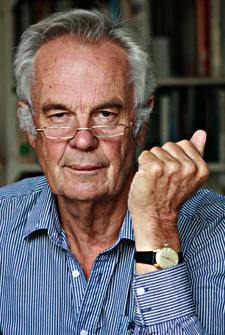
By Jan Oberg

The EUropean Union – a criminal? The EU that has peace as it’s top goal and received Nobel’s Peace Prize? The EU with Schengen and Dublin? The EU with “European” values, humanism and mission civilisatrice that tells others how to live in accordance with international law and in respect for human rights?

We live in times where little shall surprise us anymore. The answer to the question – will EU become a criminal in international law terms? – will be answered on March 17 and 18 when the EU Council meets to decide whether or not to carry through the agreement with Turkey about how to handle refugees.

Amnesty International knows what it is all about. AI uses words such as “alarmingly shortsighted”, “inhumane”, “dehumanising”, “moral and legally flawed” and “EU and Turkish leaders have today sunk to a new low, effectively horse trading away the rights and dignity of some of the world’s most vulnerable people.”

And “By no stretch of imagination can Turkey be considered a ‘safe third country’ that the EU can cosily outsource its obligations to,” says Iverna McGowan, Head of Amnesty International’s European Institutions Office.

When Amnesty International expresses itself this way, we should listen very very carefully. I do and I’ve signed Amnesty’s Open Letter to Swedish prime minister Löfvén protesting that Sweden too may join this inhuman and law-violating agreement with Turkey. Hurry up, it is tomorrow!

Behind every refugee stands an arms trade, stands militarism. Read More »
Two ways of looking at the race for the American presidency

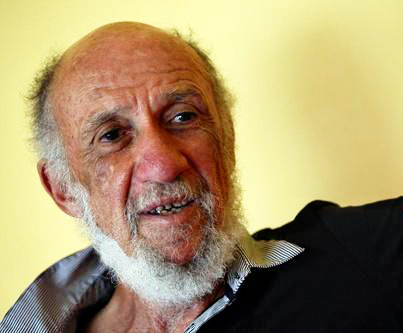
By Richard Falk

#1: as an incredibly dumbing down of the political process, turning the presidential campaigns for the nomination as heavily financed shadow shows, hiding special interests and money management, all about selling the candidate by boast and bluster;

#2: as pre-revolutionary ferment, mobilizing the young, and confronting the established order, finally, with non-establishment choices between the radical right of Trump & Cruz and the moderate social democratic left of Sanders.

This tedious struggle for political prominence and historical name recognition is being played out against a backdrop of the three pillars of America’s global role: the Pentagon, Wall Street, and Israel.

No candidate has managed to shake the pillars, although this time around Sanders has at least launched a genuine attack on the Wall Street pillar, and Trump has gestured toward what might be a mild push against the Israel pillar. This alone makes Sanders and Trump the first outsiders to compete seriously for a run at the White House.

Of course, since Sanders has done so much better than expected, Clinton makes some noises as if she is also taking on Wall Street, but as her unreleased transcripts of her gilt talks at Goldman-Sachs no doubt confirm, no one think she means it, and she doesn’t. This is her way of harmlessly sparring with the man from Vermont until she locks up the machine-driven nomination.

When we look at the candidates from a Hollywood central casting point of view, we have to wonder who is running the show, especially on the Republican side.

Senator Ted Cruz appears to be a credible reincarnation of Tomás de Torquemada, Read More »

Why Democratic Party Foreign Policy Fails and Will Continue to Fail

By Richard Falk

Prefatory Note:
An earlier version of this essay appeared on March 2, 2016 in The Progressive Magazine. It tries to explain the entrapment of liberal Democrats in an iron cage of militarism when it comes to international security policy. The explanation points in two directions: the militarized bureaucracy at home and the three pillars of credibility constraining elected political leaders—unquestioning support for high Pentagon budgets, opposition to stiff regulation of Wall Street abuses, and any expression of doubts about unconditional support of Israel.

Why Democratic Party Foreign Policy Fails and Will Continue to Fail

For six years (2008-2014) I acted as UN Special Rapporteur for Occupied Palestine, and found myself routinely and personally attacked by the top UN diplomats representing the U.S. Government. Of course, I knew that America was in Israel’s corner no matter what the issue happened to be, whether complying with a near unanimous set findings by the World Court in the Hague or a report detailing Israeli crimes committed in the course of its periodic unlawful attacks on Gaza.

Actually, the vitriol was greater from such prominent Democratic liberals as Susan Rice or Samantha Power than from the Republican neocon stalwart John Bolton who was the lamentable U.S. ambassador at the UN when I was appointed. I mention this personal background only because it seems so disappointingly emblematic of the failure of the Democratic Party to walk the walk of its rule of law and human rights talk.

From the moment Barack Obama stepped into the Oval Office he never tired of telling the country, indeed the world that we as a nation were different because we adhered to the rule of law and acted in accord with our values in foreign policy. But when it came down to concrete cases, ranging from drone warfare to the increasingly damaging special relationships with Israel and Saudi Arabia, the policies pursued seemed almost as congenial to a Kissinger realist as to an Obama visionary liberal.

Of course, recently the Republicans from the comfort zone of oppositional irresponsibility chide the government led by a Democrat for its wimpy approach whether in response to Russia’s involvement in the Ukraine, China’s moves in the Pacific, and especially the emergence of ISIS.

The Republicans out of office want more bombs and more wars in more places, Read More »

TFF PressInfo # 362: Iran’s elections and the nuclear deal

By Dr. Farhang Jahanpour
TFF Board member

Lund, Sweden, February 24, 2016

Two general elections are to be held in Iran this coming Friday the 26th – to the parliament (Majles) for the next 4 years and to the Assembly of Experts for the next 8 years.

Their results will be of utmost importance for the Iranian society and politics, for its foreign policy and the Middle Eastern region and – in the light of the nuclear deal – for the world too.

We are pleased to send you some links to essential analyses of these issues by Iranian-born scholar Dr. Farhang Jahanpour, Oxford University and TFF Board member.

Elections in Iran – A test for the regime

Is Iran the most stable country in the Mideast 37 years after its revolution?

Iran is leaning neither towards the West nor the East
Interview with Tehran Times also available here.

The nuclear deal implementation day: A win-win agreement

Views split in both Iran and the US on nuclear deal implementation

Iran moves fast: Can the nuclear deal survive elections in Iran and the US?

These articles exemplify one of three project aims TFF has for it’s multi-year engagement in Iran since 2013 – namely to increase the knowledge about Iran and thereby help change the hitherto unreasonably negative image of it in the West.

Simply put, where knowledge and understanding replace stereotypes and enemy images, the chance of confidence and peace-building increases.

The second sub-project is to help establish academic peace and conflict research at Tehran’s University, and the third is to create an art photography book from various parts of Iran.

Time for an original US foreign policy

By Jonathan Power

There are three schools of thought in American foreign policy- two you have heard about and a third that is relegated to the background.

The first and arguably the most prominent is the neo-conservative.

These people, in the days of the Soviet Union, were the rabid anti-communists who wanted to beat the Soviet Union into the ground with vastly increased spending on defence. Today they are the ones who supported the extreme right wing agitators who overthrew the middle-of-the-road president of Ukraine, Wiktor Yanukovich. They supported President George Bush’s wars in Iraq and Afghanistan and want President Barack Obama to intervene in Syria.

The second is the liberal.

Liberals have always wanted to seek nuclear arms limitations with Moscow. They wanted an end to apartheid in South Africa. But many of them also believe in directly interfering in a country that is carrying out inhumane policies. They persuaded President Barack Obama to intervene in Libya’s civil war which left a political mess that has become a haven for ISIS. Some of them have argued for intervention in Syria’s civil war. They also, in tandem with the neo-conservatives, successfully persuaded Obama to pursue an anti-Russian policy in Ukraine.

Then, third, there are the “realists”.

People like the late greats: George Kennan, Hans Morgenthau, Reinhold Niebuhr and Walter Lippmann. In many ways Obama is a realist, although not consistently. He has succumbed to both liberal and neo-conservative advice.

The realists don’t get much airtime. Their advice is usually pushed aside Read More »

Mrs. Clinton’s hard line foreign policy

By Jonathan Power

We in the world outside the US don’t have a vote in the US presidential election in November. But that doesn’t stop most of us having a strong opinion on who should win. Very few non-Americans would vote Republican – and probably not 51% of Americans.

After all President Barack Obama won two elections and has not given the Democrats a bad name. Many of us are being pulled towards Senator Bernie Sanders, a social democrat, who is giving Hillary Clinton a run for her money. But to be honest, once the primaries in the southern states start to roll, he is likely to be marginalized by Mrs. Clinton.

She will probably win the election for president.

Like it or lump it we’d better get used to a more right-wing and confrontational foreign policy.

Most of the time she was a good and faithful servant to Obama while his secretary of state but behind the scenes in internal White House discussions she would often argue against the president’s instincts and policies.

She was against Obama’s support for the Arab Spring in Egypt. She had long been close to Read More »

Obama’s success in foreign policy

By Jonathan Power

Make no mistake Barack Obama is going to go down in history as one of the great American presidents.

At home he has confronted poverty, ill-health, racism, gun laws, unemployment, immigration and the criminal justice system – with amazing tenacity, sometimes to great effect, even though the Republicans have fought him tooth and nail over every attempt at reform.

The economy is striding along, shaming Europe. Abroad he has had to struggle on multiple fronts – more than any other recent president. There are problems, especially in the Middle East, that would – and will – defeat any president. But there is a clear narrative running through Obama’s foreign policy, one that makes a lot of sense.

What is most clear is the honouring of the commitment he made in his Nobel Peace Prize speech at the onset of his presidency to lowering America’s propensity to use its military might.

His presidency began with his attempt to get relations with Russia back on an even keel. A good deal was made with President Vladimir Putin on further mutual reductions in nuclear arms.

He concluded the withdrawal of the majority of American troops in Afghanistan and Iraq (170,000 down to 1,000 in Iraq and 100,000 down to 10,000 in Afghanistan).

Later came his frustrating – and frustrated – effort to Read More »

China versus Russia versus USA: Xi versus Putin versus Obama

By Johan Galtung

From very high up three major countries-states stand out clearly: China, the most populous; Russia, the largest; USA, the most military. With three leaders, Xi, Putin, Obama, with much power on their hands.

And here is the key hypothesis, presumably more right than wrong: China-Xi: positive peace; Russia-Putin: negative peace; USA-Obama: war.

We have in mind China – also a region – building relations for reasonably mutual and equal benefit with China all over the world, spinning Asia-Europe-Africa together in a road-rail-ship-air Silk network available to all (with major mistakes in the South China Sea).

We have in mind Russia – itself also a region – calling to Russia leaders in violent conflict from all over the world, seeking cease-fires and accommodation (making itself a major mistake in Syria).

And we have in mind USA – more than a state, less than a region – since WWII ended killing more than 20 million people in 37 countries:

Afghanistan, Angola, Argentina, Bangladesh, Bolivia, Brazil, Cambodia, Chad, Chile, China, Colombia, Cuba, Democratic Republic of Congo, Dominican Republic, East Timor, El Salvador, Grenada, Guatemala, Haiti, Honduras, Hungary, Indonesia, Iran, Iraq, Israel-Palestine, Korea North-South, Laos, Nepal, Nicaragua, Pakistan, Panama, Paraguay, Sudan, Vietnam, Yugoslavia Not included: daily USA mass shootings.

And weaving the world together with the incredible internet (making a major mistake, using it for spying, betraying us all).Read More »

Burundi – to stop another genocide

By Jonathan Power

November 24, 2015

The United Nations Security Council has adopted a resolution strongly condemning the escalating violence in Burundi. It paves the way for the UN to send in thousands of blue-helmeted peacekeepers.

The resolution, which was passed unanimously, condemns the wave of killings, arrests and human rights violations. It requests that Secretary-General Ban Ki-moon reports within 15 days – i.e. on Friday the 27th – on options for increasing the UN presence in Burundi.

There are fears of a Rwandan-style genocide in Burundi, which like Rwanda has a long history of tribal distrust and, on occasion, hatred, although there are many intermarriages. At least 240 people have been killed there since protests began in April.

Since independence from Belgium in 1962 it has been plagued by tension between the dominant Tutsi minority and the Hutu majority.

The ethnic violence sparked off in 1994 made BurundiRead More »

The Failure of U.S. foreign policy in the Middle East

By Richard Falk

Prefatory Note: What follows is a modified version of the Morton-Kenney annual public lecture given at the University of Southern Illinois in Carbondale on November 18, 2015 under the joint sponsorship of the Department of Political Science and the Paul Simon Public Policy Institute.

The Failure of U.S. Foreign Policy in the Middle East

While focusing on the ‘failure’ of American foreign policy in the Middle East it is relevant to acknowledge that given the circumstances of the region failure to some degree was probably unavoidable. The argument put forward here is that the degree and form of failure reflected avoidable choices that could and should have been corrected, or at least mitigated over time, but by and large this has not happened and it is important to understand why.

This analysis concludes with a consideration of three correctible mistakes of policy.

It is also true that the Middle East is a region of great complexity reflecting overlapping contradictory features at all levels of political organization, especially the interplay of ethnic, tribal, and religious tensions internal to states as intensified by regional and geopolitical actors pursuing antagonistic policy agendas. Additionally, of particular importance recently is the emergence of non-state actors and movements that accord priority to the establishment and control of non-territorial political communities, giving primary legitimacy to Islamic affinities while withdrawing legitimacy from the modern state as it took shape in Western Europe. Comprehending this complexity requires attention to historical and cultural background, societal context, and shifting grand strategies of geopolitical actors.

I.

From many points of view American foreign policy in the Middle East has been worse than a disappointment. It has been an outright failure, especially in the period following the 9/11 attacks of 2001. Even such an ardent supporter and collaborator of the U.S. government as Tony Blair, the former Prime Minister of the United Kingdom, has acknowledged as much in a recent set of comments where he basically says that the West has tried everything, and whatever the tactics were relied upon, the outcome was one of frustration and failure. Read More »