
The US’s wrong priorities on terrorism

By Jonathan Power

Were the killings in the church in Charleston terrorism, meant to intimidate the black population of America? Of course they were. Moreover, they were a reflection of the still widespread white hatred for America’s first black president, Barack Obama.

Indeed, as the New York Times editorialized last week, “The main terrorist threat in the US is not from violent Muslim extremists, but from right-wing extremists. (Many of them anti-black.) Just ask the police”. The New York Times has studied 382 police forces and 74% reported extremism by whites. Severe Muslim extremism was only 3% of the total.

The number of violent plots carried out by international terrorists remains very low and most attempts were disrupted. ‘

Last year not one US citizen at home died from international terrorism.Read More »
America at its best is – strange

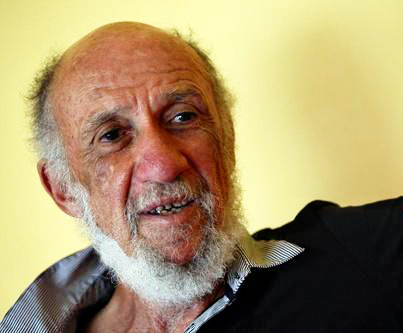
By Richard Falk

America even at its best is a strange place, alive with contradictions, a Teflon political culture that has an unshakable faith in its innocent and virtuous national character and its overall impact on the world, impervious to the ghosts of slavery and of ethnic cleansing of native Americans that should be tormenting our sleep and darkening our dreams, comfortable with its robust gun culture, and with its promiscuous reliance on rogue drones engineered to kill on command and on the brutal happenings that take place in black sites immorally situated in countries whose leaders agree to avert their gaze from the dirty work taking place.

Looked at from a short distance this is not a pretty picture.

Yet there are still those rare moments when this unsavory national profile seems not to be telling the whole story. For instance, I felt heartened by a recent news item reporting that the conservative Nebraska Legislature voted to abolish capital punishment, and in doing so went so far as to override the governor’s veto. That’s right, Nebraska!

Unfortunately, the welcome Nebraska move may not survive the backlash in the making. The Republican state governor, Pete Ricketts, vows to overturn the new law: “My words cannot express how appalled I am that we have lost a critical law to protect law enforcement and Nebraska families.” He is supported in this lethal passion by a pro-capital punishment legislator Read More »

How the US Treasury Department promotes Israel’s propaganda lines

By Gareth Porter

In February, a US Department of the Treasury press release announced sanctions on three Lebanese in Africa it said were linked to a “Hezbollah terrorist cell.”

But behind that press release is a story of how the portrayal of the Lebanese by the Treasury Department was based entirely on a case constructed by Israel’s foreign intelligence agency Mossad through its Nigerian clients, and how that Treasury release suppressed publicly available facts, which made it apparent that those claims were false.

It was not the first time the Treasury Department had used its “designations” of foreign individuals and organizations to put out false and misleading information reflecting an Israeli propaganda line.

Continue here…

How to end the war in Ukraine

By Jonathan Power

According to BBC World in a broadcast yesterday morning its considered opinion is that the ceasefire in eastern Ukraine, where Russian-backed rebels battle US-backed Ukrainian forces, is working. There are still too many skirmishes, too many guns and mortars being fired but the big guns are largely silent. President Vladimir Putin said the other day that both sides have been guilty of transgressing the cease-fire.

Both the Russians on one side and the US and Nato on the other have been playing with fire with their support of the two sides. And who suffers?- the ordinary inhabitants of the eastern provinces. However pro-Russian they were before all the fighting began they are now largely convinced the rebels killing in their name no longer represent them. The businesses they work for or own are working at half power or less. Unemployment has soared. Homes have been decimated. Pensions are unpaid. Hospitals find it increasingly hard, struggling to deal with extra patients and a curtailed drug supply.

In Moscow, among thinking people, it has become clear that Russia should have no interest in taking over large swathes of Ukrainian territory Read More »

The year 2015: First third report

By Johan Galtung

In my columns, “The Year 2015-What Are We in For?”, I identified four unfolding, dramatic processes: the West will continue fighting unsuccessfully and violently to keep their world grip; Eurasia will expand and consolidate successfully and nonviolently; Islam will expand and consolidate partly violently; Latin America and Africa will expand and consolidate, spearheaded by Brazil, South Africa, BRICS.

A third of the year 2015 has now passed; let us take stock.

Headlines in the International New York Times tell the story:

18-19 April 2015: “U.S. is said to risk losing economic leadership”; “–a divided nation shedding hard-won clout”, “We’re withdrawing from the central place we had on the world stage”.

And for the UK: 29 April: “Britain’s drift from the world stage looms over the vote”.

These are statements about leadership, about being the center as a model to emulate; controlling world stage politics; not about economic growth. Losing leadership and drifting away may actually increase growth: control is a costly, non-productive endeavor for most businesses. Sensing that may accelerate the decline as world power.Read More »

Why Iran must remain a US enemy

Gareth Porter

By Gareth Porter

The most important factor in shaping US policy towards Iran is domestic politics – not Obama’s own geopolitical vision.

Since the start of the US nuclear negotiations with Iran, both Israeli and Saudi officials have indulged in highly publicised handwringing over their belief that such a nuclear deal would represent a fundamental strategic shift in US policy towards the region at the expense of its traditional alliances with Israel and Saudi Arabia.

But the Obama administration is no more likely to lurch into a new relationship with Iran than were previous US administrations. The reason is very simple: The US national security state, which has the power to block any such initiative, has fundamental long-term interests in the continuation of the policy of treating Iran as an enemy. Continued here!

Gandhi and Mandela: Two South Africans

Johan Galtung

By Johan Galtung

Mohandas Gandhi invented the nonviolent approach to basic social change, Satyagraha, in South Africa in the early 20th century; Nelson Mandela presided over the birth of a one person-one vote democracy at the end of the century. Both were lawyers, trained in English Common Law; good in the sense of a keen consciousness of what is right and wrong, bad in the sense of a court process identifying who is in the wrong rather than solving underlying conflicts, and wrong in the sense of punishing the wrong-doer; violence rather than cooperation.

Both built on the positive side of law – the indelible rights of the people for whom they were fighting by comparing empirical facts with normative rights; immigrant Indians in the case of Gandhi, original inhabitants in South Africa, the Blacks, in the case of Mandela.

Gandhi (1869-1948) did not live to see equality between Indians and whites in South Africa, but in India, his mother-father land; Mandela (1918-2013) did. They won their struggles – but the societies that emerged still suffer from other and major ones.

A deep culture united them: the culture of law. Read More »