The Iran threat delusion

TFF PressInfo
May 8, 2013

Contacts for interviews as well as analytical sources below the statement.

Summary

Scores of Western politicians state that Iran is a threat to its neighbours or even the world. But before we end up in yet another cruel war based on wrong assumptions and delusion, somebody should ask them the simple question: How do you know?

– There is little, in fact, to back up these claims. Each time Iran spends 7 US$ on its military, the U.S. spends 700 US$, Israel 15,60 US$, Saudi-Arabia 44 US$ and the Arab Emirates 16 US$. Therefore, if Iran were to start a war, it would have to ignore the “balance of forces” of 1:110 with its basic opponents!

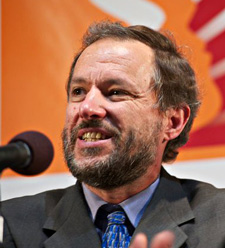
– “To construct Iran as a threat, one must assume that its leaders are lunatics or suicidal. There’s no evidence they are,” says Jan Oberg, director of TFF, The Transnational Foundation in Sweden*.

Argument

– False or exaggerated threat assertions are necessary to build up legitimacy among citizens before wars are started. Experts call it “fearology”: Instill fear in peoples’ minds and they accept, from left to right, their own governments’ taxpayer-funded wars.Read More »

Reflections taking off from the Marathon murders

By Richard Falk
Written April 19, 2013 – before the manhunt ended

The dominant reactions to the horrific bombings on April 15th, the day of the running of the Boston Marathon, as well as the celebration of Patriots Day, have been so far: compassion for the victims, a maximal resolve to track down the perpetrators, a pundit’s notebook that generally agrees that Americans have been protected against terrorist violence since 9/11 and that the best way to prevail against such sinister adversaries is to restore normalcy as quickly as possible.

In this spirit, it is best to avoid dwelling on the gory details by darkly glamorizing the scene of mayhem with flowers and homage. It is better to move forward with calm resolve and a re-commitment to the revolutionary ideals that midwifed the birth of the American nation. Such responses are generally benevolent, especially when compared to the holy war fevers espoused by national leaders, the media, and a vengeful public after the 9/11 attacks that also embraced Islamophobic falsehoods.

Maybe America has become more poised in relation to such extremist incidents, but maybe not. It is soon to tell, and the somewhat hysterical Boston dragnet for the remaining at large and alive suspect does suggest that the wounds of 9/11 are far from healed

For one thing, the scale and drama of the Boston attack, while great, was not nearly as large or as symbolically resonant as the destruction of the World Trade Center and the shattering of the Pentagon. Also, although each life is sacred, the magnitude of tragedy is somewhat conveyed by numbers, and the Marathon incident has so far produced three deaths as compared to three thousand, that is, 1/1000th of 9/11.

Also important, the neocon presidency of George W. Bush, was in 2001 prior to the attacks openly seeking a pretext to launch a regime-changing war against Saddam Hussein’s Iraq, and the 9/11 events, as interpreted and spun, provided just the supportive domestic climate needed for launching an aggressive war against the Baghdad regime. The Iraq War was undertaken despite the UN Security Council failure to lend its authority to such an American deadly geopolitical venture and in the face of the largest anti-war global demonstrations in human history.

In 2001 the preferred American grand strategy, as blueprinted by the ideologues of the American Enterprise Institute and the Hoover Institution, was given a green light by the Bush/Cheney White House even in the face of the red lights posted both at the UN and in the streets of 600 or more cities around the world.

Although there are many distressing continuities that emerge if the Obama presidency is appraised by comparison with the counter-terrorist agenda of his predecessors, there are also some key differences of situation and approach. Read More »

There is no alternative but to negotiate with North Korea

By Jonathan Power

The diplomats and pundits were right: transition after the death of Kim Jong-il in North Korea, they said, might well produce an unstable and frightening situation. Kim Jong-un, his son, is a cut off the old block.

But they forget too easily America’s stance in the negotiations that began during the presidency of Bill Clinton. It led to major progress and the unprecedented visit to Pyongyang by his Secretary of State, Madeline Albright, which was meant to pave the way for Clinton’s own visit which was likely to lead to major changes in the relationship. (The demands of the Camp David Israel-Palestine-US negotiations in the last days of his administration meant it couldn’t be fitted in.)

After seven years of erratic US policies under President George W. Bush – met by equally erratic and bellicose North Korean ones – the Bush Administration’s negotiations ended up achieving almost the same as Clinton’s, albeit with no plan to take the final, big step, as Clinton had planned.Read More »

Seeing in the dark

By Richard Falk

Seeing in the Dark with Victoria Brittain

As with the best of journalists, Victoria Brittain has spent a lifetime enabling us to see in the dark! Or more accurately, she has shined a bright light on those whose suffering has been hidden by being deliberately situated in one or another shadow land of governmental and societal abuse, whether local, national, or geopolitical in its animus.

These patterns of abuse are hidden because whenever their visibility cannot be avoided, the liberal mythologizing of the decency of the modern democratic state suffers a staggering blow. In recent years this unwanted visibility has permanently tarnished the human rights credentials of the United States due to the spectacular exposés of the horrifying pictures of prisoner abuse at the Abu Ghraib prison in Iraq or various reports of grotesque treatment of Guantanomo detainees.

As with Bradley Manning and Wikileaks, the U.S. Government should be embarrassed by its response: a preoccupation with these unwelcome leaks of its dirty secrets, while manifesting indifference to the substantive disclosures of its endorsement of torture and other crimes against humanity. But it is not, and that has become and remains a deep challenge to all of us who wish to live in a society of laws, not sadistic men, a society based on ethics and human rights, not cruelty and dehumanization.

Once such secrets have been revealed, all of us are challenged not to avert our gaze, being reminded that upholding the rights and dignity of every person is the duty of government and the responsibility of all citizens, and when flagrant and intentional failures along these lines remain unchallenged, the credentials of decency are forever compromised.

This is but a prelude to commenting briefly upon Victoria Brittain’s extraordinary recent book of humane disclosure, Shadow Lives: The Forgotten Women of the War on Terror (London: Pluto, 2013; distributed in the United States by Palgrave Macmillan). Brittain is a journalist who not only sees in the dark, but what is even rarer among the restless practitioners of this profession, she stays around long enough to listen. Read More »

Don’t blame the Iraq debacle on the Israel lobby

By Stephen Zunes

Given the enormous tragedy of the U.S. invasion of Iraq, the war’s tenth anniversary has inevitably raised the question of “why?”

As many of us predicted in the lead-up to the war, the official rationales for the U.S. invasion of Iraq—namely, that Iraq possessed “weapons of mass destruction” and had operational ties to al-Qaeda—were false. And the corrupt, inept, and repressive sectarian government the United States helped establish in Baghdad has undermined any pretense that the war was about democracy.

There are a number of plausible explanations, ranging from oil to strategic interests to ideological motivations. One explanation which should not be taken seriously, however, is the assertion that the government of Israel and its American supporters played a major role in leading the United States to invade Iraq.

The right-wing governments that have dominated Israel in recent years and their U.S. supporters deserve blame for many policies that have led to needless human suffering, increased extremism in the Islamic world, and decreased security, as well as rampant violations of international legal principles. The U.S. invasion of Iraq, however, is not one of them.

Arguments Supporting Claims of a Major Israeli Role in the U.S. Invasion of Iraq

There are four major arguments made by those who allege a key role by Israel and its American supporters in leading the United States to war in Iraq:Read More »

President Obama’s Middle East visit

By Farhang Jahanpour

After a great deal of criticism from Israeli leaders and pro-Israeli groups in the United States for not having visited Israel during his first term, President Barack Obama chose Israel as the first point of call at the beginning of his second term. Despite Israeli Prime Minister Benjamin Netanyahu’s overt interference in the US presidential election and open support for his old friend, the Republican presidential candidate Mitt Romney, Netanyahu was rewarded not only with the first visit in the second term, but also with effusive praise for Israel and its policies.

Many pundits have regarded President Obama’s visit to Israel as a wasted opportunity and indeed as a depressing spectacle, because it finally admitted the failure and the total abandonment of US mediation for a two-state solution. At the beginning of his first term, Obama gave top priority to resolving the Arab-Israeli conflict and made determined efforts to achieve that goal. In various speeches he rightly pointed out that continued settlement activity and the erosion of the remaining Palestinian territory would be an obstacle to peace, and he openly called on Israel to stop further violating international law by stealing more Palestinian land. Netanyahu’s response to all that pleading was downright rejection and deliberate provocation.Read More »

Room for optimism in Iran and the P5-plus-1 talks

By Farhang Jahanpour*

Iran and the P5-plus-1, which includes the United States, will meet again on 26 February in Kazakhstan. This is the first time that the two sides will meet in an atmosphere of continuing mutual suspicion since the third round of talks held in Moscow on 18-19 June 2012 ended in stalemate.

Iran believes that the West, particularly the United States, is using the talks as a pretext to increase the sanctions until Tehran bends to its will; whereas Washington holds that Iran is prolonging the talks in order to continue its uranium enrichment with the aim of producing a nuclear weapon. The fact of the matter is that neither side is sincere in their remarks and both sides are engaged in a cat and mouse game trying to use the talks for domestic purposes and for pursuing other goals, rather than finding a mutually acceptable solution to Iran’s nuclear program.Read More »

Hillary Clinton’s legacy as Secretary of State

By Stephen Zunes

Zunes challenges what he calls “the myth that Hillary Clinton is a figure who deserves support or admiration for her role of Secretary of State, or that she deserves another opportunity for influencing US foreign policy.”

Hillary Clinton leaves her position as Secretary of State with a legacy of supporting autocratic regimes and occupation armies, opposing enforcement of international humanitarian law, undermining arms control and defending military solutions to complex political problems. She was appointed to her position following eight years in the US Senate, during which she became an outspoken supporter of the invasion and occupation of Iraq, lied about Iraq’s military capabilities to frighten the public into supporting the illegal war, unleashed repeated attacks against the United Nations, opposed restrictions on land mines and cluster bombs, defended war crimes by allied right-wing governments and largely embraced Bush’s unilateralist agenda.

Despite this, Clinton is receiving largely unconditional praise from liberal pundits and others for her leadership, some even claiming that she is some kind of role model for young women! Continue

First published at truthout, February 7, 2013

An indispensable book on Palestine/Israel

By Richard Falk

Fast Times in Palestine: A Love Affair with a Homeless Homeland
By Pamela Olson (Berkeley, CA: Seal Press)

I realize that without knowing it, I have long waited for this book, although I could not have imagined its lyric magic in advance of reading. It is a triumph of what I would call ‘intelligent innocence,’ the great benefits of a clear mind, an open and warm heart, and a trustworthy moral compass that draws sharp lines between good and evil while remaining ever sensitive to the contradictory vagaries of lives and geographic destinies.

Pamela Olson exhibits an endearing combination of humility and overall emotional composure that makes her engaged witnessing of the Palestinian ordeal so valuable for me as I believe and hope it will be for others.

Early on, she acknowledges her lack of background with refreshing honesty: “Green and wide-eyed, I wandered into the Holy Land, an empty vessel.” But don’t be fooled. Olson, who had recently graduated from Stanford, almost immediately dives deeply into the daily experience of Palestine and Palestinians, with luminous insight and a sensibility honed on an anvil of tenderness, truthfulness, and a readiness for adventure and romance. Read More »

Forget ‘normal’ politics

By Richard Falk

Political life is filled with policy choices that are made mainly on the basis of calculations of advantage, as well as reflecting priorities and values of those with the power of decision. In a constitutional framework of governance the rule of law sets outer limits as to permissible outcomes. The legitimacy of the decision depends on adhering to these procedural guidelines, and the fact that if the societal effects turn out badly it can be corrected by altering the ‘law.’

Of course, all sorts of special interests behind the scene manipulate this process, and the public debate mirrors these pressures. The results of highly contested policy choices usually reflect the power structure (class, race, ideology) more than they do the outcome of rational detached assessments of the public good.

At present, the national public good in the United States is being held hostage to the lethal extremism of the gun lobby as led by the National Rifle Association (NRA), Read More »