TFF PressInfo # 371: If Obama visits Hiroshima (Part 2)

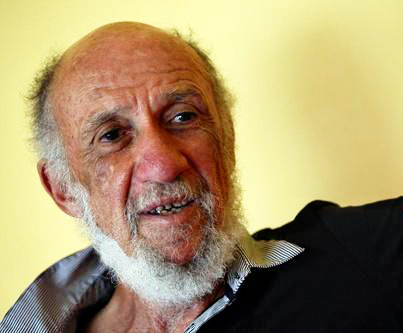
By Richard Falk

Part 1

In Prague, Obama significantly noted that “..as the only nuclear power to have used a nuclear weapon, the United States has a moral responsibility to act.” [emphasis added]

In the 1996 Advisory Opinion of the International Court of Justice (ICJ) on the legality of the threat or use of nuclear weapons, the judges unanimously concluded that there was a legal responsibility to seek nuclear disarmament with due diligence. The language of the 14-0 ICJ finding is authoritative: “There exists an obligation to pursue in good faith and bring to a conclusion negotiations leading to nuclear disarmament in all aspects under strict and effective international control.”

In other words, there is a legal as well as a moral responsibility to eliminate nuclear weapons, and this could have made the Prague call for a world without nuclear weapons more relevant to present governmental behavior.

The Prague speech while lauding the NPT never affirmed the existence of a legal responsibility to pursue nuclear disarmament. In this respect an official visit to Hiroshima offers Obama a golden opportunity to reinvigorate his vision of a world without nuclear weapons by bringing it down to earth.

Why is this? Read More »

John Avery’s CV

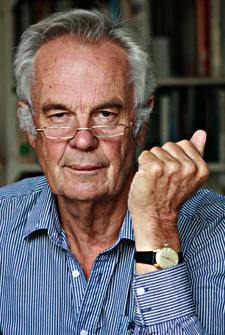
John Scales Avery

John Scales Avery received a B.Sc. in theoretical physics from MIT and an M.Sc. from the University of Chicago. He later studied theoretical chemistry at the University of London, and was awarded a Ph.D. there in 1965.

He is now Lektor Emeritus, Associate Professor, at the Department of Chemistry, University of Copenhagen.

Fellowships, memberships in societies
Since 1990 he has been the Contact Person in Denmark for Pugwash Conferences on Science and World Affairs. Member of the Danish Peace Commission of 1998. Technical Advisor, World Health Organization, Regional Office for Europe (1988- 1997). Chairman of the Danish Peace Academy, April 2004-.

You’ll find a lot about this eminent scholar at Wikipedia. Avery is also a leading peace researcher and activist – “Since 1990, Avery has been the Contact Person for Denmark the Pugwash Conferences on Science and World Affairs. In 1995, Avery was part of a group that shared in the Nobel Peace Prize for their work in the 1990s in organizing the Pugwash Conferences on Science and World Affairs.

In 1998, Avery was elected to the Danish Peace Commission. During the years 1988-97, Avery was the Technical Advisor at the World Health Organization, Regional Office for Europe. In 2004, Avery became the Chairman of the Danish Peace Academy.

In his usual humble and plain style John tells the story of his life – his personal life, his scholarly life and his peace life – here.

Publications
Dr. Avery seems to have ben writing day and night throughout his life – here is his amazing list of books, chapters and articles on world affairs.

In early 2016, Irene Publishing – run by TFF Associates Jørgen Johansen and Majken Jul Sørensen – published Avery’s Collected Essays as well as The Need For A New Economic System.

John joined TFF as TFF Associate in March 2016.

Remembering the 1916 Rising

By Mairead Maguire
Nobel Peace Laureate, Co-Founder Peace People, Ireland and TFF Associate

When the President of Ireland, Michael D. Higgins, the Irish Military, Government Members, and many Irish people gathered in Dublin, on Easter Sunday 27th March, 2016 to remember the Easter Rising of l9l6, some of his challenging words were addressed to the young generation.

He encouraged them ‘to imagine and to dream‘ and he said ‘we wish them well as they make music and continue to dream’. The Leaders of l9l6 had political hopes and dreams. President Higgins said ‘For the leaders of l9l6, their political hopes and aspirations for what a free Irish Republic might be, were linked to a rich Irish culture which they cherished and promoted.

Within that vision, their ancient Irish language and culture, informed by our history and migration, was central to everything for which they hoped and fought.’

I believe the men of l9l6 had a democratic right to their dreams of Irish self-determination and to work for Irish Freedom, but the violent method by which they fought for freedom was ethically and morally wrong. Read More »

Experiencing aesthetically the concept of peace

By Elías Abraham Foscolo

Aesthetics – being shaped by the senses – means art. And vice versa. Beauty is the main factor to recognize as the aesthetical component within an artistic experience. Whichever may be the artistic environment experienced – music, dance, theatre, film, poetry – the concept of the aesthetics is associated to the subjective capacity of experiencing the outside world and the way that impacts inside the person.

Indeed, it is an experimental process aiming to resonate with the beauty of the universe – word beauty here as metaphoric approach of peace; hence a type of beauty which aesthetically aims to be eternal, pure and human. Following this idea, an aesthetic experience of beauty is related to identifying an inner peace and such a process is an authentic artistic desire to be touched by the act of love.

Actually that is what empowers and makes the person aware of who she or he truly is; and in consequence allows the unfolding of his/her own peace and artistic inner potential.

For me the aesthetics of the art is a synonym of the aesthetics of peace.

John Paul Lederach makes explicit this: [How do we practice the aesthetics of peacebuilding? Like art itself, there is no single technique by which it can be pursued and at the same time it cannot be created without discipline].

Lederach connects the aesthetics of peacebuilding with the aesthetics of the artsRead More »

TFF PressInfo # 370: If Obama visits Hiroshima (Part 1)

By Richard Falk

There are mounting hopes that Barack Obama will use the occasion of the Group of 7 meeting in Japan next month to visit Hiroshima, and become the first American president to do so.

It is remarkable that it required a wait of over 60 years until John Kerry became the first high American official to make such a visit, which he termed ‘gut-wrenching,’ while at the same time purposely refraining from offering any kind of apology to the Japanese people for one of the worse acts of state terror against a defenseless population in all of human history.

Let’s hope that Obama goes, and displays more remorse than Kerry who at least deserves some credit for paving the way.

The contrast between the many pilgrimages of homage by Western leaders, including those of Germany, to Auschwitz and other notorious death camps, and the absence of comparable pilgrimages to Hiroshima and Nagasaki underscores the difference between winning and losing a major war. This contrast cannot be properly accounted for by insisting on a hierarchy of evils that the Holocaust dominates.

The United States, in particular, has a more generalized aversion to revisiting its darker hours, although recent events have illuminated some of the shadows cast by the racist legacies of slavery.

The decimation of native Americans has yet to be properly addressed at official levels, and recent reports of soaring suicide rates suggests that the native American narrative continues to unfold tragically.

The New York Times in an unsigned editorial on April 12 urged President Obama to make this symbolic visit to Hiroshima, and in their words “to make it count” by doing more than making a ritual appearance. Recalling accurately that Obama “won the Nobel Peace Prize in 2009 largely because of his nuclear agenda” the editorial persuasively criticized Obama for failing to follow through on his Prague vision of working toward a world free of nuclear weapons.

A visit to Hiroshima is, in effect, a second chance, perhaps a last chance, to satisfy the expectation created early in his presidency.

When it came to specifics as to what Obama might do the Times offered a typical arms control set of recommendations of what it called “small but doable advances”: canceling the new air-launched, nuclear-armed cruise missile and ensuring greater compliance with the prohibition on nuclear testing by its endorsement coupled with a recommendation that future compliance be monitored by the UN Security Council.

The Times leaves readers with the widely shared false impression that such measures can be considered incremental steps that will lead the world over time to a nuclear-free world. Such a view is unconvincing, and diversionary.

In opposition, I believe these moves serve to stabilize the nuclear status quo have a negative effect on disarmament prospects. By making existing realities somewhat less prone to accidents and irresponsibly provocative weapons innovations, the posture of living with nuclear weapons gains credibility and the arguments for nuclear disarmament are weakened even to the extent of being irrelevant.

I believe that it is a dangerous fallacy to suppose that arms control measures, even if beneficial in themselves, can be thought of as moving the world closer to nuclear disarmament.

Instead, what such measures do, and have been doing for decades, is to reinforce nuclear complacency by making nuclear disarmament either seem unnecessary or utopian, and to some extent even undesirably destabilizing. In other words, contrary to conventional wisdom, moving down the arms control path is a sure way to make certain that disarmament will never occur!

As mentioned, many arms control moves are inherently worthwhile. It is only natural to favor initiatives that cancel the development of provocative weapons systems, disallow weapons testing, and cut costs. Without such measures there would occur a dangerous erosion of the de facto taboo that has prevented (so far) any use of nuclear weaponry since 1945.

At the same time it is vital to understand that the taboo and the arms control regime of managing the nuclear weapons environment does not lead to the realization of disarmament and the vision of a world without nuclear weapons.

Let me put it this way, if arms control is affirmed for its own sake or as the best way to put the world on a path of incremental steps that will lead over time to disarmament, then such an approach is nurturing the false consciousness that has unfortunately prevailed in public discourse ever since the Nonproliferation Treaty came into force in 1970.

The point can be express in more folksy language: we have been acting for decades as if the horse of disarmament is being pulled by the cart of arms control. In fact, it is the horse of disarmament that should be pulling the cart of arms control, which would make arms control measures welcome as place holders while the primary quest for nuclear disarmament was being toward implementation.

There is no reason to delay putting the horse in front of the cart, and Obama’s failure to do so at Prague was the central flaw of his otherwise justly applauded speech.

Where Obama went off the tracks in my view was when he consigned nuclear disarmament to the remote future, and proposed in the interim reliance on the deterrent capability of the nuclear weapons arsenal and this alleged forward momentum of incremental arms control steps.

What is worse, Obama uncritically endorsed the nonproliferation treaty regime, lamenting only that it is being weakened by breakout countries, especially North Korea, and this partly explains why he felt it necessary back in 2009 to consider nuclear disarmament as a practical alternative to a continued reliance on nonproliferation, although posited disarmament more as a goal beyond reach and not as a serious present political option.

He expressed this futuristic outlook in these words: “I am not naïve. This goal will not be reached quickly – perhaps not in my lifetime.” He never clarifies why such a goal is not attainable within the term of his presidency, or at least its explicit pursuit.

In this regard, and with respect to Obama’s legacy, the visit to Hiroshima provides an overdue opportunity to disentangle nuclear disarmament from arms control.

Part 2

Searching for the good town

By Johan Galtung

Alfaz, Spain

You are young people on an EU mission exploring good towns that do not generate violence; 50 of you from 11 towns in 10 countries–and Alfaz del Pi is on the list. Rightly so, with 105 nations represented–No. 1 Spaniards, No. 2 English, No. 3 Norwegians–with conflicts over incompatible goals, yes, but hurting and harming each other, violence, no. Remarkable.

A simple theory: if a town makes you feel well, at ease–“it is so easy to live here”, many people say–then something seeps into you and makes you nonviolent. If the town, your habitat, a key context in your life, hits you badly, then aggression seeps into you, violence may follow, and often across racial or ethnic faultlines.

So, what is the secret of the good town? There is much to learn from Alfaz; here is a short list summarizing our experiences:

• small enough for people to know each other and care for each other;
• big enough to offer the necessary goods and services; shops etc.;
•people both live and work here-neither only dormitory nor only work;
•something for the spirit, like a Casa de Cultura with much going on;
•something for the body, like sports arenas of all kinds, nice walks;
•a good natural climate, beauty and green inside and around the town;
•a good human climate, people with smile and laughter in the streets;
•plenty of good diverse cafeterias-restaurants at all price levels;
•plenty of cultural offers like local cinema Royal Opera telecast;
•not much inequality, class difference with West-East ends far apart.

The Alfaz my family happened to visit in 1969 was indeed small, with women in black and flies dominating the rush hour traffic. For a bulb we had to go to that Sodoma-Gomorrah called Benidorm (but just people have been located, it has not been destroyed). With a hidden strength: Read More »

Danmark skal heller ikke bombe i Syrien – 6 artikler

Af Jan Øberg

Posted on 18 April, 2016 on Jan Oberg’s blog

Den 19. april 2016 havde Folketinget 2. behandling af forslaget om også at bombe og indsætte specialstyrker i Syrien.

Jeg mener at sagen er fundamentalt vigtig for Danmark, danskerne og vor fremtidige rolle og ‘image’ ude i verden.

Desuden finder jeg at beslutningsgrundlaget, mediedækningen og den offentlige debat giver anledning til den største bekymring.

At gå i krig er den vigtigste beslutning en regering kan tage og en befolkning bakke op om. Men det er som om dette at deltage i krig stort set rager både ministre, folketingsmedlemmer, journalister og befolkning en forårsblomst.

Med en vis fortvivlelse skrev jeg derfor 6 artikler med forskellige temaer og producerede en video, der også foreslår hvad vi kunne gøre i stedet.

Jeg ville have disse ting sagt og spredt inden beslutningen blev taget.

Herunder findes de én for én som jeg har skrevet dem med en lille kommentar til publiceringsprocessen, som også i et vist omfang vidner – for mig i hvert fald – om mærkelige prioriteringer hvad angår tidspunkt og længde.

Alt andet lige bliver redaktionerne ikke oversvømmet af kvalificerede, kritiske og konstruktive artikler af denne type – men det er dog kun meget korte ting, man kan få ind. Om overhovedet…

1. Dansk krigsdeltagelse i Syrien vil være landsskadelig

Politiken 16. april 2016. Problemfri publicering.

Den 19. april skal folketinget have 2. behandling af forslaget om at Danmark skal deltage i krigen over Syrien og endog have specialstyrker på landjorden.

Det vil i så fald være sjette krigsdeltagelse siden 1999 – Serbien, Afghanistan, Irak 2003-2007, Libyen, Irak igen.

Der synes desværre at være flertal for krigspolitikken uanset det faktum at samtlige krige har været fiaskoer på deres egne præmisser og ud fra et fredsskabende synspunkt.

Politikere og andre mennesker, der støtter det krigsførende Danmark gang på gang, må vel efterhånden kunne blive stillet til ansvar for deres holdning til massedrab på uskyldige. Kan det være rigtigt at dette er så uproblematisk som den ringe offentlige debat tyder på at det er så let at beordre mord på andre mennesker?

Internationale rapporter gør gældende at den vestlige verden kan have dræbt op til 4 millioner muslimer siden 1990.Read More »

Mediation by Judges, by the Police

By Johan Galtung

Alfaz, Spain

Police? The judges have more social status but the police know better the local situation and possible lawbreakers.logo mediation desk

What is happening right now, in front of our eyes, for instance in Vila Real, north of Valencia, 13-15 April 2016–“II Ibero-American Conference on Police Mediation” is police revolting against the judges.

“We use force to arrest the suspects, deliver them with evidence to the courts, many are found guilty, sentenced to prison, after some time released, presumably born anew–and after some more time we have to rearrest them; old or new crimes, same people.

“The theory of individual and general prevention does not work. We must remove the roots, in them and in the local context causing the crimes. We want to add mediation, prevention, to force and arrest”.

What happens in prisons? This author spent half a year in prison in Oslo many years ago; connected to conscientious objection to military service for NATO, I wanted peace service as alternative service.

The central hypothesis of my Ph.D. thesis about the prison community is that it serves prisoners in reducing, eliminating any sense of guilt. Fifteen ways of escaping from the reality of crime-guilt-punishment were identified into a reality they could accept. By far the most important was their use of social class: “those up there” commit far worse crimes than they accuse us of doing, but they get off scot free, or at least without doing time in prison. By and large that is correct.

However, that does not make them innocent, but “those up there” guilty of corruption, of selling permits to the highest bidder, enriching themselves immensely at the cost of “those down there”, claiming market legitimacy. “We need more theft, more violence till they understand that this rotten society does not work.” Class struggle.

Worse than a crime school – for most lower class crimes schooling is not needed – the prison serves to eliminate the idea of crime by reducing the sense of guilt,Read More »

Realpolitik versus Realistic Politics

By Johan Galtung

School of Conflict Analysis and Resolution – Arlington, VA, USA – April 11, 2016

Classical Realpolitik is the priority in US foreign relations. Let force decide issues, if possible by threat, if necessary by fighting to the end.

The two traditional nominees for the US Presidency, Cruz and Clinton, both advocate open violence; Cruz by “carpet bombing” and by patrolling Muslim neighborhoods making use of force credible, Clinton by standing by her past record of bombing Muslim countries.

Trump, distancing himself from both Clinton belligerence and Cruz patrolling, deepens underlying conflicts in a most unfortunate way by stirring up prejudice and discrimination against Muslims and Mexicans. He wants a fence, built by Mexico, forcing them out.

Sanders is so focused on US domestic inequality that he remains vague on foreign policy. However, he might steer US discourse as well as foreign policy by arguing more positive policies; examples below.

Net conclusion: the two official candidates, Clinton and Cruz, are more similar than they are to their intra-party rivals. Paul Krugman (INYT 5/6 Mar 2016) throws the official Republican (former) candidate Rubio “con artist” for Donald Trump back at Ryan-Cruz-Rubio. And Thomas Friedman, “Only Trump can trump Trump” (INYT 10 Mar 2016), says that should Trump become the nominee and elected, he has a lot of space to maneuver towards the center, away from his extreme positions. “He will have no problem playing the moderate unifier”.

Nevertheless, Trump may already have helped gravediggers dig his grave.

Both Clinton and Cruz have credibility problems. Democrats may find Clinton’s turn toward the left incredible and prefer Sanders as more genuine; Republicans may find Cruz’ Tea Party extremism incredible and prefer Trump. With Sanders-Trump unavailable, high abstention?

However, in the US delegatocracy, very cleverly crafted to protect the USA against democracy, alternatives may still appear/be drafted.

US Realpolitik has led to more than 20 million killed in 37 countries after WWII, while the US relative economic, military – not cultural – position in the world declines. This should lead to a search for something realistic, solving problems rather than adding new problems to the old; solidifying the US position.

What does it take to make US foreign policy more realistic? New ways of thought more than political decisions and economic allocations.

Identify the positive, good in the other big world actors, Russia-India-China-Islam-EU-Africa-Latin America, learn from positives, and link their good to the US good, for cooperation and harmony.

To promote peace, cooperation must be equitable – mutual and equal benefit – and harmony must be based on empathy – deep understanding of others. Know the shadows of history, Read More »

Concocting lies before the Iraq war

By Jonathan Power

April 19th, 2016.

President Barack Obama has observed, “ISIL – Islamic State – is a direct outgrowth of Al Qaeda in Iraq that grew out of our invasion – which is an example of unintended consequences – which is why we should generally aim before we shoot”.

Many of us, looking at the horror of the Iraq war, waged by the US and the UK against the regime of Saddam Hussein when 200,000 civilians died and a total of 800 billion US dollars was spent on the campaign, need little to be persuaded that there was a Machiavellian plot to find an excuse to make war. Yet there are many in the circles of power in Washington who believe the US should shoot on sight and to kill whenever danger is thought to have appeared- in Iraq, Syria, Libya and, before that, in Vietnam.

The so-called “justification” for going to war in Iraq 13 years ago was based on a 93 page classified CIA document that allegedly contained “specific information” on Saddam Hussein’s weapons of mass destruction programs and his close links with Al Qaeda.

The document has now been declassified thanks to the work of the investigative journalist, Glenn Greenwald. His findings have just been published in the on-line magazine, VICE.

The document, before published with a large number of deletions, is available for everyone to read in its entirety. It reveals that there was zero justification for the war. It reveals that there was “no operational tie between Saddam Hussein and Al Qaeda” and no weapons of mass destruction programs.

President George W. Bush’s secretary of defence, Donald Rumsfeld, claimed that the US had “bulletproof evidence” linking Saddam Hussein to the terrorist group. “We do have solid evidence Read More »