Syria – Minding the minds (II)

By Johan Galtung

Baher Kamal, in – And All of a Sudden Syria! writes:

“The “big five” /the UN veto powers/ have just agreed /Res 2254 of 18-12-2015/– time to end the Syrian five – year long human tragedy – they waited until 300,000 innocent civilians were killed–4,5 million humans lost as refugees and homeless at home, hundreds of field testing of state-of-the-art drones made, and daily US, British, French and Russian bombing carried out”.

But no Chinese bombing.

One term in the resolution, road map, already spells failure. There is another reason: missing issues. But something can be done.

Roads twist, turn and may be far from straight. Traveling a road is a linear, one step or mile-stone after another, process, by the map. The West loves linearity; as causal chains (“falling dominoes”) from a root cause; as deductive chains from axioms; as ranks from high to low.

However, is that not how the world is, moving in time, causes-effects, axioms-consequences, rank, power, over others? Are roads not rather useful? They are. Is there an alternative to a road map? There is.

One step after the other in time is diachronic. An alternative would be synchronic; at the same time. Let us call it a cake map.Read More »

The West should get out of the Middle East

By Jonathan Power

The year’s first major atrocity – Saudi Arabia’s execution by beheading on Sunday of 47 people, including an important Shia ayotallah who led Shia protests against discrimination by the Sunni majority but never committed an act of violence.

Even the Islamic State doesn’t behead 47 in one day. Although beheading is swift it strikes most of us as being grotesque as well as medieval. The Saudis are aware of their image in the outside world but nevertheless persist, as if they want to tell the rest of the world: “Back off. Our Wahhabi (ultra puritanical) morality is our morality. We are a belief system unto ourselves.”

They exported the political convictions that have evolved out of Wahhabism to Afghanistan (with money for guns along with the theology), first to fight the Russians, then to arm the Taliban and later to allow them to “ignore” that the Taliban was giving refuge to Al-Qaeda.

Over the last three years rich Saudis, for lack of policing, have been allowed, in effect, to fund IS.

Saudi Arabia not only has a political and judicial system capable of repulsive acts it is also got a foreign policy that the West should have no part of. Along with Israel itRead More »

The common roots of our faiths: Return to our collective consciousness – Iran and Christmas

By Farhang Jahanpour

While Christians celebrate Christmas on Dec. 25th, the Persians celebrate one of their oldest and most festive celebrations on Dec. 21st, the eve of winter solstice, the longest night and the shortest day of the year. In Iran this night is called “Shab-e Yalda”, the night of the birth or nativity of the sun, or Mithra the Sun-god.

According to Orthodox Christians, the Armenians and the Eastern churches, Jesus Christ was born on January 6, and the celebration of his birthday on December 25th, may in fact be born out of the Persian Mithraic influence. In ancient Persian mythology, Mitra (Mithra, Mehr), the God of love, friendship, and light, or the sun-god, was miraculously born from a rock by a river or stream on this longest night of the year.

In his fifth volume of the collected works, Symbols of Transformation, Carl Jung, the famous Swiss psychiatrist, has extensively discussed the influence of Mithraism on Christianity and has portrayed its images and symbols. In praise of the Mithraic sun-god, Jung states:

“The sun. . . is the truly ‘rational’ image of God, whether we adopt the standpoint of the primitive savage or of modern science. In either case Father-God from whom all living things draw life; he is the fructifier and the creator, the source of energy into our world. The discord into which the human soul has fallen can be harmoniously resolved through the sun as a natural object which knows no inner conflict . . . It shines equally on the just and the unjust, and allows useful creatures to flourish as well as the harmful. Therefore the sun is perfectly suited to represent the visible God of this world, i.e., the creative power of our own soul, which we call libido, and whose nature it is to bring forth the useful and the harmful, the good and the bad. That this comparison is not just a matter of words can be seen from the teachings of the mystics: when they descend into the depths of their own being, they find “in their heart” the image of the sun, they find their own life-force which they call the “sun” for a legitimate and, I would say, a physical reason, because our source of energy and life actually is the sun. Our physiological life, regarded as an energy process, is entirely solar (para. 176).”

Soon, Mithraism spread its wings from Persia to the ancient-civilized world in Rome and many European countries. Consequently, in Europe as in Persia, Read More »

Edward Said’s humanism versus the US State Department’s Anti-semitism

By Richard Falk

Prefatory Note
This post consists of my written text for a public presentation on the theme of “Edward Said’s Humanism and the Rejection of the State Department’s Definition of Anti-Semitism” at a conference at Fresno State University, Nov. 6, 2015 bearing the title “Universities at the Crossroads: The Assault on Academic Freedom,” which was the last event of the “Edward Said Lecture Series” organized by Professor Vida Samiian of the Department of Linguistics at FSU. My talk as given departed considerably from this text.

In these remarks, I will present the following analysis:

(1) The most ardent Zionist forces have longed tried to conflate criticism of Israel and Zionism with hatred of Jews, the traditional understanding of anti-Semitism, but this effort has intensified recently, and even has been endorsed by the US Government and is currently under consideration by the University of California and elsewhere;

(2) Examine the definition of anti-Semitism adopted by the U.S. State Department, and discuss briefly why it has pernicious implications for academic freedom, and indeed even for an understanding of the genuine nature of anti-Semitism;

(3) Show why Edward Said despite his intense opposition to anti-Semitism would nevertheless be vulnerable to allegations of being an anti-Semite if the State Department definition were to be applied to his writings and activities;

(4) And finally to point out that according to the imperatives most influentially expressed by Noam Chomsky and Said, the ‘responsibility of the intellectual’ would perversely require them to be ‘anti-Semitic’ according to this pernicious wider conception.

My personal experience with this theme of anti-Semitism and Israel can be summarized by recalling two different occasions:

The first was in Greek Cyprus more than a decade ago at a meeting of the Inter-Action Council (composed of ex-heads of states) devoted to conflict resolution in the Middle East. I had been invited as a resource person. At a session devoted to Israel/Palestine the Israeli ambassador to Greece spoke at some length, insisting that it was anti-Semitic to express strong criticisms of Israel and Zionism. As the only other Jew at the table I felt it to be almost a duty to clarify what I believed to be a mischievous manipulation of ideas.

In my intervention I explained that Zionism was a project or ideology, Israel was a state, and that Jews were a people or persons. I attempted to explain that to disagree with Zionism or to criticize Israeli policies and practices as a state was not at all anti-Semitic, but to exhibit hostility, hatred, and discrimination against Jews as a people or as individuals was indeed anti-Semitism. Recall that Hitler did not persecute Jews for being Zionists, but for being Jews, for partaking of a race or ethnicity.

After the meeting recessed, several participants thanked me for my comments, indicating that only a Jew could offer this kind of clarification, which they found persuasive.

In contrast, the Israeli ambassador and his NGO sidekick Read More »

The clouds are dark and getting darker

By Johan Galtung

The process has now gone full circle, from Sykes-Picot Agreement negotiated from 1915 to 16 May 1916, about control of the Ottoman Empire, when beaten, to England now joining France in bombing Syria. “Violence In and By Paris” two weeks ago was wrong about England wanting to stay out: the House of Commons on 02 Dec 2015 voted 397 to 223 for bombing; 56 Labor MPs for, only 7 Conservative MPs against.

Russia played a minor role in Sykes-Picot as now also in bombing maybe mainly the opposition to Assad.

As Robert Savio points out, “They all fight to the last Syrian.”

The likelihood of an atrocious Paris 13 November type violence in London went up many points. And Russia had a civilian plane bombed.

The USA is as addicted to bombing as a hammer to a nail, not only to use allies and train locals. James A. Lucas, “The United States has killed more than 20 million people in 37 nations since WWII”, in 1945 (jlucas511@woh.rr.com) seems not to be enough; they just go on and on. More than a million Muslims killed in West Asia mainly by the USA since 1991. In San Bernardino, somebody may have killed 14 in revenge.

The new name for what they fight, after jihadism, is the Islamic State, calling it sometimes IS, ISIS, ISIL. What is it, this Daesh?

There seem to be heavy elements of Saddam’s army, the Baath secular party (also Assad’s), and the Tikrit clan from the recent past–now adding maybe ten fighters for each killed by the West. Daesh seems toRead More »

Responding to Megaterrorism after Paris

By Richard Falk

Prefatory Note
The article below is based on an opinion piece published by Middle East Eye on December 1, 2015 under the title “A Different Response to ISIS after Paris.” My modified text places its focus on the originality of megaterrorism and its distinctive challenges, suggesting that the choice of response needs to be extended beyond the iron cage of militarism and vengeance. Also, it is essential for analysts and leaders to envision the response to the response as well as being preoccupied with how best to hit back. Increasingly, American politicians treat the challenge as if playing poker whereas the realities of the situation call for a chess players’ natural disposition to think ahead as many moves as possible. Finally, given the religious and civilizational dimensions of current versions of megaterrorism, it is vital to guard against various manifestations of Islamophobia.

What separates megaterrorism from other more customary forms of terrorism is the theme of this post. It is not possible to give a precise definition of megaterrorism by pointing to a threshold of casualties or the magnitude of response. Each megaterrorist event is decisively shaped by its distinctive sociopolitical and psychological context.

The focus here is to take account of this radical new category of threat posed in a variety of settings, critique the ‘war’ reflex and the war/crime binary, briefly consider alternate paths of response, and recommend risk and cost assessments that take into account adversary responses to the prescribed response. The 21st century experience with responding to megaterrorist events does not create confidence in either most conceptualizations of the challenges being posed or the responsive strategies chosen to be implemented.

The horrific Paris attacks of November 13th challenge the West more deeply in some ways than did the 9/11 attacks 14 years ago. Read More »

Om Samförståndsavtal med Nato om värdlandsstöd

Av Ola Friholt
För Fredsrörelsen på Orust

Ordförande och TFF Associate

Till Försvarsdepartementet

103 33 Stockholm

Re: Yttrande om promemorian om Samförståndsavtal med Nato om värdlandsstöd.

DS 2015:39 PM om värdlandsavtal

Fredsrörelsens organisationer har sent omsider fått ta del av denna promemoria. I hast vill nu Fredsrörelsen på Orust avge detta yttrande.

Det förtjänar att påpekas att den samlade fredsrörelsen i Sverige har genom en mer än hundraårig tradition av intresserad efterforskning och fördjupning i frågor om konflikter och konfliktlösning uppnått en fördjupad kunskap, oftast förmedlad av kända fredsforskare som Johan Galtung, Håkan Wiberg, Jan Öberg och av dem som vid svenska universitet inbjudits till talrika seminarier, alltså internationella profiler som nämnde Galtung, Noam Chomsky, Richard Falk, och böcker av Daisaku Ikeda, Howard Zinn och andra.

En överväldigande bevisning finns om att militära medel inte förmår lösa konflikter. Konfliktlösning och bestående fred måste eftersträvas och förverkligas med fredliga medel, avspänning, samarbete m m för att åstadkomma en gemensam säkerhet för alla konfliktande parter. Straff- och vedergällningstänkande är alltid kontraproduktivt. Rustning och allianser skapar hot och spänningar.

I detta ljus bör vi analysera det pågående arbetet med att vinna folkets stöd för ett värdlandsavtal med Nato, världens utan jämförelse starkaste militärallians med cirka 60 % av världens samlade militärutgifter.

Fredsrörelsen på Orust har följande synpunkter på detta PM om värdlandsavtal:

Avsnitt 3, Ärendet

Under de senaste tjugo åren har Sveriges regeringar stegvis och utan folklig debatt och information övergivit etablerad svensk säkerhets- och fredspolitik, bort från målet att främja kärnvapennedrustning, Norden kärnvapenfri zon (i Alva Myrdals efterföljd), arbete för nedrustning och omställning till civil produktion (i Inga Thorssons efterföljd), arbete för fredlig konfliktlösning (i Maj-Britt Theorins efterföljd) och arbetet för gemensam säkerhet (i Olof Palmes efterföljd).

Förkortningar som OSSE, ESK m fl har förlorat sin innebörd. Man hänvisar aldrig till Helsingforsöverenskommelsen eller FN-stadgan, utom när det gäller Rysslands göranden.

Partiskhet är lösenordet för Sveriges utrikes- och säkerhetspolitik.

PMets formulering ”Sverige är ett aktivt partnerland och vårt samarbete med Nato inom PFF har gradvis utvecklats och fördjupats” ter sig i detta ljus som ett öppenhjärtigt konstaterande att Sveriges fredssträvande politik är bytt mot rustad militär maktpolitik.Read More »

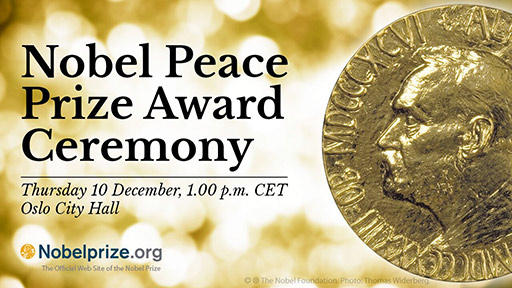
TFF PressInfo # 351: The Nobel Foundation taken to court on the Peace Prize

Lund, December 10, 2015

On the day of the Nobel Peace Prize Award Ceremony at Oslo City Hall

To whom it may concern, including the media

We know – and Alfred Nobel knew – how devastating war and arms races are, and how little security we get for all the money we spend on military forces.

The campaign to reclaim the Nobel Peace Prize is first and foremost a campaign to revive the idea that global peace requires global cooperation on disarmament and replacing the law of force with the force of law. Every day more and more of us see, from the Middle East warfare, from the refugee crisis, and many other chilling reminders, the mandatory urgency of a change in world politics.

Alfred Nobel decided to give one fifth of his fortune for a prize to promote disarmament and resolution of all conflicts through negotiations and legal means, never through violence.

Can such a prize, with a so clearly stated goal, be turned to serve the opposite idea and be given again and again to recipients who promote arms races and believe in militarism and war?

This question will soon be answered, after Mairead Maguire, Jan Oberg, Davis Swanson, and Lay Down Your Arms took the case to the Stockholm District Court on Friday 4th of December 2015. Here is the full text of the summons.
and all other relevant information is available at the Nobel Peace Prize Watch.

Test case: the award to the European Union in 2012

The court case will test one of the most obvious violations of the Nobel idea Read More »

Peace journalism – is it working?

By Johan Galtung

Short answer: No. The Paris event triggered war journalism; no peace journalism was observed. To doubt that anti-IS violence will work is not peace journalism, only war journalism with question marks.

Peace journalism was conceived in the 1960s as a reaction to foreign news negativism, and focus on actors and elite people/countries. Not as advocacy of peace, but as journalism about peace; like war journalism is not advocacy of war, but indispensable journalism about war, reporting what happens, and who is winning. It can be done well or not, and often becomes propaganda for one side, in national more than local and global media (with Anglo-American accent, however).

Thus, peace journalism was never a substitute for war journalism. The idea was to have both, complementing each other. Read More »

TFF PressInfo # 350 – The West will lose to ISIS – too

By Jan Oberg

Lund, Sweden, November 30, 2015

French president Hollande has declared war – war on terror, George W. Bush style. Like September 11, 2001 wasn’t a war, Paris November 13 wasn’t a war. It was a criminal act.

The war on terror has been an exceptionally stupid war.

In the years before 9/11 about 400 people died worldwide by terrorist attack. The Global Terror Index informs us that 32.600 died in 2014 – 80 times more!

And, still, the only answer everywhere is: More war on terror.

The only – intelligent – exception is Italy whose PM has announced that Italy is going to counter terrorism by investing billions of Euros in culture, art and creativity – showing the world what civilisation is.

Politicians and the mainstream media seemingly try to make us believe – as if we were uneducated – that we in the West are the main victims and innocent victims at that. We are neither.Read More »