TFF PressInfo 317: Yemen – The mainstream narrative is grossly misleading

By Jan Oberg, TFF director

Lund, Sweden, April 24, 2015

Double standards

A coalition led by Saudi-Arabia and supported by Western leaders has been bombing Yemen for about a month; it’s a clearcut international aggression and an extremely a-symmetric conflict.

But we’ve heard no calls for a ‘humanitarian intervention’ by NATO or a no-fly zone to prevent the now more than 1500 bombing raids from contining and hitting also civilian targets.

It’s not that international law is blatantly violated; sadly that has been seen before. It is the roaring absence of a clear condemnation by the UN, EU/NATO countries – usually calling themselves ‘the international community’ – and by the Western mainstream media.

Substance plays a minor role. What is right or wrong depends on who is doing what. This war is OK because the Saudi dictatorship and its coalition members are Western allies and armed by NATO countries.

The convenient but wrong narrative

Furthermore, the narrative has twisted this into a proxy war between Saudi-Arabia and the West on the one side and Iran, alone, on the other side blaming the latter for its alleged support to the Houthis.

It is no wonder that a group of eminent scholars on Yemen have published an open letter in Washington Post in which, among other things, they condemn the Saudi-led war on Yemen.Read More »
How the US contributed to Yemen’s crisis

By Stephen Zunes

Washington’s support for Yemen’s former dictatorship — and of Saudi efforts to sideline the country’s nonviolent pro-democracy movement — helped create the current crisis.

As a Saudi-led military coalition continues to pound rebel targets in Yemen, the country is plunging into a humanitarian crisis. Civilian casualties are mounting.

With U.S. logistical support, the Saudis are attempting to re-instate the country’s exiled government — which enjoys the backing of the West and the Sunni Gulf monarchies — in the face of a military offensive by Houthi rebels from northern Yemen.

None of this had to be.

Not long ago — at the height of the Arab Spring in 2011 — a broad-based, nonviolent, pro-democracy movement in Yemen rose up against the U.S.-backed government of dictator Ali Abdullah Saleh. If Washington and Saudi Arabia had allowed this coalition to come to power, the tragic events unfolding in Yemen could have been prevented.

The movement had forged an impressive degree of unity among the various tribal, regional, sectarian, and ideological groups that took part in the pro-democracy protests, which included mass marches, sit-ins, and many other forms of nonviolent civil resistance. Leaders of prominent tribal coalitions — as well as the Houthis now rebelling against the government — publicly supported the popular insurrection, prompting waves of tribesmen to leave their guns at home and head to the capital to take part in the movement.

These tribesmen, along with the hundreds of thousands of city dwellers on the streets, were encouraged to maintain nonviolent discipline, even in the face of government snipers and other provocations that led to the deaths of hundreds of unarmed protesters.

The Obama administration, however, was more concerned about maintaining stability in the face of growing Al-Qaeda influence in rural areas. Secretary of Defense Robert Gates acknowledged that Washington had not planned for an era without Saleh, who had ruled the country for more than three and a half decades. As one former ambassador to Yemen put it in March 2011, “For right now, he’s our guy.”

Continue here…

Powerful nonviolent resistance to armed conflict in Yemen

By Stephen Zunes and Noor Al-Haidary

As with the initial uprising against the Saleh regime four years ago, an unarmed civil society movement rises up to challenge the Huthi militia.

While media coverage of the tragic situation unfolding in Yemen in recent months has focused on armed clashes and other violence, there has also been widespread and ongoing nonviolent civil resistance employed by a number of different actors.

In fact, the most significant setbacks to the Huthi militia in their march southward across the country in recent months have come not from the remnants of the Yemeni army or Saudi air strikes, but from massive resistance by unarmed civilians which has thus far prevented their capture of Taiz, the country’s third largest city, and other urban areas. The resistance efforts have also pressed the Houthis to withdraw their forces from a number of previously-held areas, including universities, residential neighborhoods, and even military bases. This kind of nonviolent resistance by ordinary people is remarkable, but it is not new in Yemen.

Continued here…

Criminalizing war – 20 recommendations

Johan Galtung

By Johan Galtung

Below 20 points that Johan Galtung now presents for discussion at his lectures and seminars:

1. Japanese Constitution Article 9 or something similar for all states: ‘__forever renounce war as a sovereign right of the nation and the threat or use of force as a means of settling international disputes’.

2. Universal Declaration of Human Rights Article 28 criminalizing war: ‘a social and international order in which the rights and freedoms set forth in this declaration can be fully realized’

3. UD Article 3 “Everybody has the right to life, freedom and security of person” should also apply to cross-border aggression of any kind.Read More »

On the links between refugees and warfare

By Jan Oberg

It’s our wars, stupid!
A short interview on Russia Today about Europe’s woefully inadequate understanding of why refugees come here.
Towards a solution: Deal with conflicts early and by peaceful means, criminalise arms trade and abolish war and you’ve solved most of the world’s refugee problems!

Interview on YouTube with RT International (700 million viewers worldwide and broadcast repeatedly on April 20, 2015).

Gandhi and Mandela: Two South Africans

Johan Galtung

By Johan Galtung

Mohandas Gandhi invented the nonviolent approach to basic social change, Satyagraha, in South Africa in the early 20th century; Nelson Mandela presided over the birth of a one person-one vote democracy at the end of the century. Both were lawyers, trained in English Common Law; good in the sense of a keen consciousness of what is right and wrong, bad in the sense of a court process identifying who is in the wrong rather than solving underlying conflicts, and wrong in the sense of punishing the wrong-doer; violence rather than cooperation.

Both built on the positive side of law – the indelible rights of the people for whom they were fighting by comparing empirical facts with normative rights; immigrant Indians in the case of Gandhi, original inhabitants in South Africa, the Blacks, in the case of Mandela.

Gandhi (1869-1948) did not live to see equality between Indians and whites in South Africa, but in India, his mother-father land; Mandela (1918-2013) did. They won their struggles – but the societies that emerged still suffer from other and major ones.

A deep culture united them: the culture of law. Read More »

Re-connect the world’s children with Nature

By Kamran Mofid

Here, this Blog, I am calling upon families, educators and community leaders worldwide to become as children and rediscover the benefits of paying attention to nature, and to take action to strengthen children’s connections to nature.

As adults, we should be opening the doors and providing the children and the youth opportunities that fully connect them to the natural environment so they can gain an understanding of the natural world in as many educational and recreational settings as possible. We cannot start too soon!

Today’s children and families often have limited opportunities to connect with the natural environment. Richard Louv called this phenomenon, ‘nature-deficit disorder’ in his influential book, The Last Child in the Woods, and opened our eyes to the developmental effects that nature has on our children.

Continue reading on Mofid’s blog – Globalisation For The Common Good Initiative.

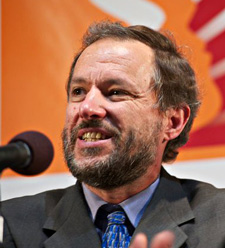
Iran won upfront sanctions relief, but with potential snags

Gareth Porter

By Gareth Porter, TFF Associate*

The framework agreement reached on Thursday night clearly gives the P5+1 a combination of constraints on Iran’s nuclear programme that should reassure all but the most bellicose opponents of diplomacy. It also provides the basis for at least a minimum of sanctions relief in the early phase of its implementation that Iran required, but some of the conditions on that relief are likely create new issue between Iran and the Western powers over the process.

The agreement’s dependence on decisions by the International Atomic Energy Agency (IAEA) and the penchant of Israeli intelligence for discovering new evidence of illicit Iranian activities will encourage moves to delay or obstruct relief of sanctions.

US and European officials had been telling reporters that they would phase out their sanctions on oil and banking in return for Iranian actions to modify its programme only gradually over several years, and made it clear that the purpose of this strategy was to maintain “leverage” on Iran.

Iran, however, was demanding that those sanctions be lifted immediately upon delivering on their commitments under agreement. Read More »

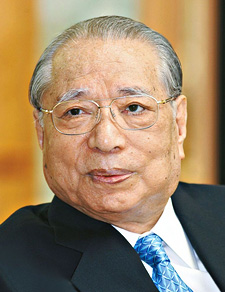
Calling for an early Japan-China-South Korea summit

By Daisaku Ikeda

SPECIAL TO THE JAPAN TIMES
MAR 5, 2015

As this year marks the 70th anniversary of the end of World War II, I believe that Japan should take this as an opportunity to renew its pledge to build lasting peace and step up its efforts to contribute to stability and development throughout Asia. Strengthening of cooperation to address environmental problems and disaster risk reduction is a particularly urgent priority.

In November last year… continued here >