I am not a Dane

By Jan Oberg

Jan Oberg

NO to being included in the Denmark of the Government and Parliament

Written in the wake of the official Danish reactions to the tragic, horrific murders in Copenhagen of a Danish film director and a Jewish Danish guard outside the synagogue in Copenhagen on Saturday February 14 – a crime committed by a 22 years old Danish Muslim with a heavy criminal record and one foot in Denmark and one in a Palestinian refugee camp in Jordan.

I’m a Danish citizen. I’ve worked for the UN Charter norm of peace by peaceful means for 40 years. Have been a member of the Danish government’s Commission for Disarmament and Security all through the 1980s. I’ve worked in war and conflict zones in Somalia, all parts of Yugoslavia, Burundi, Iraq, Georgia, Iran.

I have friends and colleagues in many countries and cultures. I know things can be seen in more than one way – and how the West may also be perceived from the outside.

I will use my freedom of expression and wisdom of expression and our democracy to struggle against the warring Denmark which Prime Minister Helle Thorning-Schmidt insists that we Danes shall all be united around.

Denmark is not only a victim. It has also caused many victims.

It has violated international law and participated in mass murders on the Iraqi and other people, innocent people. On the initiative of then prime minister Fogh Rasmussen it has fought a cultural battle (kulturkamp) not with but against other cultures – related to the Muhamad caricatures. His government was also responsible for dragging Denmark into being an occupation power during four dark years in Iraq – and thus co-responsible for today’s situation there. Likewise in Afghanistan and Libya.

Over a couple of decades Denmark has developed a political xenophobia which I would never have thought even remotely possible a couple of decades ago because of basic values such as welfare for all, solidarity, equality, peoples’ colleges, philosopher poet Grundtvig, disarmament, the compassion for the Jews in October 1943, the fundamental belief in human dignity and tolerance.

The Danmark which the Prime Minister demagogically includes ”all we Danes” in and insists that we all be united around in her misplaced, all-motherly manner, is not the Denmark I want to be included in.

If so, I am not a Dane these days.

I want a Denmark for peace by peaceful means – and in that struggle we dissidents may meet, however few or many we seem to be.

But I draw my line at a national(istic) forced inclusion in the warring, xenophobic and segregated Denmark that has been created the last few years.

And this is not easy for me to write.
PressInfo # 309: Learn conflict and peace in 20 minutes

By Jan Oberg

Jan Oberg

The world is full of unnecessary violence and human suffering. Do you know anyone who’d like it to continue like that?

If we educate ourselves and look outside the box, we can create a better world for all. Peace and security can be learnt, making conflict illiteracy and most of the violence a thing of the past.

Below is how – not in a column of 800 words but in a twice as long mini text book. It’ll enable you to think new thoughts and take the first steps into a hitherto closed but beautiful landscape.

Here we go:

Conflict happen. They are basically a good thing. There is no human community without conflict – and if there were it would be a dictatorship, or utterly boring. But how good are we – citizens, media and politicians – at dealing with conflict? Why do we often see violence where it could have been avoided and large violence where only a little, applied early, could have stopped large and long wars?

First a couple of ‘credos’ based on a few decades of experience:

• Conflicts are usually much more complex than presented by the parties and those who intervene in them; many have existential dimensions too.

• If we could learn to analyse and understand conflicts and reduce early, over-emotional side-taking – like we have medical expertise investigating diseases and treating patients instead of condemning them – we would have a more peaceful and just world with much less suffering.

• Conflicts is a problem standing between parties – their solution is not located only in individuals but in changing everybody’s goals, attitudes, behaviour and visions of the future.

• Conflicts can be solved/managed better if we address them sooner rather than later.

• The moment violence has been introduced we face a much bigger problem: the original issue plus the humiliation, anger and wish for revenge. Read More »

TFF PressInfo # 308: Minsk – A fragile 2nd step

By Jan Oberg

Jan Oberg

Let’s be cautiously optimistic; the meeting did not break down and a ceasefire document was signed. But that is a minimum in this extremely tense situation. One would have hoped for more than what seems to be a revision of the first Minsk agreement.

What are the next steps for this ceasefire agreement to lead to a peace plan, the two things being vitally different?

First, what no one talks about, it seems: A rather large UN peace-keeping and peace-making force with a unit of some 8.000-10.000 robust military from countries completely neutral to this conflict. The classical three legs: military, civil police and civil affairs, perhaps 20.000 in all.

Why the military component? Because the OSCE can monitor and report but it cannot enforce. And because the parties don’t trust each other. And why should this agreement be more durable than the first without it?

If on the 16th of February some shots are again fired by a madman on either side, hell will break lose and accusations fly. And if this agreement doesn’t hold either, we are close to a large-scale war and the U.S. will pour in its weapons (if not before).

What is needed is something like Read More »

TFF PressInfo # 306: Islam is not the problem. But keep your own house in order

By Jonathan Power

February 3rd 2015

The beheading of a Japanese journalist does not represent Islam. Saddam Hussein did not represent Islam. Bashar al-Assad does not represent Islam. Muammar Gaddafi of Libya did not represent Islam. The regular beheadings in Saudi Arabia for “crimes” such as adultery don’t represent Islam.

Likewise, the US dropping nuclear bombs on Hiroshima and Nagasaki didn’t represent Christianity. Nor did the torture practiced in Northern Ireland. Nor did the Buddhist-led atrocities against the Tamils of Sri Lanka represent Buddhism.

Nevertheless, it is probably true that in the late twentieth century a high percentage of the world’s violent conflicts took place inside the Muslim world or against non-Muslims. But that does not mean they were supported by a majority of Muslims. Indeed, I would surmise that they were approved by less than 1% of Muslims.Read More »

Bringing peace in Pakistan

By Jonathan Power


January 27th 2015

It looks like the recent slaying of 130 school children by rabid Islamic extremists finally has brought a halt to the long time policy of Pakistan facing both ways. Pakistan, because of policies developed over decades by its all-powerful army and its intelligence service, the ISI, has long played both ends against the middle.

On one end is the West, especially the US, trying to tug Pakistan into its orbit, so that it becomes a strategic partner in defeating the Afghan Taliban and its associates, and bringing peaceful democracy to Afghanistan. At the other end is what has been seen as the need to encourage and support the Islamic warriors in their effort to wrest a good slice of Kashmir away from India and, besides that, to make sure that Afghanistan under American tutelage doesn’t fall into the reach of Indian influence and thus threaten Pakistan’s deepest interests.

This clash of policies hitherto has been settled, say many, in favour of the militants, with the ISI for decades giving them arms, training and direction.Read More »

Pope Francis, Salman Rusdie, and Charlie Hebdo

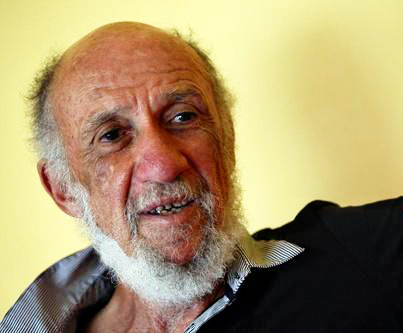
By Richard Falk

Richard Falk

Prefatory Note
This post is a much modified piece published a few days ago in AlJazeera English, and republished elsewhere on line. As many have now done it tries to enlarge the context in which the Charlie Hebdo events are understood beyond a highlight film clip in ‘the war on terror.’ The alleged link between the Chouachi brothers and Al Qaeda of the Arabian Peninsula (AQAP) allows the attack on Charlie Hebdo to be experienced as the French 9/11, and with this a return of France to a status of post-colonial geopolitical relevance.
Without grasping the relevance of how the dominant treat the dominated within our societies and throughout the world, we are consigning ourselves to many repetitions of the private and public horrors experienced in France on January 7, 2015.

There is some common ground, but not much. The killings in Paris last week were horrifying crimes that expose the vulnerability of democratic societies to lethal vigilante violence, whether facilitated from outside or as a spontaneous expression of homegrown psychopathic alienation. Beyond this naked, morbid reality associated with the murder of the Charlie Hebdo cartoonists, police officers, and the supermarket hostages there is nothing but darkness, and in that darkness some dangerous monsters lurk.

We can be again thankful for the moral clarity of Pope Francis who a few days ago in the impromptu setting of a plane taking him from Sri Lanka to Manila shined a light upon the darkness. Unlike those who so ardently wielded the slogan “Je suis Charlie” the Pope understood that free speech without limits is an invitation to indulge the worst negative impulses that will then operate as viruses destroying the vital organs of the body politic.

What Pope Francis underscored was the impossibility of reconciling dignity with hurtful insults,Read More »

The year 2015 – What are we in for?

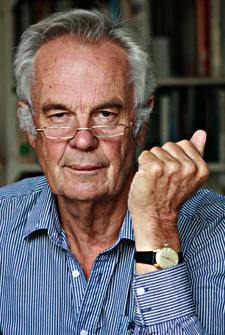
By Johan Galtung

Johan Galtung

Three, maybe four dramatic, global processes are unfolding.

First, the West–particularly USA, Israel, France – fighting very violently and counter-productively to keep their grip on the world.

Second, Eurasia, spearheaded by Russia-India-China in BRICS (Brazil, Russia, India, China, South Africa) expanding and consolidating, successfully and nonviolently.

Third, Islam expanding and consolidating, partly by conversion to Islam, partly through the dream of a new caliphate, partly violently.

Fourth, Latin America and Africa in the old Third World expanding and consolidating, spearheaded by Brazil-South Africa in BRICS.

If you want to live drama, you have chosen the right year.

The basic conflict is the first against the other three; the declining against the emerging. After some time conflicts among the three will show up, particularly Islam with the other two.

Economically right now Read More »

TFF PressInfo # 304: Wisdom of expression

By Jan Oberg

Jan Oberg

My answer is simple: the issues surrounding the horrific attack on Charlie Hebdo disappeared so fast because the general Western reaction was ill-considered/phony and therefore unsustainable. But there is actually still quite a lot to be discussed.

Secondly, European politicians and media chose – quite uniformly for a professed pluralist society – to not discuss the possible causes. The more convenient interpretation was that the perpetrators were just madmen and people like that should be hunted down and eliminated (like IS in Syria and Iraq).

Without causal analysis we can more easily go straight for more “security”, intelligence, surveillance and more police and military in the streets – in short, symptom treatment.

Further, when we deny human beings any motives we de-humanise them and then they don’t deserve to be heard or treated as humans. Evil is always ‘the other.’

The attack on Charlie Hebdo was not an attack on the entire Western culture, democracy or freedom of expression as such. The perpetrators would hardly know such a concept.

It was an attack at one weekly magazine for what it had misused freedom of expression to do.

Misused?

Freedom and wisdom of expression can be combined. There are at least 4 reasons why we should be proud of the principle of freedom of expression and therefore be wise enough to not misuse it or make it a weapon against others. Read More »

Misunderstood fundamentalism

By Jonathan Power

January 20th 2015

In his book “Faith and Power” Edward Mortimer, the former foreign affairs columnist for the Financial Times, when writing about Rishid Rida, the great Islamic intellectual of the first half of the twentieth century, asked himself if Rida was “fundamentalist” since he was an admirer of the militant Wahhabi puritans of Saudi Arabia. “I do not think so”, concluded Mortimer, “although I must admit that the precise meaning of this word when used in the context of Islam eludes me.”

At a time when the West is again aroused – because of the attack on Charlie Hebdo – by the actions of extreme Islamic fundamentalists we should note that it is astonishingly difficult to define fundamentalism either in Islam or Christianity. If it means “an effort to define the fundamentals of one’s religion and a refusal to budge from them once defined then surely anybody with serious religious beliefs of any sort must be fundamentalist in this sense”.

In Christianity there are many strains of fundamentalism. The Catholic Church, which abhors Enlightenment liberalism, is clearly fundamentalist when it comes toRead More »

TFF PressInfo # 302: Interview with “Iran Review” – and a word about intellectual freedom

By Jan Oberg

Jan Oberg

Lund, Sweden, January 21, 2015

I visited Iran for a third time in December last year, participating in the international UN-endorsed conference, WAVE – World Against Violence and Extremism.

I gave interviews to some ten agencies and media but the longest was this exclusive one by a passionate and very professional 24-year old Iranian journalist, Kourosh Ziabari, for the esteemed Iran Review.

The distorted image of Iran

TFF has been engaged with an in Iran the last three years. We believe that the general image in Western media – covering almost only Iran’s nuclear program, human rights violations and Iran as a threat to the world – is neither objective nor fair.

It conveniently omits the harmful effects on the Iranian society of Western policies since the days of the US-UK coup d’etat against the democratically elected President of Iran, Dr. Mossadegh, in 1953.

Whether intended or not, this type of media coverage risks contributing to deeper conflict and legitimise future violence – rather than mutual understanding and peace.

It is therefore imperative to go there and see for yourself. More about that in the next TFF PressInfo.

What TFF tries to do in Iran

TFF has these aims with its work in Iran:

a) Fact-finding: to simply learn first-hand about its history, culture, people and how they think on all levels; by traveling around and interviewing people, as many and different as possible.

b) To influence the image in the West of IranRead More »