There are reports that the Palestinian Authority will seek a vote in the Security Council on a resolution mandating Israel’s military withdrawal from Occupied Palestine no later than November 2016. Such a resolution has been condemned by the Israeli Prime Minister as bringing ‘terrorism’ to the outskirts of Tel Aviv, and this will never be allowed to happen.
The United States is, as usual, maneuvering in such a way as to avoid seeming an outlier by vetoing such a resolution, even if it has less stringent language, and asks the PA to postpone the vote until after the Israeli elections scheduled for 2015.
Embedded in this initiative are various diversionary moves to put the dying Oslo Approach (direct negotiations between Israel and the PA, with the U.S. as the intermediary) on track.
The French want a resolution that includes a revival of these currently defunct resolutions, with a mandated goal of achieving a permanent peace within a period of two years based on the establishment of a Palestinian state, immediate full membership of Palestine in the UN, and language objecting to settlement activity as an obstruction to peace.
Overall, European governments are exerting pressure to resume direct negotiations, exhibiting their concern about a deteriorating situation on the ground along with a growing hostility to Israeli behavior that has reached new heights since the merciless 51-day onslaught mounted by Israel against Gaza last summer.Read More »
The First Conference on ”World Against Violence and Extremism” is inaugurated here in Tehran this morning by President Rouhani. His idea was endorsed unanimously by the UN General Assembly last year. This PressInfo was written before I came to Iran.
The last round of negotiations between Iran and the Five Permanent Members of the UN Security Council + Germany about the future possibility that Iran would acquire nuclear weapons should have resulted in no agreement but a 7 months postponement. It is a waste of everybody’s time in one of the most urgent issues on the international agenda.
An a-symmetric conflict
Here are 5 countries bristling with thousands of nuclear weapons themselves and planning to spend trillions of dollars on more and more sophisticated nukes – unanimous in telling a country that does not have nukes to not acquire them: ”What we can’t live without thou shall never have”.
Everybody knows but conveniently omit mention of the fact that Israel is a nuclear weapons power over 50 years with at least 200 nukes in contravention of UN resolutions that the whole region shall be free from such weapons. And it has not signed the Non-Proliferation Treaty.
In rough terms, Iran’s military expenditures is 2-3% of the United States’; with a population ten times that of Israel it spends about the same, and 4% of its GDP where Israel spends 6.
TFF wants to express its gratitude to Yoshikazu Sakamoto who served for many years as TFF Associate.
Prefatory Note
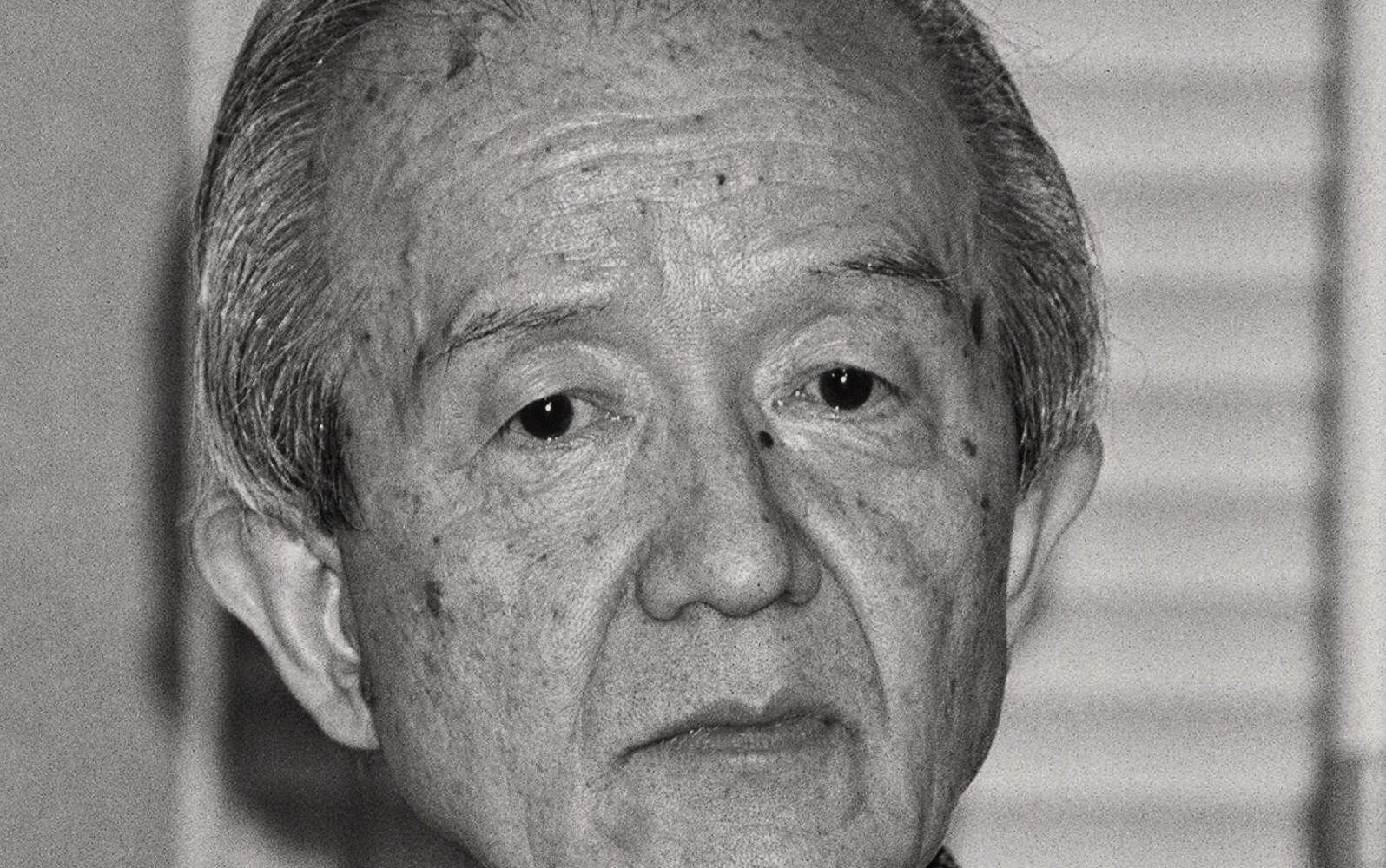
This post is dedicated to my remembrance of Yoshi Sakamoto who died recently. Yoshi was a deeply valued friend and an important public intellectual in Japan who exerted a strong influence on the post-war generation. His political orientation, rejecting extremes of right and left, while questioning the militarist premises of the Cold War and Japan’s willingness to become America’s Asian poodle, gave him a distinctive political profile.
I am sharing these words of appreciation, and hope that anyone from Japan who comes across this text will contact me, especially if they have a way of putting me in touch with either Yoshi’s family or Japanese media. I would like to believe that ‘an American appreciation’ of Professor Sakamoto would be of interest to those who knew and admired him.
I first met Yoshi in the mid-1960s when he came to visit me at Princeton, expressing his concern about the Vietnam War and knowing of my anti-war activism. We bonded quickly and marched in a peaceful demonstration in New York City a few days later, and somehow managed to keep in fairly consistent contact until Yoshi’s death on October 2nd.
Kuala Lumpur
IAIS-International Institute of Advanced Islamic Studies & IIUM-International Islamic University of Malaysia
Yes, Islam and Christianity are on old Buddhist lands; with Muslim-Buddhist clashes in Sri Lanka, Myanmar.
Occident is the big space of the three Abrahamic religions Judaism-Christianity-Islam, with the secularisms of the first two, excluding each other. Indonesia-Philippines are in the Occident.
Orient is a big space spanned by Buddhism, which does not exclude others, not even violent state power; hence more complex. There are pure Buddhist countries: Sri Lanka, Thailand, Myanmar, Cambodia, Laos, Vietnam; and mixed Buddhist countries, with other non-exclusive world views: in China with Daoism-Confucianism, in Japan with Kami shinto-Confucianism, and in Korea with Confucianism and Christianity.
Dear Colleagues; the future of mediation is to make ourselves redundant by spreading a conflict solution culture at all levels of social organization, enabling people to handle conflicts themselves. There will be counter-forces from professional mediators to monopolize the job and countercounter-forces from others to become ever better, to be ahead. The latter will win.
Model: the health professions.
Incredible gains were made in human health enabling people to take better care of their bodies: protection against contagious diseases through hygiene, washing hands, brushing teeth; keeping fit with adequate food, water, moving-walking –but care with jogging, unnatural, in the direction of a hospital– against the climate through adequate clothing and housing; against sepsis in wounds adequate cleaning: a minimum of health education. More than the complexities of surgery this gave us 25 more years of life.
For children and adolescents: watch the pathogens bringing illness from the outside as micro-organisms and violent encounters, shocks, excessive heat and cold, fire. After that come structural diseases–malignant tumors, cardiovascular, mental disorders–also rooted in the inside, with genetic predispositions. Too little adequate food and exercise; too much smoking, alcohol and other drugs can be handled with some will to get better. Equally important: an overload of stress and strain, problems and conflicts not handled: our task. Physicians have shared with people washing hands and brushing teeth as hygiene; it is our task to share conflict hygiene with everybody.Read More »
Just before former Soviet president Mikhail Gorbachev on Saturday made his stunning criticism of the West that, since the fall of the Berlin Wall, it had engaged in “triumphalism”, I was in Moscow. Everyone I talked to said the West had set out to humiliate Russia (not to help rebuild it as it did in Germany after the Second World War).
Gorbachev has long been the West’s pet political darling, (although the New York Times didn’t report this speech) – for undoing the straitjacket that enveloped Soviet society, for allowing the reunification of Germany and for being the major contributor to ending the Cold War.
So the question is will the West listen to him now? Will it listen to his point that the expansion of NATO has made Russia feel threatened?
Will it understand that there is a good reason why he and an overwhelming majority of Russians support President Vladimir Putin’s foreign policy? Will it share his fear that “we are on the brink of a new Cold War”?
The West has lost a close enemy, the Soviet Union and Eastern Europe. Which reactions can be discerned and what psycho-political emotions are they indicative of? How did the West cope with the first years of this new post-Cold War situation? Can we mourn the death of an enemy, can we heal ourselves after the loss? How does one learn to live a new life without a close enemy? Has the West done what it ought to do for itself and for the former enemy?
“The West” of course is a term hanging loose. We employ it in this article as meaning interchangeably “NATO, the Western hemisphere, the United States and Western Europe and a few cases, Western or Occidental culture”.
The first hypothesis of this essay is that the West, i.e. the Western part of the Occidental civilization, is traumatized by the loss of its Eastern brother.
The second is that we have discussed far too little what it means for the West and projected all our attention on the Soviet Union, i.e. acted as spectators in a certain sense.
The third hypothesis, therefore, is that the West is increasingly stuck in a self-congratulatory “we have won the cold war and socialism is dead” attitude which only increases the likelihood that it will be taken even more by surprise in the future.
And the fourth hypothesis is that the changes in the Eastern Occidental brother occur simultaneously with a number of challenges within the Western Occidental system and is bound, ultimately, to pose an overwhelming challenge to our own system. There is now an historical opportunity, a new political space and time to be filled by cooperation and exciting visions of a common future. We believe that the West has something to learn from the idea, not the content, of perestroika, i.e. experimenting with deep non-violent change in one’s own system the outcome of which cannot be known with any precision.
Czech playwright and president, Václav Havel, when in January 1990 adressing the Polish sejmen, argued that Eastern Europe should not be seen as a poor dissident or a bewildered prisoner set free but “as someone who has something to offer, namely spiritual and moral inspiration, daring peace initiatives, an unexploited creative potential, an ethos of new freedom and impulses toward bold and quick-moving solutions.” And he rounded off this speech with the following words (author’s translation again): “The most dangerous enemy today is not the dark forces of totalitarianism, intriguers or leagues of gangsters – it is our own dark sides. My program as president is therefore based on the principle of infusing spirituality, moral responsibility, humanity and humility into politics and, thus, insist on there being something higher than we humans, that our deeds shall not disappear into the dark holes of our time but be preserved, somewhere, investigated, evaluated – that we have neither a right nor a reason to maintain that we understand everything or can do everything.”
One may wonder with whom in the West Havel can have a dialogue at this level? Who in the West would respond in these existential and visionary terms? Why is the response of the West first of all Read More »
“Countercyclicity” means that both move through history in cycles, up and down; with one moving up when the other moves down.
Christianity started with its founder crucified, like the first pope St Peter; Christians were tortured, killed, expelled from Jewish Palestine. But then indeed up, as religio licita in the Roman Empire in 313, defined in Nicaea in 325 by Emperor Constantine. The Empire split in 395, with a Catholic Church in the West – contracting, monastic after the Western Empire fell in 476 – and an Orthodox Church in the East, till Constantinople became Istanbul in 1453 – Moscow became “the Third Rome”.
Islam started with the Prophet’s hizrat, migration from Mecca to Medina as city-state under Mohammed till he died in 632. From then till the end of the umayyad Damascus dynasty in 750, Islam covered the lands from Iberia (not Asturias) as the caliphate of Cordoba in 711, to Iran. Moving on, the abassid Baghdad dynasty till the 1258 massacre by Mongols, the sultanates of Delhi in 1192, Pattani now Thailand, Aceh in Sumatra; Sulu and Maguindanao in Mindanao, Philippines in 1405, 1490s.
Ahead of expansionist Christian Magellan 1520-21. After Columbus 1492 – the arch-year of Christian expansion – Read More »
A soon-to-be released report of the US Senate criticizes the CIA under President George W. Bush of conducting torture of Al Qaeda suspects. However, it doesn’t assess the responsibility of Bush himself nor his vice president, Dick Cheney.
According to the Senate Intelligence Committee’s chairwoman, Dianne Feinstein, the 6,000 page report is “one of the most significant oversight efforts in the history of the US.”
The report shows that the CIA did not provide accurate information to Congress and also provided misleading information. The report also concludes that the CIA impeded effective White House oversight and decision-making. While the report was being prepared the CIA penetrated the Senate Committee’s computers, arousing the fury of its members.
Bush and Cheney were deeply involved in initiating the torture program. Read More »
On November 9, it is 25 years the Berlin Wall came down. Seventeen months later, Yugoslavia’s dissolution began and various concepts and policies were introduced that fundamentally changed international politics ever since – more so than the fall of the Wall.
These features can be seen in the conflict (mis)management in later conflicts.
By now we should have accumulated enough evidence of how effective the various ”teatments” of the ”patient” called Yugoslavia were. To put it crudely: A unique country was destroyed – yes from the inside too, but that doesn’t reduce the responsibility of the West/NATO in its role as ”peacemaker”.
Today, Croatia is ethnically much more clean; Kosovo remains a failed state; the constituencies of the Dayton Accords for Bosnia (1995) still won’t live together as one state, as elections have just shown us. Macedonia’s problems have only deepened. The split between Serbia and Montenegro was enigmatic. Today’s Slovenia is the only unit that can be said to be in a better situation now than when part of Yugoslavia.
It is high time we get a critical discussion going of what the international so-called community chose to actually do – no matter the stated intentions – to help bring about peace in former Yugoslavia.
All of it must be re-assessed and lessons must be learned for governments to introduce a little modesty and recognise that they are not born peacemakers but rather war makers. And we need such a debate to go down another road than the one we took since 1999.
TFF maintains that the crisis in and around Yugoslavia is much more significant for international affairs than hitherto assumed because e.g.:
• The international so-called community’s attempt at being self-appointed conflict analysers and peacemakers with no prior education or training right after being Cold War warriors led to miserable results on the ground.
• Closely related: the amateurish idea that conflicts could be understood and treated as two parties, one good and one bad. The bad guys were the Serbs, of course, and Slobodan Milosevic became the new ”Hitler of Europe” after the West had used him as an ally.
• During this crisis Russia was sidetracked and humiliated. But in the Soviet Union era no one would have dared touch the Yugoslav space. Now the West could do what it wanted and Russia could do nothing to oppose it.
• Violent humanitarian intervention was introduced and persuaded many,Read More »




 TFF Associates Blog 2011-2017