ISIS, militarism and the violent imagination

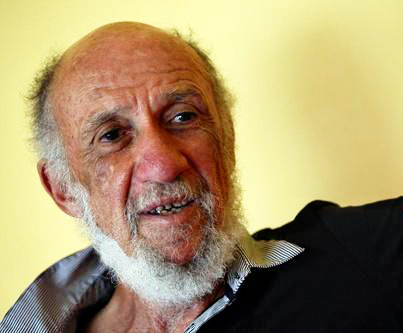
By Richard Falk

Richard Falk

Before ISIS

The beheading of American and British journalists who were being held hostage by ISIS creates a truly horrifying spectacle, and quite understandably mobilizes the political will to destroy the political actor who so shocks and frightens the Western sensibility, which is far from being free from responsibility for such lurid incidents.

Never in modern times has there been a clearer example of violence begetting violence.

And we need to ask ‘to what end?’ Political leaders in the West are remarkably silent and dishonest about what it is that they wish to achieve in this region beset since 2011 by a quite terrifying outbreak of political extremism, whether from above as in the cases of Syria, Egypt, and Israel or from below as with ISIS and al-Nusra.

It is difficult to recall that at the start of 2011, just three years ago, progressive voices around the world were inspired by the Arab upheavals, especially in Egypt and Tunisia, that burst upon the political scene unexpectedly.

These extraordinary events appeared to repudiate the prevailing patterns of authoritarian, exploitative, and corrupt collaboration between oppressive domestic elites, neoliberal economic forces, and the regional imperial juggernaut that had kept this humanly disastrous reality stable for so long. Yet even during that time of optimism about the Arab future, a closer scrutiny of what was happening disclosed many reasons to be worried. It is helpful to look to this recent past to have some comprehension of the perplexing present.

A Revolutionary Spirit Without Revolutionary Action

The goals of these upheavals were far too ambitious to be realized by such limited challenges directed at the established order. These movements were essentially confined to getting rid of a hated ruler. Read More »


The long shadows of history

By Johan Galtung

Johan Galtung

As Carl Gustav Jung said, and the Chinese before him–the shadows are long and dark. Jumping does not help, they follow us. Thus, the USA is wrong in believing that they can get away with the misdeeds of the past, that people will forget; they are not historians. Moreover, when done by the USA, deeds are not evil, at worst “tragic”, and not only for the victims but also for the perpetrators accused.

Take Ferguson, Mo. and the militarization of the US police. The s-word “slavery” is whispered in the shadows – and shouted in books like Walter Johnson, River of Dark Dreams, Slavery and Empire in the Cotton Kingdom. It was forced labor to put it mildly, with chains and whips. And in the world No. 1 in prisoners, the USA, we find a disproportionate number of blacks for petty crimes on forced labor with chains–sold to employers; prisons even on the stock exchange.

Take the indigenous, the g-word “genocide” is whispered, and the e-word is shouted in G. C. Anderson Ethnic Cleansing and the Indian.

Shadows take shape in the collective memory, the conscious part. In the deep culture: “one day they will come and do to us what we did to them”; making the fear of a major revolt self-fulfilling.

The darkest shadows are inside the collective subconscious. The feeling of being on the wrong side of history, not only losing wars and an empire, has come to many, even if not yet to that bipartisan Congress. Despair, apathy, suicide; individually or as mass murder. A feeling of sliding downhill in the country used to always outdo itself.

The leadership tries to find somebody outside to blame, revives Russia from the Cold War, ever more Muslims from the war on Islam declared by NATO in 1992 as the successor to the Cold War – all the time against the shadows whispering, watch yourself USA, these calamities are basically of your own making. You may jump at others, execute them–but the shadow follows you faithfully, growing darker.

How does one process dark shadows?

By confronting them!Read More »

A hard fist inside a velvet glove

By Jonathan Power

Despite Ukraine, Syria, Iraq, Libya, Afghanistan, Israel/Palestine and Southern Sudan the world is a lot more peaceful than it was at the end of the Cold War and shows no sign of returning to the bad old days when there were some 25 wars going on every year. Now it is down to about a dozen.

The task today is to keep that number going down – a difficult job when the outbreak of conflict in Syria, Libya and Ukraine have turned the graph upwards a few notches for the first time.

Protagonists in political quarrels tend to push the non-violent activists to one side – as they have done in Syria, Libya, Gaza and Ukraine.

This is not a good tactic as these situations have clearly shown. In Syria whole parts of cities have been reduced to rubble. Likewise in Gaza. In Ukraine this is starting to happen.

In the current issue of Foreign Affairs Erica Chenoweth and Maria Stephan argue that the prospects for civil resistance to bring about political change are commonly undersold.Read More »

TFF PressInfo 279: Hot Russian-US discussion in Moscow

By Jonathan Power

September 16, 2014
 
A couple of days ago I was on the Moscow metro. In the interchange I asked two twenty something young women the direction. Then they asked me did I like Russia? I asked them the same question and they said “no”. They didn’t like the way President Vladimir Putin was restricting freedom.

Then I asked them what they thought of Ukraine. They said that it upset them. They had some Russian-speaking friends living in eastern Ukraine and the friends didn’t feel the militias represented them.

Interestingly, the women said they knew there were Russian troops in Ukraine.

This was one of the most explicit but rare condemnations of Russia that I came across.

I also talked to two groups of students at Moscow’s prestigious Institute of World Economy and International Relations, where I had been invited to speak by the US-Russian Forum, where top think-tankers and academics tried to thrash out their differences.Read More »

TFF PressInfo 278: September 11 – The War on Terror is a – predictable – fiasco

By Jan Oberg, TFF co-founder

TFF PressInfo 278

Lund, Sweden September 11, 2014

President Obama’s speech last night

This speech is a record low in terms of moral and intellectual analysis: What it boils down to is war – i.e. killing every single ISIS person anywhere, people who he compares to cancer cells.

The war on terror has always been about killing terrorists but you can not kill an ism – terrorism. To do something about the causes that compel people to become terrorists would be much more efficient.

The President has said repeatedly that a lasting solution is political, not military. The speech, however, is exclusively military – not a word of political, psychological or other insights: No, we kill people because we think it is wrong to kill people…

The speech can be seen as a proof of how utterly misguided the U.S. response to 9/11 was – had it been more intelligence and less revenge-oriented, there would neither have been a devastating Iraq war nor an ISIS.

It’s difficult to be Number One in a rank order. You ony teach downward. If you are Number Twenty, there are 19 others to learn from. It seems as if the United States, inside its exceptionalist box, is now unable to learn lessons.Read More »

TFF PressInfo 277 – After all this, what?

A couple of messages to NATO’s Summit

By Jan Oberg, TFF co-founder

Jan Oberg

Lund, Sweden September 5, 2014.

Yugoslavia then and now

TFF’s first report from Yugoslavia from September 1991 carried the title, After Yugoslavia – What? It is now one of 127 reports and articles in the huge research and policy blog – Yugoslavia – What Should Have Been Done?

It contains the equivalent of 2000 book pages authored by Johan Galtung, Jan Oberg and Hakan Wiberg. All articles are published as they were written at the time. For anyone to see whose analyses stood the test of time.

We opened this blog two days ago – on the 23rd year of TFF’s first of some 70 peace missions into the war zones.

While it is important to analyse the world, it is more important to criticise it and most important to search – and re-search – alternatives to it. Thus the title. You are kindly invited to browse.

Such work is not only of historical interest. It carries a message for the future – as does all good research.

While inner factors were certainly dominant, the West – in its misguided attempt at playing peace maker – Read More »

The big crises – NATO and demonstrators both fail

By Jonathan Power

September 2nd 2014

Violence should have had its day. Look at its non-achievements: The US/British/French invasions of Iraq, Afghanistan and Libya. The upheavals of the “Arab Spring”. And now Ukraine.

Will we ever learn its limitations?

In Iraq outsiders’ violence overthrew the dictator Saddam Hussein who for all his faults provided stability, safety on the streets, food, a falling infant mortality rate and universal health services. What did it substitute beside the worthwhile job of killing off Saddam?

Mayhem, tens of thousands of deaths of innocents, fear of the street, shortages of food, upheavals in the health services and schools. And an ongoing instability, not least the opening given to ISIS.

In Libya, Read More »

TFF PressInfo 276 – Ceasefire in Eastern Ukraine: Now withdrawal by Russia, the UN in and NATO out

By Jan Oberg, TFF co-founder

Jan Oberg

Lund, Sweden September 3, 2014 – 11:30 CET.

As announced just a few minutes ago, the Ukrainian and Russian president have agreed to what the first reports call a permanent ceasefire in Eastern Ukraine.
That’s indeed the best piece of news from that region.

It places the NATO Summit in Wales this Thursday and Friday in a new light.

The ceasefire must be solidified
However, an agreement over a phone is only a beginning; the devil is in the details. Secondly, there is no mention – yet – of the East Ukrainian fighters are on board this agreement.

Time for UN peacekeeping
Third, a credible ceasefire should be monitored by neutral observers and competent people. The only ones who can do that is the UN peace-keepers – perhaps with some staff also from Russia and Ukraine.Read More »

USA-Israel vs. Arab-Muslim Worlds: What Happens?

By Johan Galtung

Johan Galtung

Kuala Lumpur, International Islamic University of Malaysia, 19 Aug 2014

Nothing good. But let us have a look at it in the standard peace studies way: Diagnosis – analyzing, Prognosis – forecasting, and Therapy – remedies, even solutions.

“Israel-Palestine” is the discourse Tel Aviv-Washington prefers. They have all the strong cards: overwhelming military power, political veto in the United Nations Security Council, the economic upper hand in interlocking economies – not just oil cash from Saudi Arabia-Qatar–and the idea of working for a solution with Washington as “mediator” – only the U.S. can bring the two together, gently or roughly–toward a sustainable peace.

A great distance from reality is needed to believe in that spin.

USA and Israel are interlocked by a much deeper tieRead More »

Make Russia a friend again

By Jonathan Power

August 26th 2014.

In his magisterial book “Europe”, Norman Davies writes, “Europe is a relatively modern idea. It gradually replaced the earlier concept of ‘Christendom’ in a complex intellectual process lasting from the fourteenth to the eighteenth centuries.”

Jean Monnet, the founder of the European Union, said, “Europe has never existed. One has to genuinely create Europe”.

“For more than 500 years”, continues Davies, “the cardinal problem in defining Europe has centred on the inclusion or exclusion of Russia. Throughout modern history the Orthodox, autocratic, economically backward but expanding Russia has been a bad fit.”

Nevertheless, Empress Catherine the Great announced in 1767 in St Petersburg that “Russia is a European state”. Dostoevsky, at the poet Pushkin’s funeral, eulogised Europe. “Peoples of Europe don’t know how dear to us they are.”

Muscovy has been an integral part of Christendom since the tenth century. Moreover, one can see that since Pushkin’s time Russia has created a larger part of the Western high cultural heritage than any other single European country and far much more than America. Think of the ballet (the best in the world by far) and the Bolshoi and Mariinsky theatres- and their protégés from Nureyev to Anna Netrebko. Think of composers: Tchaikovsky, Mussorgsky, Rimsky-Korsakov, Borodin, Stravinsky and Shostakovich. Think of the novel, poetry and drama: Tolstoy, Gogol, Chekov, Turgenev, Anna Ahmatova as well as Pushkin and Dostoevsky.

Lenin identified closely with Europe. Only under Stalin did Russia move away from Europe. In more recent times both Mikhail Gorbachev and President Vladimir Putin have talked of wanting to belong to the “Common European Home”- one day members of the European Union.Read More »