Uniting for Peace, Building Sustainable Peace through Universal Values at the Centenary of World War I: Criminalizing War

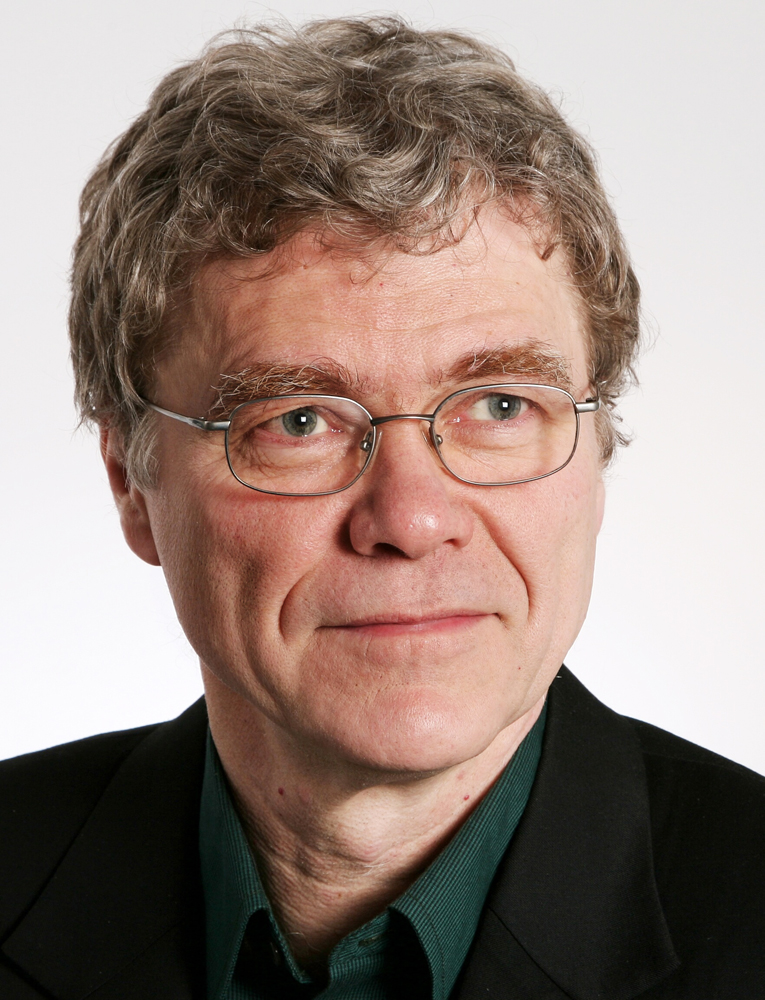
By Johan Galtung

Johan Galtung

Keynote, 25th International Peace Research Association (IPRA) Conference
Istanbul, 11-14 August 2014

We have come of age, at 50; and I am the only surviving founder from 1964 in London, capital of a foggy island in the North Sea. Now we meet in the sunny capital of another empire; bridging three continents. One cloned itself all over; the other was more an Islamic umma, a community of togetherness-and-sharing, with millet islands of tolerance. And now: the superb IPRA program.

Uniting for peace. But we differ, disagree? Incredible how far we can come if we identify and focus on the good and the positive in Kiev, Donetsk and Moscow, or husband and wife in broken marriages rather than what is wrong, and build new relations on that.

Peace is a relation, not attributes of the parties. So also for conferences: focus on the best in paper, praise it; not on the dubious and missing.


Building sustainable peace. My formula in A Theory of Peace is:

Equity X Harmony

Peace = ———————

Trauma X Conflict


Four Roots of Peace

• for positive peace: 1) cooperation for mutual and equal benefit, and 2) empathy for the harmony of sorrow at other’s sorrow and joy at other’s joy;

• for negative peace: 1) reconciling trauma, and 2) resolving conflicts–avoiding violence, through skills.

Expansion of interaction – through means of communication and transportation – with rights and obligations has created vast zones with less direct violence. But without equity: more inequality, more structural violence, killing even more. Identifying violence with bullets is as naive as identifying disease with microbes, overlooking structural diseases like cancer, heart; and overlooking chronic violence, like the security state and security world, by the US National Security Agency. Better: make Ukraine a federation, relate West-North to EU and South-East to Eurasia, with both having access to the other! And clone Snowden.

Through universal values. I know only two for sure, basic to Buddhism: reduce dukkha, suffering, and increase sukha, fulfillment (wellbeing). Emotions more than cognitive values? Yes, hence more basic. Negative and positive peace. Be aware of both-and and neither-nor, the ambiguous and the bland, more frequent than either-or.

Democracy? As rule by the consent of the ruled, maybe; but not as multiparty state elections, too easily corrupted into bankocracy. As dialogue to consensus in smaller units? But many rule themselves or go for those smaller units, uninterested in “states” and “regions”.

Human rights? If enriched with collective, people’s rights, yes; but be careful. They are excellent goal-formulations for underdogs but very one-sided as conflict discourse. Where are the goals of the topdogs? Only to remain on top? Only their perennial “if underdogs come up they will treat us like we treated them?” Or also some justified skepticism about an alternative order with former underdogs on top in a majority democracy, given their numbers? We do not know in advance; give them a hearing – not guaranteed by Human Rights. Solve problems.

To be ruled by somebody of your own kind? Universal. Even if one’s own kind is unkind, it is better than the benevolence of somebody else.

The First World War at 100: To see the Sarajevo’s shots on 28 June 1914 as the cause of the Hapsburg Empire attacking Serbia on 28 July overlooks Austria-Hungary annexing Bosnia-Herzegovina in 1908. The Serbs wanted to be ruled by their own kind. Self-determination was key. Nor was this a world war, all major battles were in Europe (17 of them in the French-Belgian corner). The massive killing was so insane that Europeans pushed it on the world.

The Second European war, rather, the First being the Napoleonic. The First World was, of course, Western colonialism from 4 May 1493 (Pope Alexander VI)–another atrocity to conceal.

IPRA at 50

What we wanted in 1964 was peace research recognized as a social science, member of the UNESCO International Social Science Council, bypassing turf-concerned Western universities. We got it.

Elise Boulding – role of culture, women – very active at the founding, saving IPRA several times afterward. Her husband Kenneth – the Image, stable peace, economic evolution – was in the background and Bert Röling – the youngest judge at the Tokyo Tribunal, disarmament, law for peace–became the first IPRA Secretary General. And then Galtung – at the time the health studies parallel and positive/negative peace.

We were from the world Northwest and IPRA has, like the world, moved East and South, with a Turkish Delight and a Sierra Leone Diamond as secretaries!

Prognosis: we will move on to Islam and China–India still needs time to grow with our Guiding Spirit: Gandhi. Then back to a more modest Northwest, circling on, as we should.

Criminalizing War

Massive murder, dukkha, inequity, disharmony, trauma leading to revenge, solving nothing in the longer run. The 1648 Westphalia Peace stabilized two Christianities at the price of a state system with the “right to war”. That institutional mandate has to go.

A centuries long process – jus ad bellum, jus in bello, human rights – to outlaw war except for defense, peace-keeping and “peace-enforcement” – recently as R2P (Responsibility to Protect) – opens countless loopholes, protected by anonymity and collectivity.

Personalize by naming the massive killers from top politicians to bottom soldiers – Nürnberg, Tokyo. Individualize by making them responsible, maybe following the Trans-National Corporations with amnesty in return for confession-contrition-compensation.

And remove that mandate from the Abrahamic god’s countless massacres via rex gratia dei – the King by God’s grace – transferred to the state – and via vox popoli vox dei – the voice of people being the voice of god–perverting democracies into killing machines.

Be careful! They may kill even more in order not to be arrested.

And we get further with positive and negative peace, and by fighting war as a social evil.

But the three approaches add up. We have work to do!

Originally published by Transcend Media Service here.

TFF PressInfo: Support Richard Branson’s Ukraine dialogue initiative

TFF PressInfo 273

By Jan Oberg, TFF co-founder

Jan Oberg

Lund, Sweden August 22, 2014

We are drifting towards a new Cold War. The reason isn’t substance because there is no reason we should not be able to live in peace in Europe – if we want and educated ourselves in handling problems.

No, the reason is the woefully incompetent way in which politicians and media focus on violence and ignore the underlying conflict and civil means – yes yes, of course there are exceptions.

Escalation doesn’t create peace

Here is just one example – NATO S-G Anders Fogh Rasmussen and NATO’s supreme commander General Breedlove (funny name given his anything but loving views coming rather from a Strangelove …) in the Wall Street Journal.

They tell you about all the escalation they have already done Read More »

Rusland, EU og sanktionerne

Af Jens Jørgen Nielsen

Betragtninger 7. august, 2014

Vi lever i en interessant tid. Og den er ikke kedelig. Mange faste forestillinger ændrer sig. Det slår mig, at EU politikere og ditto amerikanske ved meget lidt om både Rusland og verden. Som EU borger kan jeg med beklagelse konstatere, at EU ikke har nogen politik i forhold til Rusland. Og højstemt forargelse og at snakke amerikanerne efter munden tæller ikke som en egentlig politik.

Hvilke forestillinger har EU politikerne haft om slutspillet i Ukraine? Hvilke forestillinger har de haft om virkningerne af sanktionerne? Hvilken viden og forståelse af hvilket land Rusland er, har de samme politikere haft?

Det er som om dæmonisering af Putin har gjort det ud for en politik. Jeg opfordrer ikke her til at man skal elske Putin. Men jeg opfordrer for det første til at finde ud af, hvad man ønsker med Rusland og for den sags skyld også med Ukraine. For det andet, at man gør sig overvejelser over, hvad sanktionerne betyder på både det lange og korte sigt.

Hvad har mangelen på overvejelser over egne interesser og mangelen på analyse af sanktionernes virkning ført til? Read More »

TFF PressInfo: Wow, Hillary Clinton as moral philosopher

By Jan Oberg, TFF director

Jan Oberg

Lund, Sweden July 31, 2014

Responsibility for wars and killing

A number of Western/NATO politicians – Hillary Clinton foremost among them – and media people have recently introduced a new ethical principle in international affairs:

When A delivers weapons to B, A is responsible for what B does with these weapons. The former Secretary of State and perhaps future U.S. President presents this new ethical principle here on CNN.

This makes a lot of sense to me. Look at it this way:

Here is a young confused boy who has little to look forward to – and less to lose – because his country is falling apart in nasty civil war. He’s been told by some commander, or by his President, that he must hate the enemy; he gets paid for killing off as many as he can. And so he does.

He believes also in what he’s been promised: Fame as a hero upon return – that is, if he returns – and a comfortable life.

So he kills people, Read More »

Cruelties of ceasefire diplomacy

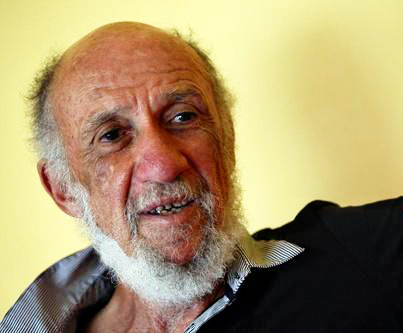
By Richard Falk

Richard Falk

Prefatory Note

The post below is a revised text of an article published in AlJazeera America on July 26, 2014. Devastation and violence has continued in Gaza, with Palestinians deaths now numbering over 1000 (overwhelmingly civilians) and Israeli deaths latest reported at being 43 (almost all military personnel).

Such casualty figures and disparities raise questions of state terrorism in a stark manner. Also, it should be appreciated that if Israel were to do what it is required by international law to do there would be no rockets directed at its population centers – lift the blockade, negotiate peace on the basis of the 2002 Arab proposals and Security Council 242. Yet this would require Israel to give up once and for all its expansionist vision embedded in the settlement phenomenon and the version of Zionism embraced by its leaders and reigning political parties.

The best that the UN has been able to do is to call for an “immediate and unconditional ceasefire” to allow the delivery of humanitarian aid at an emergency meeting of the UN Security Council; such an unseemly balancing act is not what the UN Charter had in mind by aligning the international community in opposition to states that break the peace and act aggressively in disregard of international law; a victimized people deserves protection, not some sort of display of deforming geopolitical symmetry.

So far, the diplomatic effort to end the violence in Gaza has failed miserably, Read More »

TFF PressInfo: It’s doable: Peace Israel-Palestine (1)

By Jan Oberg, TFF director

Jan Oberg

Lund, Sweden July 25, 2014

Violence is a dead end

Look at the violence in Gaza today, DR Congo (6 million dead), Iraq, Libya, Afghanistan, Somalia etc: Isn’t it obvious that the world needs a completely new approach to conflicts?

We’ll never rid the world of conflicts, conflicts is part of human and social life. Conflict-prevention is a meaningless term.

But we can rid the world of most of its violence. If we want, if we educate each other and if economic and other interests stopped supporting killing as a tool in conflict-management.

Unrealistic? Hopelessly idealistic? Well, look at the places above and try to find the realism and hope there.

Look at the conflict not at the parties and the violence

It requires almost no intellectual effort to take sides in a conflict between A and B. If both parties use violence, that means endorsement of the violence – the justification both need: “They threaten and kill us, therefore we threaten and kill them.”

Those who support a conflict party who use violence also support violence. As long as violence continues, there will be no process towards peace – only more hate, traumas, suffering, wish for revenge and destruction.

Violence – not the conflict – becomes the main thing and tit-for-tat the rule of the game, with an increase in the violence for each round. Scorpions in a bottle, feeding each other.

Both those who are outside a conflict and debate it – for instance, 99% of the media debates – and the conflicting parties on the ground feed on violence. If A did not use violence against B, how would B justify its own killings?

Gaza today – both parties lose

This is where we are in Gaza today when reports tell that around 800 civilians have been killed without any positive effect, both losing.

It’s not about evil, it’s about desperation coupled with traumas coupled with a lack of insight and education.

This wrong-headed attitude is indicative of conflict and peace illiteracy: among the parties, our media and our decision-makers. Innocent people on both or all sides normally pay the price for it.

The world needs a completely different approach. It’s embedded in the UN Charter and called peace by peaceful means.Read More »

TFF PressInfo: Use Malaysia’s MH17 to make peace instead

By Jan Oberg, TFF director

Jan Oberg

Tragic misuse of a tragedy

The government of Ukraine as well as the separatists, NATO/U.S. and very many leading Western mainstream media seem all to know who has caused the tragedy. Putin believes it was caused indirectly by the West.

Given the fact that very few, if any, people or institutions can know who did it with enough details, data and precision to accuse anyone, the MH17 tragedy has been misused to an extent that can itself only be termed tragic.

The misuse is tragic because it is a catastrophe for close to 300 people, their relatives and friends. Silence – of both verbal and military weapons – and empathy would have been appropriate.

Anyone pointing fingers and calling it a terrorist act at this point is irresponsibly or should present convincing evidence.

Secondly, the blame game makes the necessary road to peace and security even more difficult.

An All Party Peace Process should come out of MH17 and the civil war

It would have been so much more civilised to use the MH 17 tragedy to say:Read More »

Aage Bertelsen (1901 – 1980) – Danish educator for peace

By Jan Oberg & Johan Galtung*

Lund and Kuala Lumpur, July 2014

Introduction

He was a tall man and a great man, a visionary, pacifist, civil resister, educator and philosopher. He took life more seriously than most and he could be playful and fun like a child. His life’s guiding principle was ”Engage in your time!” and while he wrote and talked a lot he also did it. His name was Aage Bertelsen, he was born in Denmark in 1901 and died on August 15, 1980.

Bertelsen’s imprint on history is two-fold. First, with his wife Gerda he was a prime mover of one of the groups, the Lyngby Group, which organised the rescue of altogether 7.220 Danish Jews into safety in Sweden in October 1943 during the German occupation of Denmark – more here. The Lyngby Group – Lyngby is north of Copenhagen – got about 1.000 of these in safety by organising their nightly transport onboard small fisher boats over the Sound between Denmark and Sweden.

In this he deserves a place in international contemporary history for its humanity, civil courage and as an example of non-violent struggle against occupation.

Secondly, Bertelsen was an educator of and for peace. His life work educational efforts included his family and friends, his pupils over 22 years at the Aarhus Cathedral School in Aarhus, Denmark, the general public as well as national and international leaders.

He lived in pre-Internet times and very little is publicly available today about this renaissance man. From two rather different, but compatible, perspectives we’ve taken it upon us to remind the world about him – friends and colleagues of his as we happen to be.

Headmaster Aage Bertelsen in 1961 Photo: Elfeldt, Copenhagen


Why now, over 30 years after his death? Read More »

TFF PressInfo: “The human price of the war on Iraq” Hearing Statement

Comments by Hans-C. von Sponeck
Former UN Assistant Secretary General, UN Humanitarian Coordinator for Iraq & TFF Associate


Hearing at the UK House of Commons, London June 10, 2014

Intro
1. HoC/HoL have repeatedly held Iraq hearings as have British NGOs such as CASI (Campaign Against Sanctions on Iraq) and Stop the War Coalition/UK. In Europe these are considered models for responsible public action.

2. My contribution at this hearing is not about the crimes of dictatorship or the details of Iraqi suffering. For both well researched data is available. The objective of my participation is to make two detailed observations about externally-driven Iraq politics during the period 1990-2014.

Observation 1

3. Today’s tragic Iraq reality can only be understood if the additive impact of the years before and the years following the US/UK Governments’ illegal invasion and occupation is fully taken into account.Read More »

Five Palestinian futures

By Richard Falk

For years, perhaps going back as far as the Madrid Peace Conference of 1991, influential international debate on the future of Palestine has almost exclusively considered variations on the theme of a two-state solution. The American Secretary of State, John Kerry, stampeded the Palestinian Authority and Israel into negotiations that ‘failed’ even before they started a year ago. At least Kerry was prudent enough to warn both sides that this was their do or die moment for resolving the conflict.

It was presumed without dissent in high places anywhere that this two-state outcome was the one and only solution that could bring peace. Besides the parties themselves, the EU, the Arab League, the UN all wagered that a resolution of the conflict required the establishment of a Palestinian state. Even Benjamin Netanyahu became a reluctant subscriber to this mantra in his 2009 speech at Bar-Ilan University, although always in a halfhearted spirit.Read More »