Rational conflict resolution: What stands in the way?*

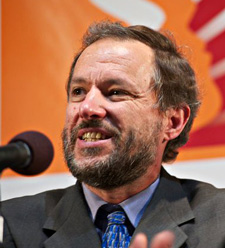
By Johan Galtung

We are facing six conflicts, four current, one past and one future are shaping our present reality. Conflict is a relation of incompatibility between parties; not an attribute of one party. It spells danger of violence and opportunity to create new realities.

Thus, to understand the shoa the narratives of unspeakable German atrocity and infinite Jewish suffering are indispensable. But so are the narratives of German-Jewish relations, Germans to others, Jews to others. Failure to do so blocks rationality: if conflict is in the relation, then the solution is in a new relation. This is not blaming the victim. What matters most is changing the relation. Are we able?Read More »

The politics and benefits of equality

By Johan Galtung

US politics has for a long time, since the 1970s, been the politics of inequality. Not only have the indicators of inequality, like the ratio in average income between the top and the bottom 20%, or the salary ratio between a CEO and the average employee in a corporation, increased (from 50 to 1100). But the top 10 or 1 or 0.1 percent, has acquired wealth so far unheard of. And the bottom 90, or 99 or 99.1 percent see the average family income in real terms decreasing; for the lowest down below the poverty line, way down into misery like worrying about where the next meal comes from (from the soup kitchen for very many).Read More »

Memories – conscious and subconscious

By Johan Galtung

Gernika-Basque Country, Spain, 28 April 2012

75 years ago Germany-Italy bombed this sacred Basque-Spanish town, adding state terrorism to the destruction of arms factories. Picasso made the atrocity enter world collective memory forever. As a testimony to the power of art, and memory, the painting was ordered covered when USA tried to make the case that Iraq was producing mass destruction weapons for the UN Security Council.

Two kinds of memories serve politics: glories and traumas. Read More »

Iran & Israel: What the West should and can do

By Jan Oberg (951 words)

IPS COLUMNIST SERVICE, APRIL 2012 © IPS and the author
Editor’s note:

The overall picture has turned much worse over the last few months. In particular, the Western demands to Iran made public prior to the Istanbul consultations on April 14, bodes ill for the next round of talks in Baghdad. Everyone has stated views, used rhetoric and taken concrete steps that bring us all closer to the abyss called ‘War on Iran’. While it is easy and dangerous to escalate a conflict, it is difficult ­without losing face­ to de-escalate and make peace, writes Jan Oberg, director and co-founder of the Transnational Foundation (TFF) in Lund, Sweden.

Among these counterproductive steps are the Western halting of imports of oil from Iran on July 1, 2012 and the tightening of sanctions that already suffocate Iranian society. It is believed – ­falsely­ – that sanctions are somehow “soft weapons”. In Iraq, with one-third of the population of Iran, Western sanctions caused roughly one million Iraqi deaths.

What is indicative of a will to promote future peace among the parties? Well, the following are not: pre-negotiation demands, threats to destroy, an oil embargo, sanctions directed at citizens, condescending rhetoric to and about a nation with one of the oldest civilisations in the world, murdering its scientists, providing military training to its dissident terrorists abroad, telling it to abstain from what you have yourself done and requiring inspections there but not with the nuclear-armed “other side”. These are methods to make Tehran consider obtaining nukes although Iran’s highest leader has pronounced repeatedly that nuclear weapons are haram, i.e. strictly prohibited according to Islam (a fact never reported in Western media).

The world needs conflict-resolution capacity, knowledge and training. Those who run these matters steer their policies like unlicenced drivers. Under such conditions, accidents will happen and people will die. There is a huge spectrum of options between doing nothing and smashing up countries by military means.

This article offers plenty of constructive proposals.Read More »

Consequences of Annan’s questionable stalemate in Syria

By Jonathan Power

The Syrian cease-fire supports the status quo – the armed might of the government on one side and the armed opposition factions on the other. The government cannot eradicate the rebels although it can brutalise them. But neither can the armed opposition hope to topple the government which retains its popularity in the capital, Damascus, and in many other parts of the country where Shiite Islam and the Alawites are a majority.

Is this what the world wants? Are the members of the UN and its former secretary-general, Kofi Annan, who has negotiated this cease-fire, aware of the implications of this? Read More »

For a denuclearized Middle East

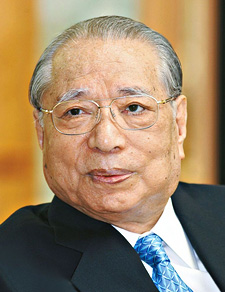
By Daisaku Ikeda (*)
© IPS 2012

TOKYO, Mar (IPS) – In recent months, the dispute over the nature and intent of the Iranian nuclear development programme has generated increasing tensions throughout the Middle East region. When I consider all that is at stake here, I am reminded of the words of the British historian Arnold Toynbee, who warned that the perils of the nuclear age constituted a “Gordian knot that has to be untied by patient fingers instead of being cut by the sword.”

Amidst growing concerns that these tensions will erupt into armed conflict, I urge the political leaderships in all relevant states to recognize that now is the time to muster the courage of restraint and seek the common ground on which the current impasse can be resolved. Read More »

Military intervention in Syria is a bad idea

By Stephen Zunes

Although the impulse to try to end the ongoing repression by the Syrian regime against its own people through foreign military intervention is understandable, it would be a very bad idea.

Empirical studies have repeatedly demonstrated that international military interventions in cases of severe repression actually exacerbate violence in the short term and can only reduce violence in the longer term if the intervention is impartial or neutral. Other studies demonstrate that foreign military interventions actually increase the duration of civil wars, making the conflicts longer and bloodier, and the regional consequences more serious, than if there were no intervention. In addition, military intervention would likely trigger a “gloves off” mentality that would dramatically escalate the violence on both sides.Read More »

Way to end war in Afghanistan

By Jonathan Power

After the Soviet Union invaded Afghanistan in 1979 and got totally bogged down there was a joke circulating in Moscow. “Why are we still in Afghanistan? Answer: We are still looking for the people who invited us”.

Zbigniew Brzezinski, architect of US policy in Afghanistan when he was President Jimmy Carter’s national security advisor, was convinced Afghanistan would become the Soviet Union’s Vietnam. In fact the Soviet Union’s Vietnam has become America’s Afghanistan.

There is truth in both these cynical observations. And there are lies, distortions and self-delusion built into the narrative. Only Russia has been more or less honest. Under President Mikhail Gorbachev it decided to cut its losses and withdraw and was open about the reason it did so.

Today the debate in the US is contorted. Read More »

Get the law and politics right in Iran now!

By Richard Falk

In his important article in the New York Times, March 17, 2012, James Risen summarized the consensus of the intelligence community as concluding that Iran abandoned its program to develop nuclear weapons in 2003, and that no persuasive evidence exists that it has departed from this decision.

It might have been expected that such news based on the best evidence that billions spent to get the most reliable possible assessments of such sensitive security issues would produce a huge sigh of relief in Washington, but on the contrary it has been totally ignored, including by the highest officers in the government. Read More »

Iran, Israel and the USA

How to prevent the war that is becoming more likely?

By Gunnar Westberg
TFF Board member who has visited Iran a number of times the last few years

The threat of a war involving Iran, Israel and USA is discussed with increasing intensity. At this time an attack by Israel is seen as the most likely risk.

Do I, decidedly not an expert, have the right to say that most contributions are lacking in depth and there is little attempt to understand the other parties? I say so, and I hope to be proven wrong.Read More »