Criminalize the arms trade into hotspots

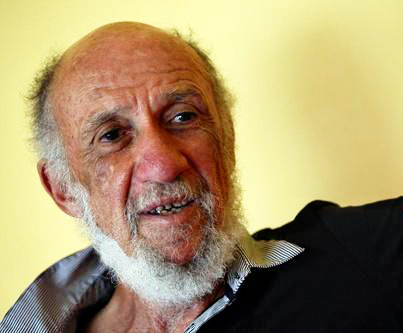
Jan Oberg comments on PressTV to Noam Chomsky’s criticism of Western support to terrorist groups in the Middle East.

Oberg maintains that the War on Terror is stupid in the sense of producing more of what it is supposed to combat and that arms traders – private as well as state – should be held accountable for their crimes, not only politicians and militaries.

Arms deliveries into hot spots ought to be criminalized too.

Peace without war in Colombia

By Jonathan Power

August 30th 2016

After 52 years of fighting between the Colombian government and Farc, the left wing, drug-dealing, Marxist, guerrilla grouping, there is a peace agreement.

I’ve always wondered why the US and Nato never intervened militarily. They should have if they were to be consistent. Colombia has long been exhibit A for those who say, “Look what happens when the outside world doesn’t intervene- the local fires just burn brighter and fiercer”. (And it has been said likewise for Sri Lanka during its civil war.)

The facts say the opposite: fires burn brighter and fiercer when there are invasions by the US and Nato. In Kosovo Nato jets, at President Bill Clinton’s command, tore into Serbia to bring “peace” to an unthreatening backwater of Europe and left behind a mafia that de facto had unseated and replaced the government.

Similarly, they blasted into Afghanistan even though the original purpose was not a war across a whole country but merely an attempt to kill off Al Qaeda. Likewise, into Iraq and Libya. As in Afghanistan, all these interventions made the fires burn fiercer.

So why not Colombia? I don’t know the reason that made Clinton decide not to intervene but although this peace agreement has taken a heck of a long time to negotiate is it not better than stoking up from outside a terrible war with hundreds of thousands of casualties?

Clinton said in 1999 thatRead More »

TFF PressInfo # 385 – How did Western Europe cope with a much stronger Soviet Union and Warsaw Pact?

By Jan Oberg

TFF Series ”The New Cold War” # 6

How did Western Europe survive the much stronger Soviet Union & Warsaw Pact 30-40 years ago? A pact that had about 70% of NATO’s military expenditures where today’s Russia has 8%? How did we get on after the Soviet invasion of Hungary and Czechoslovakia – and a Union with much more global military and political influence?

Europe did so through a well-maintained military capacity, or superiority, technical superiority and, of fundamental importance to security – confidence-building measures (CBM).

And through a political leadership by personalities who knew what the 2nd World War had implied and why it must never happen again. One towering figure of course being Willy Brandt, the German chancellor who had himself been a refugee in Norway during the war.

CBMs were meant to both uphold a high level of war-fighting capacity while also seeking military early information/warning, attending each other’s military exercises, etc. They resulted in the establishment of the very important OSCE – Organisation for Security and Co-operation (then C for Conference) in Europe with the Helsinki Final Act of 1 August1975. It contained politico-military, economic, environmental and human rights dimensions – ’baskets’ that were seen as related to each other and which served as dialogue points between the two blocs.

The visionary President Urho Kekkonen of Finland was credited as the main architect of the CSCE – and his Finland was neutral but upheld a co-operation agreement with the Soviet Union.

Finland was also the only country in the European space that could show opinions polls according to which the people felt equidistant to both blocs.

The simple but brilliant idea was this: We need dialogue to feel secure. It was also called Detente. And it implied a disarmament dimension – negotiations about how to mutually scrap weapons in a measured and verifiable manner that both sides had decided they no longer needed.

These negotiations included not only conventional weapons but also the arsenals of nuclear weapons.

In the domain of nuclear weapons, the Non-Proliferation Treaty, NPT, was signed in 1970 and carried four very important provisions:

1) the world shall move towards general and complete disarmament and the nuclear weapons shall be abolished;
2) those who have nuclear weapons shall negotiated them down, in principle to zero and
3) as a quid pro quo for that all non-nuclear weapons shall abstain from obtaining nuclear weapons – and
4) countries who want nuclear energy shall be assisted to introduce this civilian energy technology.

All this happened in the era of Detente and CBM. How had that become possible? Read More »

Over-hyping ISIS

By Jonathan Power

Politicians have it in their DNA to hype our supposed present dangers. So do journalists. So does the military-industrial complex. So do certain think tanks and university professors who depend on sounding the alarm about this and that to gain grants from foundations.

When Leon Panetta was defence secretary under President Barack Obama he was not atypical when he said that any defence cuts would undermine the military’s “ability to protect the nation” and reductions would “invite aggression”.

Yet today’s wars tend to be low-intensity conflicts that on average kill 90% fewer people than the wars of the 1950s. The first decade of this century had fewer war deaths than any decade of the last century.

As for terrorism nothing is more over-hyped.

Of the 13,186 people killed in terrorist attacks in 2010 only 15 were American citizens. Unless you live in Pakistan, Afghanistan, Iraq, Yemen, Somalia or Syria the chance of dying from a terrorist attack today has fallen to just above zero. Even the latest spate of bomb attacks in France and Belgium barely affect this world percentage.

The US is almost Islamic terrorist-free. What terrorism there is comes from right wing white men. Read More »

The new Cold War

By Jonathan Power

August 9th 2016

Nearly everyone I talk politics to says the world is in a mess. But I live in a student town – Lund in Sweden – and most of them have nothing to measure their opinions against. They know not much about the Cold War, the Cuban missile crisis, Watergate or the great famines in Africa and India.

In many ways most of us live in the best of times, on better incomes than our parents, with longevity increasing all over the world, not least in the poorer countries and helped by inventions that our parents never dreamt were possible.

As for war, as each year goes by less people are killed, UN peacekeeping is more advanced and sophisticated than before, Russia and the West, although at loggerheads over Ukraine, worked together to get Iran to give up its nuclear plans and are talking now about how to cooperate against ISIS.

However, it is true overall things don’t look good in Syria, Ukraine, Egypt, Afghanistan, Saudi Arabia, Iraq, Turkey and Southern Sudan but the rest of the world looks reasonably peaceful. Russia and the US are overloaded with nuclear weapons and appear to have put future agreements on big reductions on the shelf. Nevertheless, they have already reduced the total number of nuclear-tipped missiles from 70,000 to 16,300 and placed limits on large standing armies in Europe.

Arguably the biggest problem in the world today is that the political elite and much of the media in both Russia and the US (less so in Europe) are gearing up for a new Cold War. A dispassionate conversation between the two sides becomes ever more difficult.Read More »

Too many American nuclear bombs – also in Turkey

By Jonathan Power

July 26th 2016

The Incirlik air base in southeast Turkey- from which U.S. pilots launch bombing raids on ISIS forces in Syria – is home to about 50 B-61 hydrogen bombs. That makes it NATO’s largest nuclear storage facility.

Each bomb has a yield of up to 170 kilotons, nearly a dozen times more powerful than the weapon that destroyed Hiroshima. The bombs are stored in underground vaults within aircraft shelters that in turn are protected by a security perimeter.

Last week Incirlik was in the headlines because it appears it was one of the command centres of the attempted coup, meant to topple President Recep Tayyip Erdogan.
After the coup had been put down the commander of Incirlik was arrested and charged with complicity in the overthrow attempt.

Jonathan Marshall in Consortium News, who has been researching this year the inner workings of the base, reports, “The security of the bombs is premised on them being defended by loyal NATO forces. In the case of Incirlik that loyalty proved uncertain at best. Power to the base was cut after mutinous troops used a tanker plane from the base to refuel F-16s that menaced Ankara and Istanbul”.

He goes on in his latest report to observe, “One can easily imagine a clique of Islamist officers in a future coup seizing the nuclear bombs as a bargaining chip with Ankara and Washington or, worse yet, to support radical insurgents in the region.”

Jeffrey Lewis, a nuclear proliferation expert at the Middlebury Institute of International Studies at Monterey, asks, “Does it seem like a good idea to station American nuclear weapons at an air base commanded by someone who may have just helped bomb his own country’s presidential palace?”Read More »

Tony Blair- Evil big enough to be charged for war crimes

By Jonathan Power

The crime of aggression (“planning, preparation, initiation or waging of a war of aggression”) was described by the Nuremberg Tribunal that tried Nazi leaders as “the supreme international crime differing only from other war crimes in that it contains within itself the accumulated evil of the whole”.

President George W. Bush and British prime minister, Tony Blair, have been accused by many as war criminals for starting the war against Iraq and, second, for not watching carefully enough to make sure that war crimes carried out by individual soldiers were not covered up, and for the torture that Bush initiated and Blair appeared to tolerate.

Did Blair lie over the reason for going to war with Iraq – the supposed stockpile of weapons of mass destruction that Iraq possessed? It depends how you define lie. If you define lie as saying this cat is black when in fact it’s white he didn’t on the big issues. But what he did do was to give the impression the cat was assuredly white when in fact it was a sort of greyish.

But as the just published government commissioned report made by a distinguished civil servant, John Chilcot, has made clear the caveats were left out of intelligence briefings and the presentation was polished by the prime minister’s office.

We in the public didn’t have the pre-polished version but Blair did and he must have known in his mind, if not his heart, he was taking a gamble with the evidence. Read More »

Are we heading toward global autocracy, ecological collapse and political malaise?

By Richard Falk

What follows are preliminary reactions to both the BREXIT vote and the world according to Trump, but also a commentary on the related alienation of large segments of the public that are being badly served by both the established elites and their demagogic adversaries.

The failures of neoliberalism, the successes of digitization, the scourge of random violence, and more broadly, the dilemmas posed by late modernity are among the root causes of this global crisis of legitimate governance, which is deepened while being mishandled by unprecedented ecological challenges, extremely irresponsible geopolitical leadership, and a variety of ultra-nationalist backlashes against the encroachments of economic globalization.

Imagining the World After the Cold War

After the end of the Cold War there were various projections that tried to anticipate the likely future of the world in broad interpretative strokes. Three of the most influential conjectures by three prominent American authors received attention in the public sphere: those of Francis Fukuyama, Samuel Huntington, and Robert Kaplan.

Fukuyama challenged conventional political imagination with his provocative claim that with the collapse of the Soviet version of state socialism and the triumph of capitalist liberalism the world had reached ‘the end of history.’ It was also somewhat dubious that Fukuyama validated his views by reference to the Hegelian contention that history is made by the march and interplay of ideas rather than through the agency of material forces.

In this respect history came to a supposedly glorious end because there was no grander possible political vision than that of market-based constitutionalism, epitomized by the American political system. Even the most casual observer of the global scene must have noticed the befogged Western optic through which Fukuyama saw the world.

Huntington, no less provocative or biased, although less comforting for the West, anticipated a ‘the clash of civilizations’ as the sequel to the Cold War, especially stressing the confrontation between the liberal West and the non-West or simply ‘the rest.’ His suggestive emphasis was on blood-soaked fault lines between states, civilizations, and peoples associated with Islam and the Western polities descending from the Enlightenment tradition as it unfolded in Europe, taking root in North America and elsewhere.

Kaplan, also punctured the Fukuyama triumphalist tone of geopolitical serenity, by writing Read More »