TFF wants to express its gratitude to Yoshikazu Sakamoto who served for many years as TFF Associate.
Prefatory Note
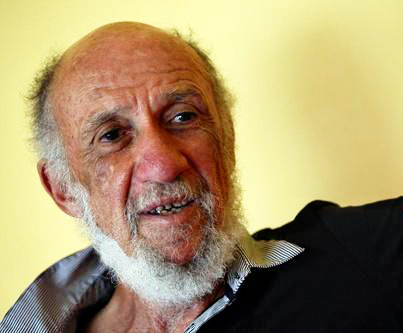
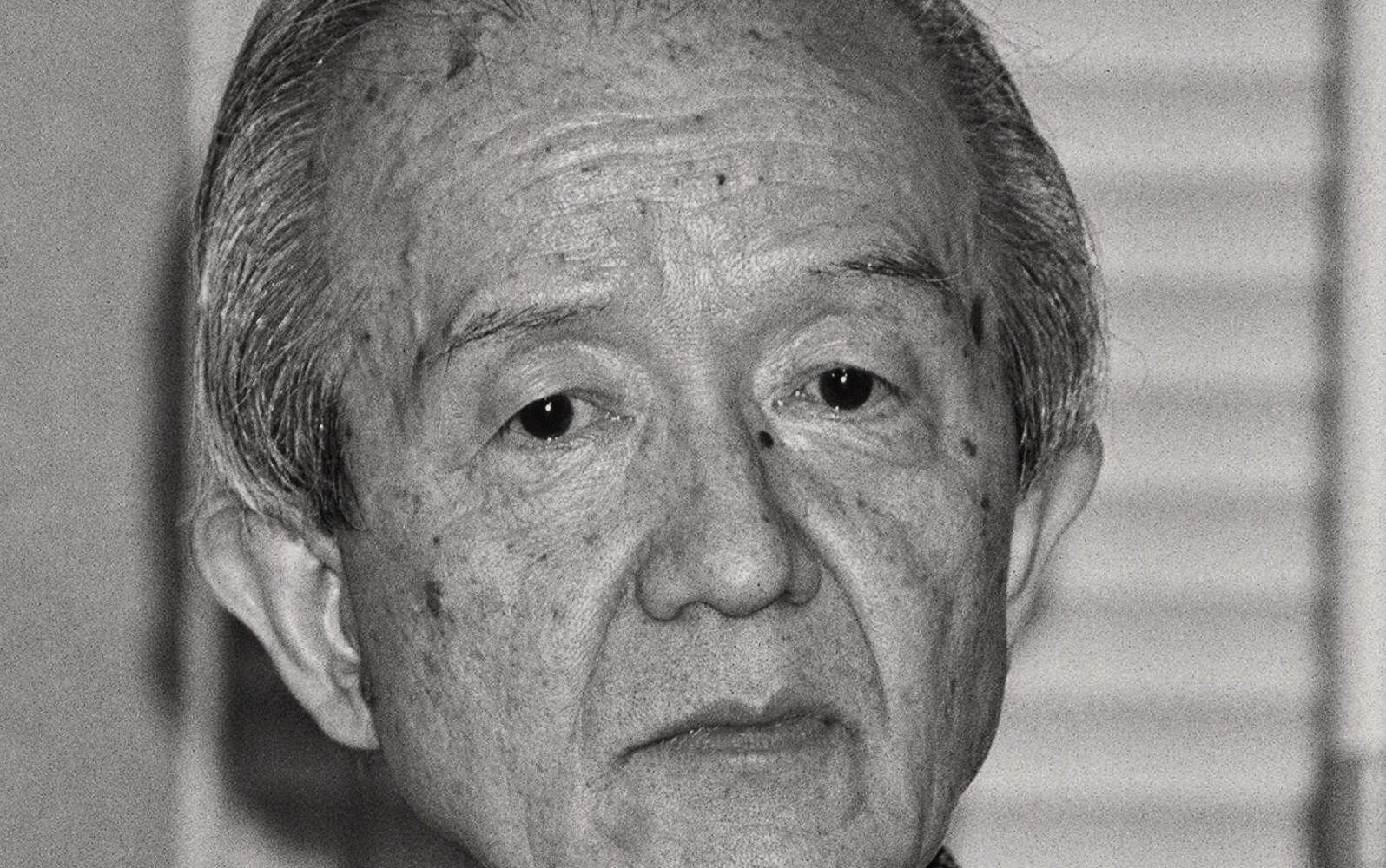
This post is dedicated to my remembrance of Yoshi Sakamoto who died recently. Yoshi was a deeply valued friend and an important public intellectual in Japan who exerted a strong influence on the post-war generation. His political orientation, rejecting extremes of right and left, while questioning the militarist premises of the Cold War and Japan’s willingness to become America’s Asian poodle, gave him a distinctive political profile.
I am sharing these words of appreciation, and hope that anyone from Japan who comes across this text will contact me, especially if they have a way of putting me in touch with either Yoshi’s family or Japanese media. I would like to believe that ‘an American appreciation’ of Professor Sakamoto would be of interest to those who knew and admired him.
I first met Yoshi in the mid-1960s when he came to visit me at Princeton, expressing his concern about the Vietnam War and knowing of my anti-war activism. We bonded quickly and marched in a peaceful demonstration in New York City a few days later, and somehow managed to keep in fairly consistent contact until Yoshi’s death on October 2nd.
Kuala Lumpur
IAIS-International Institute of Advanced Islamic Studies & IIUM-International Islamic University of Malaysia
Yes, Islam and Christianity are on old Buddhist lands; with Muslim-Buddhist clashes in Sri Lanka, Myanmar.
Occident is the big space of the three Abrahamic religions Judaism-Christianity-Islam, with the secularisms of the first two, excluding each other. Indonesia-Philippines are in the Occident.
Orient is a big space spanned by Buddhism, which does not exclude others, not even violent state power; hence more complex. There are pure Buddhist countries: Sri Lanka, Thailand, Myanmar, Cambodia, Laos, Vietnam; and mixed Buddhist countries, with other non-exclusive world views: in China with Daoism-Confucianism, in Japan with Kami shinto-Confucianism, and in Korea with Confucianism and Christianity.
When Nehru was taking a train on his return to India after studying abroad he read of the Japanese victory over Russia in the 1904-05 Russo Japanese War. At that moment he had an epiphany, realizing the hitherto unthinkable, that the British Empire was vulnerable to Indian nationalism. An earlier understanding of the colonial reality by native peoples generally subscribed to the postulates of hard power primacy making it futile or worse to challenge a colonial master, although throughout history there were always pockets of resistance.
This soft power attribute of colonial hard power by way of intimidation and a façade of invincibility is what made colonialism efficient and profitable for so long at the great expense of colonized peoples.
A traditional colonial occupation assumes that the foreign domineering presence, while oppressive and exploitative, refrains from ethnic cleansing or genocide in relation to the indigenous population.
When settler versions of colonialism emerged in relation to the Western Hemisphere and regions occupied by traditional peoples that were without either population density or some kind of industrial capability, the occupier managed to achieve enduring control Read More »
Malaysia has recently experienced maximum insecurity for two extra-territorial sovereign territories: Malaysian Airlines flights MH370 to Beijing and MH17 from Amsterdam. Flights are subject to air traffic rules, but sovereignty was deeply insulted for MH17–possibly also for MH370–and so was the security of the close to 600 on board: dead, possibly killed. The finding so far is that MH17 was hit by “numerous high energy objects”, which–looking at the photos of the cabin wall–aka “machine gun fire”; rather than “hit by a BUK rocket”. MH370: a race to locate the wreckage, by submarines, surface vessels; between China to find, and Australia to destroy, any evidence of crimes?
Intentional destruction of planes entails identification of the perpetrators whoever they are; arraigning them into court and if found guilty punishing them for mass murder. Taking place in international space both should be international, like the International Civil Aviation Organization and the ICC-International Criminal Court. For MH17 Malaysia used Netherlands for the investigation and may prefer Malaysia for the adjudication; two unfortunate decisions. We are dealing with one, possibly two, cases of aggression on civilian planes, themselves incapable of aggression; hence no case for self-defense. The cases are clearly criminal.
So much for space. Conventional borders are on land, sea (EEZ-Exclusive Economic Zone aka Economic Exclusion Zone, between EEZs) and in the air; traditionally defended by land, sea, air military forces against insults by other states, and by police for insults by individuals such as smuggling, drugs, kidnapping, illegal immigration and fishing. The borders are territorial, and the military is focused on national territory. Check out: are there problems anywhere, even conflicts, disputed claims? How will they evolve? Diagnosis, prognosis, and if needed, therapy; standard peace research approaches.Read More »
No matter what you may think of Putin and Russia this is simply not the way international politics should be conducted, particularly not at the personal level. If it wasn’t an offence to children, one would aptly characterise it as childish behaviour.
Western leaders ignored a brilliant opportunity to meet face-to-face with Vladimir Putin and move forward towards mutual understanding instead of signalling that they want a new Cold War.
Western leaders tell us that Russia is a ”threat to the world”. That obviously serves other purposes because you don’t bully someone you genuinely fear.
The G20 Brisbane should be remembered for its show of Western leaders’ personal display of weakness and conflict illiteracy.
Pummelled Putin punching bag
CNN reports that, during the meeting, Putin took ”pummelling” and was treated as a ”punching bag” by Western leaders from he set foot on Australian soil where his Australian host had sent a deputy minister of defence to receive him.
The Guardian reports that the Russian president approached Canadian Prime Minister Harper with his hand outstretched. Harper reluctantly shook it, then said “Well I guess I’ll shake your hand, but I only have one thing to say to you: you need to get out of Ukraine.” ”Bold words” – media called it.
Footage shows Putin sitting alone at a lunch table – like a naughty school boy put in the corner as by his teachers.
President Obama said that we are ”opposing Russia’s aggression in Ukraine which is a threat to the world as we saw in the appalling shoot down in the MH-17”.Read More »
Just before former Soviet president Mikhail Gorbachev on Saturday made his stunning criticism of the West that, since the fall of the Berlin Wall, it had engaged in “triumphalism”, I was in Moscow. Everyone I talked to said the West had set out to humiliate Russia (not to help rebuild it as it did in Germany after the Second World War).
Gorbachev has long been the West’s pet political darling, (although the New York Times didn’t report this speech) – for undoing the straitjacket that enveloped Soviet society, for allowing the reunification of Germany and for being the major contributor to ending the Cold War.
So the question is will the West listen to him now? Will it listen to his point that the expansion of NATO has made Russia feel threatened?
Will it understand that there is a good reason why he and an overwhelming majority of Russians support President Vladimir Putin’s foreign policy? Will it share his fear that “we are on the brink of a new Cold War”?
The West has lost a close enemy, the Soviet Union and Eastern Europe. Which reactions can be discerned and what psycho-political emotions are they indicative of? How did the West cope with the first years of this new post-Cold War situation? Can we mourn the death of an enemy, can we heal ourselves after the loss? How does one learn to live a new life without a close enemy? Has the West done what it ought to do for itself and for the former enemy?
“The West” of course is a term hanging loose. We employ it in this article as meaning interchangeably “NATO, the Western hemisphere, the United States and Western Europe and a few cases, Western or Occidental culture”.
The first hypothesis of this essay is that the West, i.e. the Western part of the Occidental civilization, is traumatized by the loss of its Eastern brother.
The second is that we have discussed far too little what it means for the West and projected all our attention on the Soviet Union, i.e. acted as spectators in a certain sense.
The third hypothesis, therefore, is that the West is increasingly stuck in a self-congratulatory “we have won the cold war and socialism is dead” attitude which only increases the likelihood that it will be taken even more by surprise in the future.
And the fourth hypothesis is that the changes in the Eastern Occidental brother occur simultaneously with a number of challenges within the Western Occidental system and is bound, ultimately, to pose an overwhelming challenge to our own system. There is now an historical opportunity, a new political space and time to be filled by cooperation and exciting visions of a common future. We believe that the West has something to learn from the idea, not the content, of perestroika, i.e. experimenting with deep non-violent change in one’s own system the outcome of which cannot be known with any precision.
Czech playwright and president, Václav Havel, when in January 1990 adressing the Polish sejmen, argued that Eastern Europe should not be seen as a poor dissident or a bewildered prisoner set free but “as someone who has something to offer, namely spiritual and moral inspiration, daring peace initiatives, an unexploited creative potential, an ethos of new freedom and impulses toward bold and quick-moving solutions.” And he rounded off this speech with the following words (author’s translation again): “The most dangerous enemy today is not the dark forces of totalitarianism, intriguers or leagues of gangsters – it is our own dark sides. My program as president is therefore based on the principle of infusing spirituality, moral responsibility, humanity and humility into politics and, thus, insist on there being something higher than we humans, that our deeds shall not disappear into the dark holes of our time but be preserved, somewhere, investigated, evaluated – that we have neither a right nor a reason to maintain that we understand everything or can do everything.”
One may wonder with whom in the West Havel can have a dialogue at this level? Who in the West would respond in these existential and visionary terms? Why is the response of the West first of all Read More »
“Countercyclicity” means that both move through history in cycles, up and down; with one moving up when the other moves down.
Christianity started with its founder crucified, like the first pope St Peter; Christians were tortured, killed, expelled from Jewish Palestine. But then indeed up, as religio licita in the Roman Empire in 313, defined in Nicaea in 325 by Emperor Constantine. The Empire split in 395, with a Catholic Church in the West – contracting, monastic after the Western Empire fell in 476 – and an Orthodox Church in the East, till Constantinople became Istanbul in 1453 – Moscow became “the Third Rome”.
Islam started with the Prophet’s hizrat, migration from Mecca to Medina as city-state under Mohammed till he died in 632. From then till the end of the umayyad Damascus dynasty in 750, Islam covered the lands from Iberia (not Asturias) as the caliphate of Cordoba in 711, to Iran. Moving on, the abassid Baghdad dynasty till the 1258 massacre by Mongols, the sultanates of Delhi in 1192, Pattani now Thailand, Aceh in Sumatra; Sulu and Maguindanao in Mindanao, Philippines in 1405, 1490s.
Ahead of expansionist Christian Magellan 1520-21. After Columbus 1492 – the arch-year of Christian expansion – Read More »
President Vladimir Putin is often painted as an ogre in the world’s media. The seemingly eternal president of Russia has an iron grip on his nation and a foreign policy to match. Yet a large majority of Russians give him their support.
Is it his early economic success? Or is it because of a new stability? Or the nation’s growing self-respect after the ignominious years that followed the demise of the Soviet Union? Or is it a sense of besieged defensiveness because of the advantage the West undoubtedly took of Russia after that demise.
The answer is a bit of all these.
Few in the outside world seem to talk much about what happened after President Boris Yeltsin pushed aside Mikhail Gorbachev, the last president of the Soviet Union. Few recall the political and economic upheavals of that time and why the stability of Putin’s governance is welcomed by people at large. Perhaps it is because this was a quarter of a century ago and people now ruling the West, and the journalists who report on them, were only teenagers or in their twenties at the time – and suffer from that common Western political disease of lack of perspective and little knowledge of history.
Immediately after Gorbachev’s fall two things happened.Read More »
Brazil has long lived out its personal fantasy as the archetypal relaxed, tolerant and gregarious country with Copacabana beach, the samba, the carnival and a great deal of sexual freedom. It is now living out in real time its almost forgotten societal dream, an economic-cum-social revolution.
The retired president, Luiz Inacio “Lula” da Silva, bequeathed the nation a vibrant capitalist economy with a human face – an economy that has raised income per head quite substantially (it is now four times that of China), has almost abolished daily hunger and given the large majority of the poor an income supplement in return for families sending their children to school.
Still, after 8 years of Lula and 4 years of his hand-picked successor, Dilma Rousseff, the country struggles to stay ahead of its burgeoning population, the inequities of the feudal land system that cast millions into shanty towns and a murder rate in the slum favelas that is more akin to a war zone than a normal society.




 TFF Associates Blog 2011-2017